







BLM proposes opening 22 million acres of federal land, including in Colorado, for solar development
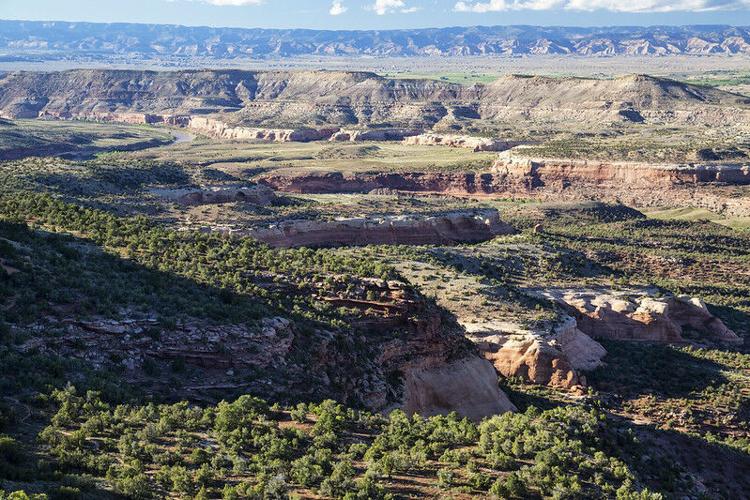
FILE PHOTO: Turkey Flats Loop Trail in Grand Junction. Beat the heat of the desert landscape in western Colorado on the Turkey Flats Loop Trail in Grand Junction. The trail loops through forests of aspen, firs, and pines for plenty of shade for you and your pup.
Courtesy photo, Bureau of Land Management
The U.S. Bureau of Land Management spent $4.3 million producing a proposal to open another 22 million acres of federal lands across 11 western states, including Colorado, to development of solar farms and battery storage.
The agency is holding two virtual, and six in-person, open house meetings across the West in February and March to present its plan to the public, according to a news release.
The proposal is an update to its 2012 Programmatic Environmental Impact Statement (PEIS) for solar development on BLM lands enacted under the Obama administration.
Then-Secretary of the Interior Ken Salazar, a Colorado native and former U.S. Senator, signed the 2012 plan.
“The BLM is committed to ensuring public lands do their part to meet our nation’s clean energy goals,” BLM Director Tracy Stone-Manning said in the news release. “We can and must do so responsibly, and we look forward to hearing from the public on how to achieve that balance.”
The 2012 impact statement identified some 19 million acres in Colorado, and five other states, as potentially suitable for “solar energy zones with access to existing or planned transmission, incentives for development within those zones, and a process through which to consider additional zones and solar projects.”
Under the BLM’s preferred alternative, the 2024 draft plan adding 22 million more acres would “streamline the BLM’s framework for siting solar energy projects in order to support current and future national clean energy goals, long-term energy security, climate resilience, and improved conservation outcomes.”
The combined 41 million acres available for development under the 2012 and proposed preferred 2024 PEIS would comprise more than 64,000 square miles, which is only slightly smaller than the state of Florida.
“By directing development to areas that have fewer sensitive resources, less conflict with other uses of public lands, and close proximity to transmission lines, the BLM can permit clean energy more efficiently while maintaining robust public and Tribal engagement, which are central features of all BLM reviews of individual projects,” according to the release.
The public meeting schedule is below and more details can be found at blm.gov.
-
Mon, Feb. 5: Virtual
-
Tue, Feb. 6: Boise, Idaho
-
Mon, Feb. 12: Cedar City, Utah
-
Tue, Feb. 13: Las Vegas, Nevada
-
Thu, Feb. 15: Yuma, Arizona
-
Tue, Feb. 20: Grand Junction, Colorado
-
Thu, Feb. 22: Albuquerque, New Mexico
-
Wed, Mar. 6: Virtual
The public comment period on the plan ends April 18, 2024.