







EPA demands more information on flaring at Colorado oil and gas facilities
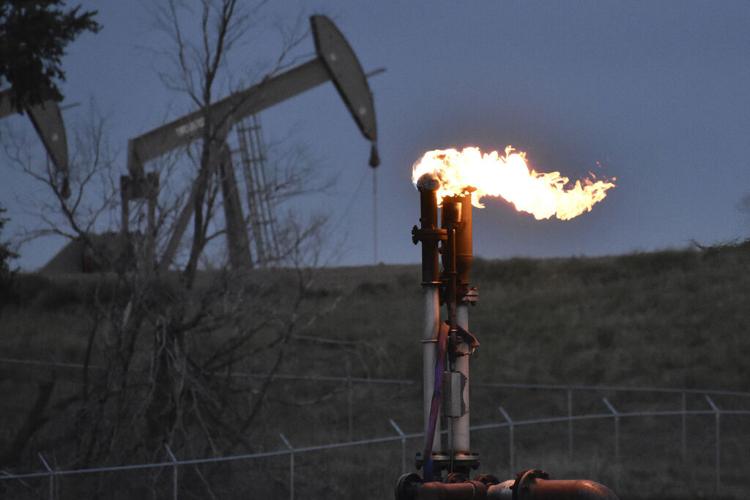
FILE - A flare burns at a well pad Aug. 26, 2021, near Watford City, N.D. On Saturday, Dec. 2, 2023, the Biden administration issued a final rule aimed at reducing methane emissions, targeting the U.S. oil and natural gas industry for its role in global warming as President Joe Biden seeks to advance his climate legacy. (AP Photo/Matthew Brown, File)
Matthew Brown


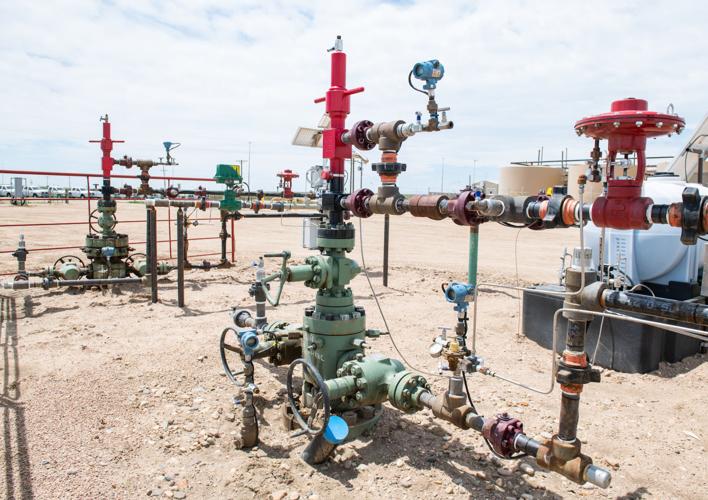
In a ruling, the Environmental Protection Agency ordered the Colorado Department of Health and Environment to revise permits issued for four oil and gas facilities following a petition that challenged state regulations on equipment used in oil and gas production.
Some of the processes involved in oil and gas production use some natural gas that cannot be put back into the refined gas stream and therefore must be disposed of by burning.
The agency said it wants more information and permit amendments for “enclosed combustion devices” used to reduce emissions of unusable volatile organic compounds. They are supposed to be almost completely consumed in the devices, but the EPA says the state’s regulations don’t guarantee the required 95% combustion efficiency.
The Jan. 30 decision is the result of a petition filed by the Center for Biological Diversity, which challenged the state’s recent regulations requiring enclosed combustion devices be used, rather than open-air burning, when VOCs are burned to reduce emissions of, among other things, ozone-producing compounds.
According to Ryan Maher, an attorney for Center for Biological Diversity, the state relies largely on manufacturers’ claims about the combustion efficiency of the devices, which, he said, may be advertised as up to 98% efficient when new but which may lose efficiency over time, either because of wear and tear, harsh weather or improper installation, leading to incomplete combustion of the compounds falling below the EPA-mandate of 95% efficiency.
The order noted that CDPHE submitted a dataset, including results from 52 stack tests where 47 of the 52 results showed “the average control efficiency from all of the stack tests is 98.18 percent.”
But, the order said, “CDPHE provides no information regarding what might cause ECDs to fail to achieve 95 percent control efficiency, and whether the monitoring requirements in the permits would prevent such factors.”
The EPA order requires CDPHE to revise the permit records to “more fully explain how the monitoring in the permits assures compliance.”
It also says that if CDPHE concluded that additional monitoring is required, it must amend the permits and permit records justifying the changes.
Maher said what his group is looking for is not just better monitoring at four Weld County sites, but improvements to CDPHE’s regulations statewide to require, at a minimum, annual stack testing at every facility to ensure the devices are working properly.
Maher also said that operators are already required to perform regular inspections of their facilities, and that adding an emission test for the devices would not place any extraordinary burdens on operators, who are required to meet the 95% standard anyway.
“There are tens of thousands of flares in use by the oil and gas industry, and we know that these flares are meant to control toxic pollution, including, crucially, ozone forming pollution,” Maher told The Denver Gazette. “And we know that the oil and gas industry is a massive contributor metro ozone. So, to fail to assure that flares are working like they’re supposed to has serious ramifications and as a result, public health consequences and consequences for wildlife and the environment, more generally.”
In an email to The Denver Gazette, CDPHE said its experts will continue “reviewing EPA’s decision and any additional impact it may have.”
“The department’s Air Pollution Control Division is committed to protecting clean air for all Coloradans. The division issues protective permits in accordance with state and federal laws,” an agency spokesperson said. “The division follows a robust analysis process and provides opportunity for public input before issuing Title V permits.”
In a statement, Energy & Natural Resources Special Counsel Jack Luellen of the Denver office of the Buchalter Law Firm told The Denver Gazette that the state will have an “opportunity to present evidence in opposition to the EPA ruling.”
“I would expect the presentation by Colorado to be robust and forceful,” he said.
Luellen noted that Colorado is at the forefront of energy regulation nationally when it comes to emissions from oil and gas development.
“Colorado, through the ECMC (Energy and Carbon Management Commission) and the CPDHE, has the most stringent oil and gas regulations in the nation,” Luellen said. “In addition, in the years since the implementation of SB-181, local governments have substantially increased their regulations over oil and gas operations in their jurisdictions.”
The Colorado Oil and Gas Association, the industry’s trade organization, appeared somewhat less approving of the petition and the EPA order, viewing it as unnecessary and obstructive.
“These objections are based on historical concerns with CDPHE’s testing requirements and are generally paperwork related,” Christy Woodward, COGA’s senior director of regulatory affairs, said in a statement. “CDPHE updated their regulations for testing in 2021 and much work has been and continues to be done to test these devices. Just because the permit doesn’t reference the rule, doesn’t mean the rule doesn’t still apply.
“This is just another frivolous attempt by environmental activist organizations to create paperwork delays in already existing robust permitting and testing programs related to actual emission reductions,” Woodward added.