







Space Force rolling out dedicated ‘combat squadrons’ to prepare for growing threats
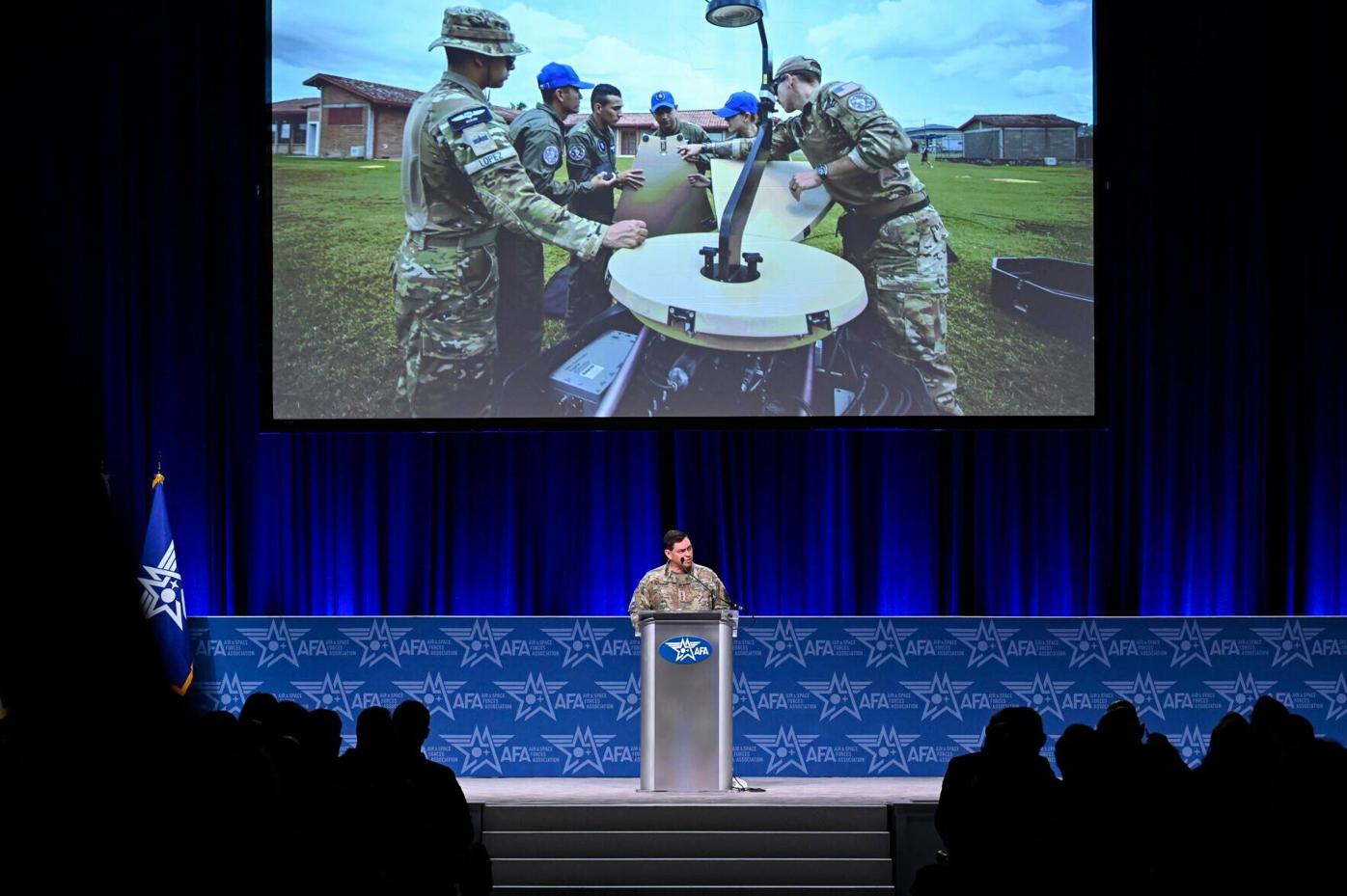
Eric R. Dietrich, Air Force
The Space Force is introducing new dedicated combat squadrons that will help guardians focus on their missions on dedicated cycles.
Gen. Chance Saltzman announced the units during the Air and Space Forces Association’s Warfare Symposium this week in Aurora, where military leaders emphasized the change to help deter a possible Chinese invasion of Taiwan in 2027.
Air and Space Forces announce urgent changes to stay ahead of China
The Space Force represents a very small fraction of the overall military with 1,400 members assigned to technical fields, such as cyber operations and satellite operations, but their work is critical, Saltzman said.
“Do not mistake our size for our value or our impact,” he said.
Space Force guardians are embedded at four combatant commands and Saltzman would like to see them join all the commands, he said. Combatant commands bring together service members from all branches of the military for defense and combat operations. For example, Central Command leads military operations in the Middle East.
To be more effective, the Space Force also established U.S. Space Forces-Space in December to oversee guardians that are “deployed in place,” a role it took over from Space Operations Command, explained Lt. Gen. Doug Schiess, who leads it. He is also the Joint Force Space Component Commander for Space Command.
The crews deployed in place are transitioning to the new dedicated combat squadron model. As a member of one of those squadrons the guardians will work for Space Forces-Space and they will not have to worry about other duties such as fielding new technology or training. Schiess likened the model to the missileers who would answer to Strategic Command while on duty.
He said he expected it would allow guardians to focus on critical tasks, such as running the GPS constellation or missile warning.
He expected all the procedures for running the new squadrons would be in place in the coming months.
The Space Force is also working on another big change — accepting part-time employees, a model meant to allow guardians to gain industry experience among other benefits.
The force is still working on the administrative details of how to pay part-time guardians, Saltzman said. He expected the new model, which will absorb Air Force Reserve’s 310th Space Wing at Schriever Space Force Base will be in fairly quickly. But it could take five years to build out. Once in place the model will give the Space Force a surge capacity, he said.
The Space Force has also sorted out the roles for officer, enlisted, and civilian Guardians after inheriting a variety of operational cultures, disparate organizational structures, and differing training requirements, Saltzman said.
Leaders will use the data to realign unit structures and training, he said.
The numerous changes announced this week are expected to help prepare for growing threats in China, Russia and North Korea, he said. China has tested a satellite with a robotic arm that can pull satellites out of orbit. It has also invested in satellite jamming and directed energy weapons that are concerning, said Brig. Gen. Anthony Mastalir, who leads U.S. Space Forces, Indo-Pacific.
“The risk of moving too slow is far greater than any risk associated with rapid change,” Saltzman said.