





Aurora to local governments, nonprofits: Don’t bring immigrants in without coordinating
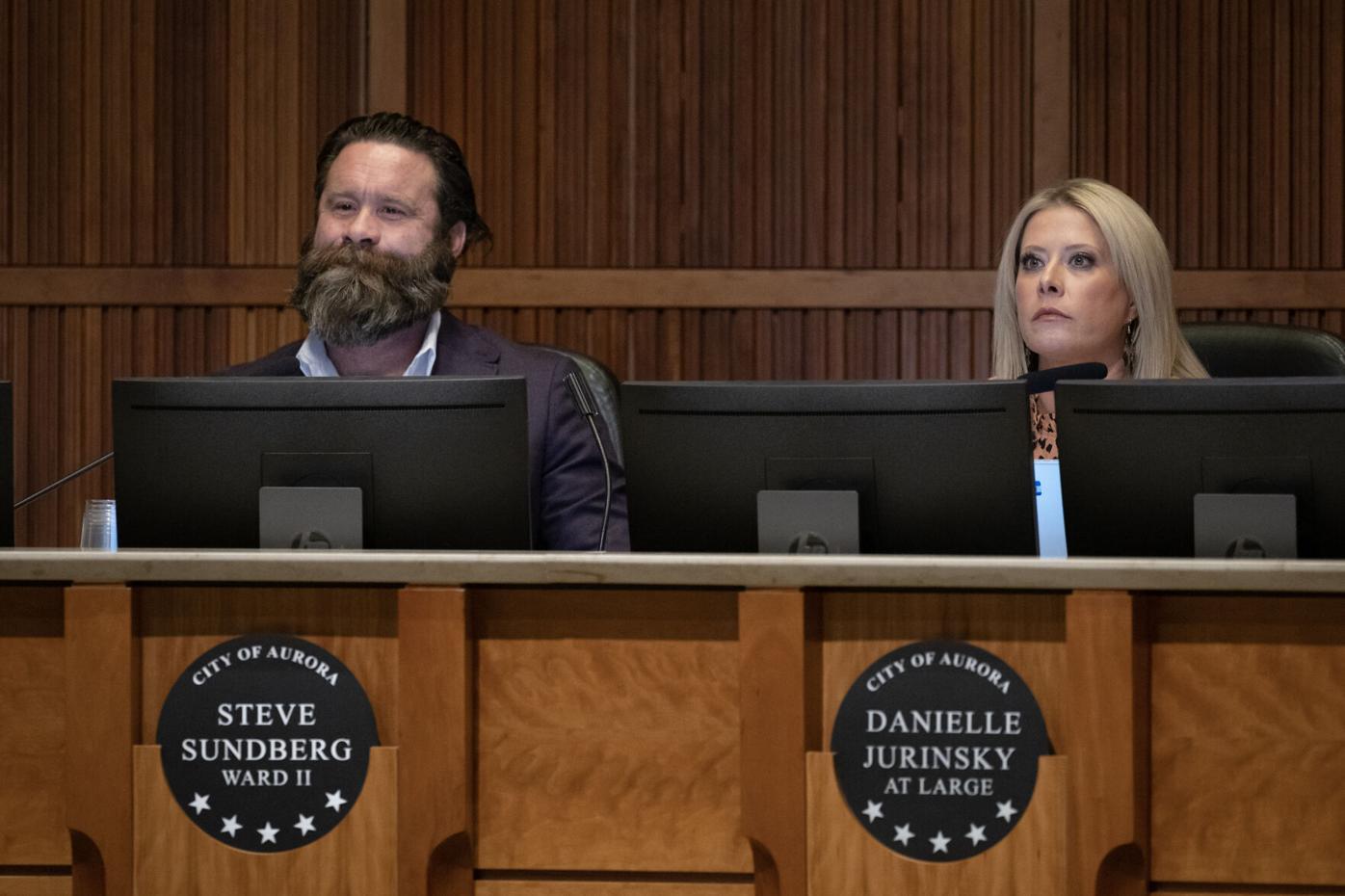
Timothy Hurst/Denver Gazette
The Aurora council approved a resolution on Monday night telling other local governments or nonprofits entities to not bring immigrants — who ended up in metro Denver after illegally crossing America’s southern border — into Colorado’s third most populous city.
The vote followed disagreement among councilmembers and criticism from some residents who attended the meeting. The resolution’s sponsors later made changes in response to feedback from nonprofits and community members.
As amended, the resolution affirms Aurora’s “non-sanctuary” status, asserting that the city “does not currently have the financial capacity to fund new services related to this crisis.”
The resolution “demands that other municipalities and entities do not systematically transport migrants or people experiencing homelessness to the city for temporary housing without the City first being given an opportunity to coordinate such assistance with those other municipalities.”
Since the statement is a resolution — not an ordinance — it has no enforcement mechanism, City Attorney George Koumantakis said.
Originally, the resolution stated that the city would “not allocate public funds, services, or staff resources for migrant support,” expressing worries that bringing immigrants into the city would result in “undue financial hardship” and an increase in demand for services.
This provision was taken out of the final resolution. Councilmembers Alison Coombs, Ruben Medina and Crystal Murillo voted “no” on the resolution.
In stark contrast to neighboring city Denver, Aurora’s newly adopted resolution reiterates the city’s stance since 2017 that it is not a “sanctuary city” but also signals that it won’t adopt its neighboring city’s more “welcoming” position toward the immigrants.
Generally speaking, a “sanctuary city” is a local jurisdiction with a policy of discouraging cooperation with federal authorities such as by forbidding law enforcement from reporting an individual’s immigration status.
Several Aurora residents spoke against the resolution, and one person favored it.
The person who supported the resolution accused other speakers of having “no clue what the purpose of a city council is.”
“I heard (councilmembers) called everything in the book because you might possibly want to … respect my tax dollars,” he said. “I get angry when people sit here and think that we can feed every person in the world that pours across our southern border. We simply cannot afford it, it will bankrupt our city.”
Meanwhile, Nayda Benitez said her family left their home country and came to Aurora out of necessity and found it “incredibly infuriating” to hear the council bring forth an “anti-immigrant” resolution.
“It will be detrimental to public safety, as marginalized communities like newcomers will feel even less comfortable trusting local law enforcement or elected officials,” Benitez said.
Councilmembers in support of the resolution said it does not say anything about being “anti-immigrant” and maintained it’s about city not having resources to support the influx of immigrants.
“We do not have the funding that Denver has to sustain this,” Jurinsky said. “Nowhere in this resolution does it say that we will no longer welcome migrants or celebrate migrants in our immigrant communities.”
Councilmember Francoise Bergan also insisted the resolution isn’t about the city not supporting or welcoming immigrants, but rather about the lack of resources.
“We are a welcoming city. We love our immigrant community. This is not about not supporting our immigrant community,” Bergan said. “This is about a crisis that has affected major cities.”
Councilmembers who opposed the resolution said the fear being spread through the resolution is “anti-immigrant” and against what the city says it stands for.
Councilmember Crystal Murillo said she does not support the premise of the resolution.
“I’m concerned that this is spreading a narrative of fear, that we are pitting groups of marginalized communities and people in need against each other,” Murillo said. “I hope we don’t ever go that route of trying to hold nonprofits or any other private entity that the government is going to try to interfere with their ability to do their work.”
Councilmember Alison Coombs called the resolution “problematic.”
“Folks can say all they want that this resolution is not harmful and unwelcoming to immigrants, but immigrants are telling you that you’re wrong … that is what the immigrants who live here in this city are telling you,” Coombs said.
The illegal immigration crisis that’s been spilling into America’s interior cities — notably Denver, New York and Chicago — has overflowed into other municipalities, confronting the latter with the challenge of caring for the immigrants and the cost that entails.
Jurinsky and Councilmember Steve Sundberg, who sponsored the resolution and brought it to the Federal, State and Intergovernmental Relations policy committee earlier this month, argued that it’s necessary to send a clear signal that the city’s priority is caring for its residents — not the immigrants.
Unlike Denver, Aurora is not a county and, therefore, does not have the same responsibilities or funding that a county has, according to the resolution.
Offering sanctuary or support to people coming into the city creates “financial hardship on the City and burdens available City resources,” the final resolution reads.
Since December 2022, more than 38,600 immigrants have arrived in Denver, where officials decided earlier in the crisis to provide shelter, feed and transport immigrants to their final destination. Denver Mayor Mike Johnston warned that the cost to care for the immigrants could cost the city $180 million. He asked Denver’s agency heads to find up to 15% in potential budget cuts.
Finally, Aurora’s resolution calls on the federal government to take action, saying the city calls on them to “perform its constitutional duty and secure our nation’s borders.”
“We want to express our appreciation with the State and local governments and other organizations who are dealing with this crisis,” the resolution says.


Multiple ‘powder days’ forecast in Colorado as snowy December ramps up
Jonathan Ingraham
jonathan.ingraham@denvergazette.com
Updated 19 minutes ago
December starts snowy across Colorado’s high country after a snowy end to November. Skiers and riders can rejoice as multiple powder days are forecast over the next week. A few ski areas had to push back their opening dates to...

Jonathan Ingraham
Reporter

Denver weather: Sunny conditions return Monday ahead of mid-week snow storm
Jonathan Ingraham
jonathan.ingraham@denvergazette.com
Updated 32 minutes ago
Ample sunshine returns across metro Denver on Monday, but high temperatures stay cool after a cold front pushed through the state Sunday evening. Denver residents can expect sunny skies today, with a high near 38, according to the National Weather...
Jonathan Ingraham
Reporter

Matt Zambrano: Last by letter, first by feats
John Moore
john.moore@denvergazette.com
Updated 13 hours ago
2025 DENVER GAZETTE TRUE WEST AWARDS: DAY 1 Here’s every brilliant thing busy and beloved actor and director did this year Matt Zambrano is such a nice guy, he will give you the shirt off his back – and the words...

John Moore
Reporter
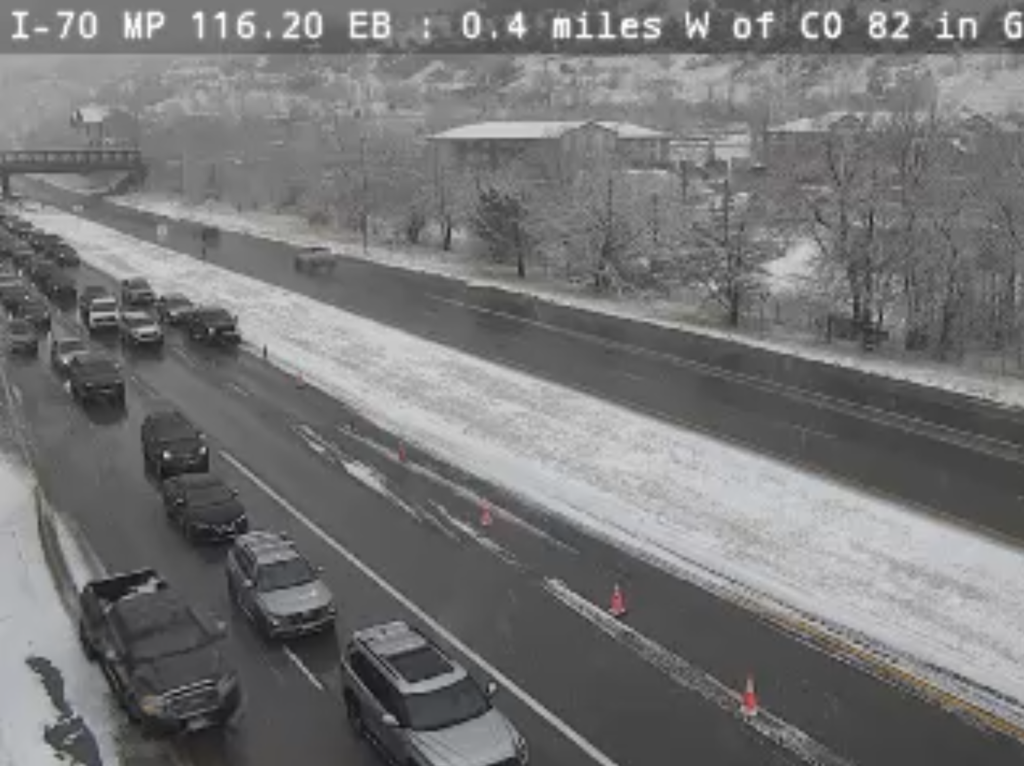
Multiple pile-up crashes snarl I-70 in Colorado amid low visibility, icy conditions
Noah Festenstein
noah-festenstein@denvergazette.com
Updated 13 hours ago
A busy Thanksgiving weekend with extended family became busier for motorists along Interstate 70 on Sunday after two crashes caused massive pile-ups along Colorado’s primary east-west thoroughfare. No injuries have been reported in both crashes, according to a Colorado State...

Noah Festenstein
Reporter
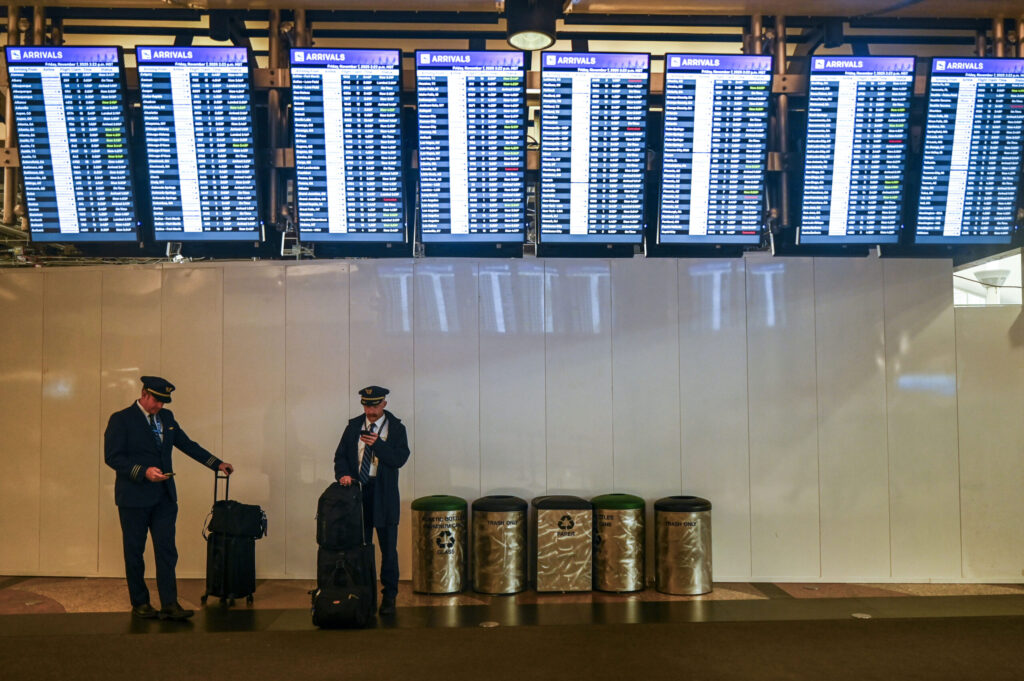
Hundreds of flights delayed out of Denver airport on busiest travel day
Noah Festenstein
noah-festenstein@denvergazette.com
Updated 14 hours ago
Hundreds of flights on Sunday were delayed at Denver International Airport amid freezing temperatures on what officials said was projected to be the busiest travel day of the Thanksgiving holiday season. As of 3 p.m., 482 flights were delayed and...
Noah Festenstein
Reporter

Man dies after possible road rage shooting in southwest Denver, police say
Noah Festenstein
noah-festenstein@denvergazette.com
Updated 15 hours ago
Denver police are searching for a suspect after a possible road rage shooting left a man dead in southwest Denver on Saturday night. The shooting took place in the 3000 block of S. Winona Ct., according to a Denver Police...
Noah Festenstein
Reporter

Aurora to hold first council meeting with new members
Kyla Pearce
kyla-pearce@denvergazette.com
Updated 16 hours ago
Aurora’s four new councilmembers and an incumbent will be sworn in Monday night, marking the beginning of a progressive-majority council rule in the city that has been led by conservatives for years. In November’s election, Aurora voters chose progressive candidates...
Kyla Pearce
Reporter

Air Force Academy tightens rules on conferences, public appearances for faculty
Mary Shinn
mary-shinn@denvergazette.com
Updated 12 hours ago
After the Department of Defense rolled out rules for employees to engage with the public in September, the Air Force Academy adopted a new layer of review for faculty and others who wish to attend conferences. The Air Force Academy...

Mary Shinn
Reporter

Rocky Mountain Holiday Train Show keeps chugging along
Michael Braithwaite
michael.braithwaite@gazette.com
Updated 2 days ago
Beneath fluorescent lighting and set to a playlist of Christmastime hits, hundreds of people flocked to The Ranch Events Complex in Loveland on Saturday for the annual Rocky Mountain Holiday Train Show. Born over 40 years ago and revitalized in...

Michael Braithwaite
Reporter

Roll credits: ‘The Chez Lady’ is leaving Landmark’s Mayan Theatre
John Moore
john.moore@denvergazette.com
Updated 20 hours ago
The face of Denver arthouse film for the past 27 years has popped her last corn and seen her last cinematic Colorado sunset When I walked into the Mayan Theatre on Wednesday and asked the young woman behind the concessions...
John Moore
Reporter
PREV
PREVIOUS

Aurora seeks community, business feedback on 'navigation' campus for homeless people
As the city of Aurora moves forward with its homeless navigation campus, officials are holding meetings in March to gather feedback from community members and business owners in the surrounding areas. The city will hold informational meetings for the public to learn about the project, ask questions, and share concerns, staff said at Monday night’s […]

Tension boils over at Aurora Council meeting about public defenders, call for ceasefire
Tension boiled over at the Aurora City council meeting on Monday, when two items — a call for a “cease-fire” in Gaza and efforts to undo the request for proposals to examine the potential effects of privatizing the city’s public defender’s office — were removed from the agenda. Councilmember Alison Coombs, who had championed the “cease-fire” […]