







Will ‘Barbenheimer’ bring back the Oscar ratings? | John Moore
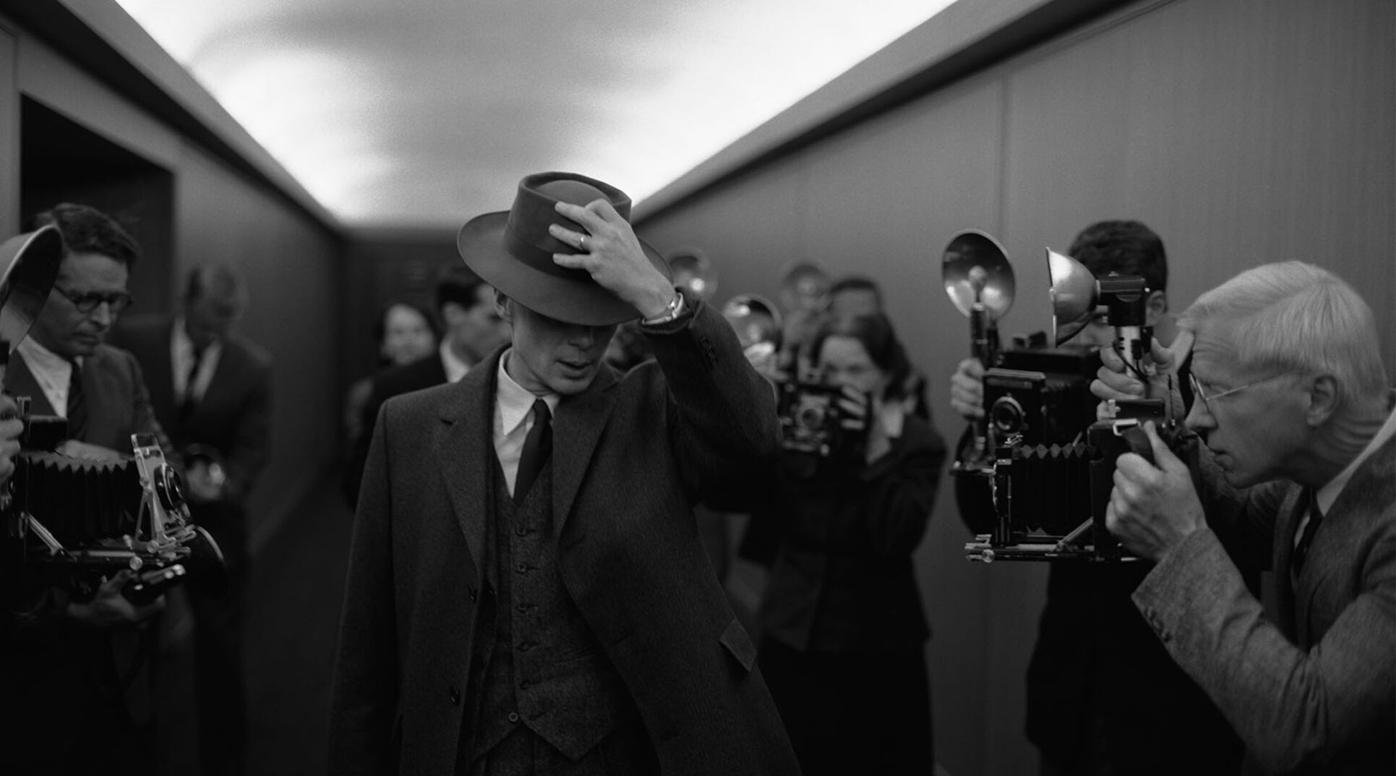
Universal Pictures

Two years ago in this space, I said the Oscars have a big, boring problem. Then along came Will Smith a few hours later to slap me – and Chris Rock – right in the face.
Whatever that was – it was not boring.
But when it takes a befuddled old person to name the wrong winner of the Best Picture, or an aggro dude in a tux to leap out of the audience and smack the host to infuse your program with some badly needed viewer enthusiasm, then, I will say it again – you do have a problem.
That problem in recent years has been the growing gap between the shrinking traditional cerebral filmgoing demographic and the younger, more populist moviegoing crowd who think “Top Gun: Maverick” is as good as moviemaking gets. Or that “Chez Artiste” sounds like it might be the name of a stinky French cheese. In other words: The majority of everyday Americans.
(For the record: The Chez Artiste is one of my favorite places to see an arthouse film. And it doesn’t smell like cheese.)
And what do you know: This year, two of the favorites for Best Picture – aided by the luckiest marketing blitz in movie history – have grossed $2.4 billion (with a b) worldwide between them. Being released on the same day after a year of bludgeoning hype didn’t hurt.
“Barbenheimer”: Now, that’s how you get box office. And Oscar ratings.

Ryan Gosling as Ken and Margot Robbie as Barbie in “Barbie.”
Warner Bros. Pictures


Ryan Gosling as Ken and Margot Robbie as Barbie in “Barbie.”
After years of hand-wringing, the Academy finally seems to have caught wise to the fact that more people will have a reason to watch the Oscars if they have actually seen the nominated movies.
Or have they? Once you get past the juggernaut combo of “Barbie” – the most successful woman-directed film in history – and “Oppenheimer” – the most relentlessly promoted film since “The Phantom Menace” in 1999, the box-office figures drop precipitously. The other eight nominees combined for just 17 percent of the “Barbie” and “Oppenheimer” box-office haul.
The Academy has been employing desperate measures to attract viewers since 2009, when it super-sized the Best-Picture category from five to “as many as 10” films, significantly diluting the prestige of a nomination, but allowing fan favorites like “Bohemian Rhapsody,” “The Blind Side,” “Toy Story 3” and, yes, “Top-Gun: Maverick” to have their five seconds of Oscar glory.
But if that’s the case, then the Academy certainly fell on its face by not giving the wholly worthy “Spider-Man: Across the Spiderverse” one of the 10 spots this year. (I’m assuming the 57 million of you who saw that film in a theater agree.)
Still, some critics are calling this year’s pool “the finest group of Best Picture nominees since the academy expanded the category to 10 in 2009,” including L.A. Times columnist Glenn Whipp.
But I don’t see it. I see 10 good films, perhaps one or two even great ones – but one of them is not the presumptive favorite, “Oppenheimer.”
With 13 nominations, it is widely predicted that Christopher Nolan’s blockbuster biopic on the man who invented the atom bomb will turn this year’s Oscars into a blowout on the scale of “Lord of the Rings,” “Titanic” and “Ben Hur.” Which might happen – but that doesn’t mean it should.
At the risk of rankling my two science-nerd friends out there, I’m just going to come out and say it: “Oppenheimer” is ordinary.
It left out some of the most interesting aspects of J. Robert Oppenheimer’s life, while lingering too long on unimportant plot points. It in no way captures the full trajectory of a man who barely made it out of college alive into the man now known to history as “the destroyer of worlds.” It had no storytelling tempo. And it doesn’t meet the narrative challenge of how to build suspensefully to an already known finale.
What you could edit out of “Oppenheimer” and the superior “Killers of the Flower Moon” combined would make up an entire movie. You could have watched “Barbie” three times in the time it took to watch “Oppenheimer.” (That might be an exaggeration – but it felt like it.)
We had been told how great “Oppenheimer” would be for so long leading up to its release that its greatness was largely assumed and conferred upon delivery. And the movie we were marketed for all that time turned out to be an entirely different kind of movie altogether.
(Admittedly, it’s easy to pick on the favorite – but that just had to be said.)


If any movie deserves to be singled out for its place in history, it is “Barbie,” without question the zeitgeist film of the year. While some might also call it a period piece, it is fresh, original and wildly unpredictable. But whenever it has the chance to put its golden stamp on a movie that will forever define its era (and in the case of “Barbie,” I mean right now, post-Harvey Weinstein 2024, not 1965), the Academy almost always makes the safe (boring) choice.
No matter what you think of the film, “Barbie’s” place in film history is secure, and not only because it made $1 billion in its first three weeks. Because of what it did for women in surprising ways.
I was surprised when my friend, Kit, saw the movie for the third time, and I asked her what she got out of it. She didn’t say it was fun or silly or clever. She said it was “hard.” That’s what she loved about it – and what kept her coming back. What was hard about it, she said, was the in-her-face patriarchy, which mirrored what she has seen throughout her entire life. “It made my throat close,” she said. And yet, she loved it – because it made her feel seen.
“Poor Things,” a female twist on the “Frankenstein” franchise, is a far more acquired taste, but there is no question that it, along with “Barbie,” make perfect companion pieces for women in 2024. “Poor Things” dares to show a woman, made from the rib of a man, who discovers the inherent power of her sexuality and is not cast out of the Garden of Eden – but instead grows her own women-centric garden. Props to the Tweeter who opined: “‘Poor Things’ is the first movie Barbie should see in the real world.” Brilliant.
The question for tonight is whether any of the interest generated by these two blockbusters will translate into Oscars viewership for ABC. (Note the Oscars’ early 5 p.m. start tonight.)
Oscars telecasts have been enjoying a bit of a bounceback since the telecast hit an historic if understandable low of 10.4 million viewers in the 2021 pandemic year. That number jumped to 18.7 last year, most likely fueled by viewers who wanted to see what might possibly top the Will Smith (bleep) show of 2022. TV pundits are predicting a huge surge into the 30s (in millions of viewers) tonight – still a far cry from the 43.7 million who watched in 2014. Overall, viewership has plummeted 57 percent over the past decade.
Theories abound, largely reflecting political ideologies. Conservatives see the ratings freefall and use that data as gleeful confirmation that bedrock America has finally had enough of liberal Hollywood. But the more likely (boring) reason is that TV ratings have fallen across the board simply because, with streaming and expanded cable, viewers have exponentially more options for what to watch. This is very much a Golden Age of television. But our definition of a hit has significantly shrunk.
Twenty years ago, the then-brand new “Gray’s Anatomy” was just the eighth-most-watched TV show in America, with an average of 11.6 million weekly viewers. Last week, it came in seventh with just 3.15 million viewers. And it is still considered a massive hit.
Still, you would expect Americans to come together and watch big annual events like the Oscars and the Super Bowl in massive numbers. But while the Oscars are only starting to pull themselves up from historic lows, the Kansas City Chiefs just won the 58th and most-watched Super Bowl in history, drawing 120 million. (Thank you, Taylor Swift.)
Still, there are plenty of reasons to tune in tonight. For example: Lily Gladstone could become the first Indigenous woman to win an Oscar, and Martin Scorsese could become the oldest Best Director at age 81 (both for “Killers of the Flower Moon”). One reason not to watch tonight: “Oppenheimer” could break the record for the most Oscar wins.
For the record: The Best Picture nominee that I think will have its place in history among the quiet greats is “Past Lives,” which delivers everything we should want out of a story. The biggest snubs for Best Picture, I thought, were “All of Us Strangers,” followed by “Nyad.”
My absolute favorite film of the year (which almost never finds its way to a Best Picture nomination) was “Jules,” a feel-good film that even Roger Ebert shouted out from the grave as “an absolutely stupendous movie.” In it, an aging man’s life is upended when an extraterrestrial passenger crash-lands in his backyard, opening up a delightful meditation on friendship, aging and regret starring the great Ben Kingsley alongside the great Jane Curtin and the great Harriet Sansom Harris.
How the Academy couldn’t see that as an Oscar-worthy film is just another one of its problems.

From left: Jane Curtin, Harriet Sansom Harris and Ben Kingsley star in the feel-good film of the year, 'Jules.'
Courtesy Big Beach Films
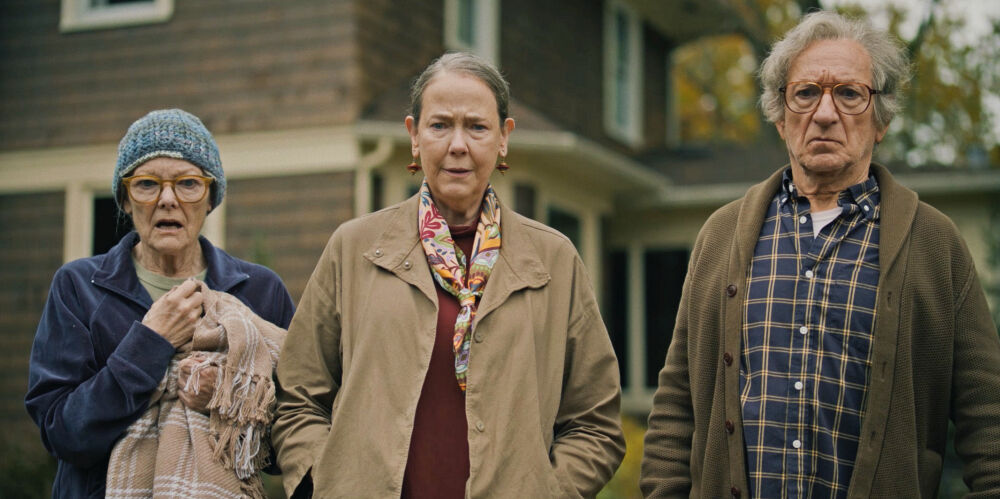

From left: Jane Curtin, Harriet Sansom Harris and Ben Kingsley star in the feel-good film of the year, ‘Jules.’
John Moore is The Denver Gazette’s senior arts journalist. Email him at [email protected]