







CPW reminds people that moose can be dangerous
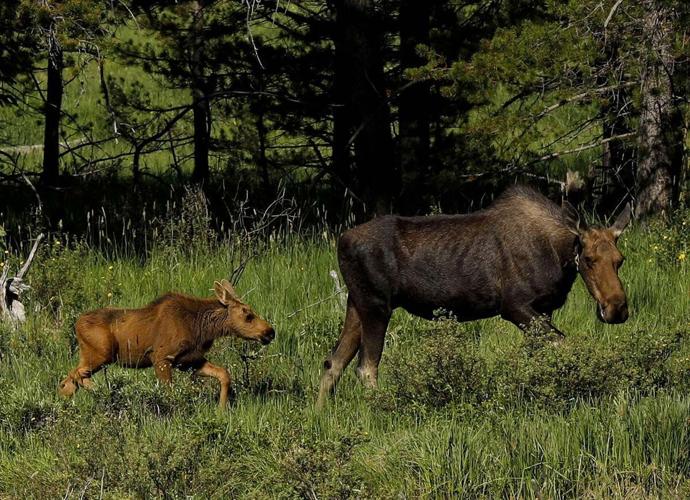
FILE PHOTO: A curious moose calf strolls through a meadow near Lake Irene on the west side of Rocky Mountain National Park on Saturday, July 13, 2019.
Chancey Bush/Gazette
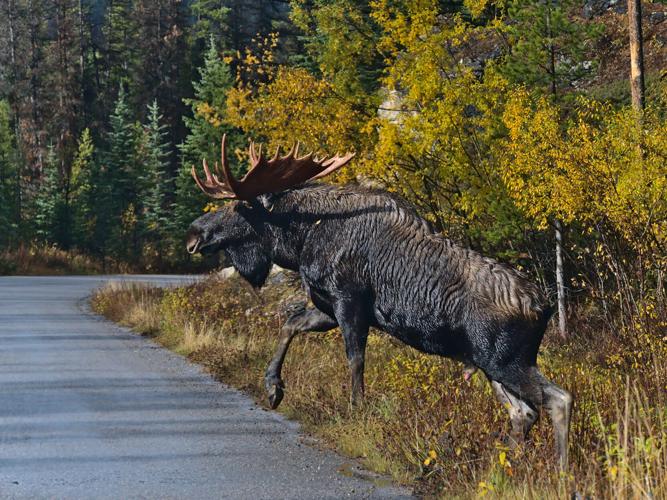
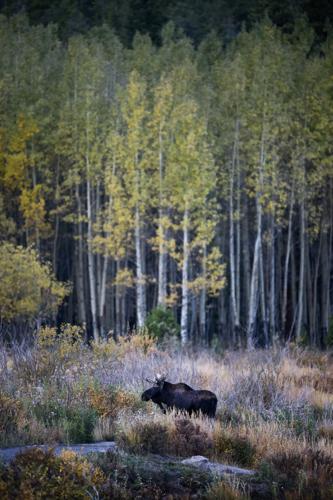
Six potentially deadly encounters with moose in the Fraser and Tabernash area between Jan. 28 and March 7 triggered an advisory by Colorado Parks and Wildlife to help visitors and residents avoid problems.
In one of the encounters, a man walking his two dogs on the Fraser River trail came across a cow moose with calves, according to CPW. The man was charged by the moose, but sustained only minor bruises that didn’t require medical care. His dogs were leashed at the time.
Five other incidents involving aggressive moose were reported between Feb. 17 and March 7 in Tabernash, about four miles north of Fraser.
No human injuries were reported in those incidents, but one dog was killed after being stomped by a moose.
CPW recommends remaining vigilant in order not to surprise a moose and for Fraser trail users to find an alternative route, or different location to walk dogs.
“Moose view dogs as enemies and will sometimes go out of their way to kick at one, even if the dog is on a leash or in a fenced yard. Give moose an extremely wide berth if you have a dog with you and don’t let your dog chase a moose,” according to the Alaska Department of Fish and Game.
Alaska has the nation’s largest population of moose by far — more than 175,000 — and has decades of experience dealing with moose–human interactions.
“If you encounter a moose do not hang around. Leave the area as quickly as possible, giving them space and time to move,” according to the CPW news release. “Do not try to move the moose as it could be dangerous, and it is also considered harassment, which is illegal.”
Avoid approaching moose calves, even if they appear to be alone. Most of the time they are not, and you may place yourself between the mother moose and her calves, which may trigger an attack.
If your dog is unleashed and approaches a moose and, after the moose acts defensively and your dog runs back to you, or you attempt to catch them, you may put yourself at risk of being severely injured, said the release. CPW recommends keeping your dogs leashed in moose habitat.
Wildlife officials also recommend carrying wildlife pepper spray (bear spray) to try and discourage an aggressive moose — or bear.
“If a moose begins to react to your presence, you are too close. Signs of moose aggression include laid back ears, raised hairs on the neck, and licking of the snout,” said the CPW release. “If a moose displays aggressive behavior or begins to charge, run as fast as you can and try to put a large object between you such as a boulder, car or tree. If you are injured, seek medical attention immediately and inform your local CPW office as soon as possible.”
CPW warns skiers that they are skiing in moose territory and may see them on the runs. It’s recommended skiers slowly leave the area if possible and not “hang around with the hopes of getting that viral image or video.”
Colorado has about 3,500 moose today, up from essentially zero in the 1850s, according to a CPW spokesperson. Moose reintroduction began in 1978 with the introduction of 24 male and female moose from Wyoming and Utah into North Park to create breeding and hunting opportunities.
By 2012 there was a breeding population of about 2,300. According to CPW, while moose populations in other states has declined, Colorado’s moose population is growing. All in all, from 1978 through 2010, 259 moose were imported and released in Colorado.
Learn more about moose in Colorado on CPW’s website.