







Former Denver Post Building inching closer to becoming City of Denver property

FILE PHOTO The Denver City Council approved purchasing the former Denver Post Building located at 101 W. Colfax Ave. during a Monday, March 18 meeting.
Dennis Huspeni/Denver Gazette
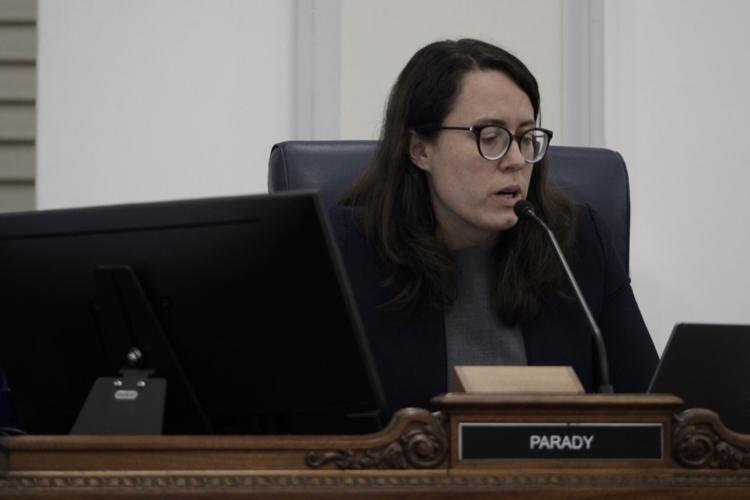

The Denver City Council moved closer to purchasing the former Denver Post Building after approving two measures Monday.
But some councilmembers question the need for the $90-million building in light of potential budget cuts due to the staggering costs of the immigration crisis that’s hit the city in the past year-and-a-half.
City officials, and the City Council, have been discussing the issue since November.
Two bills were ordered published concerning the purchase of the large building in the heart of downtown, 101 W. Colfax Ave. One approves $2 million to cover an escrow on an amount already paid by the city, while the other lets the city’s manager of finance purchase the building — provided the sales price does not exceed $90 million.
Four city council members voted against the second measure, questioning its utility and purpose. At-large Councilwoman Sarah Parady said purchasing the building is unwise given the looming budget cuts city departments will be forced to enact.
“If I saw the urgency of acquiring this building, that might be another matter but I do not see that corresponding urgency,” she said. “The primary drivers of the purchase are requirements from the Denver courts and the Denver DA for additional space. I have analyzed publicly available data and Denver court filings show those needs have lessened over time.”
The purchase of the building is only one aspect, as many rooms will have to be renovated for court use. About 15 rooms in the Denver Post building will be converted for court use at a cost of roughly $2 million each, adding an additional $30 million to the purchase price — though the exact value can’t be known until Denver owns the building outright, city officials told the council.
Some costs can be offset by generating revenue from the building. In the first year, the city estimates it will gain $7.8 million in rent from current occupants through 2029. Past that date, the 635 parking spaces will provide continued income.
The purchase also does nothing to address what Parady called “root causes” of crime. The City Council always appears to choose investing in the “status quo,” planning for a future that looks like the past, she said.
“We have the tools right now to invest in eviction prevention and prevention of criminal filings,” she said. “We should be moving in that direction.”
The purchase of the Denver Post building, and subsequent expansion of Denver’s court capacity, also comes on the heels of a report by the state demographer’s office — which The Denver Gazette was unable to obtain before press time — stating Colorado will become more diverse in coming decades. This raised alarm bells for some council members who believe the courts expansion is ill timed.
“It feels like a dangerous and harmful conclusion to draw that, because of the increase in black and brown residents, we should spend taxpayer taxpayer money planning for more crime in 2024 and beyond,” District 8 Councilwoman Shontel Lewis said. “And if we do predict more crime, wouldn’t the dollars be better spent preventing it?”
Lewis called crime a “condition of poverty” and also worried the purchase would not outright benefit Denver’s taxpayers.
Lewis’ concerns prompted a clarification from Lisa Lumley, Denver’s director of real estate. As the city grows, its court system will need an additional 185,000 square feet of court space by 2040, according to Lumley. This prediction is based solely on population growth.
Lumley cited a courts master plan, which the division of real estate completed alongside the Department of Transportation and Infrastructure (DOTI) and a consultant in 2020. She pushed back against the insinuation that an increasingly diverse Denver is a more crime-riddled Denver in the eyes of the court system.
“I would find it offensive if that’s how we were basing our decisions,” she said. “The courts only referenced the state demographer as it relates to growth across the metro area. It did not call out demographics at all… I would be appalled if we were making our decisions based on thinking that we were targeting certain populations.”
The two measures concerning the Denver Post building were introduced during Monday’s meeting. Measures must appear before the city council twice before they are voted on and adopted. Typically, resolutions and ordinances are adopted in a block vote unless specifically called out by a council member for further discussion or an outright vote.
The matters will appear before the council again on March 18.