







Double homicide at Denver homeless shelter prompts new security measures
Noah Festenstein/Denver Gazette
The double homicide of a man and woman inside a homeless shelter has prompted Denver Mayor Mike Johnston’s administration to launch new protocols aimed at enhancing security.
A review of 911 data involving shootings, drug use, theft or other acts of violence associated with the former DoubleTree hotel at 4040 Quebec St. and within 1,000 meters shows more than 1,200 calls within a three-month period.
That number is the highest among five hotel-turned-shelters for homeless people, according to Department of Public Safety data obtained by The Denver Gazette through a public records request.
In the days following DoubleTree’s grizzly discovery, officials said they are initiating new protocols — both inside and outside the hotel — that affect hundreds of homeless people who moved there under Johnston’s campaign to get them off city streets.
“The safety and wellbeing of our staff, our partner organization’s staff, residents, and community is a top priority,” the mayor’s office said in a statement.
Double homicide at the DoubleTree
Two victims were found dead inside a hotel room at 9:20 p.m. Saturday.
The Denver Police Department is investigating the deaths as a double homicide.
The deaths were not the result of a shooting, said police, who posted a $2,000 reward for anyone who can help lead to a suspect or suspects. Investigators ask those with information about the homicides to contact Metro Denver Crime Stoppers at (720) 913-7867.
The Denver police and the city’s medical examiner have yet to release other details, such as the victims’ identities or their cause of death.
Between August and January, Denver authorities acquired five hotels and converted them into shelters, a key strategy as the Johnston administration moved 1,135 homeless people indoors before 2023 ended.
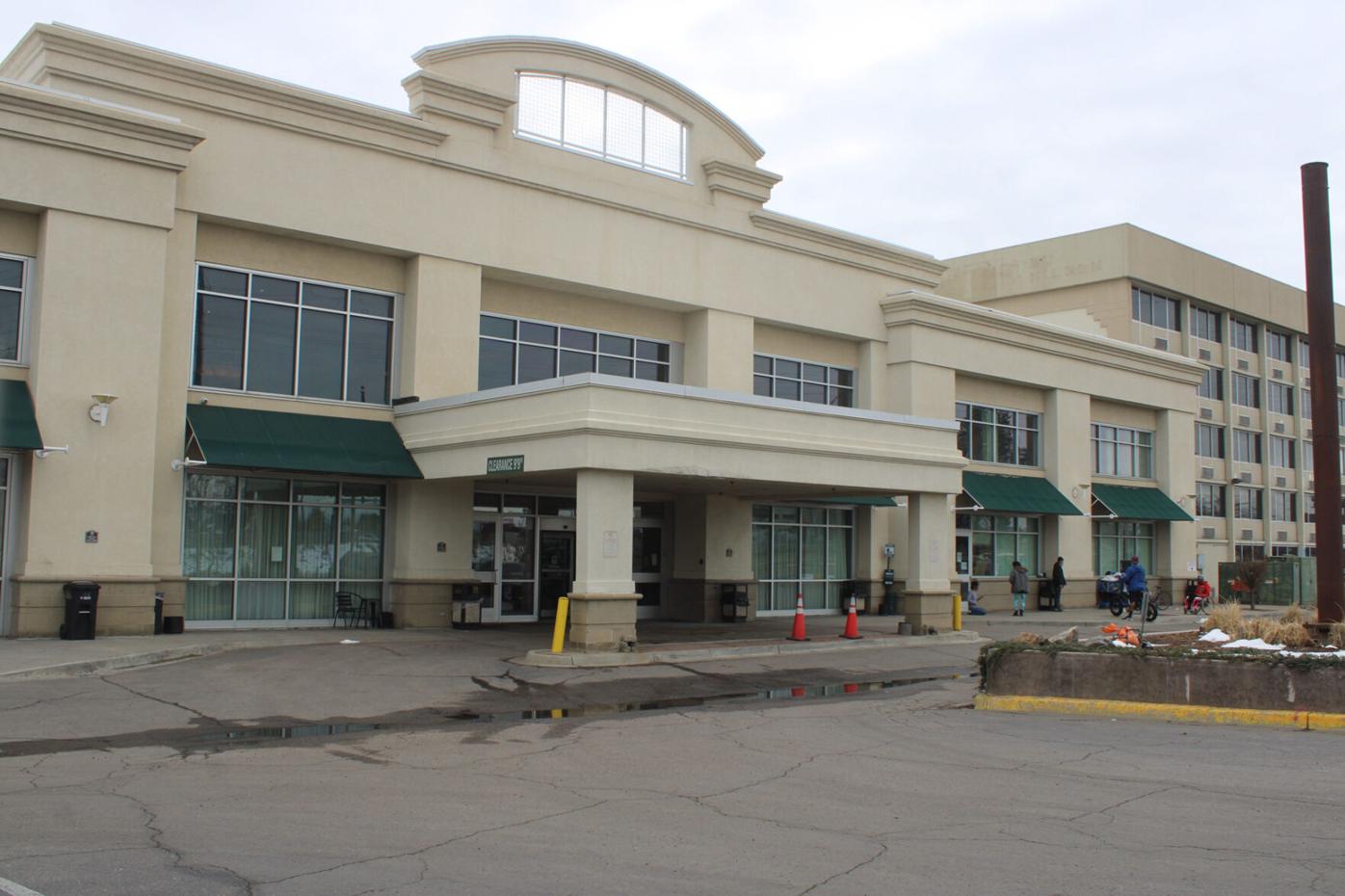
Denver approved the lease-purchase agreement for the DoubleTree hotel for $83,333.33 a month for up to 15 months, with the option to purchase the 289-room hotel for up to $43 million at any time during the lease.
An LLC associated with Rocky Mountain Communities purchased the hotel, located just south of I-70 and nestled in a pocket of open space, for $39 million on Nov. 28, according to property records. The nonprofit is leasing the property to the city and serves as its landlord.
Between Oct. 1 and Jan. 12, the hotel and within 1,000 meters of the area reported 1,212 emergency 911 calls, according to Department of Public Safety data.
The calls included shootings, drug use, theft and other acts of violence.
All told, the DoubleTree hotel area saw 417 more 911 calls in three months than the next housing site at 12033 E. 38th Ave., located four miles west of the DoubleTree.
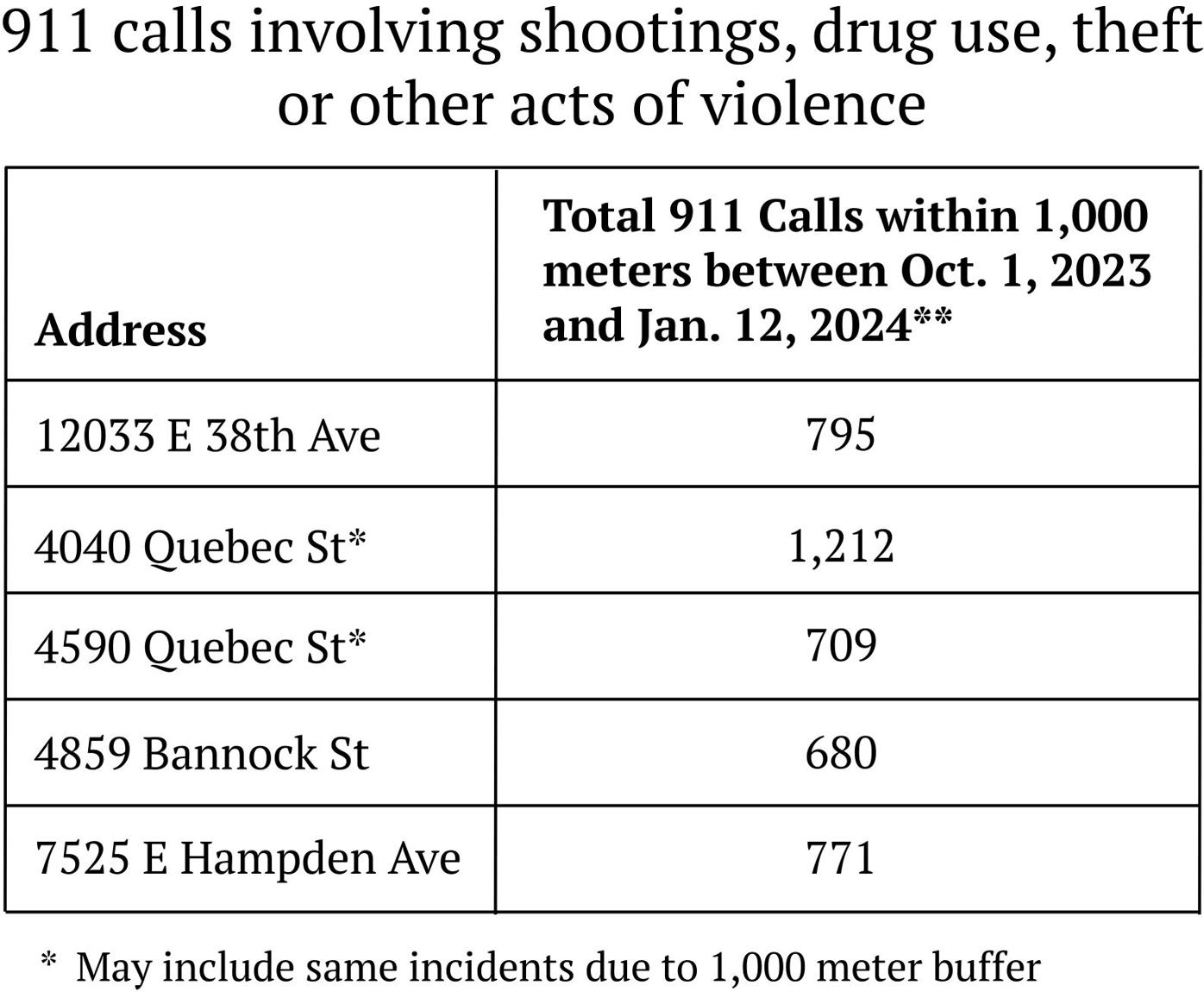
911 calls involving shootings, drug use, theft or other acts of violence surround five temporary homeless housing hotel sites. Numbers are according to Department of Public Safety data obtained by the Denver Gazette through a Criminal Justice Acts Request.
According to the Department of Public Safety


911 calls involving shootings, drug use, theft or other acts of violence surround five temporary homeless housing hotel sites. Numbers are according to Department of Public Safety data obtained by the Denver Gazette through a Criminal Justice Acts Request.
Critics have long feared that turning hotels into housing units would attract crime and violence. Residents also feared a decrease in nearby property values.
Johnston’s administration had picked the spot as it was available for purchase last year. As envisioned, it would be a confined area where homeless people can explore permanent housing opportunities.
The acquisitions have been expensive.
Last year, Johnston’s administration spent $45 million to house 1,135 homeless people. The mayor expects to spend $50 million this year to house another 1,000 homeless people.
New protocols
Following the homicide, the mayor’s office said it is imposing new protocols at the 289-room shelter.
Notably, the hotel and surrounding area expects to see an increase in police presence, administration oversight and staffing, according to the mayor’s office.
In addition, the hotel will also begin a badging system for access by residents and staff.
The administration said it’s part of a “seven-step” plan with “immediate actions and long-term solutions that will help sustain the continued success of the effort surrounding homelessness.”
Already, more staffers, physical security enhancements and security guards on-site at the DoubleTree were palpable on Tuesday. It’s not clear what the new protocols mean in added costs.
Cole Chandler, the mayor’s senior homeless adviser, has spent the last two days at the DoubleTree site to set up the new protocols.
“Being present at our sites gives me the opportunity to set the program up for long term sustainability and success,” Chandler told The Denver Gazette in a statement on Tuesday.
The priority, he added, is “ensuring that everyone on the streets of Denver has access to a home, that the sites operate safely and efficiently, and people are graduating from these sites into permanent housing.”
In one of the changes following this weekend, Chandler will take a “hands-on leadership role” at the DoubleTree, the mayor’s office said, adding he will cooperate with the site’s service provider, The Salvation Army.
The nonprofit operates the DoubleTree shelter under a $10 million contract with Denver.
Additionally, Chandler will be responsible for “oversight of all unsheltered response and outreach efforts including ensuring contracted outcomes at the All In Mile High sites,” the mayor’s office said, noting that Chandler is now the senior advisor and deputy director of the All In Mile High initiative.
“This shift will help prioritize an organizational structure that can sustain the long-term success of the efforts surrounding unsheltered homelessness,” the mayor’s office added.