







Sarah Plastino, chief of Denver’s immigrant response: ‘We want this to work for everybody’

Sarah Plastino sees her job as the director of the Denver’s “Newcomer Program” as a delicate balancing act.
In a media Q&A with Plastino on Wednesday, the Philadelphia native said her goal in taking the position will be to strike a balance between an immigration empathetic and sustainable response. Plastino’s salary is $175,000.
“Basically, the philosophy is compassion, financial responsibility,” Plastino said. “Practicalities, right? We want this to work for everybody.”
That will be no easy task.
In the 15 months since nearly 100 immigrants — mostly from South and Central America — were dropped off at Union Station and left to wander downtown in the cold, Denver has welcomed nearly 40,000 people who illegally crossed America’s southern border.
While city officials are not tracking those that stay in Denver, the number of bus, plane and train tickets purchased suggest roughly half are.

Early in the crisis, city leaders decided that Denver would pay to temporarily house, feed and transport immigrants to their final U.S. destination.
That decision has come at a tremendous cost to taxpayers: more than $61 million and counting.
Denver taxpayers are primarily shouldering those costs.
To date, the city has received $5.1 million from the state and federal government. Officials are also optimistic that the city will potentially receive $12.2 million in additional federal reimbursements.

While the bulk of the expense is associated with sheltering the immigrants, or about 36%, roughly a third of the costs are related to staff payroll, said Jon Ewing, a Denver Human Services spokesperson.
At the height of the latest migration wave in January, Mayor Mike Johnston projected that the response costs this year alone could reach $180 million and directed department heads to find 10% to 15% in cuts. Already, the city has implemented service cuts to the Department of Motor Vehicles and Parks & Recreation

By scaling back on the number of shelters, the city said it will instead spend $120 million.
More cuts are expected.
The “Newcomer Program” — the Johnston administration is calling immigrants “newcomers” — falls under the Department of Denver Human Services, which has been managing the humanitarian response since the city lifted its emergency declarations last year.
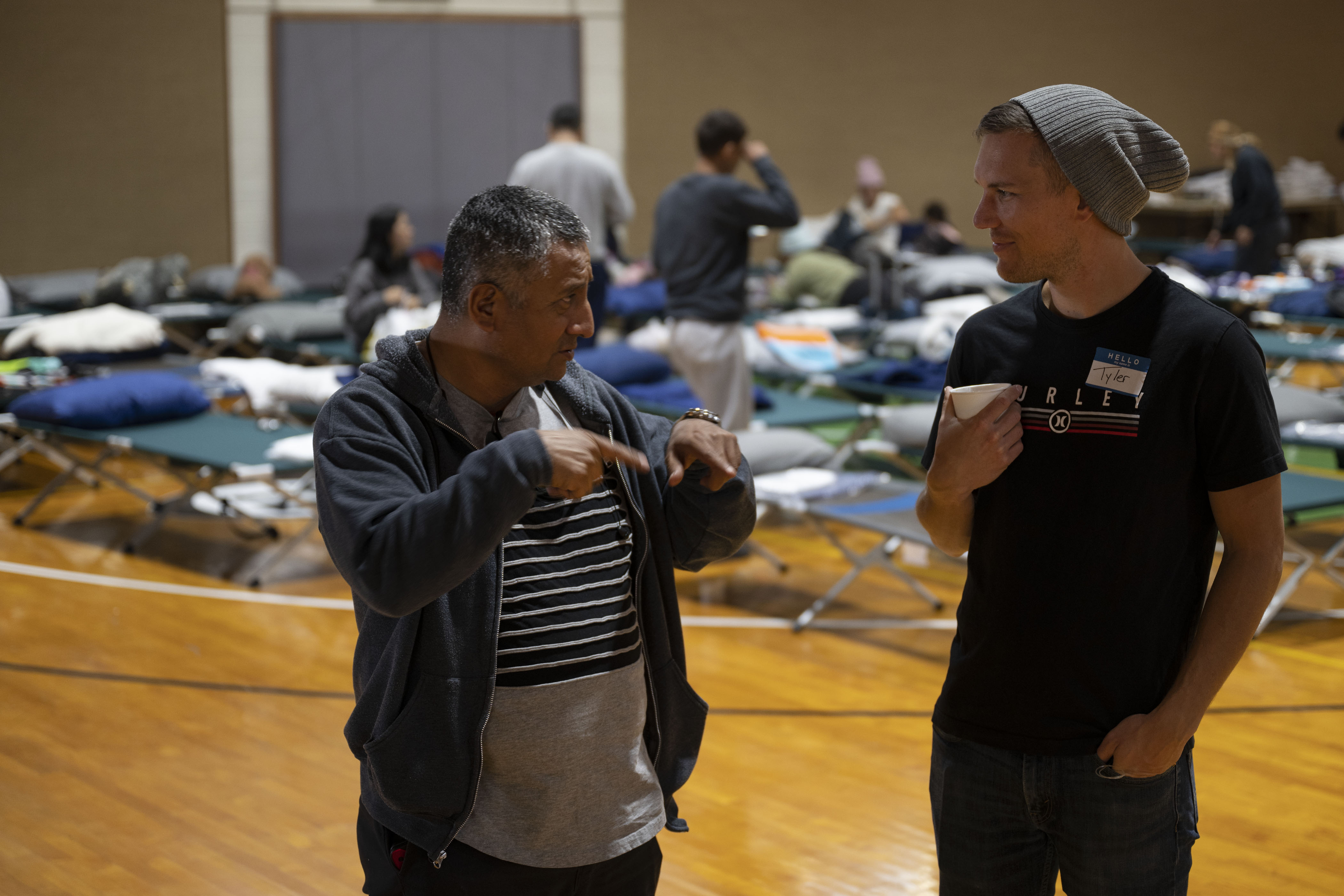
Plastino is a human rights attorney who has previously lived on the U.S.-Mexico border and worked at the Rocky Mountain Immigrant Advocacy Network to provide free legal representation to low-income immigrants facing deportation at the Aurora Immigration and Customs Enforcement Center (ICE).
Johnston announced her appointment last month.
In her role, Plastino is expected to prioritize the city’s short and long-term response as well as work to integrate these new immigrants by collaborating with various city departments and community organizations.
On Wednesday, Plastino said she was still working on the long-term plan requested by the Denver City Council members who have expressed a desire to pivot away from an emergency response to a long-term strategy that allows the city to expand and contract based on immigration patterns.
“Nobody wants large cuts that cause pain,” Plastino said.
Plastino added: “We can’t pick our emergencies. We can’t control people arriving to our city. We need to make sure that everybody’s safe and at the same time make sure we’re good stewards of taxpayer dollars.”