







Sec. Frank Kendall calls proposed Space National Guard the worst option for space-focused guard units

Air Force Secretary Frank Kendall speaks at the 39th Space Foundation Space Symposium at The Broadmoor Hotel, Wednesday, April 10, 2024, in Colorado Springs, Colo. (Parker Seibold, The Gazette)
Parker Seibold
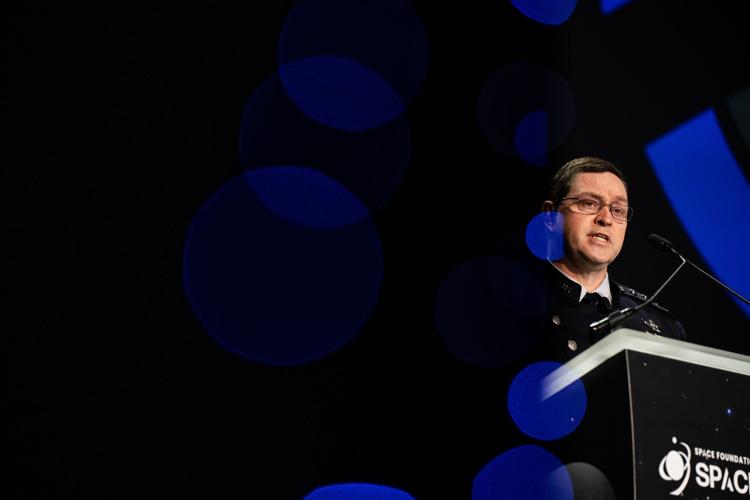
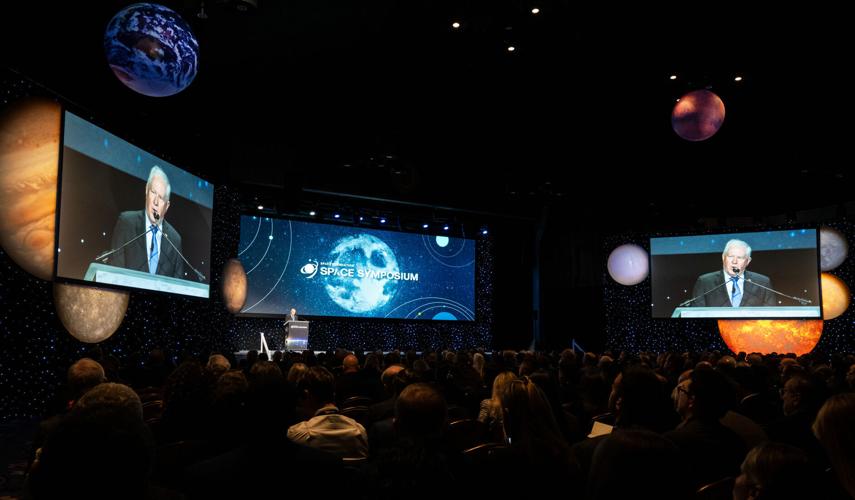
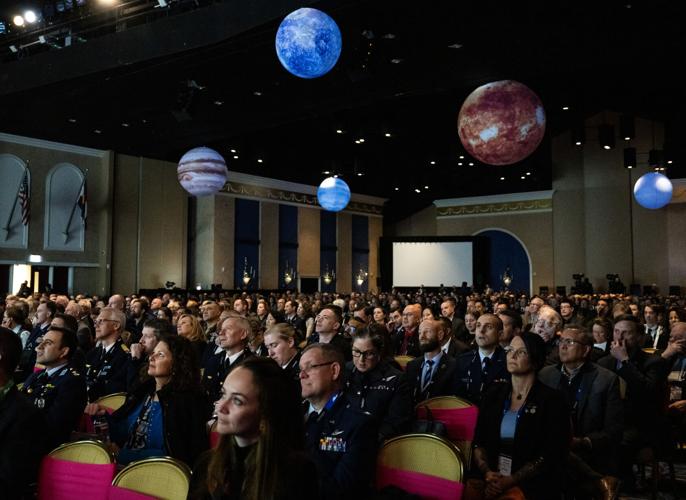

Creating a Space National Guard is likely the worst option for 14 space-focused National Guard units, Air Force Secretary Frank Kendall said Wednesday at Space Symposium.
Kendall address questions about the future of the guard units that he called an artifact of creating a Space Force. The units, including seven in Colorado, were left behind in the Air National Guard when space-focused active duty units moved into the new military branch.
Space Command announces new space wargaming lab
The fight over the future of space-focused Air National Guard units is receiving much more political attention than it deserves, he said. The impact of transferring guardsman into the active duty Space Force is “negligible” because in any of the seven states with space-focused National Guard units the units represent “at most 2% of the guard,” he said.
Recently, the Department of Defense introduced legislation to transfer space-focused Air National Guard units into the active duty Space Force without the consent of governors who oversee the units.
Sen. Marco Rubio (R.-Fla.) has introduced competing legislation that would create a Space National Guard that would allow the units to continue operating in the same way.
Colorado Springs electronics manufacturer adding 100 jobs as part of company expansion
Colorado Gov. Jared Polis sent a letter to the Secretary of Defense Lloyd Austin last week protesting the transfer of units without the consent of governors.
“I cannot stand idly by as the servicemembers I am charged with leading are faced with the decision to either leave military service, or serve in a manner that they did not originally agree to,” Polis wrote. “We know that a significant majority of Air National Guard space operators will not transfer to the U.S. Space Force, putting both their military career and national security at risk.”
A poll of guardsmen showed that 60% to 86% of about 1,000 guardsman working in space would leave rather than transfer, leaving a major gap in expertise, said Parker White, spokesman for the Colorado agency, in a previous interview.
Kendall said he was not terribly concerned about the number of people who might leave the guard, in part, because the Space Force has not been able to outline the options for guardsmen yet.
“They are not going to see much change as I see it,” Kendall said.
The Space Force will allow guardians to work part-time, a model that’s been approved but has not been implemented.
Space-focused Air National Guard reservists in the 310th Space Wing in Colorado Springs must transfer into the Space Force under this model.
Right now, the Space Force is training guardsmen and that work can be formalized more if they are absorbed into the Space Force, he said.
“The Space Force is great opportunity for these people,” he said.
Kendall noted that after four years he would like to see the issue resolved.
Congress asked the DOD to study the options for the units, including leaving the units where they are, creating a Space National Guard and moving them into the Space Force.
Kendall said that report shows moving the units is the best option and the worst option is a new Space National Guard because of the added administration. The report has not been publicly released.
Proponents of a proposed Space National Guard argue additional administration isn’t necessary.
Gen. Chance Saltzman, chief of space operations, said a transfer of the space-focused units would be phased to minimize the risk to missions.
The National Guard Bureau estimates it would take up to nine years and as much as $1 billion to replace those who plan to quit, according to a news release from the National Guard Association.