Ball Arena behind the scenes: How Avalanche, Nuggets share building in postseason
Conversion crew plays real-life Tetris to accommodate for deep NHL, NBA playoff runs

Ball Arena never sleeps.
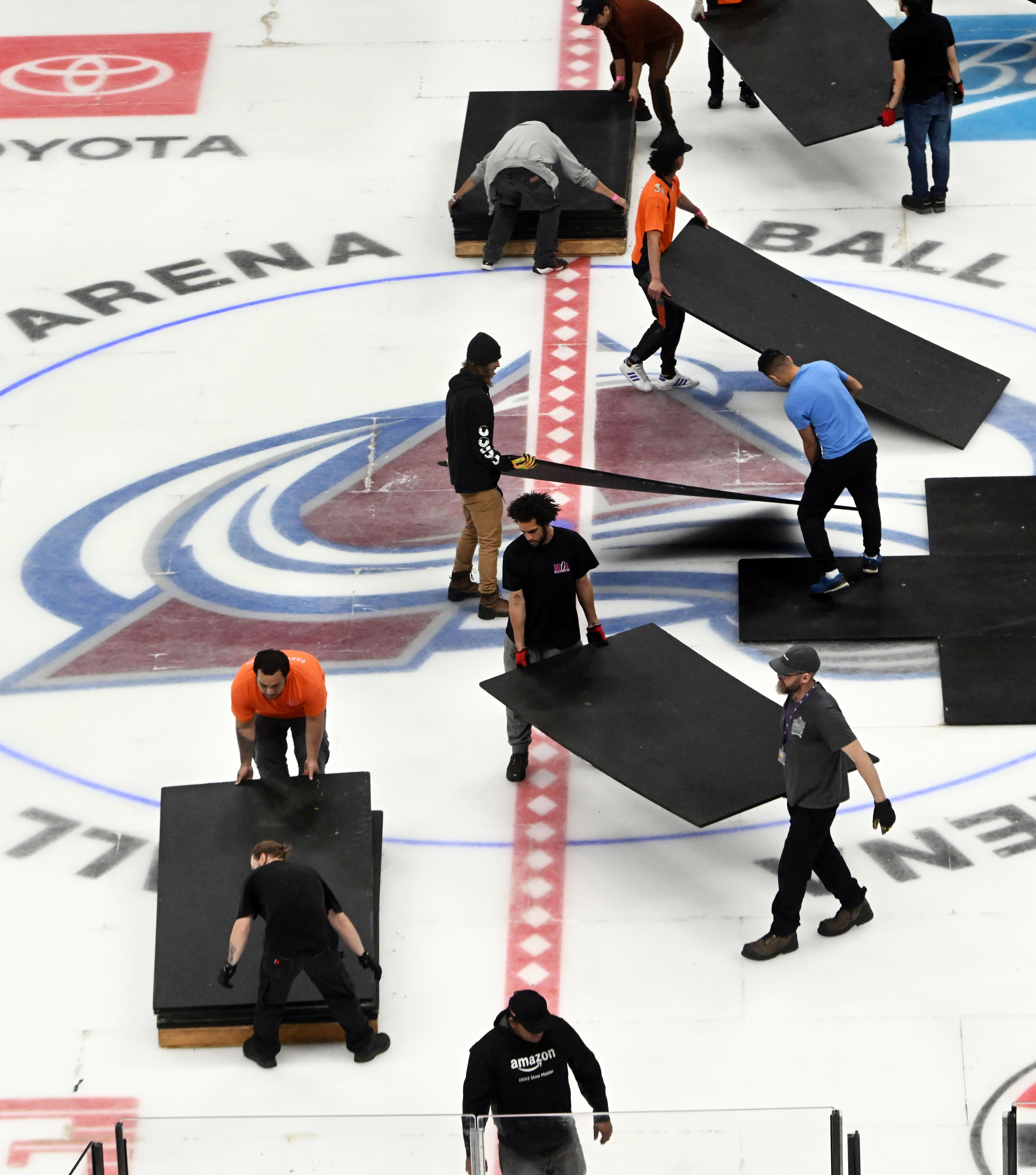
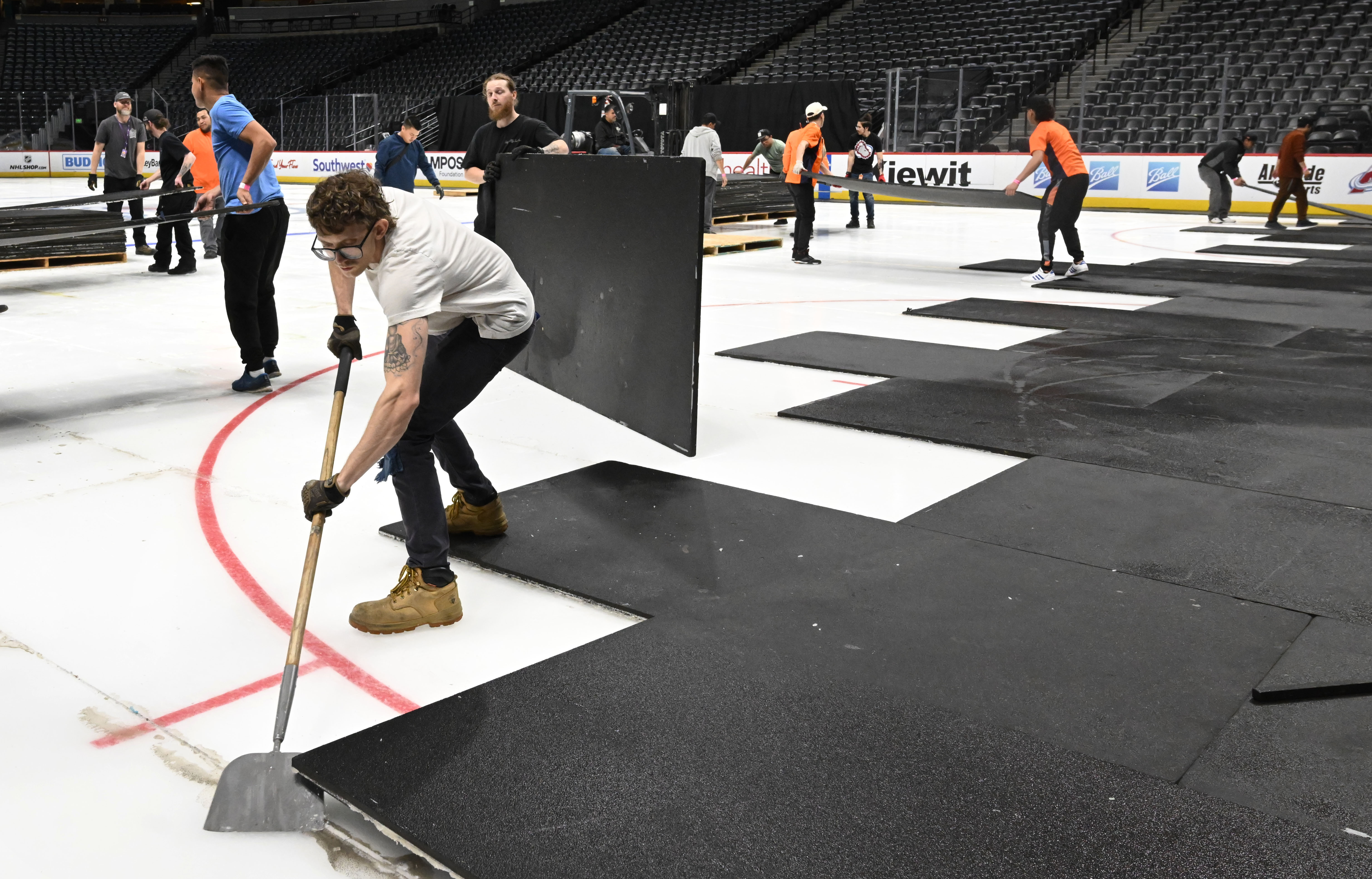
It’s 1:27 a.m. following a Nuggets home victory when the first of 600 insulated black floor tiles beneath the court are pulled to reveal Avalanche ice. A conversion crew of 30 people spent the past 3 hours playing real-life Tetris to accommodate NBA and NHL games played on consecutive nights in late March. Landon Faber, 23, in his third year on the crew, spills their secret ingredient.
“An ungodly amount of caffeine,” Faber said. “Wow.”
The Avs and Nuggets enter their respective playoffs Saturday and Sunday with championship expectations. Ball Arena could be jumping — night after night — all the way into June. It takes a dedicated, thankless, hard-working, and mostly nocturnal workforce to make it happen.
“I would put our crew up against anyone in the nation,” said Matt Mennona, senior director of conversion at Ball Arena. “I think we’re one of the best.”
“It’s an emotional rollercoaster”
Basketball-to-hockey conversion starts one hour after the final buzzer.
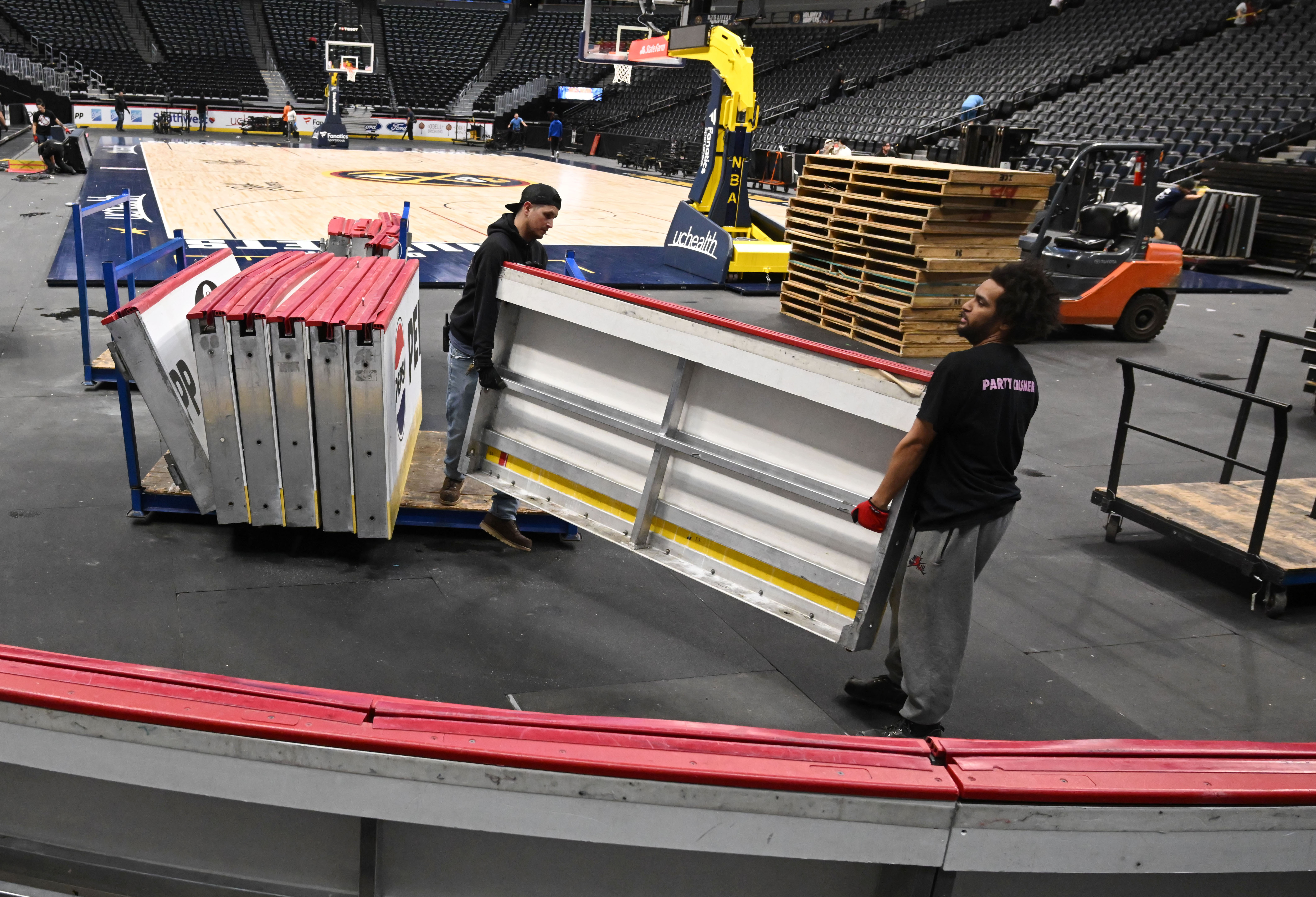
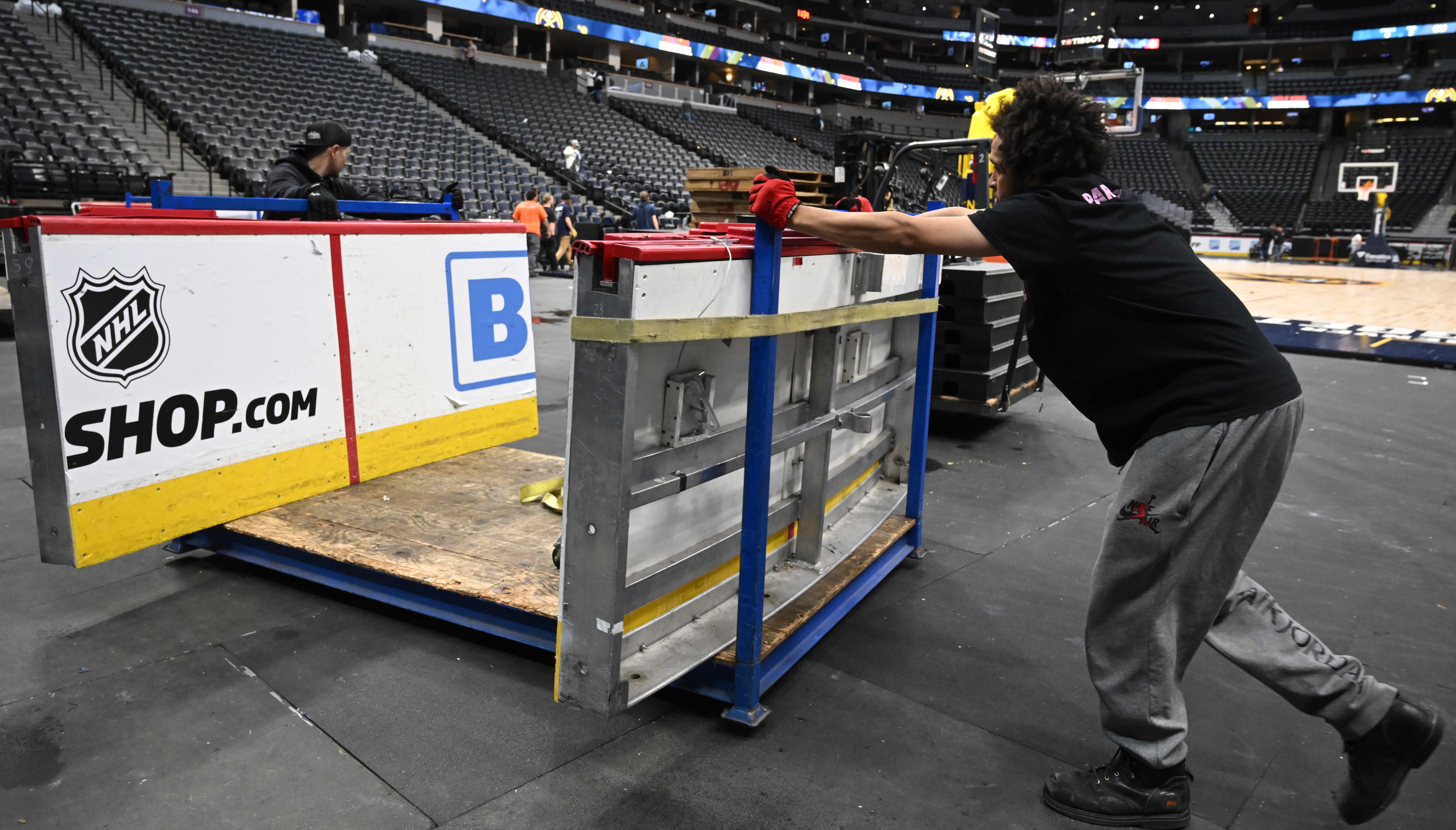
Temporary seating decks behind each baseline are disassembled to create space for end boards. The side boards — hidden in plain sight — are beneath a black sheet that separates fans from the floor. Additional seating is removed to make team benches, penalty boxes and player entrance tunnels.
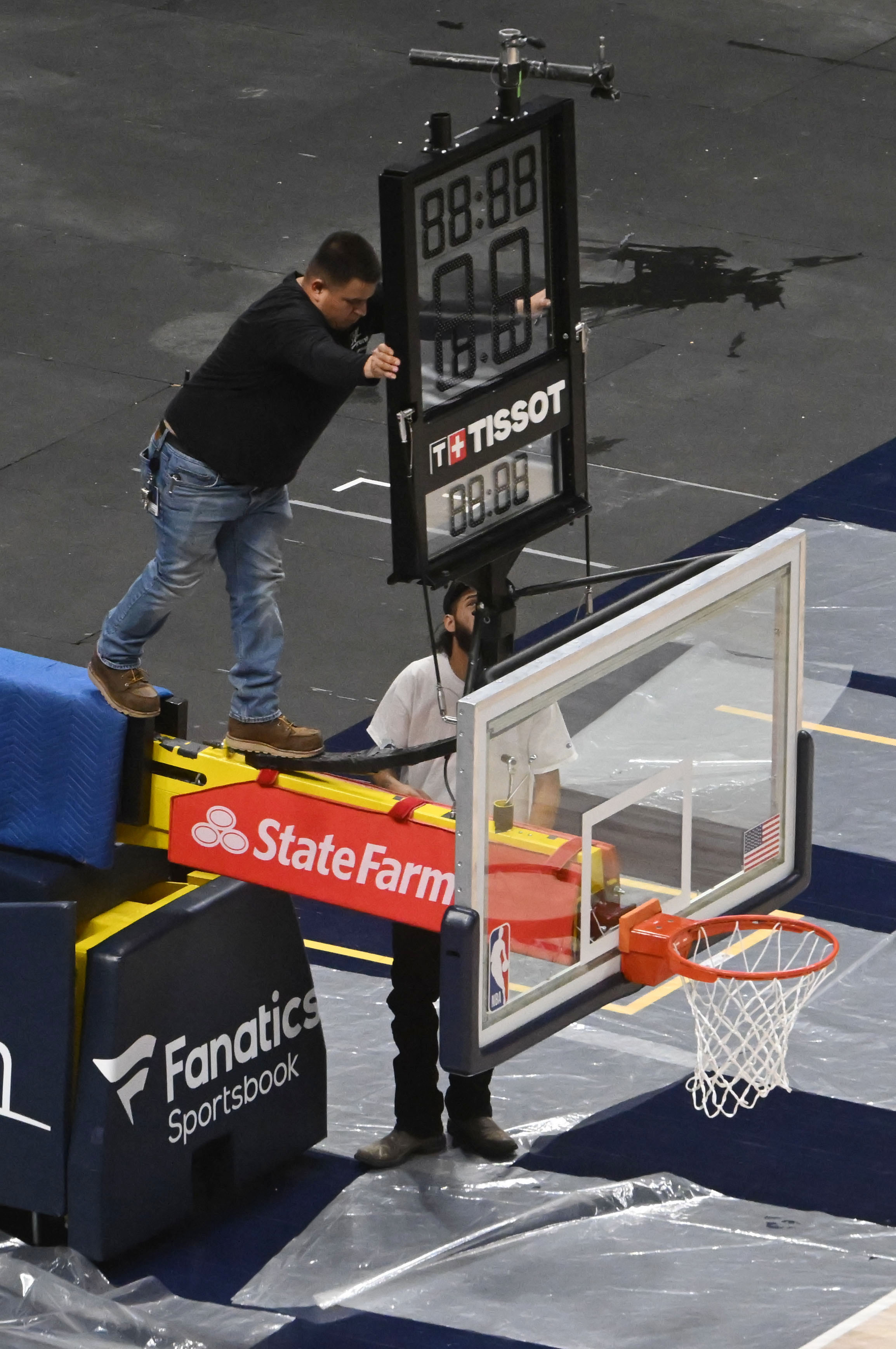
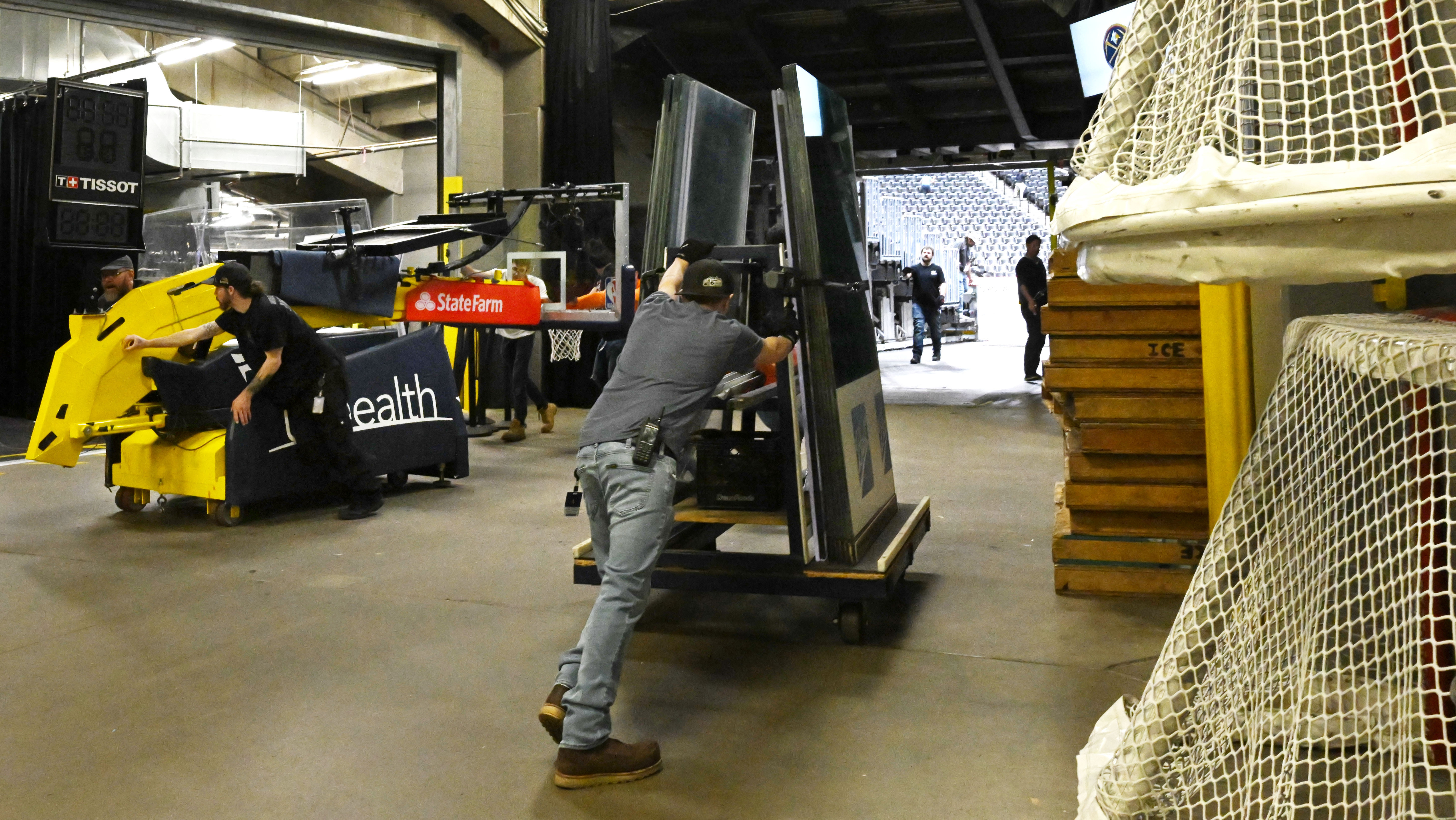
Court prepping begins at 11:45 p.m. with clear plastic sheets laid out in a checkered pattern over 233 sections of hardwood. A large metal bar is used to unhook pieces and drag them apart. The sections are manually stacked in twos, with plastic in between, and then collected by forklift. The court is stored away in about one hour when the first of two basketball hoops rolls off the floor.
“It definitely takes a lot of effort and just picking up this court itself takes a lot of work,” Faber said. “On top of that, we’ve got to throw in walls over here. We’ve got to make sure they’re all straight. We can’t have bad (puck) bounces that hurt the team.”
Proceed with caution. Here comes the plexiglass.
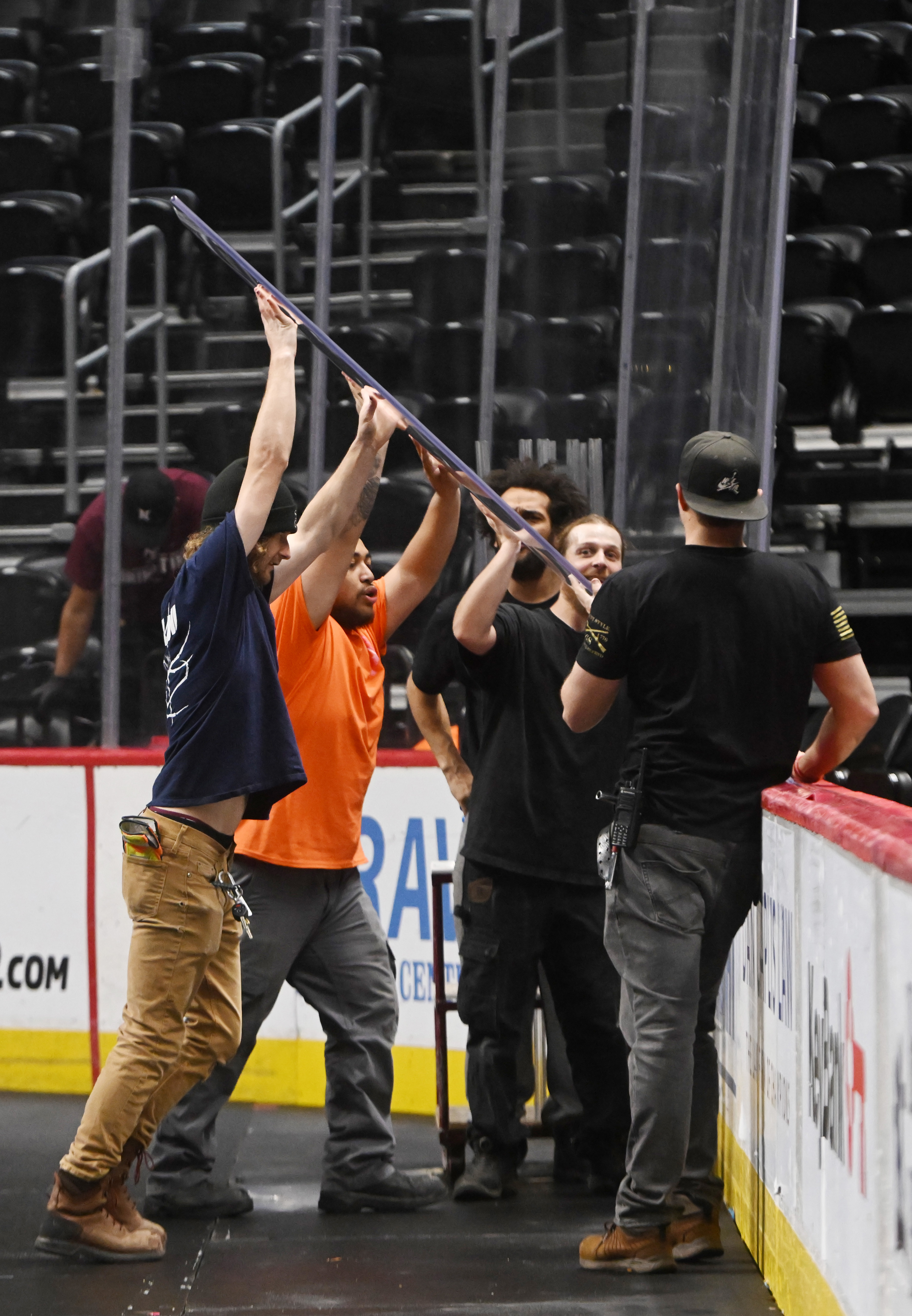
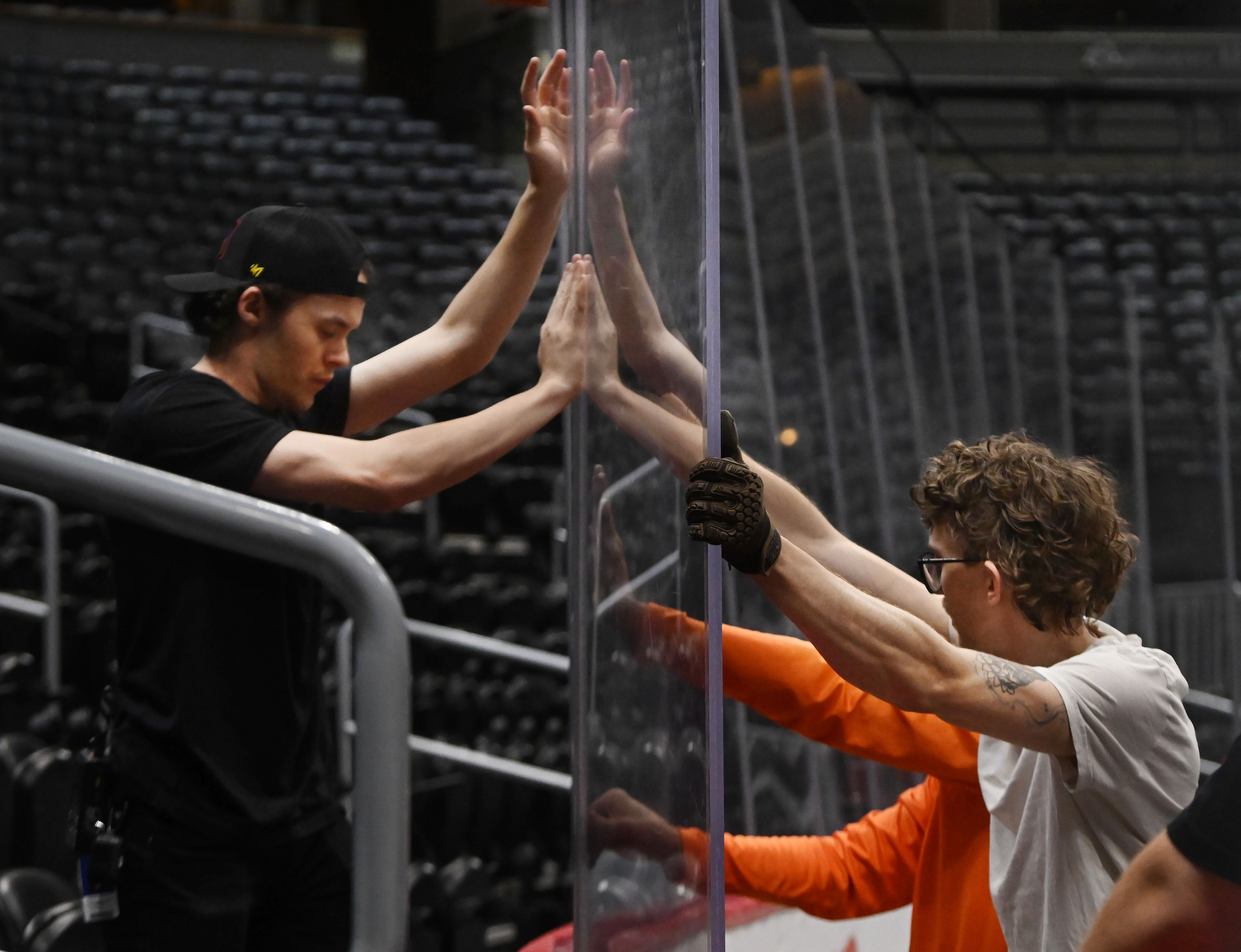
Crew members dolly it onto the floor around 12:45 a.m., manually lift each piece in teams, and set them into grooves atop the boards. Heavier glass behind player benches and the penalty box is hoisted by machine and placed with the help of large suction cups. Protective netting drops from the rafters and is attached to the glass.
The final step? Removing those 600 insulated black tiles protecting the ice. But that’s not all.
The conversion team is also responsible for in-game fixes — like broken glass or a malfunctioning shot clock — with speed and precision. Mennona, the conversion director, previously worked on the crew and replaced glass during an Avalanche game. The home crowd roared.
“It’s quite the adrenaline rush after everything is completed. It’s an emotional roller coaster. But we practice these things to make sure that we can get everything done,” Mennona said. “We’re very prideful that we’ve been able to accomplish those things without holding up the game.”
“Rinse, dry, repeat”
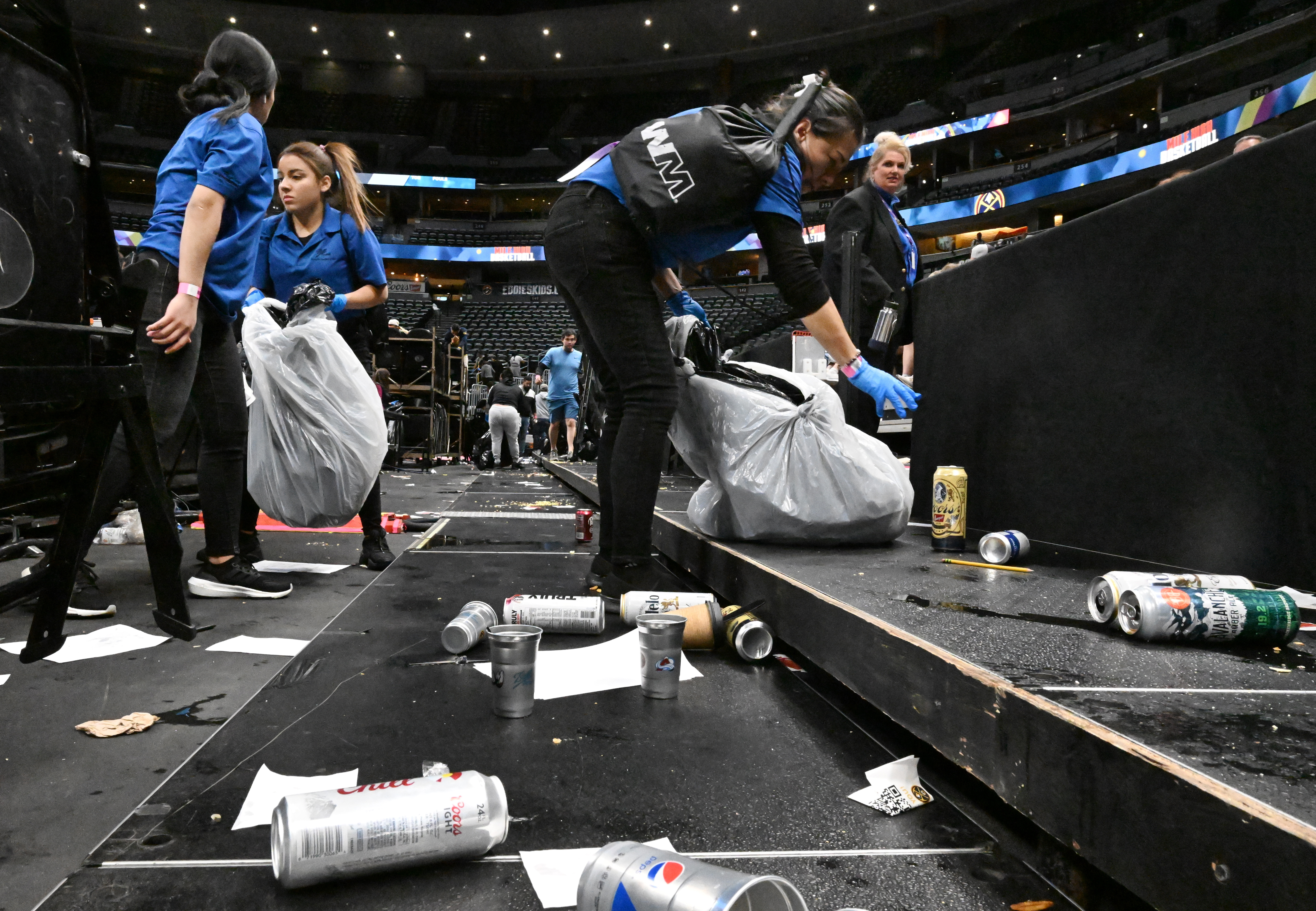
Imagine the empty cups, leftover food, spilled drinks, and general mess created from a Nuggets or Avalanche playoff game — with 18,000-plus in attendance at Ball Arena.
Then imagine picking it all up.
Premier Facility Services (PFS) is a Centennial-based company contracted with janitorial services at Ball Arena on a round-the-clock basis. Matt Steinhart, PFS general manager, said it takes roughly 70 employees split between three shifts to clean the entire building on a changeover between Avalanche and Nuggets playoff games.
“We tell them thank you all the time. I love our staff,” Steinhart said. “They are the greatest people that we have. It’s just kind of hidden. Everyone just shows up the next day and the building is clean. My seat is clean. You just kind of expect it. And that’s great. … They do a lot of stuff behind the scenes that nobody sees.”
The first step from the event crew is collecting aluminum cups and cans for recycling after the game. The night crew arrives next with a deep clean of the entire arena. They’re sweeping, mopping and spot scrubbing each section well past midnight. The morning crew will finish the job later with a final clean before fans eventually flood back into Ball Arena.
“Then it just repeats if we’re on that stretch like we’ve been on,” Steinhart said. “Rinse, dry, repeat. It’s every night.”
Cleaning, maintenance, and security teams are Ball Arena’s late-night heartbeat. Some crew members have worked there over many years, going back to the Pepsi Center era (1999-2019), with connections to players and staff. They keep the building active almost 24 hours per day.
“I’ve gotten to know some of the guys, like some of the cleaning staff and some of the maintenance guys that I’ve run into,” Avalanche coach Jared Bednar said. “We usually don’t see the changeover guys as much. … It’s pretty impressive what they’re able to do in a short amount of time to get the building set.”
“It’s a great place to play”
Ball Arena’s transformation goes beyond sports.
Since the start of 2024, the building has hosted 64 different events, including six music concerts. The Kroenke-owned Colorado Mammoth (National Lacrosse League) also call Ball Arena home. The same conversion crew handles it all.
“We spend more time here than we do at home,” Faber said. “It’s definitely a lot. But it’s fun and enjoyable. A lot of us here are probably closer with each other than we are with our own families.”
The collective work of staff — from custodians to ice engineers — is appreciated.
“I’m sure the Nuggets are really happy with the conditions of their court. We’re certainly happy with the condition of our ice,” Bednar said. “It’s a great place to play.”
Nuggets coach Michael Malone added: “There’s a lot of hard work that no one ever sees, not just those people, but throughout the entire organization. We are very appreciative of their hard work and commitment to helping us out in anyway.”
At the 2023 NBA Finals, when the Nuggets won Game 5 at Ball Arena to clinch a title, the conversion crew built a stage at center court for the trophy presentation. They shared in the celebration.
“When you get to experience winning a championship last year at home and building stages for all the players to come out and stand on, it’s very rewarding. Like all your hard work paid off,” Mennona said. “Some of our guys have been here for 20 years. To have that moment and celebrate with those guys was probably one of the best days of my life, to be honest with you.”