







Rare ‘Corpse Flower’ poised to bloom for first time at northern Colorado university
John Eisele/Colorado State University
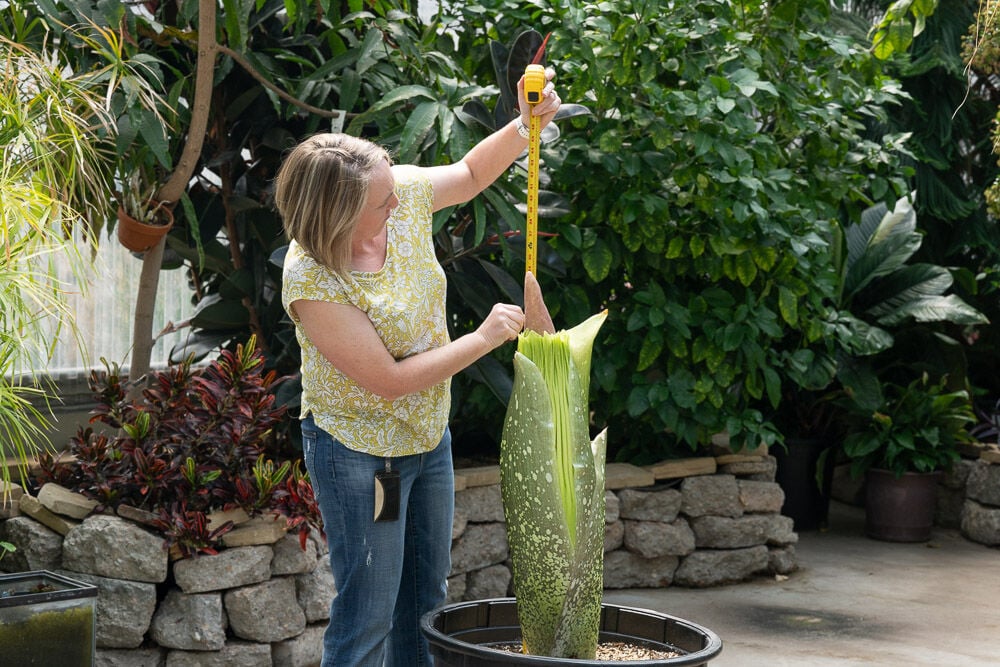
A corpse flower named Cosmo at Colorado State University in Fort Collins, Colorado — a large Amorphophallus titanum in College of Agricultural Sciences’ Conservatory since 2016 — is poised to bloom for the first it its life sometime around Memorial Day weekend.
Cosmo the corpse flower at Colorado State University is expected to bloom for the first time this Memorial Day weekend.When the rare bloom happens, Cosmo will emit a putrid odor that has been compared to the smell of decaying flesh. This will become less pronounced after the first 12-24 hours, and the bloom itself will only last for around two to three days.After that, Cosmo the corpse flower won’t bloom again for another three to five years.Public viewing will be held from 9 a.m. to 3 p.m. each day the flower is in bloom. Learn how to see the corpse flower on CSU’s campus:https://col.st/qYfLsWhat's a corpse flower? The corpse flower is the largest unbranched inflorescence (or collection of flowers acting as one) in the plant kingdom. They can grow up to 8 feet tall; and during bloom, their corpse-like smell lures pollinators like carrion beetles and flies.The corpse flower is native to Sumatra, Indonesia, and there are estimated to be fewer than 1,000 individual specimens in the wild, according to the U.S. Botanic Garden.Numerous botanical gardens and universities like CSU have begun cultivating corpse flowers to preserve its genetics and learn more about how these enigmatic plants thrive.CSU’s Plant Growth Facilities Conservatory is located in a greenhouse on the east end of campus. It’s a key piece of the network of 11 Agricultural Experiment Stations scattered across the state, and the starting point for research around vital Colorado crops like corn, hemp, sorghum and wheat.
Colorado State University
Colorado State University Plant Growth Facilities Manager Tammy Brenner brought back the ‘putrid smelling’ flower from a conference seven years ago and its stinky bloom is about to give viewers a sight for ‘smelly eyes.’
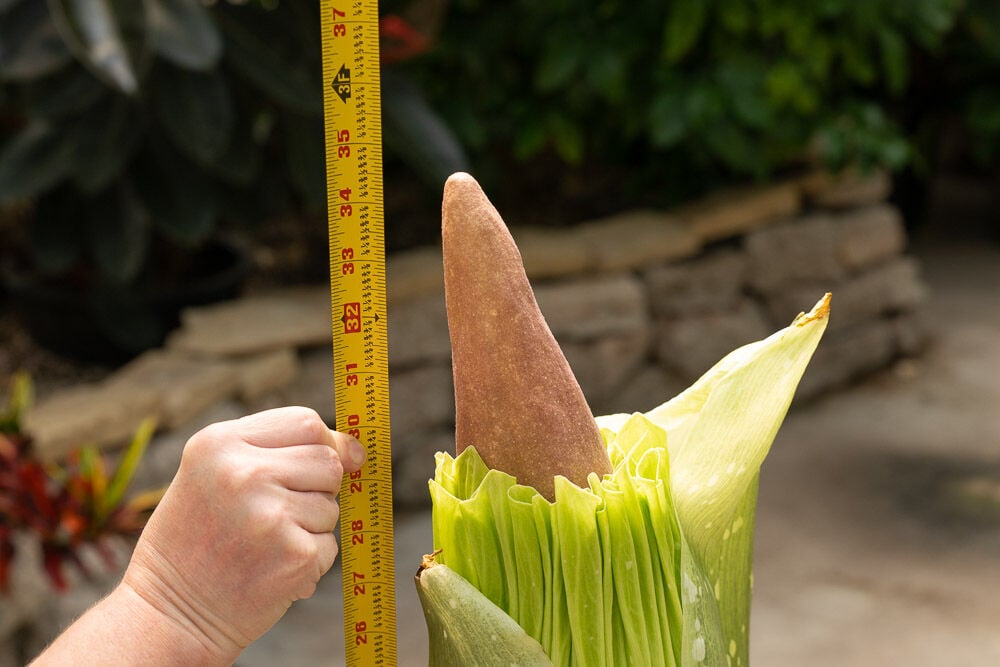
Tammy Brenner, Plant Growth Facility Manager, measures "Cosmo," an 8-year old Corpse Flower (Amorphophallus Titanum) that is about to bloom in the Plant Growth Facility Conservatory. May 16, 2024.
John Eisele/Colorado State University


Tammy Brenner, Plant Growth Facility Manager, measures “Cosmo,” an 8-year old Corpse Flower (Amorphophallus Titanum) that is about to bloom in the Plant Growth Facility Conservatory. May 16, 2024.
“Cosmo came out of dormancy around three weeks ago, and we didn’t expect anything exciting,” Brenner said. “But then two weeks ago, it started looking a little bit more full, a little bit more plump. It started growing and shooting out stalks, and we realized something really big was about to happen.”
Cosmo grew more than five inches during the weekend of May 18-19, and Brenner has been in contact with colleagues from across the country for advice about what to expect.
“All signs point to a bloom sometime around Saturday although the exact date isn’t certain,” Brenner said.
When the bloom does happen, Cosmo will emit a putrid odor that has been compared to the smell of decaying flesh. This will become less pronounced after the first 12-24 hours, and the bloom itself will only last for around two to three days.
After that, Cosmo the corpse flower won’t bloom again for another three to five years.
“This is a rare occasion and a big deal because it will be the first bloom for the corpse flower here at CSU,” Brenner said.
What is a corpse flower, and why does CSU have one?
The corpse flower, or Amorphophallus titanum (Titan Arum), is the largest unbranched inflorescence (or collection of flowers acting as one) in the plant kingdom. They can grow up to eight feet tall, and during bloom, their smell lures pollinators like carrion beetles and flies.
The corpse flower is native to Sumatra, Indonesia, and there are estimated to be fewer than 1,000 individual specimens in the wild, according to the U.S. Botanic Garden.
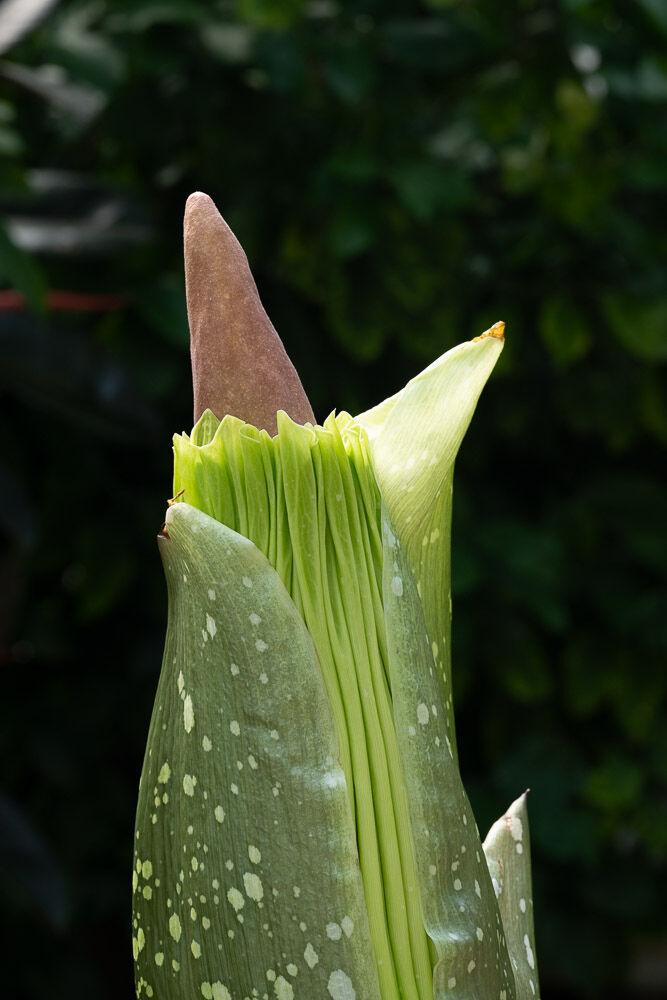
Tammy Brenner, Plant Growth Facility Manager, measures "Cosmo," an 8-year old Corpse Flower (Amorphophallus Titanum) that is about to bloom in the Plant Growth Facility Conservatory. May 16, 2024.
John Eisele/Colorado State University


Tammy Brenner, Plant Growth Facility Manager, measures “Cosmo,” an 8-year old Corpse Flower (Amorphophallus Titanum) that is about to bloom in the Plant Growth Facility Conservatory. May 16, 2024.
Numerous botanical gardens and universities like CSU have begun cultivating corpse flowers to preserve its genetics and learn more about how these enigmatic plants thrive.
Brenner received Cosmo during a plant swap at the annual Association of Educator and Greenhouse Research Curators conference. Cosmo’s “parents,” Maudine and Woody, both came from Ohio State University and were “born” on May 24, 2013.
Brenner said life was fairly routine during Cosmo’s first few years at CSU. Throughout the year, the corpse flower produces a giant stem-like structure and a leaf, but goes dormant in the fall when students return to campus from summer break.
Brenner expects people from around the community to pay Cosmo a visit while he’s in full bloom.
Other corpse flower blooms at places like the Denver Botanic Gardens have attracted large crowds, and the conservatory plans to open its doors for public viewing.
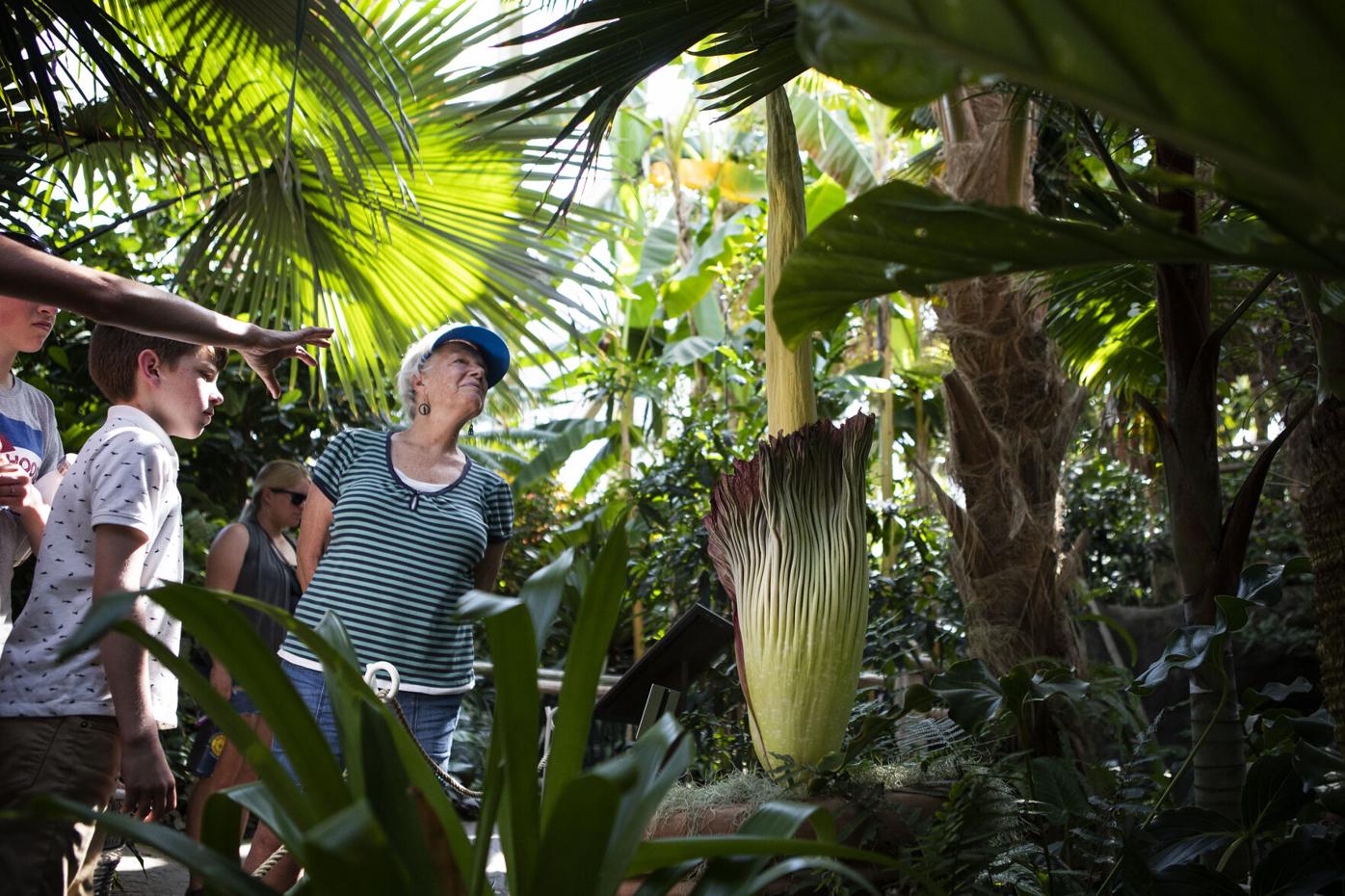
FILE PHOTO: Carol Reinhardt, center, takes a studied look at one of the Denver Botanic Gardens’ corpse flowers, named Lil' Stinker, while the flower is in its brief bloom on Friday, June 17, 2022, in Denver, Colo. (Timothy Hurst/The Denver Gazette)
Timothy Hurst/Denver Gazette


FILE PHOTO: Carol Reinhardt, center, takes a studied look at one of the Denver Botanic Gardens’ corpse flowers, named Lil’ Stinker, while the flower is in its brief bloom on Friday, June 17, 2022, in Denver, Colo. (Timothy Hurst/The Denver Gazette)
Brenner said this also comes with a caveat: While all signs point to Cosmo blooming, there’s a slim possibility that it could not happen at all.
“At the end of the day, plants are still unpredictable, but with the data we have, we’re eagerly awaiting the bloom,” Brenner said.
Cosmo the corpse flower is one of the dozens of plants inside the Plant Growth Facilities Conservatory, which is located in a greenhouse on the east end of the CSU campus in Fort Collins.
How to see the corpse flower
When: The bloom is expected to occur sometime around Saturday, May 25. Public viewing will be held from 9 a.m. to 3 p.m. each day the flower is in bloom.
Where: The Plant Growth Facility Conservatory at 1241 Libbie Coy Way, Fort Collins, CO.
Parking: Corpse flower visitors should park in the South College Avenue Garage, 121 W. Pitkin St., Fort Collins, CO. The University Station for the MAX line is within walking distance of the PGF. To reach the PGF entrance from the parking garage, walk west on Pitkin, and follow the signs for the corpse flower viewing line. Only the west doors provide access to the viewing area. Visitors should be prepared to wait in line.
(Contact Denver Gazette digital producer Jonathan Ingraham at [email protected] or on X at @Skingraham.)