




Downtown Denver ‘aspen tree’ hotel nearly ready
The Populus Hotel is set to open this summer.

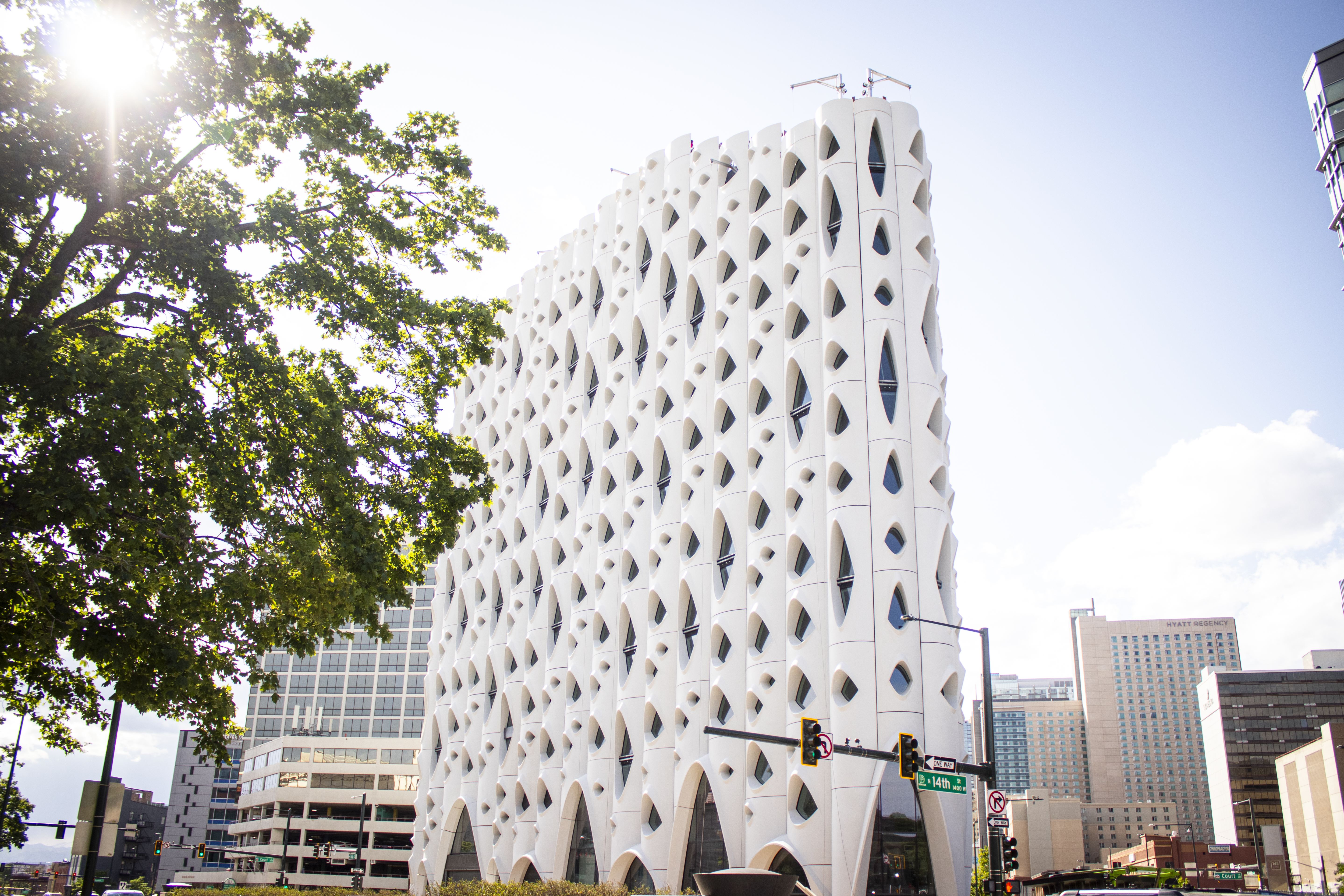
The Populus Hotel — a 13-story building resembling Colorado’s aspen trees — is taking root in Downtown Denver and bracing for its first guests in a few months.
The city has watched since 2022 as the site by Civic Center Park grew from the ground with its white trunk paneling and warped windows shaped like the tree’s dark spots on the bark known as “aspen eyes.”
It’s a full-circle moment as the building — once the site of Colorado’s first gas station — aims to be the U.S.’s first carbon positive hotel, said General Manager George Prine.
The hotel is set to open this summer.
On Thursday, reporters got a preview of the building ahead of Denver’s first Outside Festival celebrating Colorado’s role in the outdoor recreation industry. The festival will take place Saturday and Sunday at Civic Center Park — where visitors will also be able see the development’s progress across the street and its recently finished exterior.
Now, construction is shifting to finishing the inside.
“This is really a vision for the future that we’re building, especially in the hospitality sector,” Prine said. “We’re really going to try and put the emphasis on an environmentally-forward hospitality experience with the Populus Hotel.”
While it wasn’t finished to host events this weekend, Prine said the hotel’s mission lines up with the Outside Festival’s and is committed to being a partner next year.

While there’s no official opening date, the hotel’s website shows guests can begin booking stays starting Sept. 25 and business groups can begin stays Oct. 15. Prices listed Thursday range between $300 and nearly $700 a night.
The hotel will welcome leaders at the American Institute of Architects, who insisted on being the first business group to visit, according to Prine.
Populus Hotel was developed by Urban Villages, a Denver-based real estate developer focused on activating neighborhoods and incorporating environmental-friendly practices. Urban Villages also contributed toward redeveloping LoDo’s Sugar Block and turning Larimer Square into a pedestrian-only destination.
The hotel’s rooftop terrace has expansive views of the Rocky Mountains, Cathedral Basilica of the Immaculate Conception, the state Capitol, the Denver City & County Building and the rest of downtown.
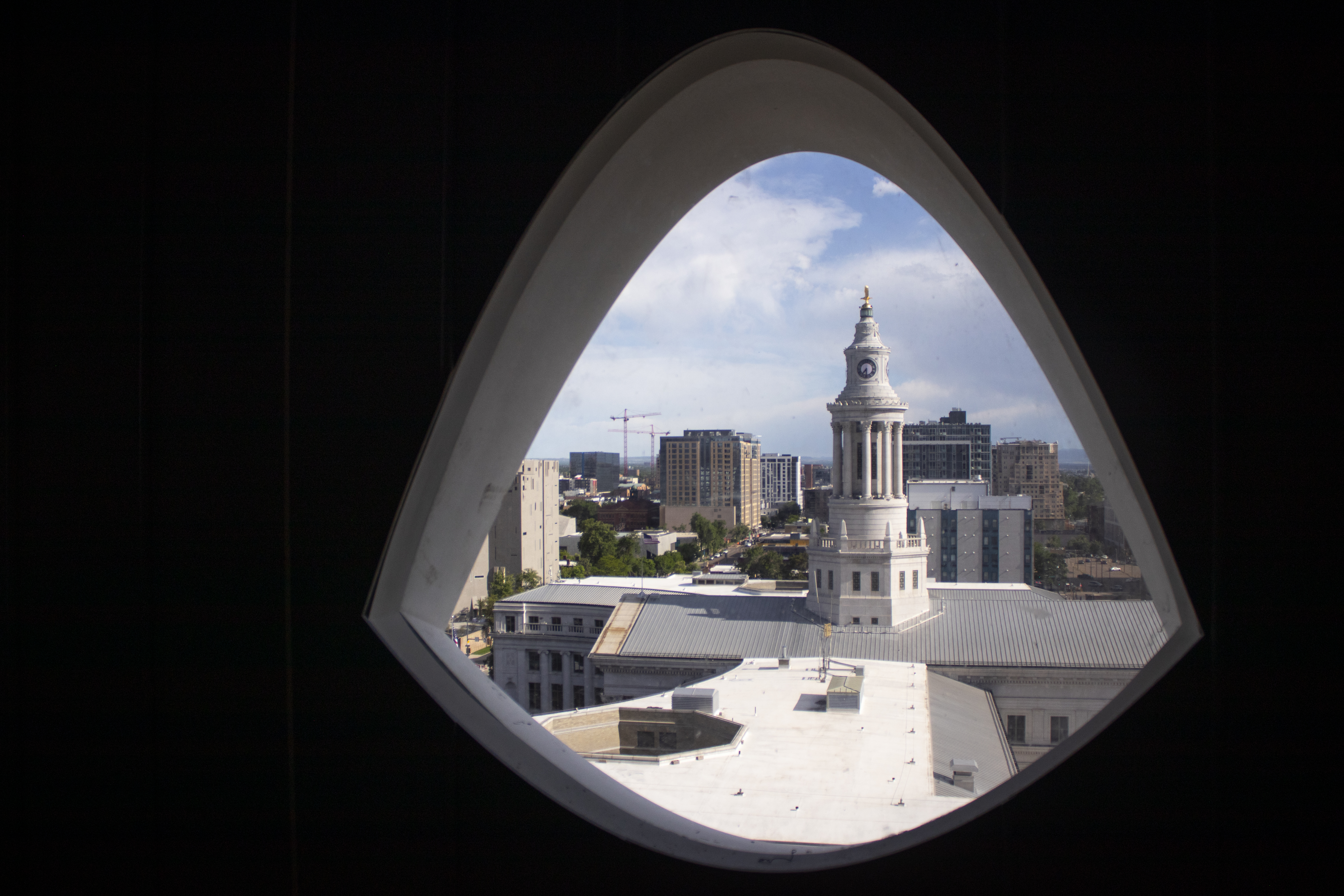
Populus Hotel was designed by Studio Gang, a global architectural firm led by architect Jeanne Gang — who’s cemented herself as a “rockstar” architect, Prine said.
The Denver hotel follows in the style of biophilic design – a rising architecture movement to make buildings look more like nature. Studio Gang’s work is also being featured in the Denver Art Museum’s “Biophilia” exhibit.
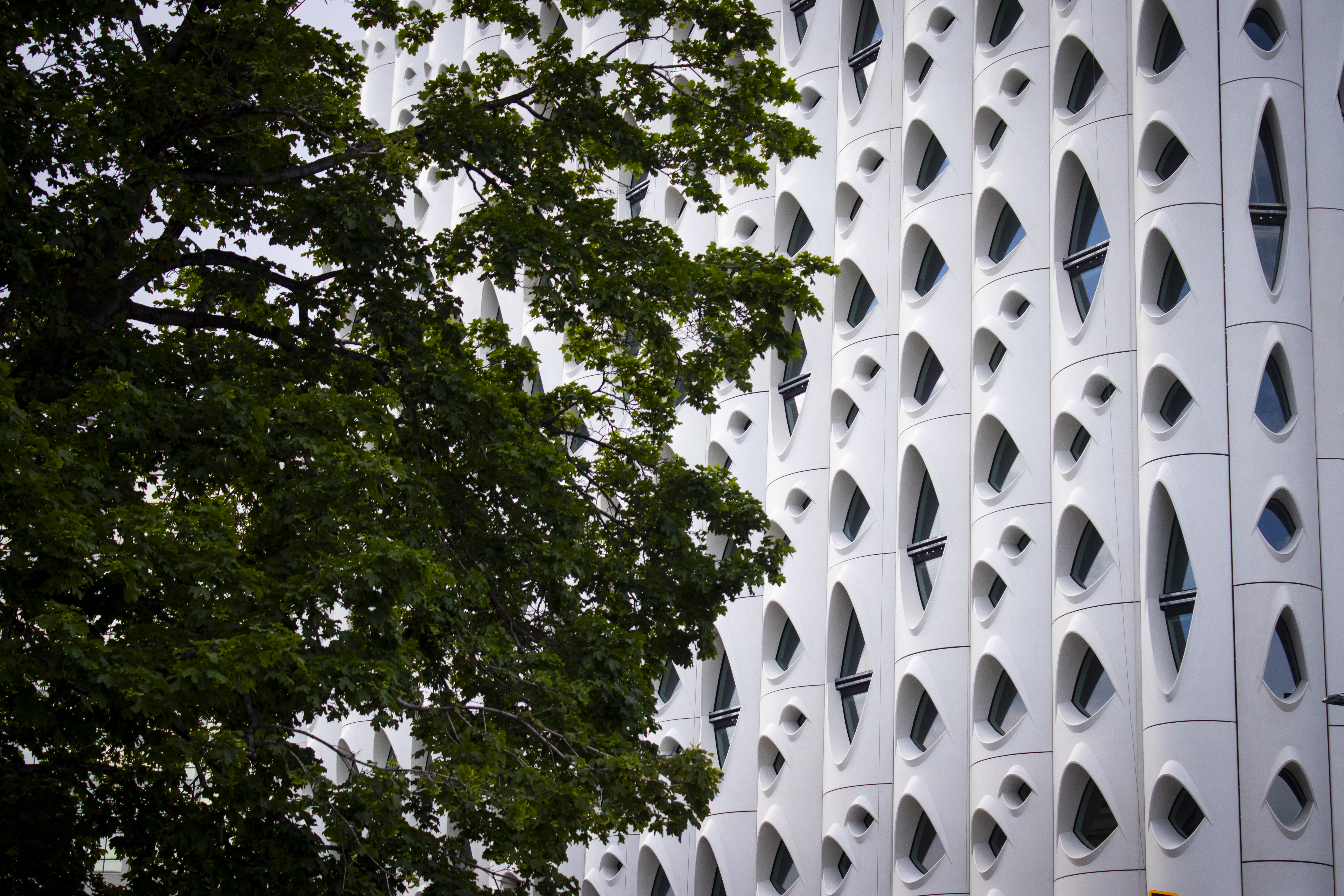
The recently opened apartment complex in RiNo, One River North, is another example of biophilic design with its canyon-like gash cutting across the building to make for greenery and a hiking trail that residents can use.
The Populus Hotel’s windows have curved overhangs to provide shade — lowering cooling costs — and channel rainwater to wash the walls of the building. The “aspen eye” windows also vary in shape, with the ground floor windows spanning nearly 30 feet in height to be inviting toward street-level passersby to go inside the building’s restaurant and coffee shop.
The hotel has yet to announce who will fill the retail space.
The 265-room building includes no parking for guests to reduce the use of cement and the hotel will encourage visitors to use public transportation alternatives in downtown, according to Studio Gang’s website.
The inside of the building was designed by Wildman Chalmers Design and also nods to the aspen tree by using rich brown and wooden motifs throughout the lobby. The rooftop terrace with a restaurant bar is also set to have greenery to mimic a tree canopy.
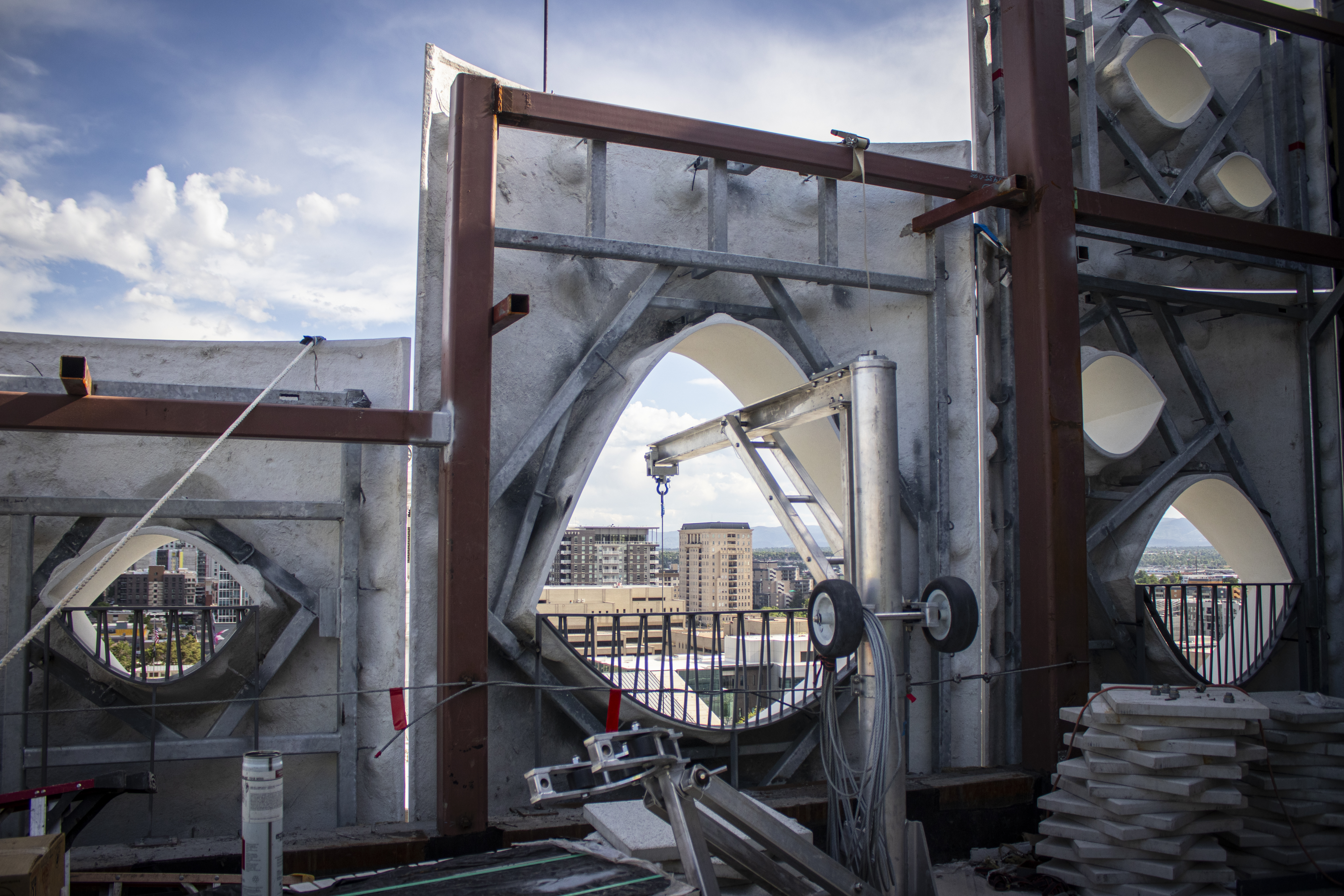
Part of its carbon-reducing commitment is by using recycled materials. Decorative wooden beams hanging from the ceiling are made of old snow fences from Wyoming. Headboards are made from pine trees killed by beetles.
There’ll also be a “biodigester,” a device to turn all of the hotel’s food waste into compost for Civic Center Park’s gardens and local farmers.
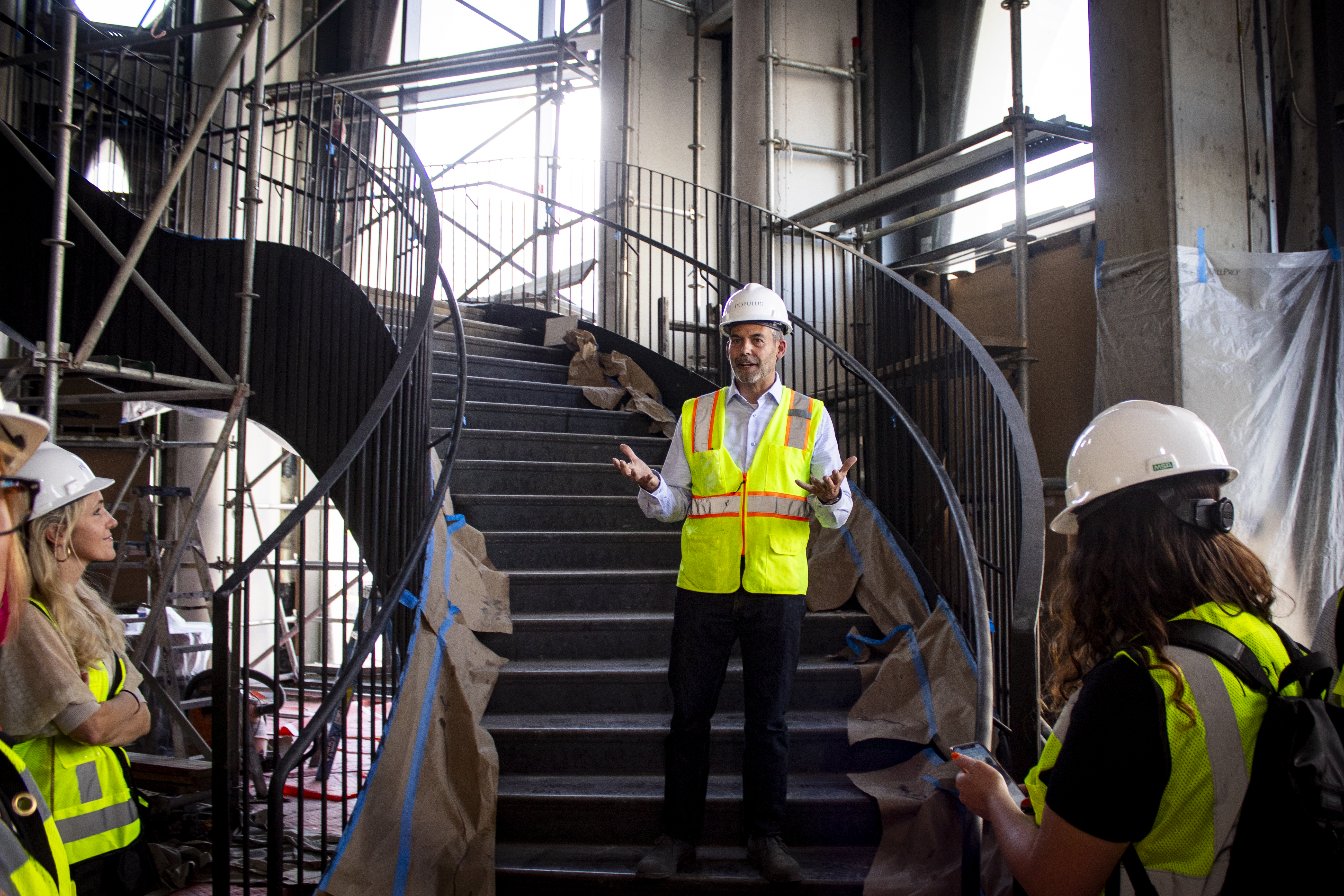
The owners wasted no expense on the building, Prine said, with most parts custom-made. He added that these eco-friendly measures could also help the hotel save costs on operations such as using less AC cooling or not having to send waste to a dump.
“What we’re doing is we’re gonna prove out that luxury and sustainability can actually have a return on investment,” Prine told the Denver Gazette. “And to be able to comfortably talk about that in the same sentence because a lot of people think that sustainability has a high cost.”
Get OutThere
Signup today for free and be the first to get notified on new updates.
PREV
PREVIOUS

North Carolinians pay a quarter less than national average
(The Center Square) – Three weeks from summer, and into the first unofficial week of it, North Carolinians are paying a quarter less per gallon of gas than the national average. Thursday morning’s averages, according to the American Automobile Association, are $3.31 for the state and $3.56 for the nation for unleaded regular. That’s down […]

What’s next for Trump? Three things to know after guilty verdict
Former President Donald Trump was found guilty on 34 counts of falsifying business records Thursday by a jury in the New York borough of Manhattan. The verdict makes Trump a felon, but it also has several other effects on his future and the presidential election. He’s expected to appeal the decision. Here’s what will happen […]