Facing extinction, a Colorado newspaperman and his machine press on
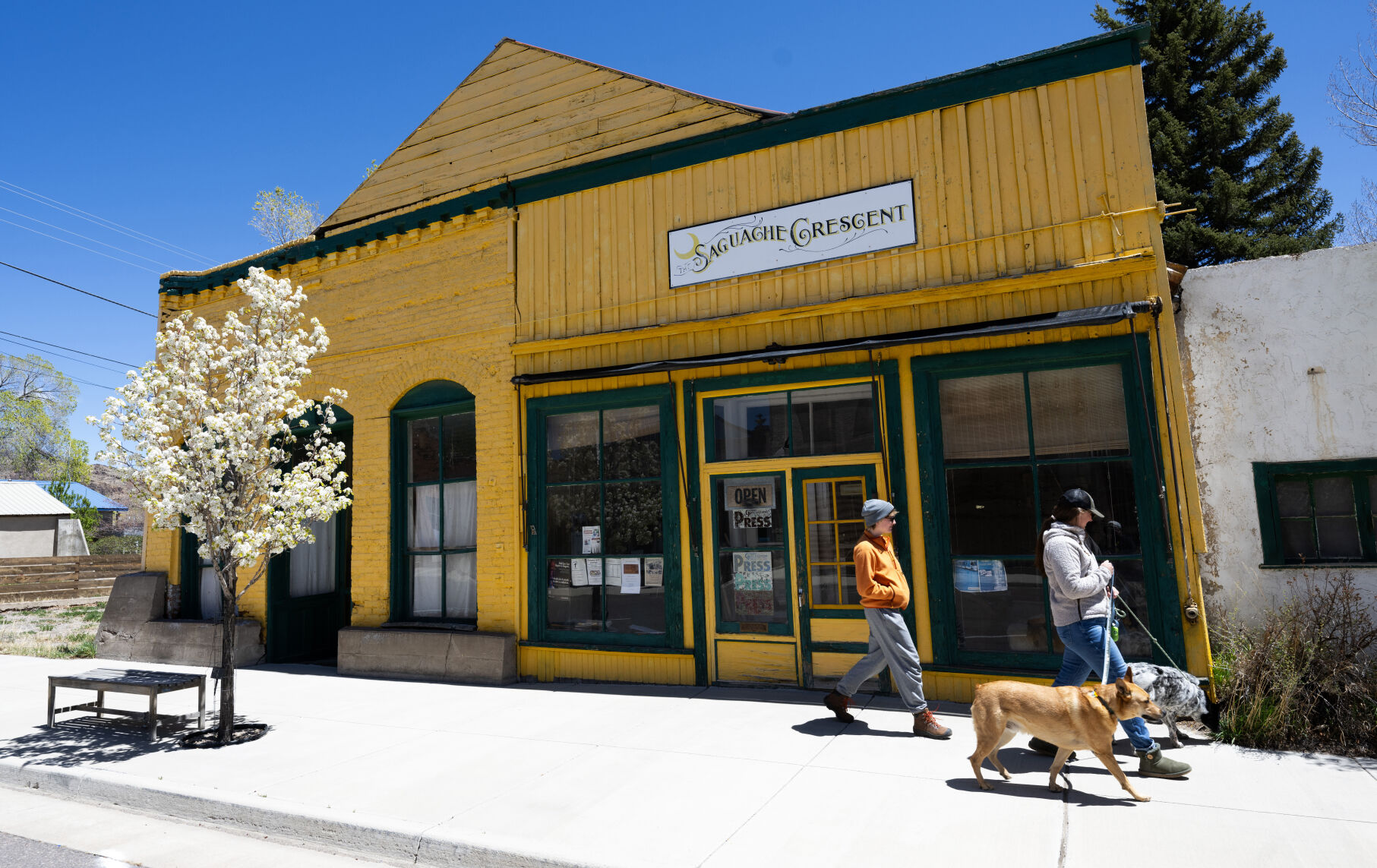
SAGUACHE • The diner is closed, dark like the theater and other storefronts that once defined a center of commerce for prospectors passing through this southern Colorado countryside. The town of 500 or so sleeps. The main drag is silent.
Silent, until the machine comes alive.
The click-clack of a typewriter. The clunk of cast-iron arms pumping up and down. The clang of brass molds. The rattle of chains and whir of wheels and rollers, the spinning of belts and springing of springs.
The town sleeps, but it seems the man in the window never does.
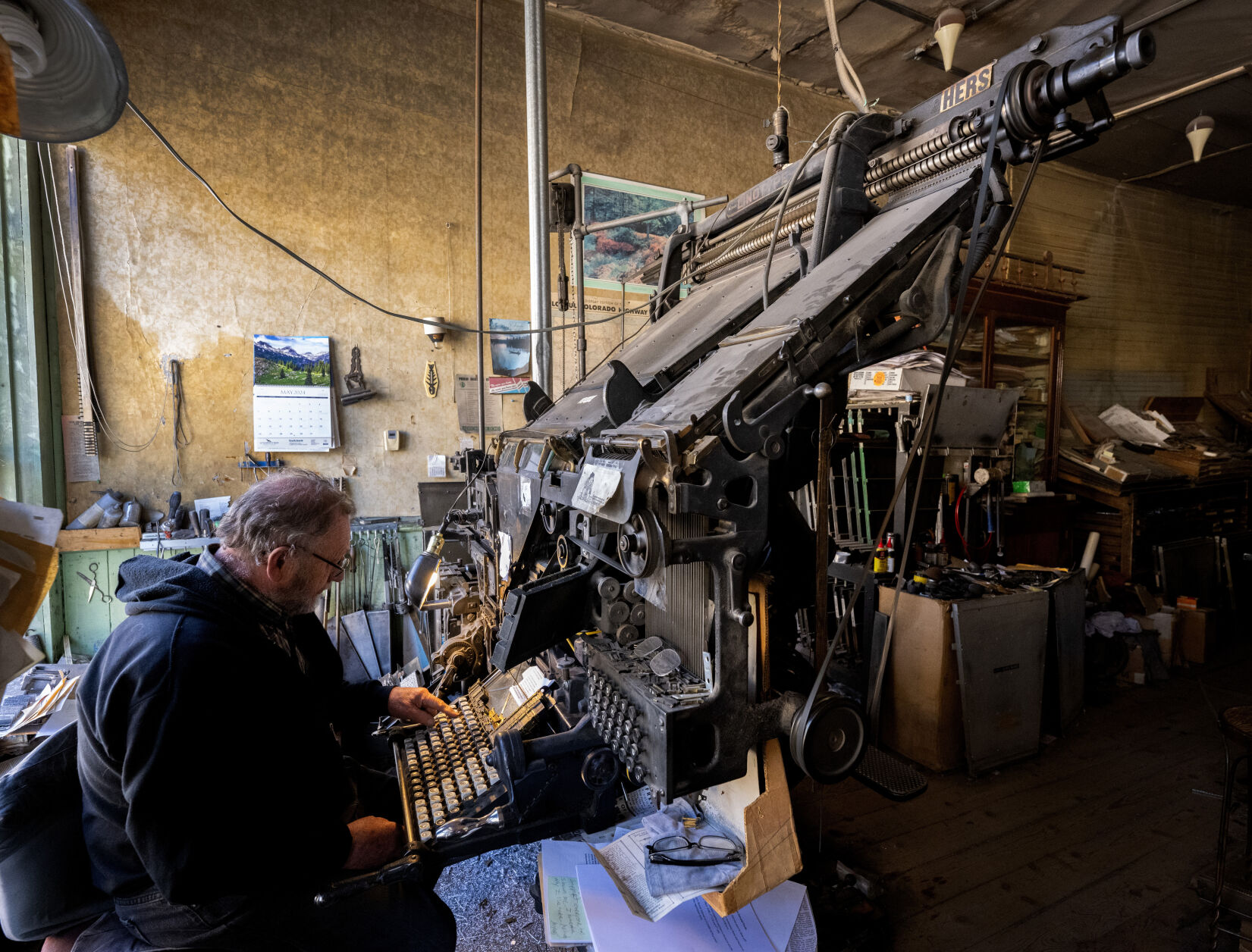
There he is, back turned to the street, in full command of that hulking, breathing machine more than 100 years old. He’s typing away, cranking levers and pulling knobs like a steampunk Willy Wonka.
That’s Dean Coombs, 72, bespectacled with salt-and-pepper scruff and hard, grimy hands.
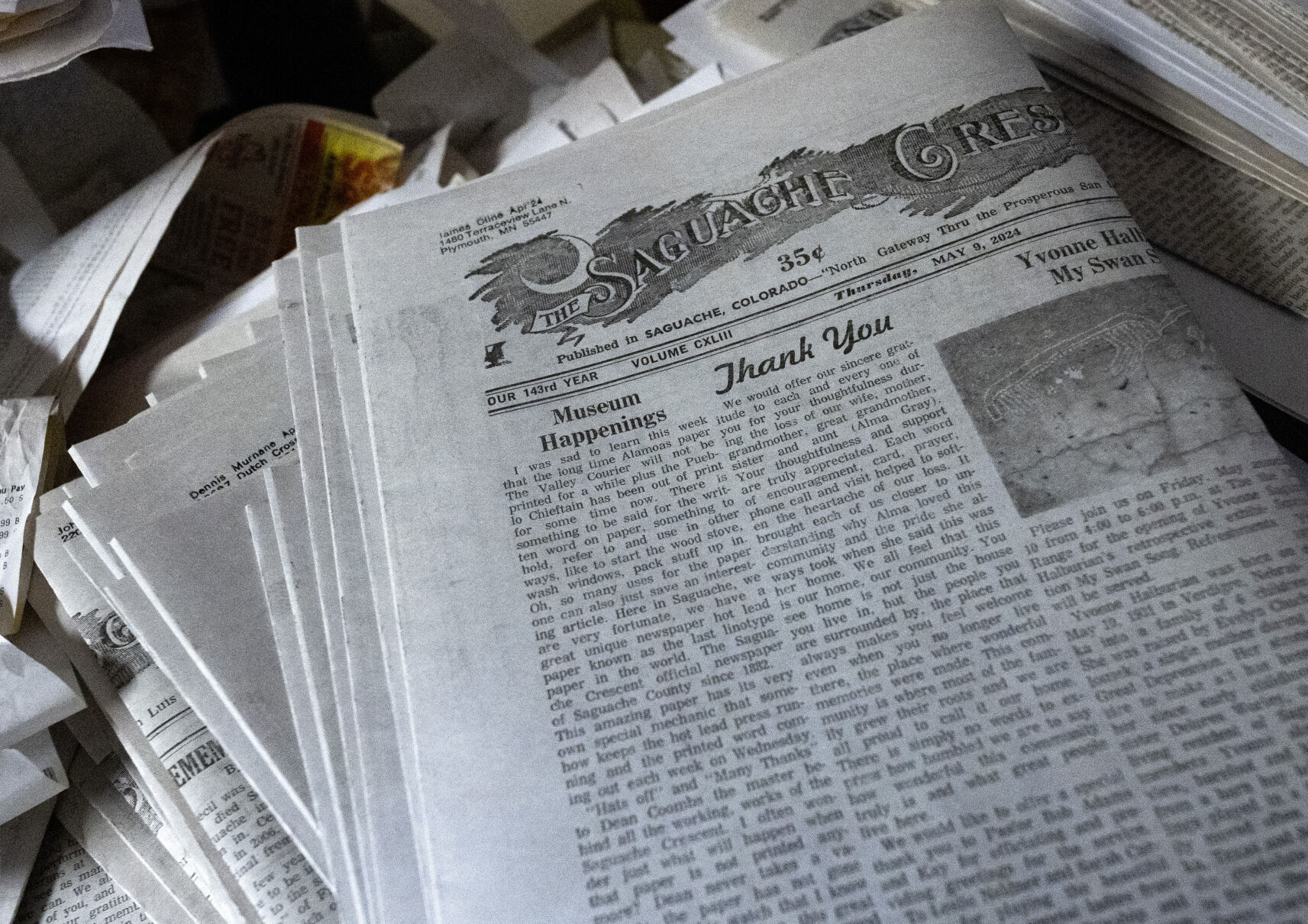
They are the hands conducting a family tradition going back to 1917. The hands putting together another Saguache Crescent — believed to be the last linotype-made newspaper in the country, possibly the world.
“This was a very common machine for a little newspaper, you know,” Coombs says before this 1920 model.
The linotype was common for papers little and large. From Saguache’s developing days in the late 1800s to the nation’s most bustling cities back east, the linotype took newspaper production out of the hand that laid every letter, comma and period and into a machine that cast typed-out lines from molds and hot lead.
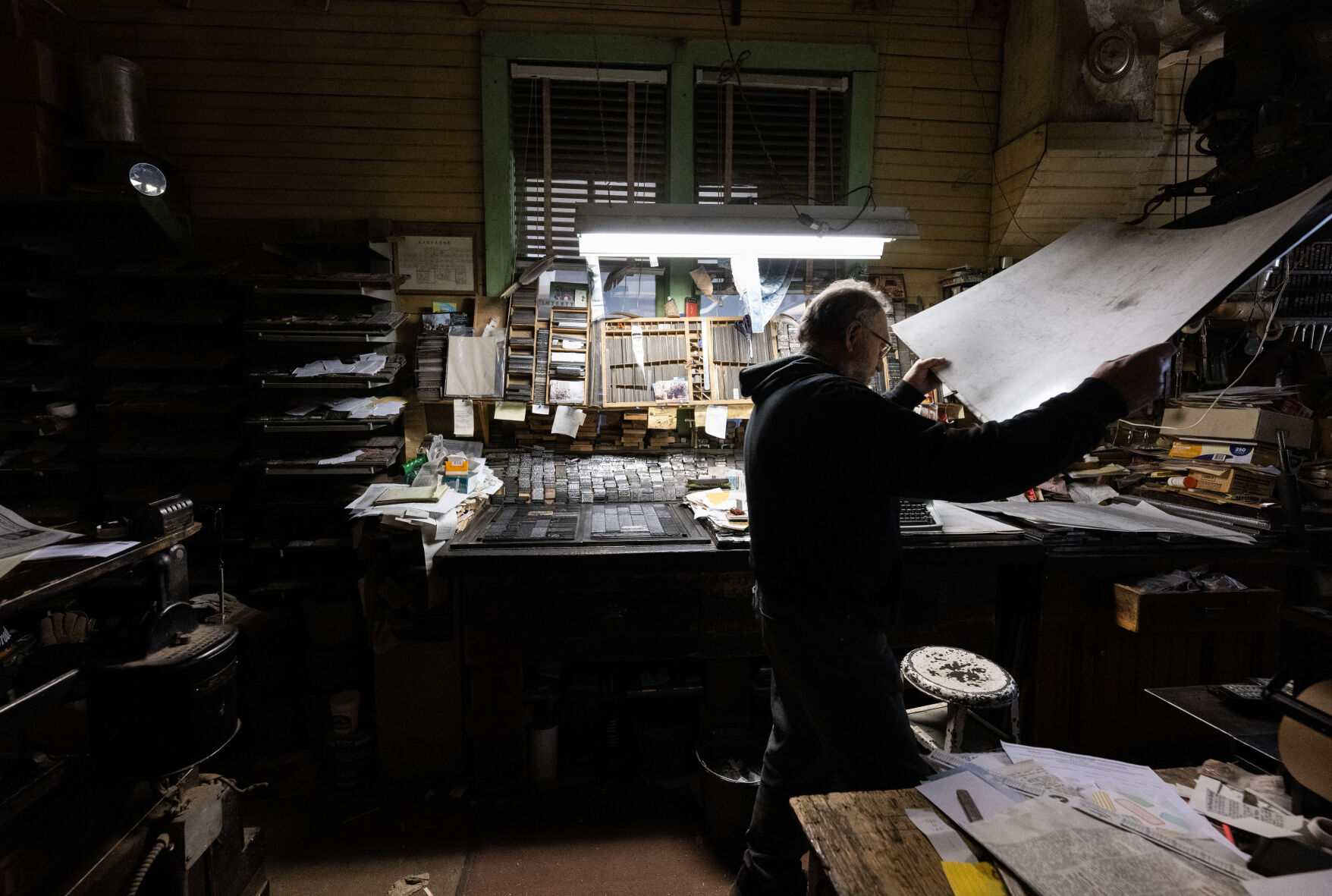
The linotype’s complexity is probably best explained by its number of parts: said to be 36,000 upon invention. The required labor and know-how is understood by watching Coombs at work here in this cluttered, dusty, dimly lit shop that smells more like a mechanic’s garage.
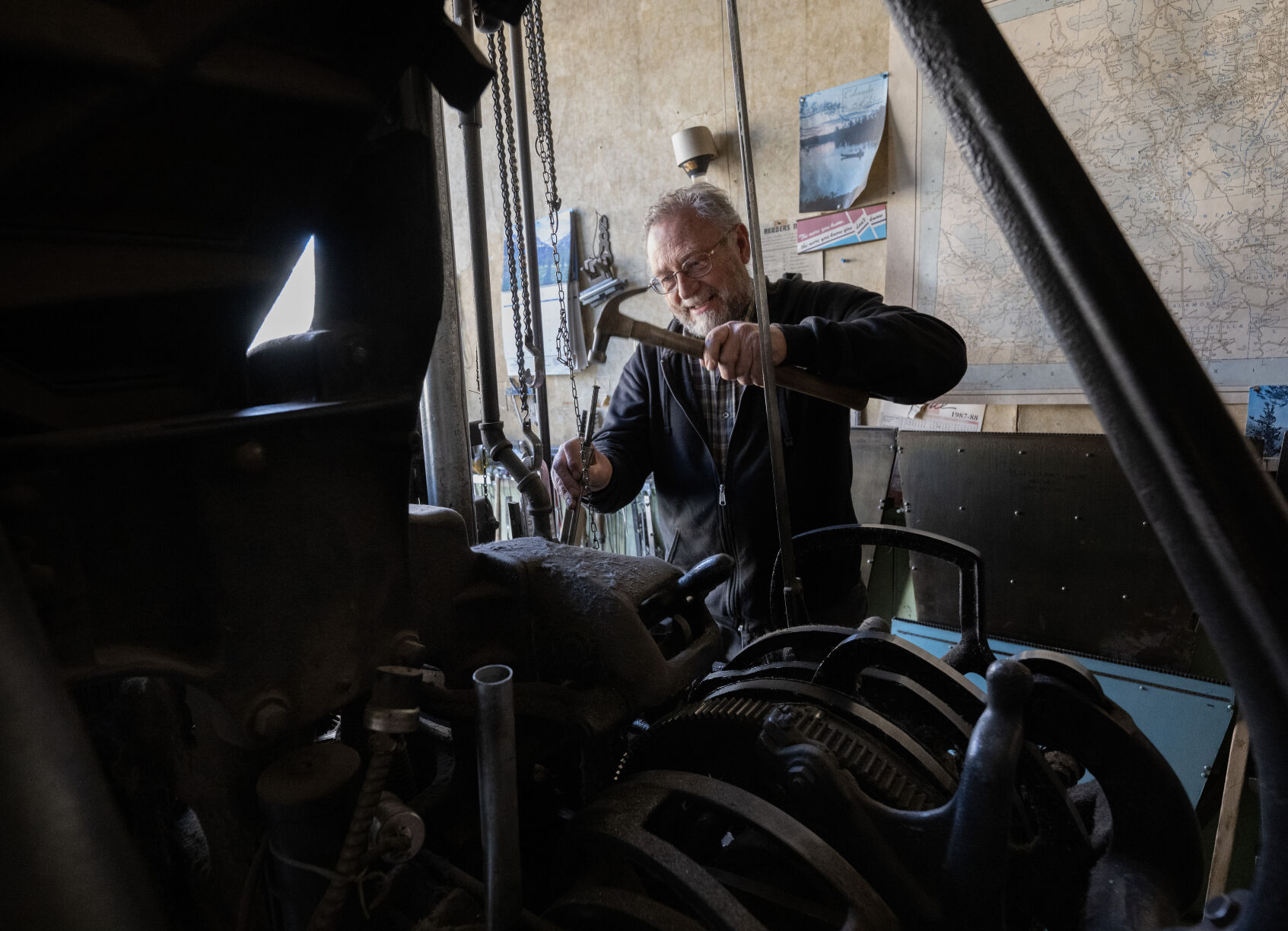
Coombs stops pecking the keys, lifts a heavy sheet and adjusts more space to allow for the word “the.” He takes a hammer to a clog-threatening clump forming in the molten pot of lead. He repositions a tiny bit with tiny ears.
“These ears have to hook into a groove so it’s all stable for the pounding,” Coombs says. “If this gets stuck, you get a fun time. Hot lead squirting out.”
But the weekly Saguache Crescent mostly goes off without a hitch. The one-man production is mostly identical to the ways of his grandparents more than a century ago.
Coombs accepts write-ups throughout the week — museum and quilt club happenings, birthdays and anniversaries, legals and meeting notices — and types them up for pressing on the 1915 contraption in the back.
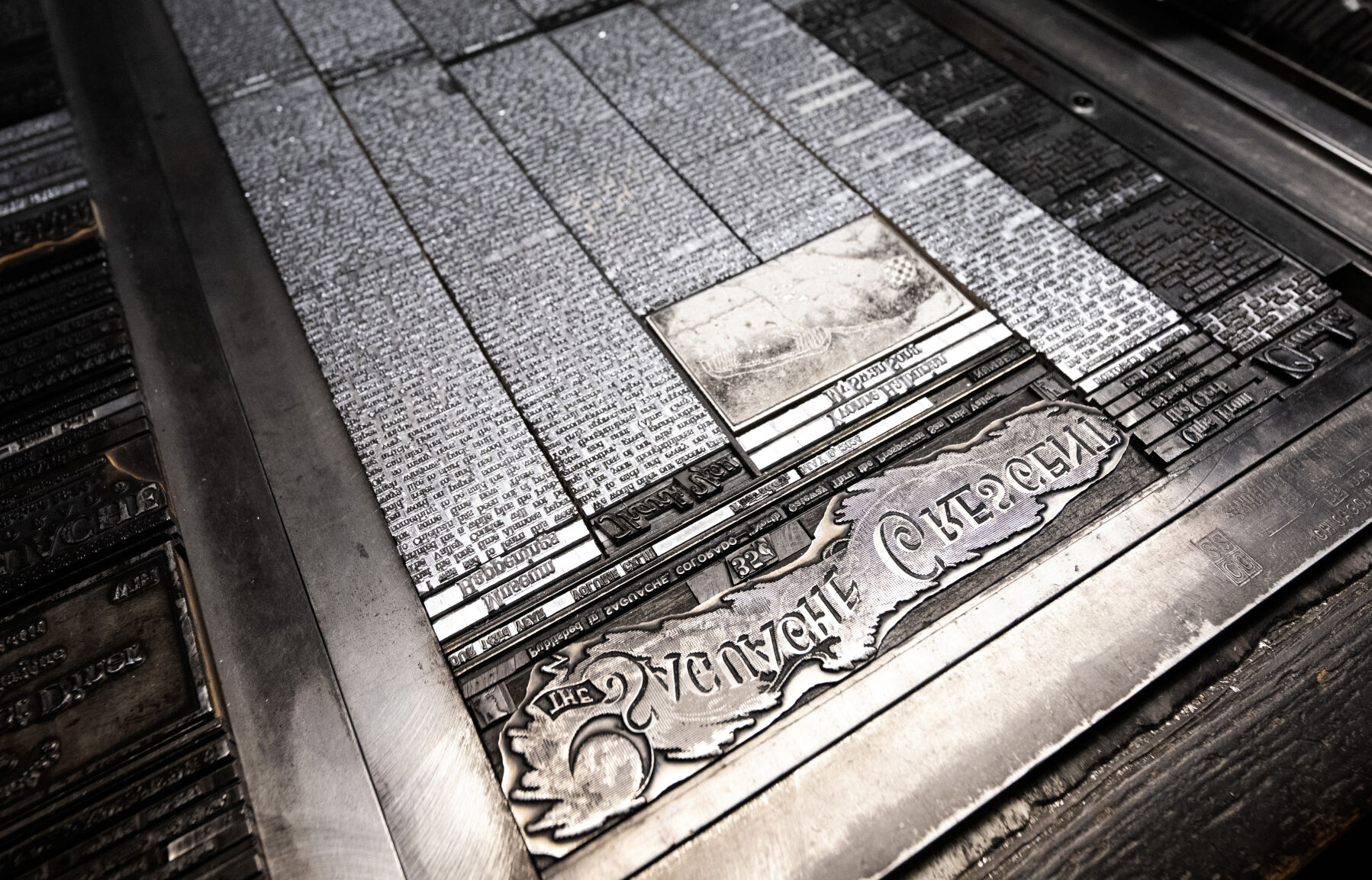
He prints about 400, four-page papers. Some of them he delivers to the diner and grocery, to be sold for 35 cents. The rest are enveloped and stamped with an antique foot press and delivered to the post office, where they are mailed far beyond southern Colorado.
Coombs’ $16-a-year subscribers — he takes cash or check — live in South Carolina, Florida, Virginia, Pennsylvania, Massachusetts and New York. “I have more subscribers in New York than Villa Grove,” he says of the next town over.
The Saguache Crescent is a keepsake, a relic. A fun conversation piece for owners. The last linotype newspaper.
Calls picked up — no cellular for Coombs, who sometimes answers a phone connected to a fax — after a “CBS Sunday Morning” feature in 2014. Reporter Barry Petersen arrived at the one-man newsroom he called “a time machine.”
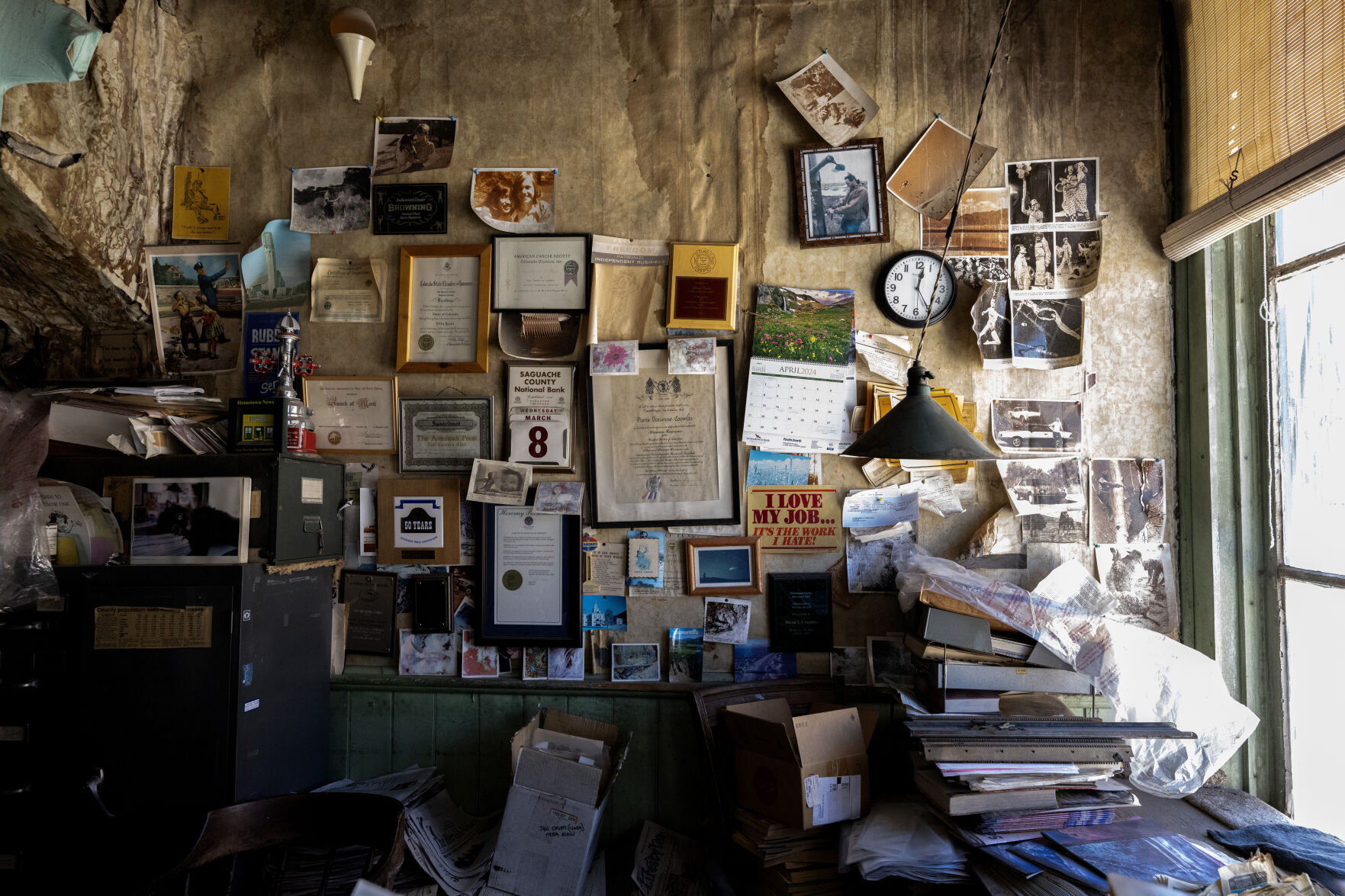
It’s an 1870s building of creaking, wood floors and a sagging ceiling strewn with wires. Dangling lamps haven’t been replaced in generations. Other than the thousands of parts he has stockpiled to keep the linotype alive, Coombs has hardly replaced anything.
Not the hand-written means of accounting. Not the desks and drawers stacked and stuffed with more yellowed papers. Not the hand tools. And definitely not the main technology.
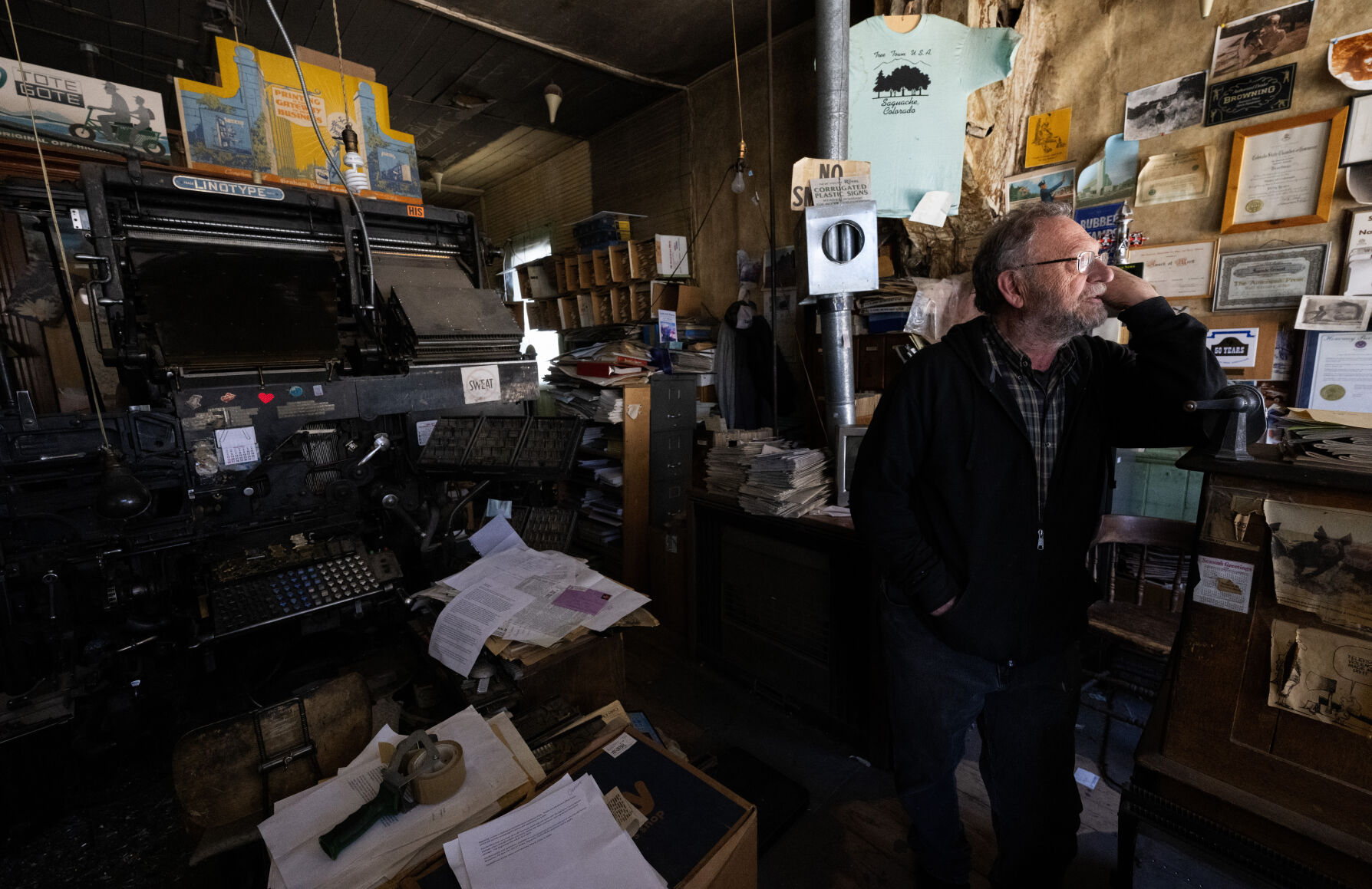
Coombs sits at the linotype most every day, preparing copy for the next paper one letter at a time. “I figure I get 14 words in a minute,” he says.
A counterpart at a computer might type closer to 80 words per minute. A computer would be easier than a linotype, Petersen remarked on his CBS visit.
Coombs shrugged. “It’s somewhat easier as long as your computer’s working.”
That was the thing about computers — it seemed to him they always needed fixing or replacing. Certainly there was a learning curve. And Coombs simply found himself uninterested, no matter the industry conversion through the ’70s and ’80s, precursing this age of the internet and disrupted business models and broken, scattered discourse.
Coombs shrugs again. “The days were full enough.”
He was uninterested, yes, but he was equally too busy to worry about the computer. He had a paper to put out.
And so he churned away at that old machine he knew intimately well, that ever-churning machine. He typed and pulled those levers and cranked those iron arms that rocked him to sleep as a baby.
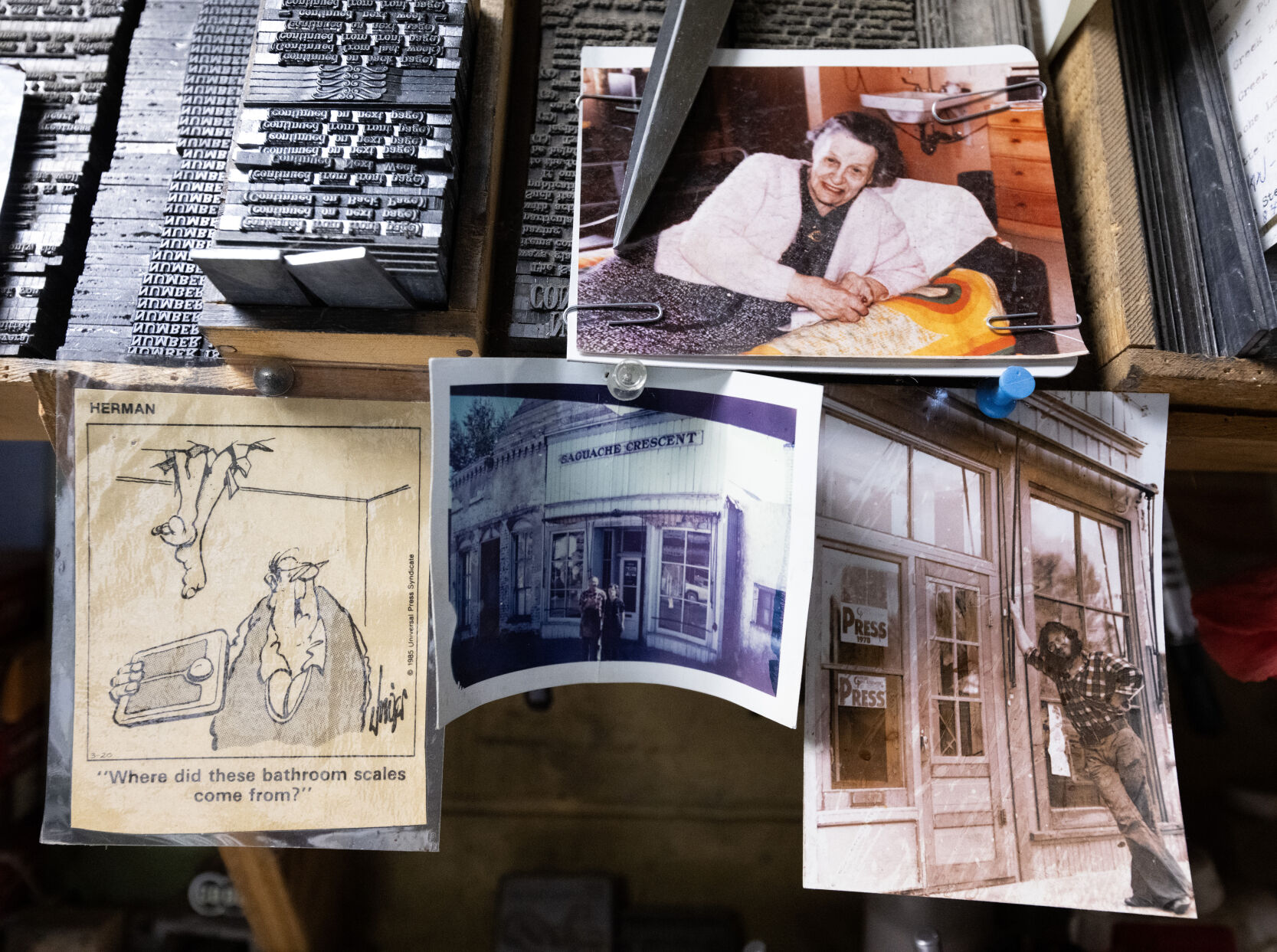
His parents hooked his rocker to the linotype while they toiled away. They are pictured in the back by the press: his mother, Marie, and father, Ivan.
They took over The Crescent from her parents in the 1940s. Marie took on an additional role, that of occasional reporter, telling a story she felt needed to be told. It was always a feel-good story — setting The Crescent’s reputation as “the good news paper,” as Coombs has called it.
His parents’ lives weren’t always so rosy. The paper was taxing work, the day-to-day so demanding that time and money were often forgotten.
“They didn’t quite understand motivation for money,” Coombs says of his parents. He’s quiet in thought. “It would’ve been nice if they could’ve done what they wanted to do, which was traveling some.”
His dad was only 62 when he died. It was a heart attack in 1978, the day after Christmas.
“We proceeded that day putting out the paper,” Coombs says.

So it’s been for Coombs ever since. Now he knows all too well that struggle for travel.
He’s taken a day trip here and there, but overnights are tricky. “If I go and stay overnight, the next day has been compromised,” he says.
He’s got a paper to put out. And while this is a noble cause for journalists — keeping a community informed, holding the powerful to account, lifting up the powerless — Coombs is not one for such sentimentality. Asked why he does it, he shrugs. “It’s just what I know.”
Rural communities like his are losing newspapers at a rapid pace; one report suggests a third of America’s papers from 2005 will be gone by the end of this year. It could be said that Coombs, with his very unlikely machine, is fighting trends that accompany the loss of papers: corruption and lost community connections.
The chair of the local museum, Lynn Sutherland, in a write-up recently lamented the print struggles of publications in the region. Many were tossed into uncertainty by last year’s closure of the printing plant in Pueblo.
“Here in Saguache, we are very fortunate,” Sutherland wrote.
To that end, Coombs only shrugs. He just puts out the paper.
Maybe he’s been too busy to reflect otherwise.
There were those local school kids raising money to go to Florida, their fundraiser helped by a note in the paper. There was that note letting veterans know about a grant providing aid and assistance to them.
Who knows who needs to see the Alcoholics Anonymous schedule? Who knows, maybe someone will see the notice on utility rate increases and speak up. Or maybe someone just needs a little pick-me-up, some good news.
Coombs has said the worst news in The Crescent regards death. Obituaries are common. Recently, the big story above the fold was written by a family member thanking people for honoring a lost wife, mother and grandmother.
At 72, Coombs knows his time is limited. He knows the paper will die with him.
He has no kids, no successor — nor would he wish the work on anyone, he has said. “It’s got to be your life.”
The Crescent doesn’t allow him to think far beyond the next day, the next edition, and maybe that’s helpful. “You always gotta be doing something,” he says.
But there amid all the clutter and handwritten notes on the desk is a page contemplating the future. The title is curious: “Quotes about death.”
Reads one: “If a man has not discovered something that he will die for, he isn’t fit to live.”