Progressive group criticizes Mike Johnston’s homeless strategy, while chamber says people feel safer
Denver's largest homeless advocacy group condemns policing homeless people living on the streets.

A progressive advocacy group criticized Mayor Mike Johnston’s homeless strategy, notably for enforcing the city’s camping ban, even as a business chamber maintained that things have improved in downtown Denver.
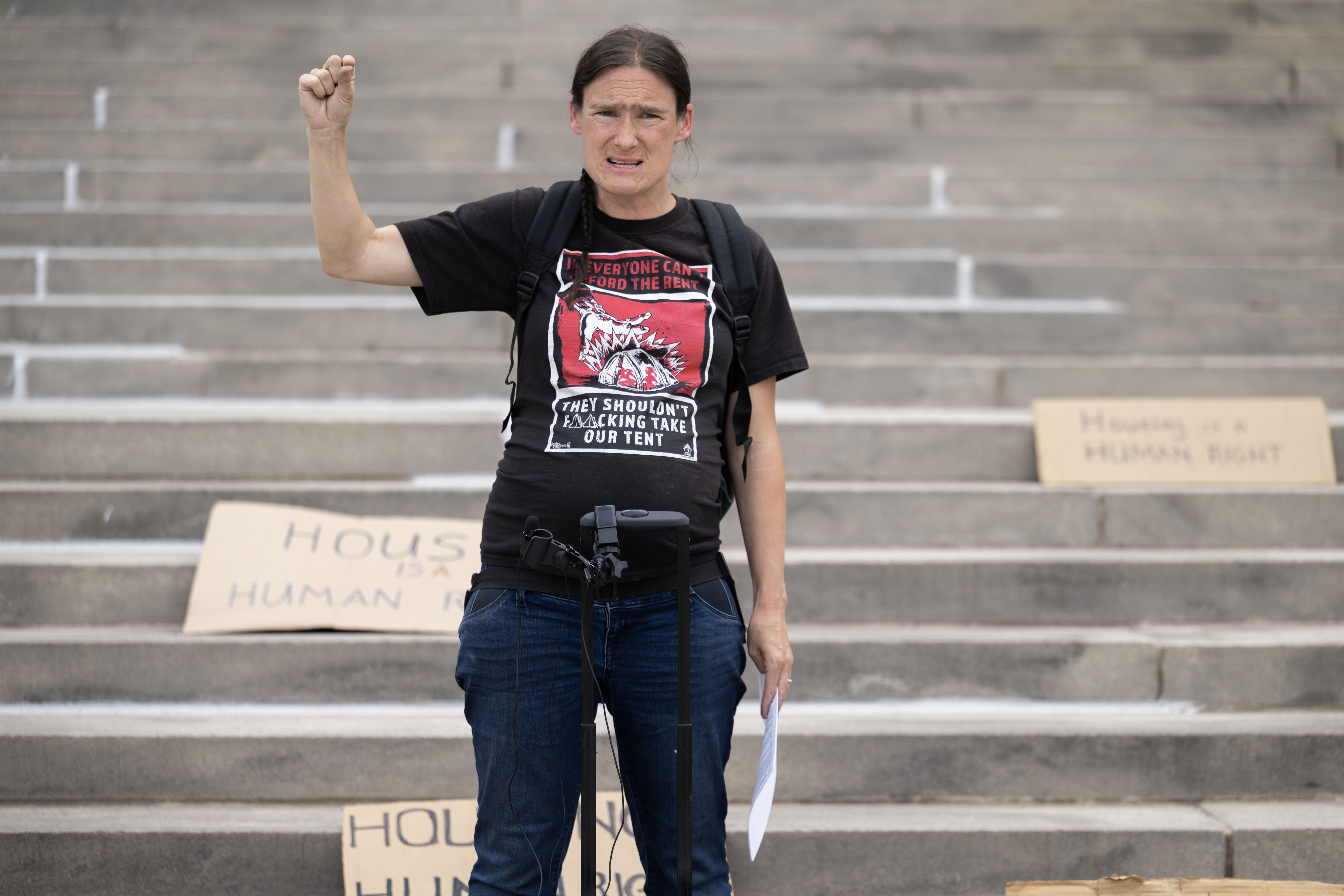
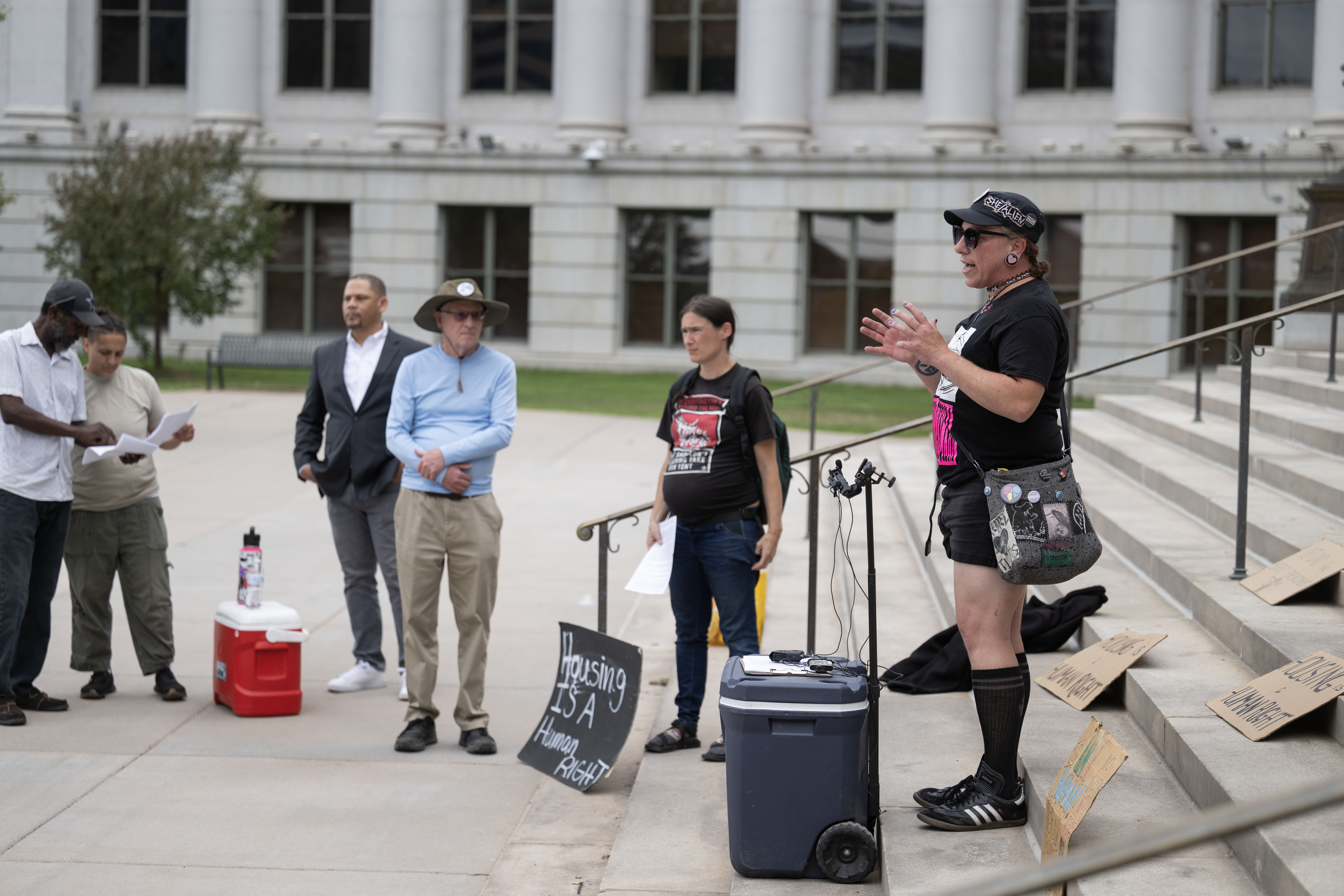
Protesters from Housekeys Action Network Denver earlier this month complained that the Johnston administration has “increased police enforcement” on the city’s streets. The group also asked the mayor to disband the Street Enforcement Team, which enforces city ordinances and informs homeless people of available resources.
“There’s no progressive beat in Johnston’s blood,” the group’s Terese Howard said on June 3. “He needs to actually stop policing people for surviving, and create real housing that lasts.”
The complaint illustrates the increasing criticism directed at Johnston from the mayor’s left flank over his strategy to tackle Denver’s homeless woes. Johnston, a Democrat, has shut down encampments in a campaign to move indoors 2,000 homeless people over two years. Groups like Housekeys Action Network and other progressive advocates have argued against what they call “anti-houseless” laws and “quality of life crimes,” which they said the mayor is enforcing.
To the group, that notably includes enforcement of trespassing laws and of Denver’s camping ban.
Denver’s camping ban has faced multiple legal and political challenges in recent years. In 2019, residents soundly rejected a proposal to overturn it. In November 2021, another ordinance asked residents to approve an amendment that required the city to enforce the ban but also to establish four authorized camping locations. Voters rejected that measure, too.
“They just want to basically leave homeless people where they’re at, let them live the life they’re living, and yeah, they just want to continue to enable that community,” Craig Arfsten, president of Citizens for a Safe & Clean Denver, said of the criticism directed at Johnston from progressive advocates.
Citizens for a Safe & Clean Denver, which backs the city’s camping ban, has been urging the Johnston administration to focus on mental health services and drug addiction treatment.
Arfsten said while he supports the mayor’s intent to transition homeless people out of the streets, Johnston needs to “acknowledge what the problem is.”
Johnston, he added, was “super effective at doing the first step that’s necessary is to get those people off the streets and into some sort of housing.”
“He did that. Fantastic, but you can’t stop there,” he said.
In criticizing Johnston, Housekeys Action Network Denver claimed his administration only moves homeless people from place to place with no concrete endgame, and that the mayor has pursued his goals “primarily through policing.”
Citing data from Newman McNulty Law, the group said that from January to March of 2023, when Michael Hancock was the mayor, there were a total of 694 “anti-houseless” crime citations but that from January to March of this year, that number stood at 941.
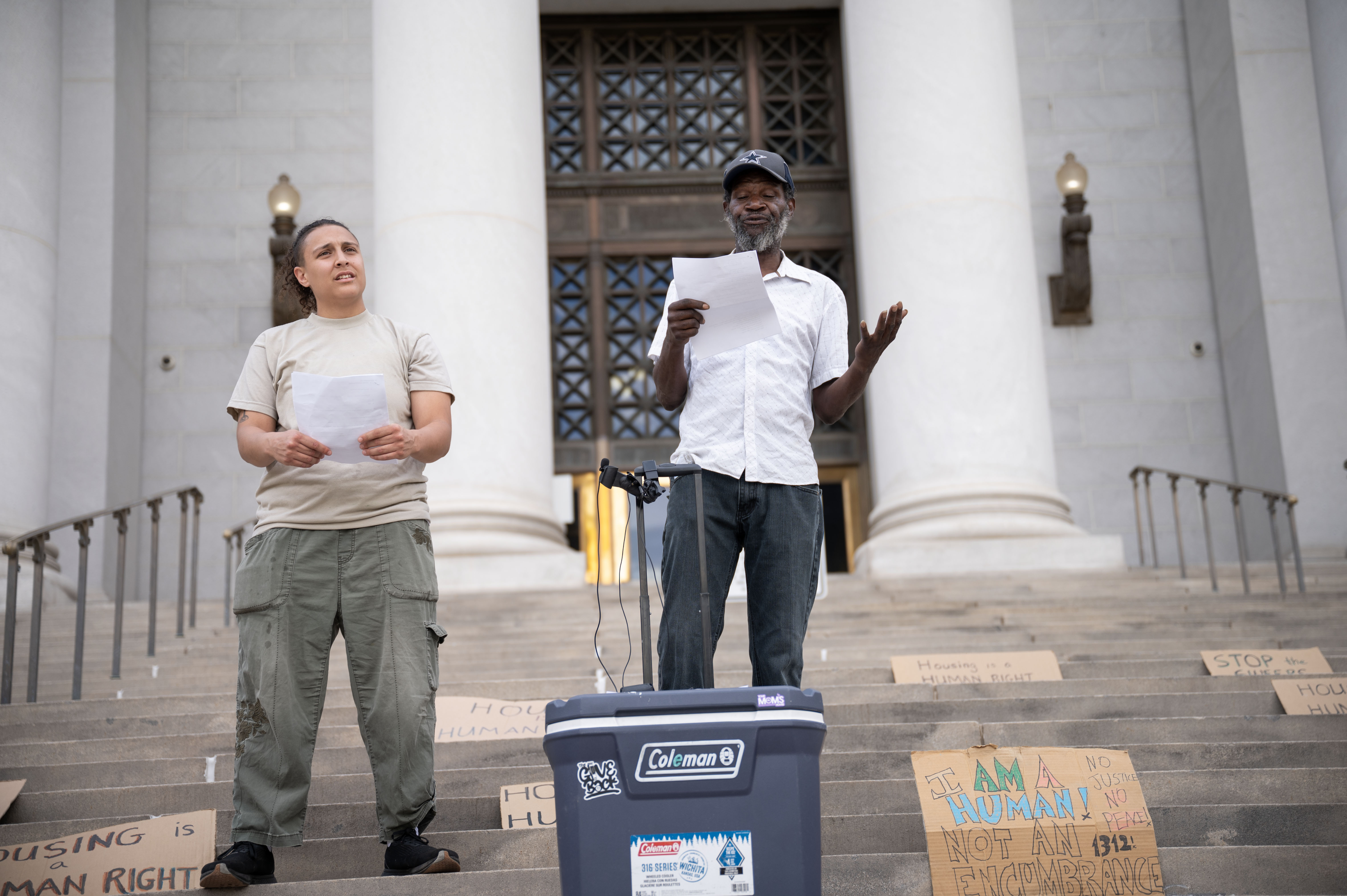
During the press conference, Howard claimed the number of “unexpected” street enforcement has gone up. Howard defended breaking laws by homeless people, saying “you have to do (that) when you’re houseless because you don’t have a private space to do it, like sleep or cover yourself.”
“Homelessness is not going down, it’s just being scattered across the city,” added Lisa Calderón, who joined the group’s rally last Monday.
Calderón lost to Johnston in the last mayoral race, along with several other candidates.
“We are now seeing homelessness in places that we have not traditionally seen tents, like in Montebello and far northeast, so it’s being pushed into the suburbs of Denver,” said Calderón, who has become more vocal in her criticism of the mayor in the last several months.
Since Johnston took office in July, the city has closed 14 large encampments, many located in the downtown Denver area.
In an email, Jordan Fuja, the mayor’s spokesperson, said the administration has “drastically reduced the number of encampment sweeps.”
“From the beginning of this effort, we were clear that we would enforce the permanent closure of those sites and that camping would no longer be allowed in the locations that have permanently closed,” Fuja said.
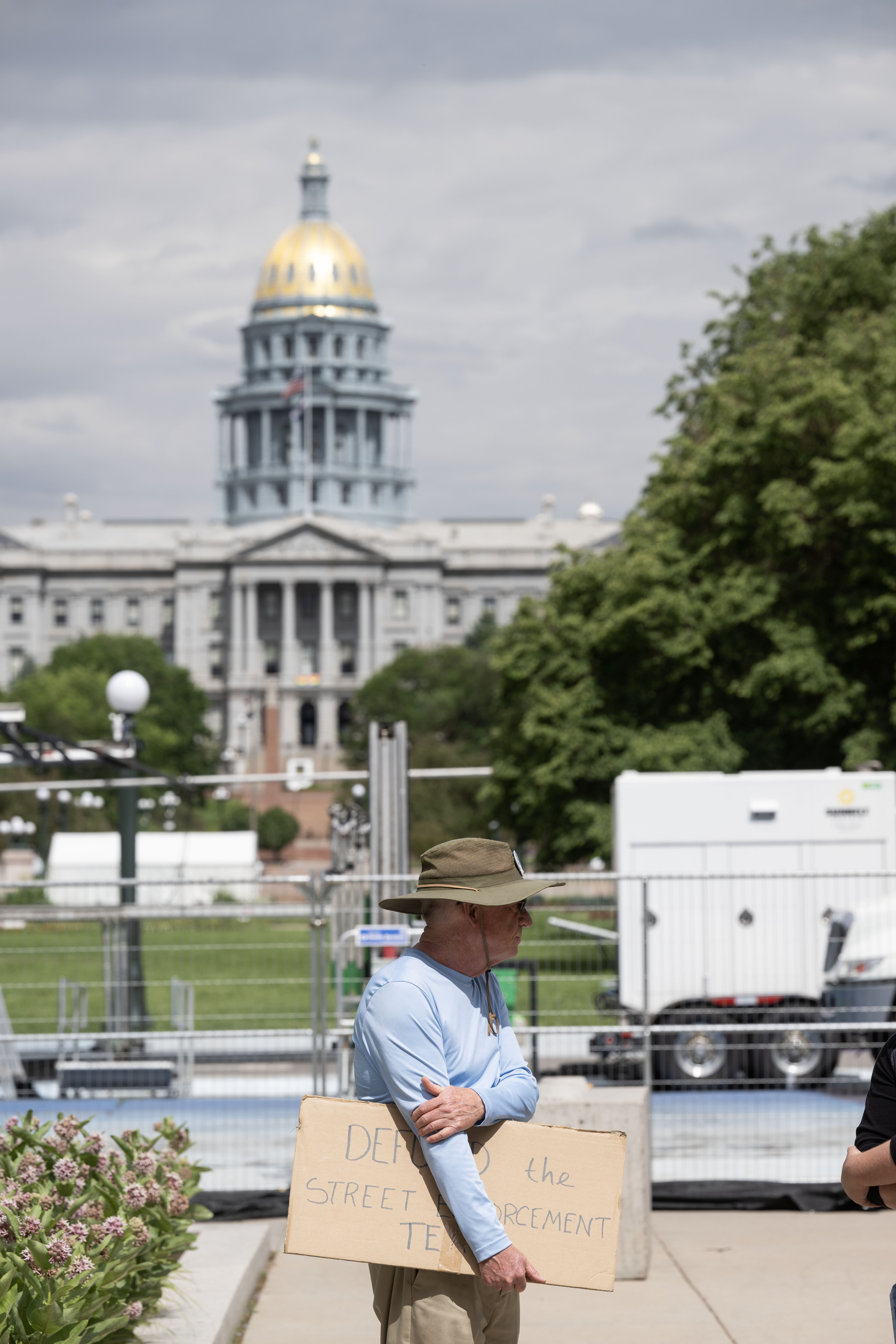
Carly West, Metro Denver Chamber of Commerce Vice President of Government Affairs, said people feel safer in downtown Denver since the mayor’s push to shutter encampments and move homeless people into shelters.
“There’s a real difference in terms of how safe people feel,” West said, adding folks are no longer trying to navigate walks to avoid a homeless camp.
“(We) would give Mayor Johnson’s administration lots of credit for the way he really looked to tackle the homeless crisis in Denver, not just in terms of addressing the safety concerns that a lot of people had, but really looking for solutions.”
West added that the mayor has not just been moving people to a different city or area of the metropolis but giving them resources, tools and opportunities to get out of homelessness.
Broadly speaking, Denver’s metro area successfully found permanent housing solutions for only 21% of those exiting homeless programs in 2022, well below the 33% rate that was the average that year for the 48 most populated metro regions, according to federal data.
And a review by The Denver Gazette of homeless provider contracts, invoices, performance outcomes and federal data showed that metro Denver trails many other major metropolitan regions in tackling homelessness with permanent housing. Indeed, just two out of every 10 people exiting homeless programming in Denver in 2023 found long-term permanent housing, a rate far worse than most other areas in the nation, according to the records.
The Denver metro region has added more homeless individuals than any other metro region in the country since 2018, according to key metrics collected by the federal government. Both the mayor’s office and the City Council have recently signaled a change of emphasis in their homeless strategy from temporary to permanent housing.
District 2 Councilmember Kevin Flynn rejected the idea dismantling the city’s Street Enforcement Team. He added that the majority of residents would, in fact, support increased enforcement on the streets.
“The SET team is a civilian alternative to having armed police officers enforce this law, and so eliminating SET would put us back to having police do this needed work. I don’t think that’s a better alternative,” Flynn said.
Meanwhile, District 8 Councilmember Shontel Lewis said she hasn’t seen data supporting Calderon’s claim of increased homelessness in and around her district.
“If we’re seeing an increase in homelessness in Montbello in particular, I think that would be a great concern,” she said.
Lewis said her district, which has the most number of city-operated temporary homeless shelters, struggles with “the concentration of poverty.”
“I think we are seeing a lot of folks in our district get housed,” she said.