







Reclamation Commissioner Touton outlines efforts to safeguard Colorado River basin
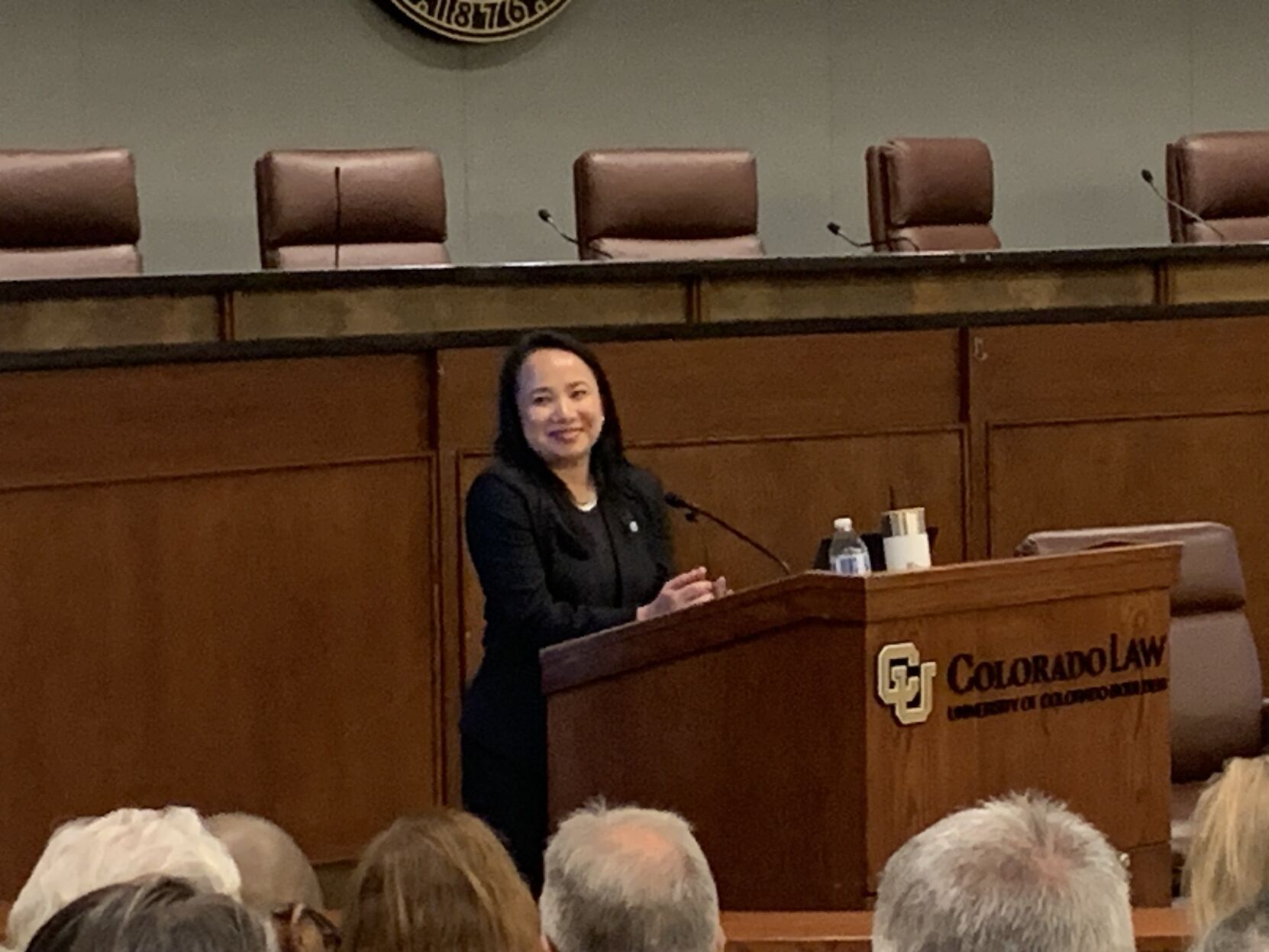
The near-term threats to the Colorado River Basin have been fended off, and the system has been stabilized to protect water deliveries, the ecosystem, and power production, U.S. Bureau of Reclamation Commissioner Camille Calimlim Touton said last week.
Speaking at the 2024 Conference on the Colorado River at the University of Colorado Boulder law school, Touton said the federal government has poured billions of dollars into shoring up the drought-stricken basin during the past three years.
One of those accomplishments will mean an extra 5 feet of water elevation at Lake Mead. That resulted from a new agreement with Mexico, called Minute 330, which went into effect in April. Touton said the new deal under the 1944 treaty with Mexico will conserve 400,000 acre-feet over 30 months through the end of 2026.
“Mexico continues to be a true partner with us on the Colorado River, taking prompt action to help protect the system and reduce the likelihood of crisis conditions in the future,” Touton said, with expectations that the relationship will continue under the country’s newly elected president, Claudia Sheinbaum.
Touton also listed the various water projects headed to the Colorado River Basin and funded by the Biden administration through the Bipartisan Infrastructure Act and the Inflation Reduction Act.
This includes $4.1 billion for 537 projects in all the states where the bureau operates west of the Missouri River. Among her favorite projects, not necessarily all applying to the Colorado River, Touton noted the Arkansas Valley River Conduit, a Kennedy administration-initiated project that finally broke ground two years ago. That project will bring clean drinking water from Pueblo Reservoir through a pipeline to Lamar.
“There were people who didn’t believe this could happen,” Touton said. “It’s amazing to see that we’re burying our success 1 mile at a time with the (pipeline) that we put in those communities.”
Some of the water providers along the Arkansas River have raised concerns about their share of the cost, which is largely the last mile from the pipeline to homes and businesses. Touton told Colorado Politics the agency is willing to talk about that cost-sharing.
Touton also highlighted water storage and recycling projects in California and Utah.
She noted Thursday’s announcement of $700 million to the Lower Basin states to save 700,000 acre-feet of water in Lake Mead.
Touton drew laughter from the audience on a question about when the Upper Basin states of Colorado, Utah, New Mexico and Wyoming can expect that same level of support.
“I look forward to looking at working with the Upper Basin on bucket two (funding),” she said, adding that, for now, “let’s be excited about bucket two in the Lower Basin.”
“Our work to stabilize the system now has allowed us to now talk about the future for 2027 and beyond,” she said, in reference to the current interim operating guidelines for the river expire at the end of 2026.
“We initiated a collaborative, transparent and inclusive process to develop the next iteration of guidelines and strategies to guide the next period of river operations into the future. And we are in the process of developing and evaluating a wide range of alternatives,” Touton explained.
The agency aims to “develop innovative and flexible operating guidelines that provide improved predictability of water availability and enhance opportunities for conservation responsive to a broad range of plausible hydrology.”
Touton also noted the agency’s work with the 30 sovereign tribes with water rights on the Colorado River, noting she has visited with about half of them in her time as commissioner. Those visits gave her a firsthand look at water infrastructure and reminded her how much work remains, she said, adding the agency’s engagement with Colorado River tribes is one of her proudest professional accomplishments.
“Our investments in Indian country match our commitment across the Bureau of Reclamation. We have a funding opportunity for $16.5 million to address the impacts of drought to tribal nations funded by the Inflation Reduction Act,” along with additional technical assistance funding, she added.
An audience question about the status of negotiations between the Upper and Lower Basin states and whether Touton will meet with officials during her visit to Boulder also drew knowing laughs from the audience. That led Touton to call out Upper Colorado River Commissioner Becky Mitchell, Colorado’s representative to the commission.
Touton noted that the seven governors care deeply about these issues and must determine what the negotiations mean for the West.
“Know that these conversations are hard, but I know that we’re having them together, that they’re talking to each other. There probably isn’t a day where I don’t talk to a government rep, a tribal leader or other partners on these issues,” she said. “I have full faith in my partners in the basin states and with our tribes, and we’re going to get it done.”