







US is 15 years behind China on nuclear power, report warns
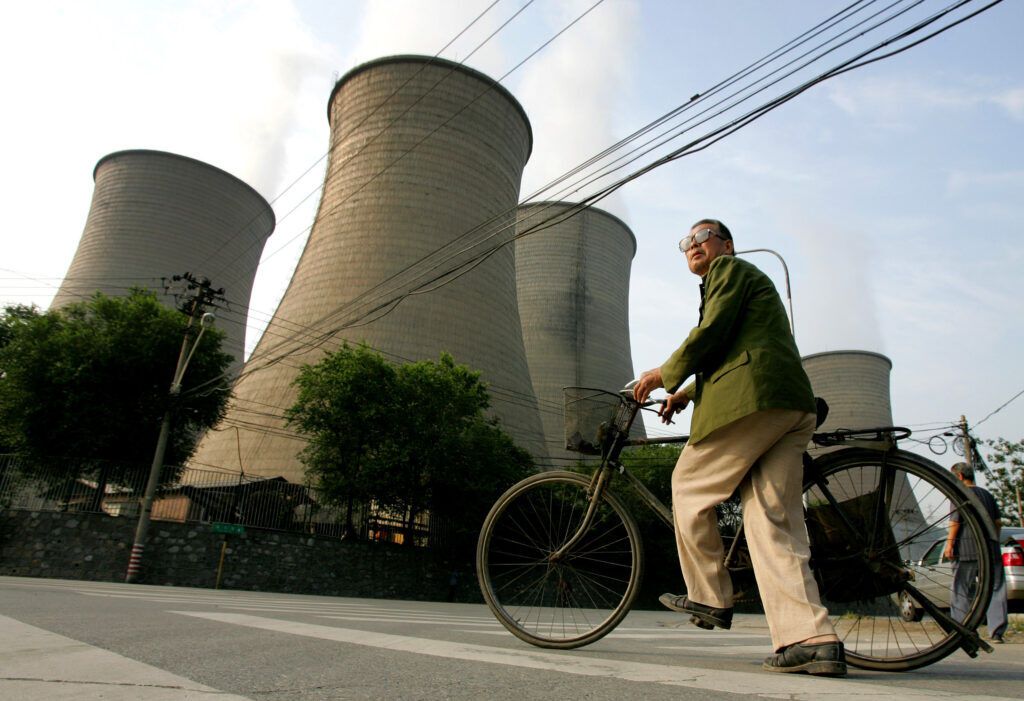
The U.S. is more than a decade behind China in its development of high-tech nuclear power generation, a new report found, illustrating the growing divide between the world’s two largest economies as they race to meet ambitious targets for carbon-free power generation and deploy next-generation reactors.
According to the report, published by the Information Technology and Innovation Foundation think tank, China currently has 27 nuclear reactors under construction, more than twice the number of projects in any other country. Projects there take an average of seven years, the report said, a much shorter timeline than in the U.S. or other Western countries.
All told, the report estimates that China is likely 10 to 15 years ahead of the U.S. in nuclear power and is on track to overtake the U.S. as the nation with the largest nuclear-generating capacity by 2030.
China’s rapid ascent is primarily due to the government’s “coherent national strategy toward nuclear power,” the report said, which authors noted has allowed the government to ease the permitting and regulatory processes for new nuclear projects and to provide developers with access to “extensive” government subsidies and low-interest loans.
“China’s government has assigned considerable priority to domestic nuclear reactor construction as part of Beijing’s broader energy strategy,” the report said.
This has also aided China in making headway on advanced nuclear technology, including on the build-out of Small Modular Reactors and nuclear fusion technology.
Between 2008 and 2023, China’s share of all nuclear patents increased from 1.3% to more than 13%, and China now leads in the number of nuclear fusion patent applications, the report noted—allowing it to theoretically get a leg up on deploying nuclear fusion reactors once fission technology becomes viable.
In December, China unveiled the world’s first fourth-generation nuclear reactor in Shidao Bay.
“China’s rapid deployment of ever-more modern nuclear power plants over time produces significant scale economies and learning-by-doing effects, and this suggests that Chinese enterprises will gain an advantage at incremental innovation in this sector going forward,” the authors said.
Meanwhile, the U.S has struggled to bring new nuclear reactors online, threatening its status as the world’s largest nuclear power producer. In the last 10 years, the U.S has completed just two new nuclear reactors. The reactors, at the Plant Vogtle facility in Georgia, were years behind schedule and billions of dollars over budget.
China has nearly tripled its nuclear capacity over the past 10 years, adding the same amount of capacity that took the U.S. nearly 40 years to build out.
Both countries are looking to major scale up nuclear power generation in the coming years.
The U.S. in December pledged to triple its current nuclear power capacity by 2050. China is planning to have nuclear power make up at least 15% of its total energy mix by the same year.
If the U.S. is to go toe-to-toe with China on nuclear power, it needs to develop a “whole-of-government” approach on project permitting and financing on advanced reactors and nuclear fusion development, the study’s authors noted, and explore the idea of working to a limited degree with international allies.
CLICK HERE TO READ MORE FROM THE WASHINGTON EXAMINER
Nuclear fusion “represents yet one more arena where the technical, scientific, and commercial competition will be fierce between China and the United States in the years ahead,” they wrote.