







Westminster keeps size of enormous off-leash dog park — for now
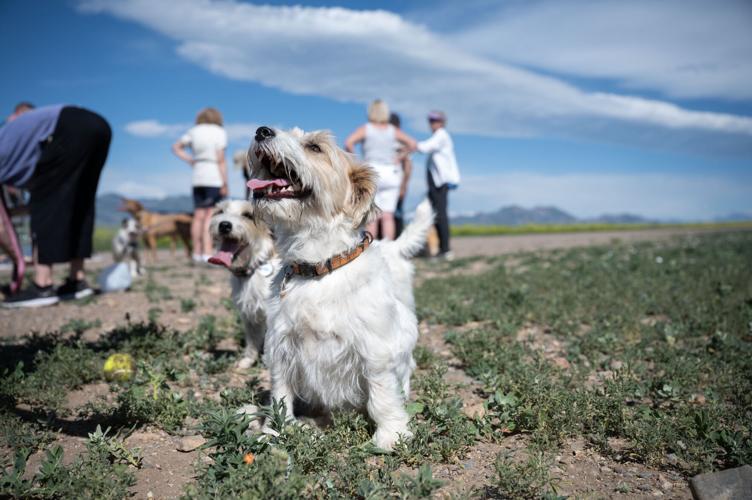
Dogs play with their owners in the Westminster Hills Open Space dog park on Friday, June 7, 2024. (Stephen Swofford, Denver Gazette)
Stephen Swofford/Denver Gazette
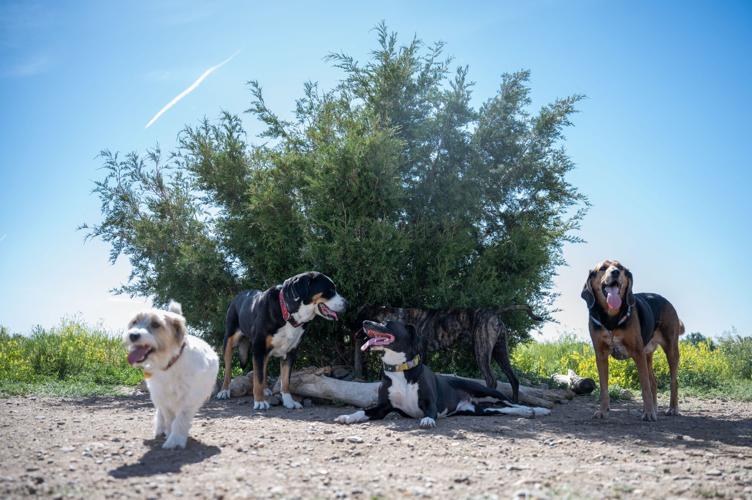
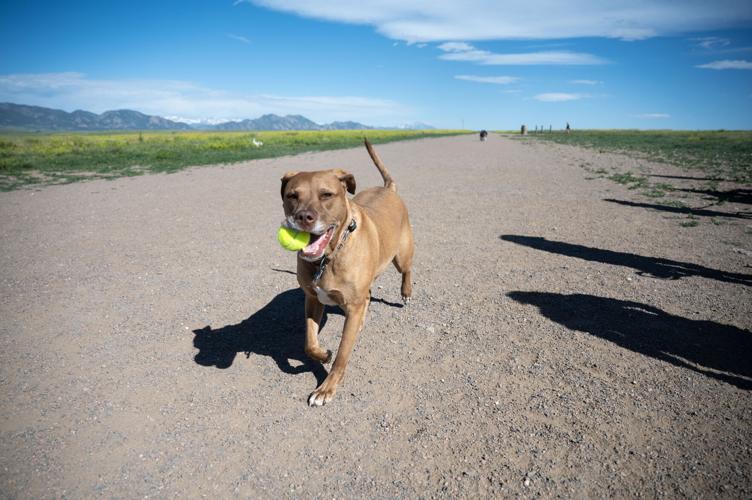
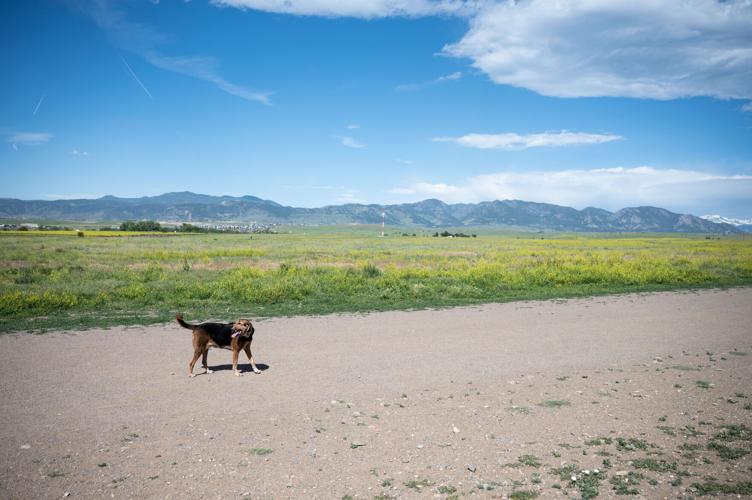
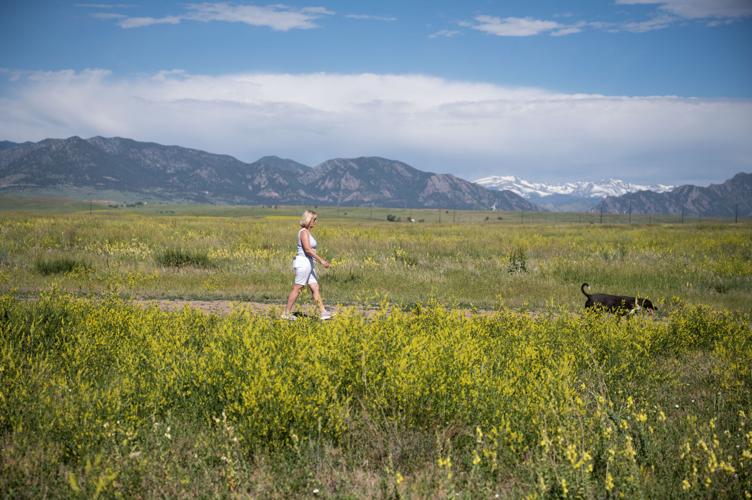
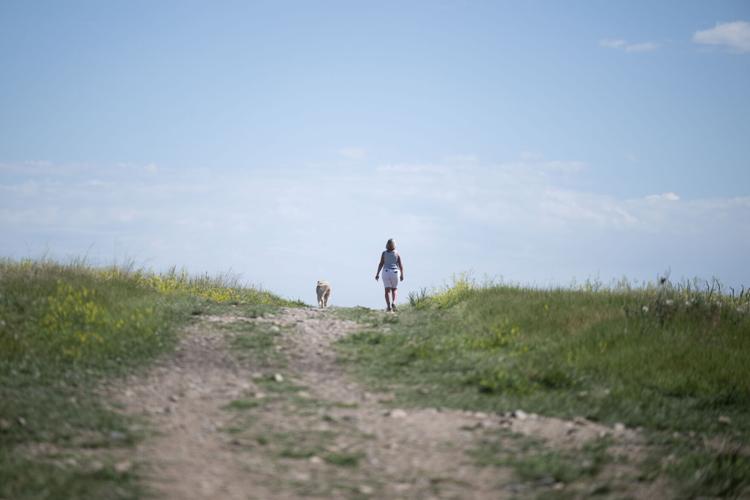

Facing pressure from dog owners, the Westminster City Council on Monday decided to maintain a popular 470-acre off-leash park instead of reducing it to a fraction of its original size.
The council voted, 5-2, to retain the dog park’s current size in the massive Westminster Hills Open Space property — but with a stipulation that it could shrink by 20 acres with future zoning amendments.
By doing so, the council appeased people upset by the original proposal to shrink the off-leash dog park to 33 acres.
The debate over the park’s future has pitted dog owners and residents against each other, offering points and counterarguments that involved dog poop, native wildlife and open space.
Technically, the council adopted a city code for the “Westminster Hills Open Space Dog Off-Leash and Natural Area.” The city’s next step is to outline regulations tailored for the park.
‘Yes, I said poop’
The city’s Parks, Recreation and Libraries department had pushed for shrinking the size of the dog park, arguing it has negatively affected the habitat.
“We’re trying to correct something that’s been going on for a long time on that particular piece of property,” Parks, Recreation and Libraries Director Tomas Herrera-Mishler said on Monday night.
A city study showed that the dog park has affected ecological growth in the area, ranging from preventing wildlife habitation to an increase in nitrogen and E. coli bacteria from dog waste.
“There’s wear and tear on the landscape, invasive plants are taking over and we have a poop problem,” Mishler previously said. “Yes, I said poop.”
In a previous meeting, the parks director said workers annually haul 3,500 pounds of fecal matter from the area’s underground vault receptacles.
In 1985, Westminster became the second city in Colorado to establish a dedicated municipal open space preservation program, providing “green” buffers between developments. Often seen in the Westminster Hills Open Space are bald eagles, burrowing owls and endangered frogs.
More than 750,000 people annually visit the open space, which provides views of the Front Range and open space as far as the eye can see.
The area also acts as a vital link in a 13,000-acre network of protected shortgrass prairie, which is located in one of most threatened ecosystems in the state, according to the park’s website.
Since 2001, Westminster has allowed off-leash dogs to roam around parts of the open space. Roughly seven years later, the entire 470-acre property has grown to be a massive off-leash dog park, while also serving as an open space for runners, hikers, bicyclists and others.
It’s so enormous that all 48 metro Denver area parks combined could easily fit into the space.
Before it became a dog park, mostly cattle and prairie dogs roamed the area.
Shrinking dog park’s size remains an option
Monday’s action only updated city code to “match the practice” of keeping the entire open space “an off-leash dog area,” according to city spokesperson Andy Le.
“The way we classified the land didn’t match the use,” Le said.
But it also comes with the potential of shrinking the off-leash park, depending on future conditions of the open space, according to the city manager’s office.
Westminster expects to develop what’s called an Area Specific Management Plan, which would include regulations for new trail alignments, benches, shade structures, parking lot redesigns, signage, and ecological restoration, according to city officials.
That process, which could take up to a year, would cost a little over $1.3 million.
The proposal had divided residents, even among dog owners, and accusations flew in all directions.
In a letter, Carol Gosenheimer, a Westminster resident, said councillors have “shown no concern for Westminster residents at large.”
“You’ve dismissed the research of countless experts. You’ve ignored nonprofit organizations, and sister municipalities on this subject. You’ve eagerly aligned yourselves with a very small, vocal interest group,” she said. “You’ve pretended the high emotion and sympathetic stories from dog owners justifies acting against the best interests of the land and the majority of this city’s residents.”
Gosenheimer cited a survey, which she said showed that that 90% of Westminster residents “value open space for its protection and preservation of land and wildlife, while less than 18% of residents use dog parks across the city.”
“Yes, this particular space is important to dog owners. This particular space is ALSO important to residents who want to walk their dog on leash without confrontation. It’s important to families with small kids, owners of reactive dogs and physically fragile residents,” she said. “It’s important to all residents who want to walk in that beautiful open space without being confronted by off-leash dogs. It’s important to native wildlife, the overall ecosystem, and our wellbeing as an entire community.”
Others defended keeping the dog park.
“I wanted to reach out and ask if you guys could please leave the dog open space in Westminster as a dog open space for families,” Michael Wood said in a transcribed voicemail. “Love taking my family and my dogs there and enjoying some beautiful Colorado time.”
“I would like the dog open space that is up for debate to remain open. It is an integral part of our community. And it is a very beautiful location that money cannot buy,” Joshua Wood also said in a voicemail.
Some councilmembers and residents complained that city staff did not provide sufficient information prior to the vote.
“We’ve provided an objective approach to managing the land,” said Cindy Staudt, one of the organizers of the group Westy Dog Park Guardians, which opposed reducing the dog park’s size. “They’ve had one goal in mind and that is to cut the off-leash part of the park to 33 acres. I don’t trust the parks department but I do have confidence in city council.”
Le, the city spokesperson, said Westminster has learned from the experience.
“We could’ve introduced this in a better way,” Le said. “We learned a lot from this experience and we will do a better job engaging the community early and often.”
The first, right step?
During Monday’s meeting, Councillor Obi Ezeadi expressed his support for keeping the dog park but was initially confused over the language of what the council was voting on.
“It’s what a lot of people wanted — which is to keep the existing size of the dog park, and accomplishing these other objectives on ecological restoration and the recreation activities,” Ezeadi said.
Mayor Pro Tem Sarah Nurmela and Councillor Claire Carmelia voted against the designation.
“I understand this is an open space designation, but the attribution of an off-leash dog park for the entire area doesn’t resonate with what I’ve heard,” Nurmela said. “I was hoping this process would allow for some property management to retain more of this area as open space and to allow for — still the largest in the state — this dog park to exist.”
Councillor David DeMott, who backed retaining the dog park, said the action isn’t perfect, but that “this is the first, right step.”
“Things have changed over time, and I think we need to protect the property. But I also think when we give things to the residents that they have enjoyed, that we make sure we maintain that,” DeMott said.
Councillor Kristine Ireland, who hesitated, said she would support the designation, as long as city staff “does their homework” and that there would be amendments in the future.
Mayor Nancy McNally ended the nearly four-hour long meeting by saying, “We have a ton more work to do. This is just the first step. (It) might look different as it goes on. I don’t know. But we have to start somewhere.”
Reporter Carol McKinley contributed to this article.