







Underground Music Showcase highlights gumbo of local genres
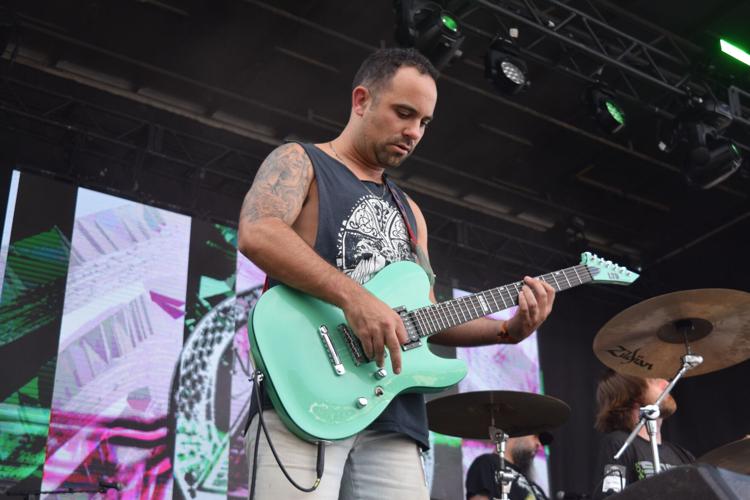
Native Daughters, a riff-based post-metal unit with two drummers, helps kick off a weekend of live music at the Underground Music Showcase on Friday.
Sage Kelley sage.kelley@denvergazette.com


Splattered over a mile of stages and participating venues, the Underground Music Showcase (UMS) opened Friday night for its 24th birthday with an synthesis of sound.
Over 700 artists — making up around 250 bands — are scheduled on the four outdoor stages and 10 indoor venues over three days. Over 80% of the artists are based in Colorado, according to UMS Co-Manager Jami Duffy.
The self-proclaimed largest music festival in Denver not only showed guests the melodic tastes that the state has to offer, but also highlighted an interesting conundrum — ironically tied to the diverse aspects that makes the festival shine — Denver doesn’t have a specified sound.
Referred to as both a gumbo and punchbowl by local artists performing at the festival, the Denver music scene seemingly is both colorful and a bit unorganized.
A look back
Before defining — or better yet, unraveling — what exactly the genre or “sound” of the region is, it’s important to take a fish-eyed look at the biggest bands to pop out of the Centennial State, even if they haven’t performed at UMS.
The first UMS, though not fully titled at the time, began in 2001 when the Denver Gazette’s very own John Moore ran a poll inquiring about the local bands that needed more mainstream attention.
Topping the poll was 16 Horsepower, a goth-country rock band based in Littleton that felt as if sonically ripped from a Flannery O’Connor story.
Future Grammy winner, DeVotchKa, also made the list. DeVotchKa shared the slightly alternative country aura of 16 Horsepower, except sliding into a more folk, lighter approach.
Interestingly, the folkish, alternative country sound can be tagged onto a few of the most popular artists to have reigned from the state. For example, The Lumineers, one of Denver’s biggest successes, continued on that stomp-clap sound.
“I think there was a Denver sound and it was pretty soft,” Michael McGrath, a photographer that has been shooting UMS since its inception, said during the festival Friday. He pointed toward the folk offerings of Nathaniel Rateliff and Gregory Alan Isakov as the stereotypical sound, along with the aforementioned success stories.
“It’s kind of what people think is going on here, but I’m like, ‘Nah man. There’re metal kids here. There’re hip-hop kids here,'” he said. “We’re not all wearing straw hats and deeply contemplating things. There are some rockers here.”
The most commercially successful band to come from Colorado, The Fray, didn’t follow in the Rocky Mountain footsteps with twangy strings and pseudo-country singing, though. The Fray fell neatly into the era-centric genre of soft rock.
Then there’s Pretty Lights — an electronic dance music (EDM) artist — Big Head Todd and the Monsters and The String Cheese Incident — jam bands — and Flobots — hip-hop.
A look forward
Though the folky, mountain sound of the early 2000’s was showcased by a few bands during UMS’ 2024 rendition, it’s fallen a bit from popularity. The alternative-country hybrid is no longer the sound of Denver.
There might not even be one at all.
“It’s difficult,” Avery Jacob, emcee and self-appointed “chief rocker” of Beasts of No Nation, said about pinpointing what the Denver sound currently is. “There are so many talented musicians and so many talented bands. They’re all doing something different.”
Jacob added that you see a plethora of artists jumping between genres with different collective units, creating for an overall mix-match throughout the city.
“You play an open mic and there may be a drummer or guitarist that saw you before and says ‘I like what you’re doing. I’d like to get involved,’” Jacob said. “Then that creates an opportunity for collaboration. For creating something new.”
Jacob and Beasts of No Nation, a 10-piece Afro fusion band who began in 2023 and is playing UMS for the first time, are a perfect representative for the amalgamation of local sound that he pointed toward.
The band, filled to the brim with artists from different cultures and backgrounds, blends together hip-hop, funk and the highlife genre from Ghana to create a silky-yet-feet-tapping sound.
But while Beasts of No Nation works to craft a genre of its own, Jacob does believe there are separate, mainstay sounds in the region.
“To me, Denver has a really big jazz scene, EDM scene and jam scene,” he said. “Those are the genres I see all over the place. Within that, there are a multitude of subgenres, though.”
Debjit Das, a musician with the two-piece Shae District alternative dance group, agreed with the sentiment.
“I think there’s definitely a sound,” Das said. “I think it’s 100% jam band and bass music. There are plenty of sounds in Denver, sure, but I think those two are the distinct ones.”
Though Shae District could technically fall into the electronic bass music category, they stray more melodic with Das taking up the microphone to provide harmonious singing — something not often seen in the genre.
And while certainly some of the 2024 UMS lineup could also be classified as one of the two, with over 200 bands, all genres are represented fully.
“I don’t think there is a Denver sound,” Kayla Marque, an alternative-pop songwriter and UMS mainstay, said. “What is marketed as the Denver sound is not very inclusive. A lot of alt-rock, jam bands and folk. That doesn’t come close to encompassing the wide array of creativity that exists here. Denver has so much live music that it’s more of a punchbowl than a specific flavor.”
The main genres of folk and jam are usually tied to white culture, according to Marque, overlooking the diverse ethnic backgrounds that bands like Beasts of No Nation, Shae District and Marque, herself, show in the area.
Marque’s work, for example, doesn’t fall into any genre, though often typecast as R&B. Her work is ethereal, slowly moving and heart wrenching.
“It’s always been a struggle of mine, especially internally, just feeling like I don’t fit in,” Marque said. “It eventually became clear to me that I needed to carve my own path.”
Marque eventually created her own verbiage — sparkly dark pop — to describe her genre, intentionally crafting the way that she wants to be acknowledged.
But maybe the lack of defined sound isn’t a bad thing, but a shining highlight of the creativity and openness beaming throughout the area.
“For the most part, people here are very open-minded. That allows for you to take risks and experiment,” Das said of Denver, noting that he chose Denver over bigger cities because of its lack of cookie-cutter direction.
“It’s an amalgamation of people. An amalgamation of cultures and outlooks,” Jacob said. “That’s really what community is — diversity personified. The Denver music scene has a lot of diversity and sound, which makes the scene different than others.”
UMS beyond
Regardless of what the actual “sound” of Denver is, UMS is proof that the music scene, though slightly undefined, is going strong in the city.
Since its inception, UMS has grown into the music festival behemoth that it is today, now estimating around 10,000 guests per day at the various outdoor and indoor stages throughout South Broadway.
Along with the countless concerts, UMS also holds Impact Days during the festival, providing meetings and professional development opportunities for performing artists. The music conferences also focus on mental health, providing resources to the artists, according to Duffy.
The focus of the festival still remains in that inclusivity, showing the different genres and backgrounds that makes Denver special.
“We wanted to expand what inclusion looks like,” Duffy said of non-profit organization Youth on Record and for-profit marketing agency Two Parts, who formed UMS LLC in 2021 after Two Parts purchased the festival from the Denver Post Community Foundation in 2018.
“It’s offering different musical choices,” she continued. “Ensuring that we have all genres represented and ensuring that we have a real focus on BIPOC representation, LBTQ+ representation and increasing the number of artists with disabilities who are performing at the festival.”
To the artists, UMS is a chance to get together and celebrate that inclusive community.
“At first, I was just happy to be a part of it,” Marque said of her first UMS performance 10 years ago. “Now, it feels like a back-to-school night or a reunion of sorts. It’s just a way for all of the artists in our community to be in the same place at once.”
“You might have different acts that gig together and get to see the different sets, but most of us are just so busy gigging that we don’t get to support each other directly,” Jacob said. “UMS is a huge community moment of camaraderie and joy.”
To concertgoers, the fun is in the discovery.
“I’m from Austin, so it kind of reminds me of the way South By Southwest was when it first started,” Chad Stearns said during a show Friday. “There aren’t a bunch of international headliners. It’s small label, no label, independent musicians. It’s just great.”
“It’s that homely feel,” Gina Stearns said. “I love that.”
UMS will continue on through Saturday and Sunday. Tickets and information can be found at UndergroundMusicShowcase.com.


Denver area events for Feb. 13
Carlotta Olson
carlotta-olson@denvergazette.com
Updated 3 hours ago
If you have an event taking place in the Denver area, email information to carlotta.olson@gazette.com at least two weeks in advance. All events are listed in the calendar on space availability. Friday Bugs and Brews: Romance is Wild — With encounters, craft beverages, fun activities...

Carlotta Olson
Reporter
Colorado New Play Summit turns 20 this weekend
John Moore
john.moore@denvergazette.com
Updated 15 hours ago
Arts news: Four developing scripts will be presented for future consideration on the Denver Center Theatre Company’s upcoming seasons Things are rapidly changing in the American theater. But the Denver Center Theatre Company’s place as a major player in new-play...

John Moore
Reporter
Denver area events for Feb. 12
Carlotta Olson
carlotta-olson@denvergazette.com
Updated 3 hours ago
If you have an event taking place in the Denver area, email information to carlotta.olson@gazette.com at least two weeks in advance. All events are listed in the calendar on space availability. Thursday Snow Strippers — 7 p.m., Fillmore Auditorium, 1510 Clarkson St.,...
Carlotta Olson
Reporter
Thriller! Denver 12-year-old joins Broadway cast of Michael Jackson musical
John Moore
john.moore@denvergazette.com
Updated 1 day ago
Denver School of the Arts student Blake Channing Taylor, his dad and uncle ‘are going to make this work’ When I met young Blake Channing Taylor (not Tatum!) in August 2024, he was dressed as Snoopy, complete with an attached...
John Moore
Reporter

Denver area events for Feb. 11
Carlotta Olson
carlotta-olson@denvergazette.com
Updated 2 days ago
If you have an event taking place in the Denver area, email information to carlotta.olson@gazette.com at least two weeks in advance. All events are listed in the calendar on space availability. Wednesday Downtown Denver Food Tour — 1-4 p.m., Denver, $63.60 and...
Carlotta Olson
Reporter
Denver area events for Feb. 10
Carlotta Olson
carlotta-olson@denvergazette.com
Updated 2 days ago
If you have an event taking place in the Denver area, email information to carlotta.olson@gazette.com at least two weeks in advance. All events are listed in the calendar on space availability. Tuesday Denver Cocktails Tour — 4:30-6:30 p.m., Denver, $83.74-$90.10. Registration required:...
Carlotta Olson
Reporter
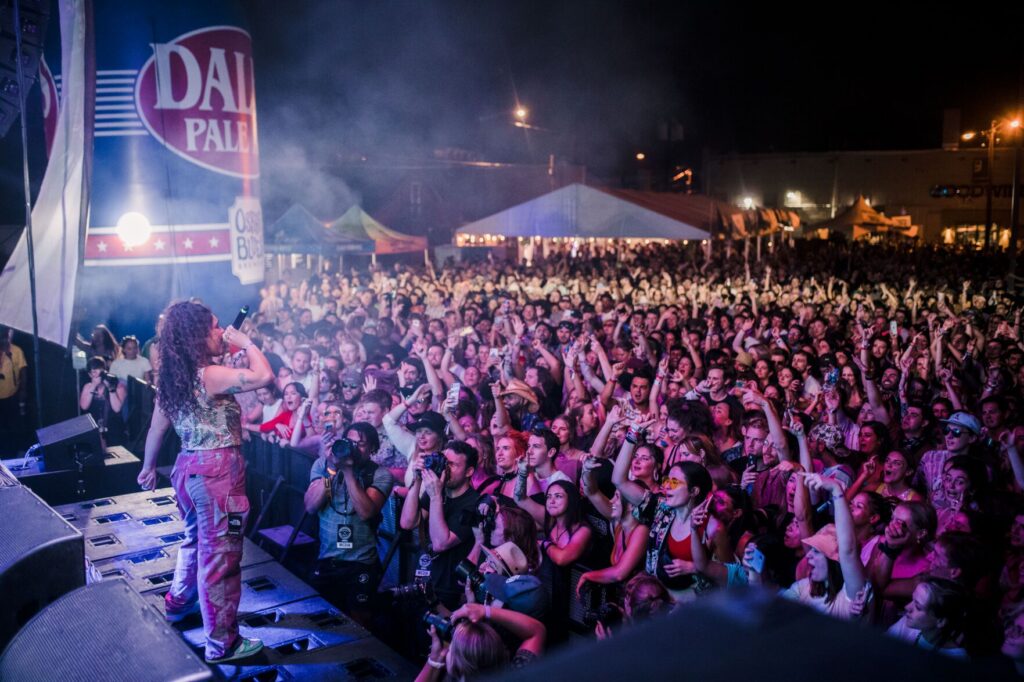
Denver’s Underground Music Showcase returns this summer, but moves
Sage Kelley
sage.kelley@denvergazette.com
Updated 3 days ago
Despite tearful goodbyes, the Underground Music Showcase won’t miss a beat. The three-day South Broadway music festival will return in the summer of 2026 at a new location — the River North Art District — despite fears last year that...
Sage Kelley
Reporter
Denver area events for Feb. 9
Carlotta Olson
carlotta-olson@denvergazette.com
Updated 3 days ago
If you have an event taking place in the Denver area, email information to carlotta.olson@gazette.com at least two weeks in advance. All events are listed in the calendar on space availability. Monday Downtown Denver Food Tour — 1-4 p.m., Denver, $63.60 and...
Carlotta Olson
Reporter
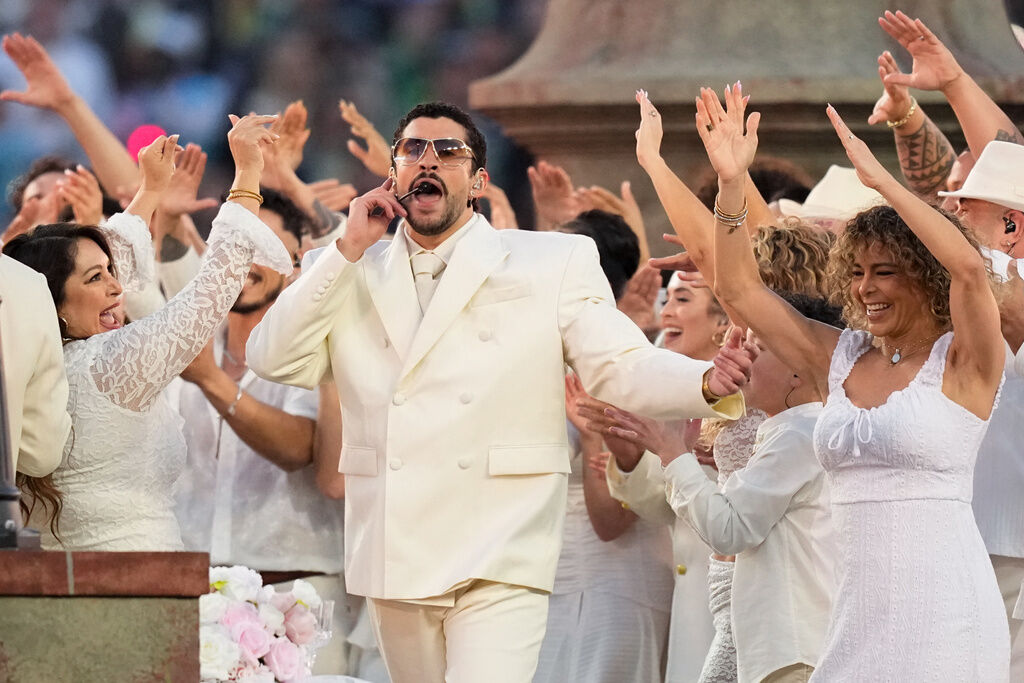
Bad Bunny brings Gaga, Martin and Puerto Rican pride to Super Bowl as Green Day, Puth play pregame
Jonathan Landrum Jr.
jonathan.landrum.jr.@associatedpress.com
Updated 4 days ago
SANTA CLARA, Calif. (AP) — Stars have been front-and-center at Super Bowl 60, with Chris Pratt and Jon Bon Jovi introducing the teams, a series of soaring pre-game performances and a much-anticipated halftime show from Bad Bunny. Highlights from Levi’s Stadium include...

Jonathan Landrum Jr.
Reporter
Rich Cowden abruptly exits top job at Aurora Fox
John Moore
john.moore@denvergazette.com
Updated 7 days ago
Executive producer of city-owned theater organization says ‘it was clear it was in the best interest of the theater.’ Rich Cowden has abruptly left his position as executive producer of the city-owned Aurora Fox Arts Center after just 2½ years....
John Moore
Reporter
PREV
PREVIOUS

The Fray is coming back to Boulder, sans Slade | Arts News
The Fray is back, if somewhat … well, frayed. One of the most successful bands in Colorado music history has announced a return that can’t exactly be called a reunion because founding lead singer Isaac Slade isn’t taking part. Band rep Taylor Perry calls it more like “the start of an exciting new chapter” for […]
Denver cancels Five Points Jazz Fest, opts for grant program
Denver Jazz Festival fans are singing the blues after the city of Denver announced Thursday the popular, 21-year Five Points neighborhood staple will not happen in 2025. Denver’s Arts & Venues officials announced the one-day music event honoring the neighborhood’s long history of the famed genre will be canceled in lieu of a grants program. […]