







Denver artist Sandra Kaplan won’t paint herself into a corner
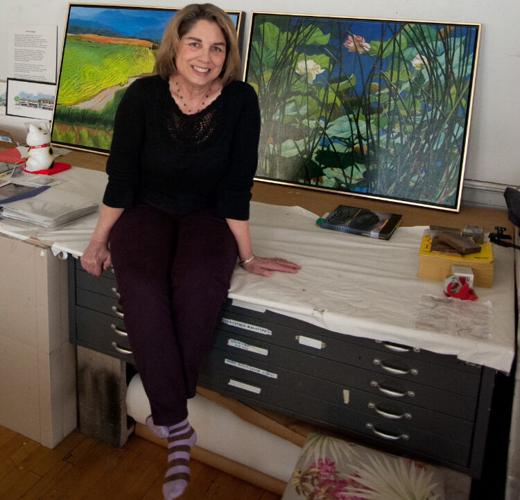
Sandra Kaplan, 81, continues to improve as an artist and an art instructor.
Courtesy of Sandra Kaplan
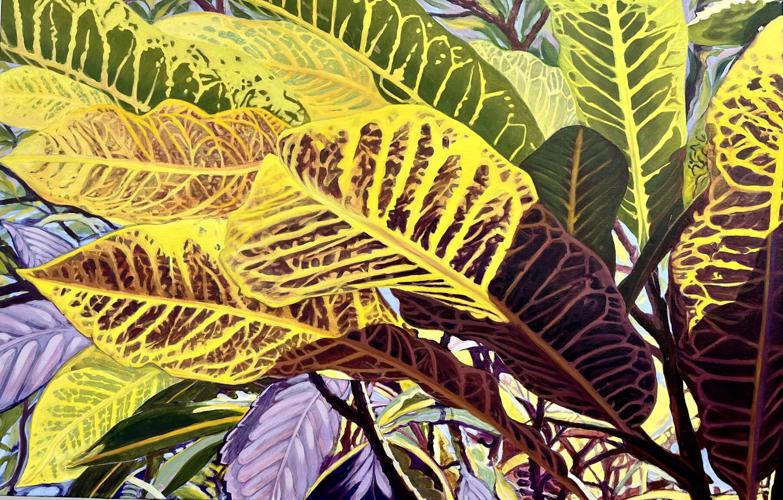
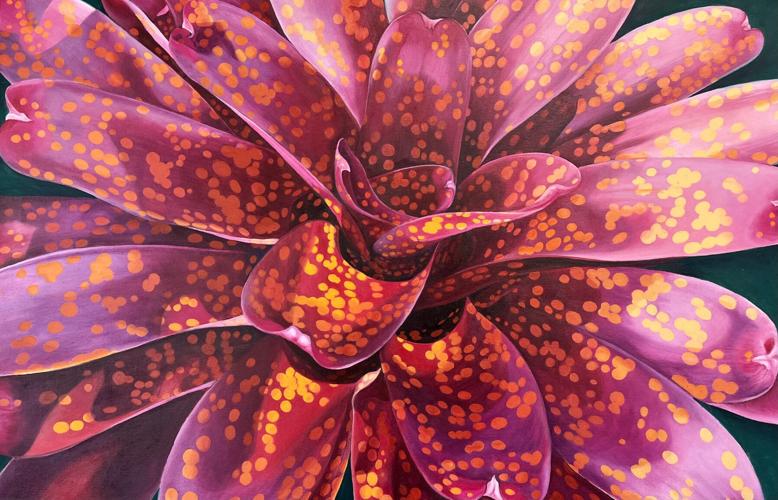
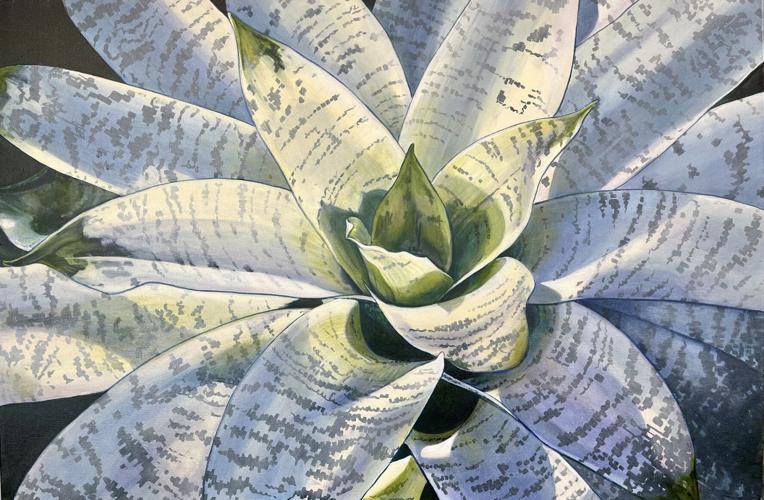
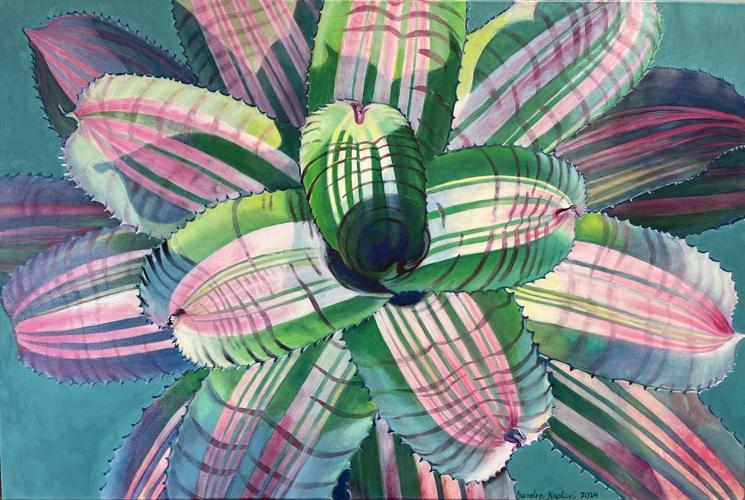
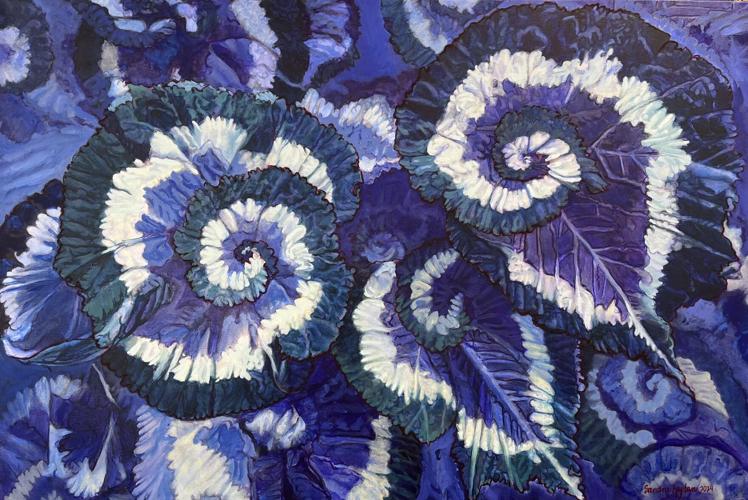
Sandra Kaplan, an outstanding artist living in Englewood, has taught painting classes at the Art Students League of Denver for more than 20 years. She knows well the importance of art instructors.
In an interview in her Denver studio, Kaplan recalled an assignment from her kindergarten teacher. The project involved crumpling up a sheet of paper, then coloring in the spaces between the folds.
“When I was finished, I took a black crayon and drew a big black circle in the center, and my teacher had a fit because that wasn’t part of the assignment,” Kaplan said. “When I think about it, art is really about setting your own rules.”
Kaplan’s bio on the Art Students League of Denver website reads: “Kaplan’s paintings have been exhibited internationally [and locally], most recently in the Art Gallery of the Fulginiti Center for Bioethics and Humanities on the CU/Anschutz Medical Campus in Aurora. Her work has been recognized in the New York Times, Art in America and other publications. She is a former secretary of the Board of the Museum of Contemporary Art|Denver.”
Kaplan — currently painting a stunning series of intricately patterned, tropically colored close-ups of foliage and flowers — is a transplant to Denver. She grew up in Cincinnati, where her parents owned a hardware store.
“I made collages of sandpaper and copper wire,” Kaplan said. “And I always loved to draw.”
At age 7, her drawing of an elephant won an art competition at the Cincinnati Zoo.
“The prize was a big box of pastels,” said Kaplan. “Unfortunately, it’s the only medium I don’t like. I can’t stand the feel of them.”
Kaplan prefers liquid paints: watercolors, acrylics and oils. Currently, she’s in an oils phase, painting leaves and stems — realistic works so closely observed they tilt into abstractions. Now 81, Kaplan clearly is still improving. Her foliage series is arguably her best work yet.
Her consistent evolution is no accident. Kaplan teaches one or two mornings a week, but she’s disciplined about working in her studio and devoting herself to her creative process.
“I’m here five days a week in the afternoon, almost every single weekday,” she said.
Kaplan throughout the course of her long career has drawn inspiration from nature, along with the mathematical patterns found in the natural world. She has painted landscapes, but also outer space.
“Part of the frustration for me as an artist is that people see me as only painting pretty pictures. That has never been my goal,” Kaplan said. “I like flowers, but I like how they grow. I like their patterning and how they often have the Fibonacci sequence. Looking back, I see patterns were always important.”
Something of a prodigy, as a high school senior Kaplan studied drawing at the Cincinnati Art Academy for three hours each school day. She went on to college at the prestigious Pratt Institute in Brooklyn, N.Y.
“Abstract expressionism was all the rage in the late ‘50s and early ‘60s,” she said, “We learned that the painting is about marks. I thought it was a fascinating way to look at things. In my art, it was never about telling stories.”
At Pratt, Kaplan earned a degree in printmaking. Asked whether printmaking informs her painting process, Kaplan said, “The major thing — and I run into this all the time in teaching — is that I look at negative space as really important in my work. That comes from printmaking because you have to think in the reverse. When you’re painting, the subject matter and everything together is what makes the painting. It’s the whole.”
The whole of Kaplan’s career includes dozens of exhibitions and many artistic awards. Individuals and corporations collect her work. She has juried numerous art shows and completed countless public and private commissions. She’s about to begin a commission of a whale shark.
Inkfish, the now-defunct gallery, showed Kaplan’s early work in Denver. Inkfish also represented another successful Mile High City artist: Vance Kirkland.
“I didn’t know him well, but Vance was nice, friendly,” Kaplan said.
A seasoned curator and art adviser, Simon Zalkind discovered Kaplan’s work soon after his arrival in Denver in the early 1980s.
“I was struck not only by her technical virtuosity which becomes more refined and evolved with each passing year, but also by her sustained focus on the largest theme of her considerable oeuvre – the plant-life of the region and beyond,” Zalkind said.
“In the hands of a lesser artist the continual return to the same subject matter could easily become repetitive and formulaic. Kaplan’s work, however, retains its freshness, immediacy and its capacity to locate the viewer in the enthralling nature of his or her own awareness,” said Zalkind. “She has a singular gift for returning us to the intimacy of the immense and the immensity of the intimate.”
While the immense American West has shaped Kaplan, the artist recognizes in her work the influences of her youth in Ohio. When she moved to Denver in 1971, Kaplan was painting geometric works with intricate lines. That changed quickly in the wide-open West.
“For me it was less about the light than about the space,” she said. “In Ohio, you never get the long view. Trees block the view. Going down the road, there’s a canopy of leaves above you, totally overgrown.”
She added, “Here, you have to coax up every blade of grass. Here, the big skies! The long views! But I find that those long views are mostly not in my paintings. It’s that close-up view.”
Shortly after settling in Denver, Kaplan made a trip to Arizona, where her fascination with cactus as subject matter took root.
“I was like, oh, my God, look at these cacti! They’re so bizarre. They look like they belong on the moon,” said Kaplan, who has made numerous cacti paintings and has at home an extensive collection of cacti salt and pepper shakers.
“I moved away from geometric works and started painting abstractions of cacti,” she said. “I got better with the paint, and they became more realistic. I’ve always tried to explore.”
Kaplan has toggled between abstraction and realism her entire career. She anticipates a swing away from her current realism back toward abstraction. She’s percolating after a visit to the Colorado Springs Fine Art Center, where works on paper by a famous glass artist inspired her.
“They had a room of drawings by Dale Chihuly. They’re amazing! They blew me away! They’re so beautiful and so inspiring,” Kaplan said. “I know at some point — pretty soon, I think — I’m going to try doing some drawings of my plants with that loaded brush.”
As she continues along her path of lifelong learning, she deepens her own appreciation of art along with her teaching.
“I want people to think about what their paintings are about, and that’s true for artists and for people looking at art. Look a little deeper,” Kaplan said. “It would be worthwhile putting more effort into it.”
As for effort, Kaplan typically pushes her students to persevere.
“The difference between a student painting and a professional artist painting is that last step that pulls the whole thing together and makes it one step beyond,” she said.
And though she teaches intermediate to advanced art students, she encourages anybody with an inkling to try his or her hand at art.
She’s been teaching her husband, the long-time film critic Robert Denerstein, to paint.
“Sandra started me on my art journey more than a decade ago by buying me a sketch pad, handing it to me, and insisting that I begin,” Denerstein said. “Sandra is great at meeting students where they are. I know many of her students, some of whom have studied with Sandra for years. I’ve watched them develop as artists, and I’ve seen Sandra express a rare quality; she can appreciate her students’ achievements as much as she appreciates her own.’’
Kaplan said, “I’m not saying anyone can become a great artist, but anyone can learn to paint or to make art if they’re willing. It takes patience. It’s technical, but it’s also learning how to see.”
For Kaplan seeing is believing, and she believes creativity is an essential element of the good life.
“You start seeing things that other people don’t see. You see things in the world around you that maybe are almost invisible,” said Kaplan, “and that’s exciting.”