







Is there a future for the arthouse cinema in Denver?
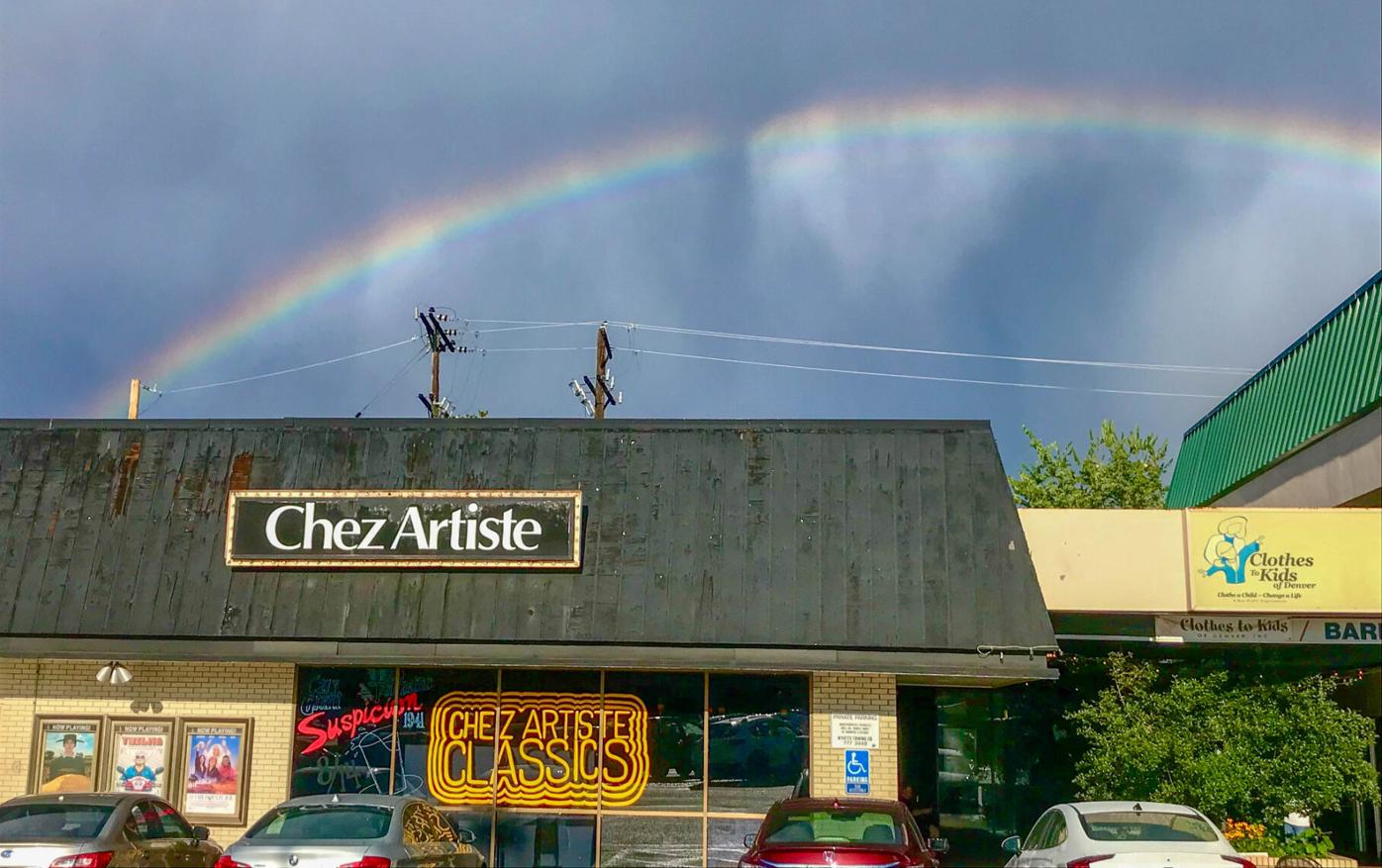
ROBIN HYDEN FOR THE DENVER GAZETTE
A spokesman for Landmark Theatres is calling Sunday’s coming closure of the Chez Artiste arthouse cinema unfortunate but economically necessary.
“We’re not happy about it,” Landmark Head of Brand/Marketing Mark Mulcahy told The Denver Gazette. “We’re as sad about this as anybody else in the community.”
So, why is this happening?
Short answer: Butts in seats.
Longer answer:
“There are a lot of factors that play into a decision like this, but the main one is the way studios are releasing films post-COVID,” Mulcahy said from West Hollywood. “Studios are now streaming their films much more quickly after their theatrical releases, which diminishes their window of economic opportunity at bricks-and-mortar movie houses like the Chez Artiste.
“Especially art films.”


Friends of the Chez Artiste movie theater left a chalk message to patrons on Tuesday (Aug. 6, 2024) saying: “We love you, Chez Artiste.”
In the before times, studios typically designated a promising art film for limited release on 50 or fewer screens nationwide – and usually no more than one per city, Mulcahy said. Those that hit with audiences did very well for the theaters that had them, and often ran for weeks. Positive word of mouth meant expansion to more theaters, and before long you had “The Blair Witch Project” or “A Beautiful Life.”
“But now studios are releasing all their art films at 1,500 or 2,000 theaters at a time, which doesn’t create the same demand we had pre-COVID, when you released on one screen in each market,” Mulcahy said.
A recent example: “Ghostlight” will surely go down as one of the best films of 2024. It screened simultaneously at both the Chez Artiste and Denver Film’s competing Sie FilmCenter for one week only before launching on TV streamers Amazon and AppleTV – never to be seen in a theater again.
Landmark’s decision to abruptly close its five screens at the Esquire and Chez Artiste theaters just three weeks apart represents nearly 40 percent of its foothold in the Denver market.
According to the National Association of Theatre Owners, more than 6,000 movie screens have closed since 2019. All of which has movie fans wondering: Are we in the final reel of the true arthouse cinema in Denver?
Denver Film, for one, says no way.
“I think we’re in a great position, actually,” said Denver Film CEO Kevin Smith, who runs the only nonprofit movie house in the state, operating three screens at the Sie FilmCenter. “We are pretty much on par with both ticket sales and attendance versus this time last year – and this year, we don’t have a “Barbie” or an “Oppenheimer,” he said of the two blockbuster draws of 2023.
Landmark’s retrenchment in Denver actually began in 2017 when it offloaded its 14-screen megaplex in Arvada to the Harkins movie chain. Closing the Chez leaves it with only its six-screen palatial home base in Greenwood Village, and its two-screen Mayan Theatre, whose building enjoys historic preservation protection.
Boulder has the Boedecker Theater, which is housed in the Dairy Arts Center. But really, the only remaining movie houses you can fairly call “arthouse theaters” in the Denver metro area are the Mayan, Sie and Boedecker.
But the line between what is an arthouse and what is a commercial cinema has been completely blurred coming out of the pandemic. The largest purveyor of arthouse films in Denver is the Texas-based Alamo Drafthouse, which offers 24 screens at its three Denver multiplexes. And right now at the Sloan’s Lake Alamo, you will get one daily screening of the brilliant indie hip-hop satire “Kneecap” (performed largely in Irish) – along with 12 (count ‘em) daily screenings of the Marvel Comic juggernaut “Deadpool & Wolverine.”
While Landmark, Alamo and Denver Film’s business models are completely different – Landmark is part of a for-profit global corporation and Sony Pictures acquired Alamo in June while Denver Film remains a mission-driven nonprofit that relies on memberships, sponsorships, grants, community partnerships and general goodwill to make maximum community impact – but the survival challenges are surprisingly similar.
Alamo barely overcame a devastating 2021 bankruptcy. Landmark owned 252 screens when Mark Cuban sold the business to Cohen Media Group in 2018, and that number is less than 175 today. And Denver Film came back from a 56% drop in in-person attendance in 2022 compared to 2019.
Smith said that, like Landmark, art films going straight to streaming platforms “has definitely been an issue for us, too.” He also said distributors are demonstrating a frustrating inconsistency in their release patterns “that shows a clear lack of knowing what they want to do with a film as they continue to learn this new landscape.
“But I do think that one of the benefits of being a nonprofit organization is having an amazing core membership group who still really want to see films in theaters together. Even if a film might be released in a couple different theaters in the same market, or is streaming as well, our members still want to have the communal viewing experience. I think that has definitely helped us.”
As both a local lover and consumer of film, it’s hard for Smith to take anything but sadness from the Chez situation. He said Denver Film will step up both by giving displaced employees priority hiring status, and by recognizing and emulating what the Chez and Esquire have done best.
“I think the first step is just evaluating what programming at both of those theaters could potentially move over to the Sie FilmCenter,” Smith said, citing the Chez’s popular themed retrospective film series.
“It is important for us to understand what those audiences were looking for and really enjoyed there. Then we can think about how we can begin to fill that gap and hopefully bring those audiences over and give them a great experience at the Sie.”
But Smith is just being honest when he says that when five competing screens disappear in a blink, there is opportunity as well.
“When you’re a distributor and you have the ability to work with one corporate entity and put your film into 30 markets with one phone call, that makes it a little bit easier than having to work with every single independent theater to make those deals,” Smith said. “So there have been a lot of times when a film has played the Chez Artiste or the Esquire that we would have loved to play at the Sie FilmCenter but, frankly, we weren’t given the opportunity.
“I think without having those screens, many newer releases certainly will have an opportunity to come to the Sie. Maybe that will mean some films will have shorter runs, but overall we will be able to play more films.”


The Chez Artiste will permanently close on Aug. 8, 2024. This is a look at the newest screen, No. 3.


The end crediuts are rolling for the Chez Artiste after 52 years in southeast Denver. One of its final movies is “Coup,” above.
John Moore is The Denver Gazette’s senior arts journalist. Email him at john.moore@gazette.com

Denver area events for Jan. 29
Carlotta Olson
carlotta-olson@denvergazette.com
Updated 2 days ago
If you have an event taking place in the Denver area, email information to carlotta.olson@gazette.com at least two weeks in advance. All events are listed in the calendar on space availability. Thursday Mitchell and Mingus by the Julie Koenig Quintet — 6:30-7:45...

Carlotta Olson
Reporter
Denver film debut has its moment in the Sundance
John Moore
john.moore@denvergazette.com
Updated 8 hours ago
Seattle critic says Adam Cayton-Holland’s ‘See You When I See You’ compares favorably to ‘Ordinary People’ Denver comedian Adam Cayton-Holland is experiencing the highest highs and, I am assuming, a few lows all at once this week as the film...
John Moore
Reporter

Crisosto Apache named Colorado’s 11th Poet Laureate
John Moore
john.moore@denvergazette.com
Updated 11 hours ago
Indigenous poet will succeed Andrea Gibson, who died of cancer last summer, and serve two-year term Gov. Jared Polis continued to make history Wednesday with the appointment of his third Colorado Poet Laureate: Crisosto Apache, an associate professor at Rocky...
John Moore
Reporter
Weekend things to do around Denver and beyond: Colorado Motorcycle Expo and more
Linda Navarro
linda-navarro@denvergazette.com
Updated 1 day ago
Each Thursday, explore Denver’s essential weekend events curated by The Denver Gazette. Dive into cultural experiences and entertainment delights across the city. Whether you enjoy art galleries, pottery, or outdoor sports, there’s something for everyone in Denver’s vibrant cultural scene....

Linda Navarro
Reporter

Denver area events for Jan. 28
Carlotta Olson
carlotta-olson@denvergazette.com
Updated 1 day ago
If you have an event taking place in the Denver area, email information to carlotta.olson@gazette.com at least two weeks in advance. All events are listed in the calendar on space availability. Wednesday Downtown Denver Food Tour — 1-4 p.m., Denver, $63.60 and...
Carlotta Olson
Reporter

Big change coming to 2026 Great American Beer Festival
Dennis Huspeni
dennis.huspeni@gazette.com
Updated 11 hours ago
For the first time in its more than 45 years of existence, the Great American Beer Festival is moving outdoors. The 48th year of the festival sees it move from its longtime home at the Colorado Convention Center to Denver’s...

Dennis Huspeni
Reporter

Denver area events for Jan. 27
Carlotta Olson
carlotta-olson@denvergazette.com
Updated 3 days ago
If you have an event taking place in the Denver area, email information to carlotta.olson@gazette.com at least two weeks in advance. All events are listed in the calendar on space availability. Tuesday Denver Cocktails Tour — 4:30-6:30 p.m., Denver, $83.74-$90.10. Registration required:...
Carlotta Olson
Reporter

Longtime festivalgoers say the final Sundance in Utah may also be their last
The Associated Press
the-associated-press@denvergazette.com
Updated 3 days ago
PARK CITY, Utah — Attendees at this year’s Sundance Film Festival could not stand in line, step onto a shuttle bus or walk into a lounge without hearing one common question: “Will you go to the festival when it moves...

The Associated Press
Reporter

The Roaring ’20s come to life in Colorado Ballet’s ‘Great Gatsby’
Marc Shulgold
marc-shulgold@denvergazette.com
Updated 3 days ago
The vast second floor of Colorado Ballet’s headquarters was alive with dancers admiring themselves in full-length mirrors, the women garbed in their stunning pastel-colored flapper dresses, the men looking sharp in their tuxes. Everyone dressed for a wild night of...

Marc Shulgold
Reporter

Denver area events for Jan. 26
Carlotta Olson
carlotta-olson@denvergazette.com
Updated 4 days ago
If you have an event taking place in the Denver area, email information to carlotta.olson@gazette.com at least two weeks in advance. All events are listed in the calendar on space availability. Monday Ryan Black Quintet — 6:30 p.m., Dazzle at Baur’s, 1080...
Carlotta Olson
Reporter
PREV
PREVIOUS

Spirit Halloween around Colorado: Here's where 2024's stores are
It might be only August, but the largest Halloween retailer in the country, Spirit Halloween, has announced its Colorado locations for 2024, according to the company’s website. Spirit Halloween has more than 1,500 locations across the United States and Canada, and 33 stores will be open in Colorado, with some starting to sell spooky costumes, […]

Chez Artiste supporters will rally Thursday to rewrite ending of theater's script
Diehard fans of Denver’s Chez Artiste arthouse cinema are dying hard. A party planned by employees to thank longtime patrons of the doomed Landmark Theatre is organically evolving into more of a protest and last-ditch rally to try to somehow save the 52-year old, three-screen cinema that Landmark has announced will permanently close after Sunday. […]