







Opening statements in Boulder mass shooting trial expected Thursday
Ahmad Alissa's trial is expected to last three weeks; he pleaded not guilty by reason of insanity
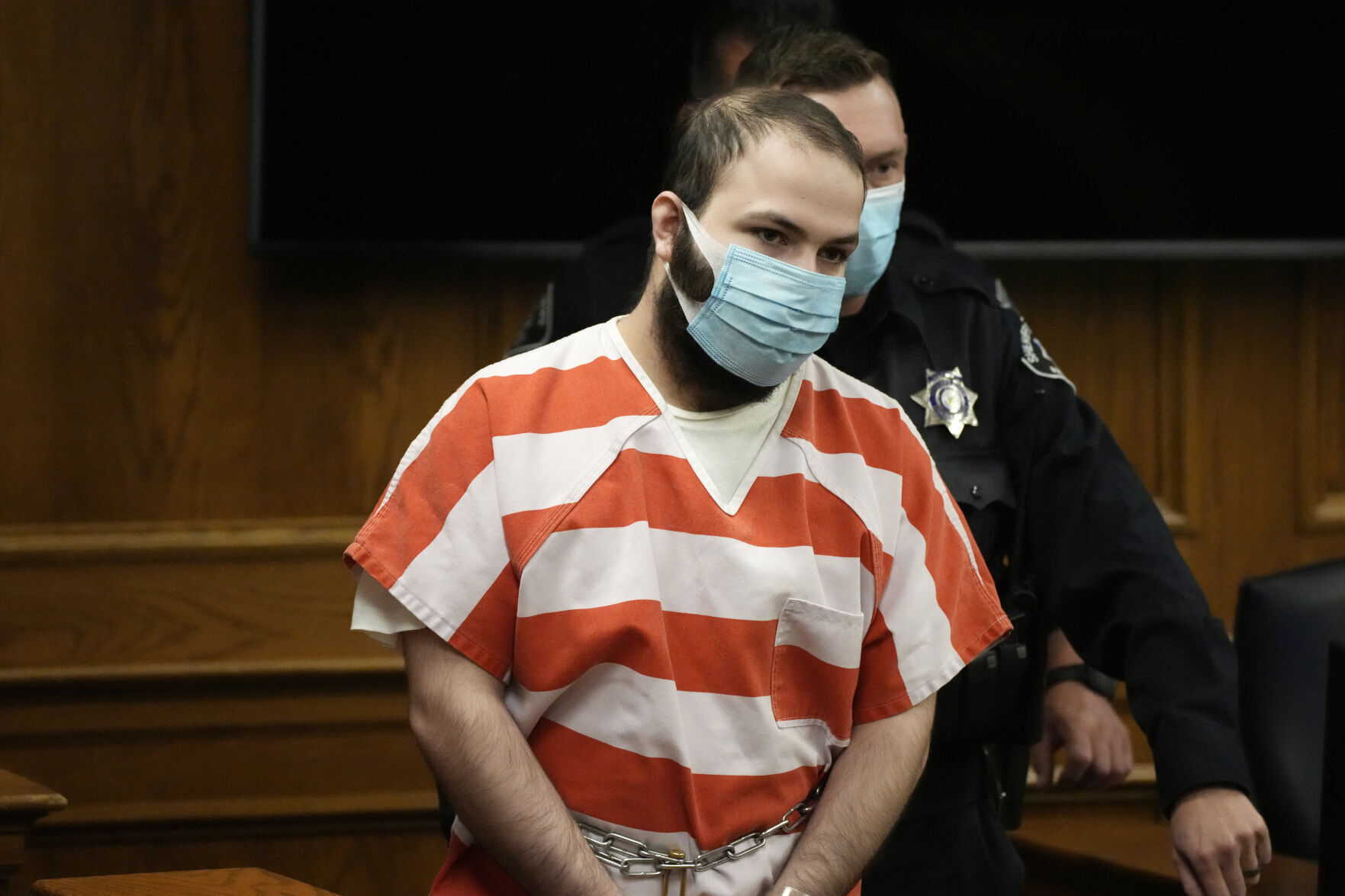
More than three years after the Boulder community was jolted by a mass shooting at a grocery store that left 10 dead, opening statements in the trial of Ahmad Alissa will start on Thursday morning.
Prosecutors and defense attorneys in the King Soopers shooting trial gave observers a sneak peek into how the next several weeks will unfold in Boulder County Courtroom G.
Alissa, 25, is charged with 55 counts overall, including 10 counts of first-degree murder, 38 counts of attempted first-degree murder, one count of first-degree assault and six counts of possessing large-capacity magazines during the commission of a felony in connection to the mass shooting that occurred at the King Soopers on Table Mesa Drive on March 22, 2021.
It is Colorado’s first mass shooting trial since the cases of the 2021 shooting at a STEM school and the 2015 Aurora Theater shooting, both of which were heard in Arapahoe County.
The 16-person panel — 12 jurors and four alternates — was whittled from 44 in just two days, which is widely considered lightning speed for a trial of such magnitude.
Fifteen hundred potential jurors were sent summonses.
Both sides questioned prospective jurors on the topics of mental illness, race and ethnicity and bullying.
The sixteen include a 21-year-old social media manager who lives with his parents; a woman who runs a children’s crisis-prevention team; a 67-year-old woman who refurbishes furniture in her retirement; and Muslim. The Table Mesa King Soopers is the home store for one of them.
Alissa was in the courtroom for the jury selection, but there is little known about his reaction. Reporters could only listen to audio because there were not enough seats in the courtroom to accommodate the press.
Eight media representatives were given seats in a ruling reversal by 20th Judicial District Chief Judge Ingrid Bakke last week, including The Denver Gazette.
Critical video footage of the massacre
“If there is video evidence of somebody hunting down and killing 10 people, who here is gonna need some explanation for all of that killing before you can consider not guilty by reason of insanity?” asked Kathryn Herold, one of the defense attorneys for Alissa, during questioning Wednesday.
Juror No. 3744, a woman, was nodding, so Herold asked her why.
“It takes time to come to a conclusion. Everybody should be heard and I want to hear all sides,” No. 3744 explained. And then she added, “That’s my store, my neighborhood.”
She was chosen as one of the final 16.
Jurors will review video surveillance footage from the King Soopers, as well as three angles of police body camera footage. Some prospective jurors admitted to the court that they may have to turn away.
“I don’t know what my power is to tap out. It’s just that I might need a break,” said Juror No. 3587 haltingly. He was scratched from the list and sent home.
At Wednesday’s start, Herold told the semi-final round of 44 prospective jurors that there were no wrong answers to her questions.
“We’re just trying to figure out your feelings about whether or not you’re the right juror for this case,” she said. “This happened in our community. Ten innocent lives were taken and now you’re being asked to potentially sit in judgment.”
People were often painfully honest.
One man, Juror No. 4141, admitted that he has children in middle and high school who go through shooter drills and was worried that the emotional impact of the March 2021 slaughter would keep him from being fair and impartial.
“You’re worried that this might not be the right case for you?” Herold asked.
“That’s what I’m feeling,” he said.
He was excused.
While Alissa’s defense attorneys, led by Herold and Samuel Dunn, did not assert that Alissa committed the mass shooting, he pleaded not guilty by reason of insanity in November 2023 following a diagnosis of schizophrenia.
Juror No. 3584, a real estate broker, was also excused by the defense when she noted that she was worried about a condition which gives her an abnormal heartbeat.
“For three weeks, I may or may not be able to participate if my heart gets broken,” she said.
On the other hand, Boulder County Assistant District Attorney Ken Kupfner told the room that emotion is OK.
“We are not looking for unemotional robots,” he said. “We want people with life experience.”
Bullying, race and ethnicity
Ahmad’s attorneys asked prospective jurors if they were ever bullied and how they handled it.
Juror No. 3856 said he was bullied to the point where he could not talk to people.
“You are bullied because you are different,” he said.
“Would he stand up to being bullied in the jury deliberation room?” attorneys asked.
“I tend to be one of those people who would back away.” Scratch No. 3856.
Juror No. 3702, who is a female engineer, spoke up without being called on.
“I’m not conflict averse,” she said. “I don’t want to be accused of violence for persisting.”
Alissa is one of a family of 11 who immigrated from Raqqua, Syria, 22 years ago.
When Herold asked if anyone in the jury pool was of Arab-American descent, no one raised a hand.
One woman noted that the attitude toward mental health “is different in different cultures.”
But plenty of the prospective panel said that they would not judge Alissa based on his race or ethnicity.
Juror No. 4106 was Bosnian and a Muslim.
“I wouldn’t want someone to think of me differently just because I’m from somewhere else,” he said.
Juror No. 3815 said she was engaged to an Arab-American who lived in Salt Lake City, but it didn’t work out. She said that the fact that Alissa did not seek out mental health help may have been because of his cultural background. She made it on the jury.
Among the jurors who had possible reasons to step down, one knew a Boulder police officer from church.
Boulder Police Officer Eric Talley was killed that day.
The father of another worked in law enforcement in New York.
Among those who were excused were a man who, after consideration, decided that it would be too hard to miss three weeks of work to sit on the jury. Another was a man in the process of CPR training who didn’t realize how “extensive” serving on a jury would be.
There was a software engineer, a behavioral therapist, a retired high school math teacher and a nurse. The men and women ranged in age from people in their 70s to a 21-year-old social media manager who lives with his parents.
All were Boulder County residents, some who have been in town since the 1970s and others who have lived there for eight years.
The trial is expected to last three weeks.
