Denver slaughterhouse advocates oppose ballot measure, citing job losses and rising food costs
Animal rights activists argue slaughterhouses are inhumane, while employees defend operations
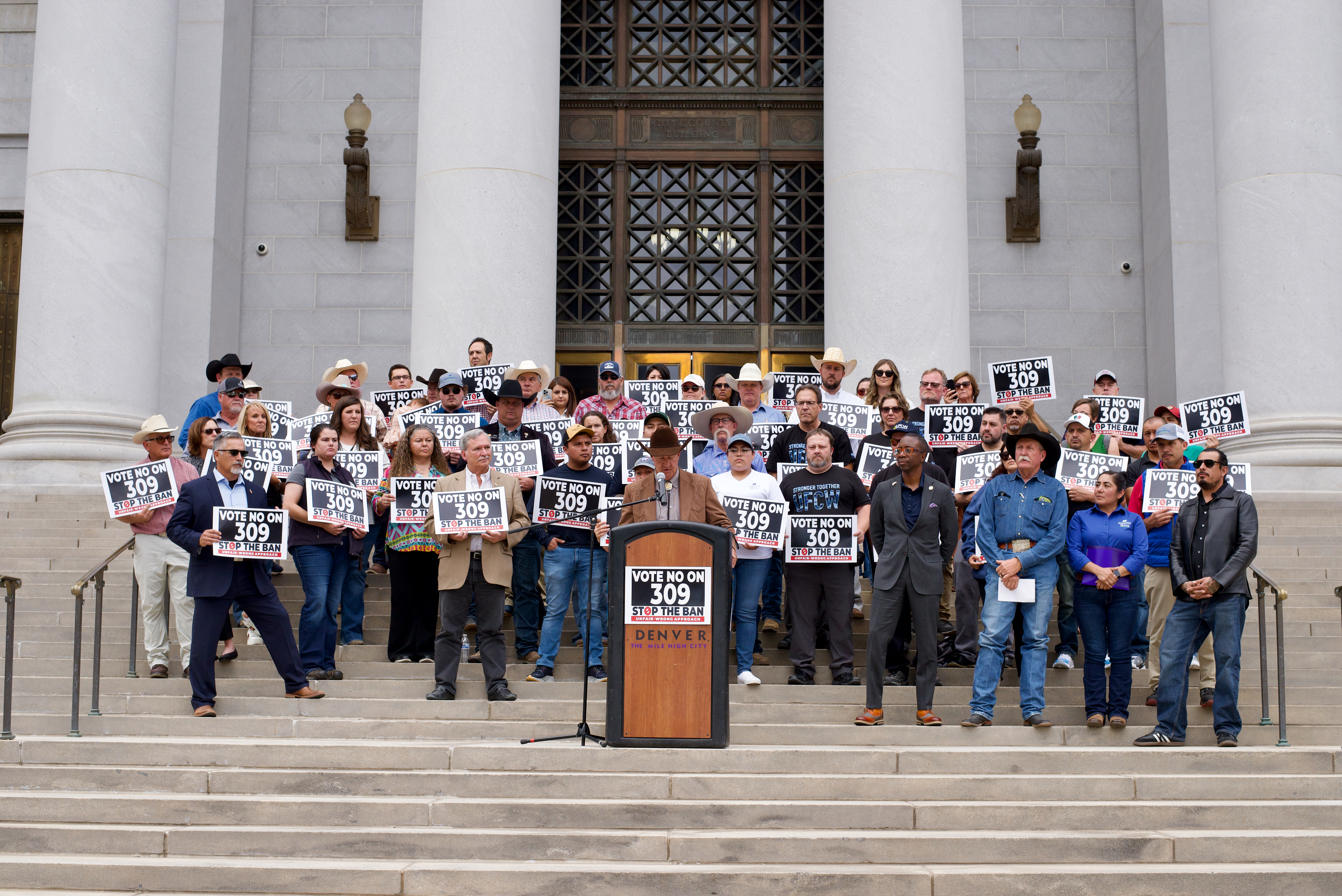
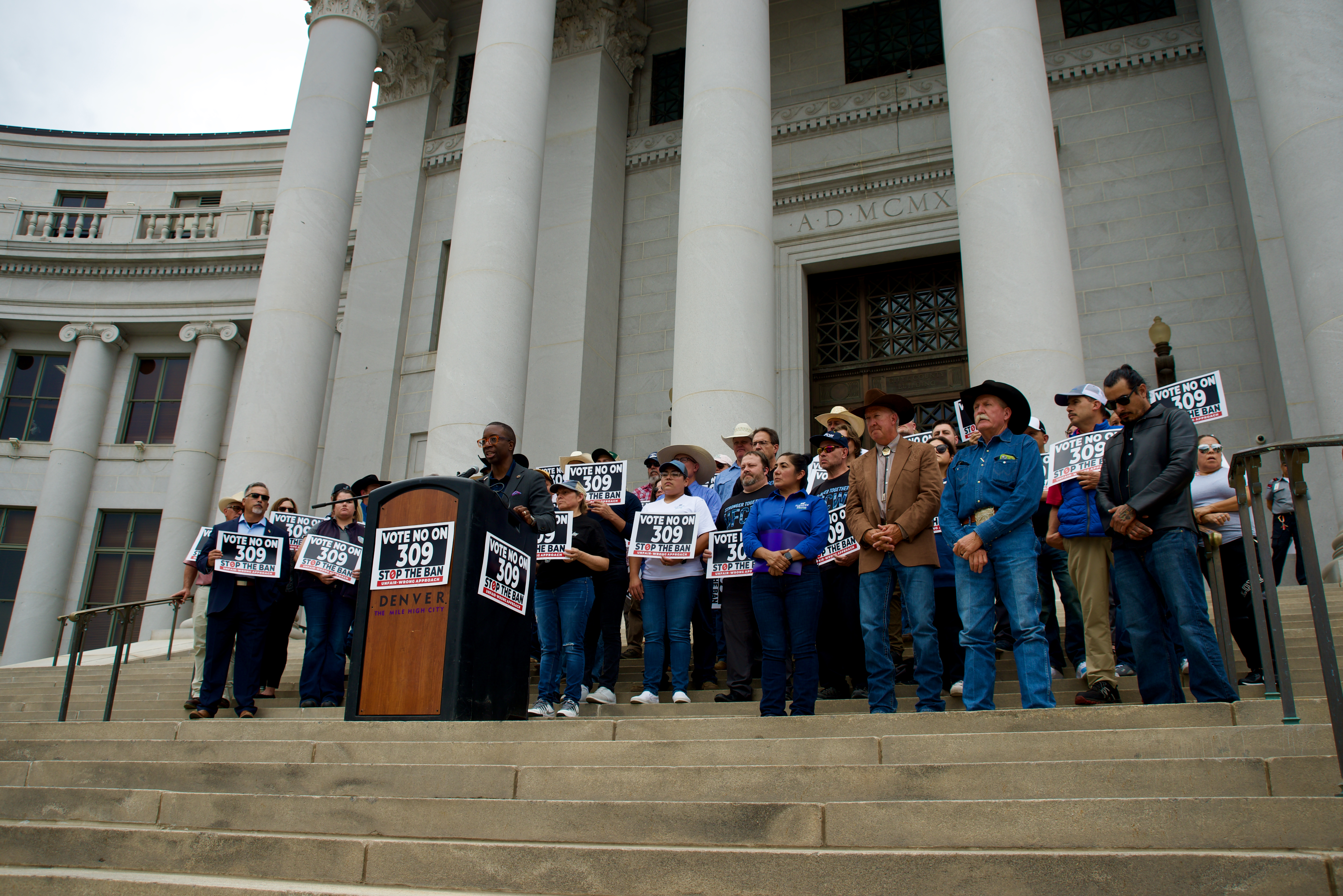
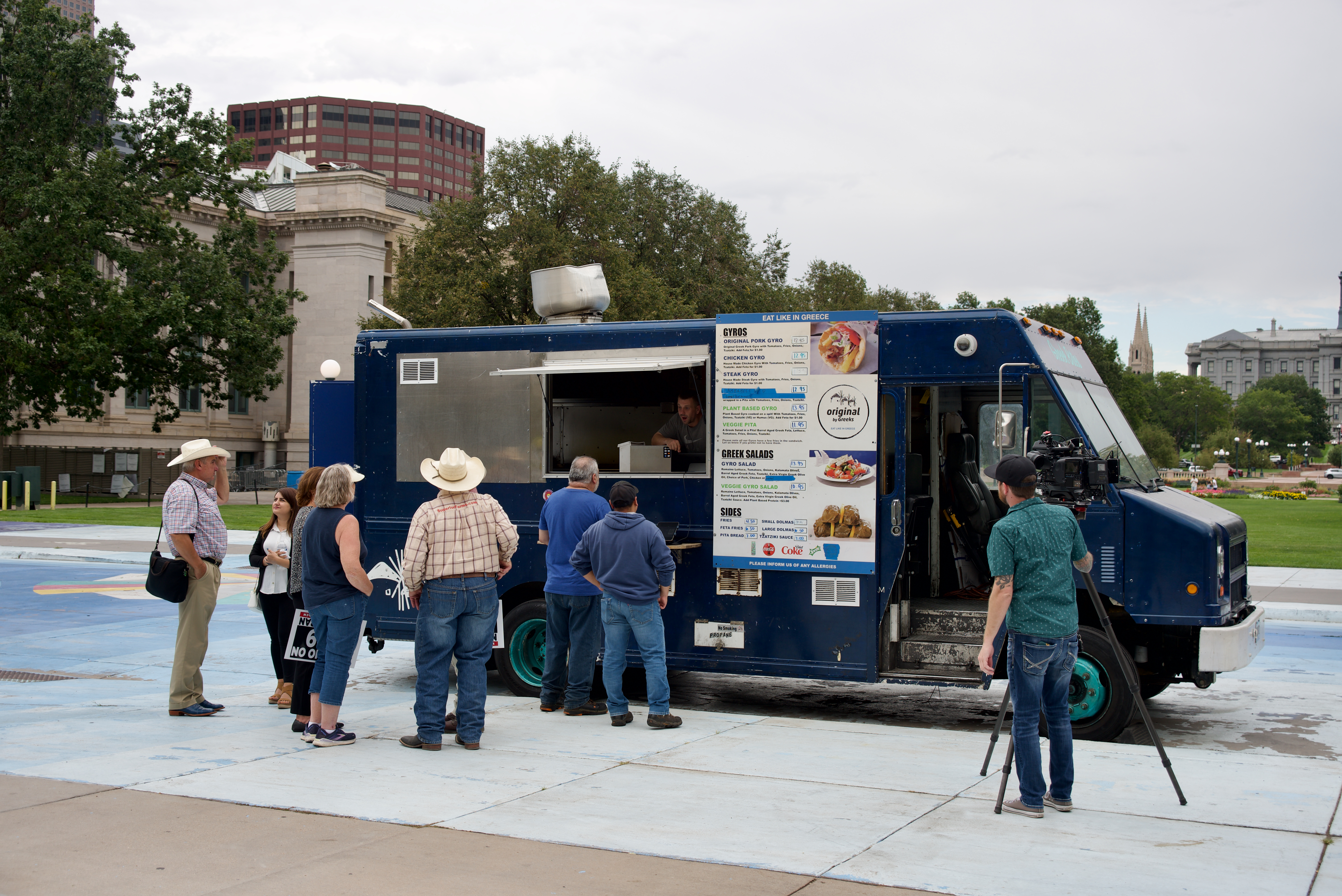
The smell of freshly cooked meat permeated the air outside the Denver City and County Building Wednesday afternoon as supporters of Denver’s only slaughterhouse gathered to oppose a ballot measure that seeks to shut it down for good.
At stake are roughly 160 jobs and, according to one study, at least $215 million in economic benefits to one of Denver’s poorest neighborhoods.
A group of activists, who have formed the group Pro Animal Future, initiated the ballot measure, arguing that slaughterhouses are inhumane to animals and workers. They previously called the industry “one of the worst” in Denver.
Specifically, they cite ongoing violations of the Clean Air Act and residential sentiment turning against Superior Farms and their slaughterhouse operation. The slaughterhouse employees reject the claims that they’re mistreated and say day-to-day operations feel more like family than business.
One city councilmember said he is distressed by what he described as a “wrongheaded” experiment to see if Denver’s voters are willing to shut down the slaughterhouse as a “test case” for measures targeting larger businesses like the JBS cattle plant in Greeley.
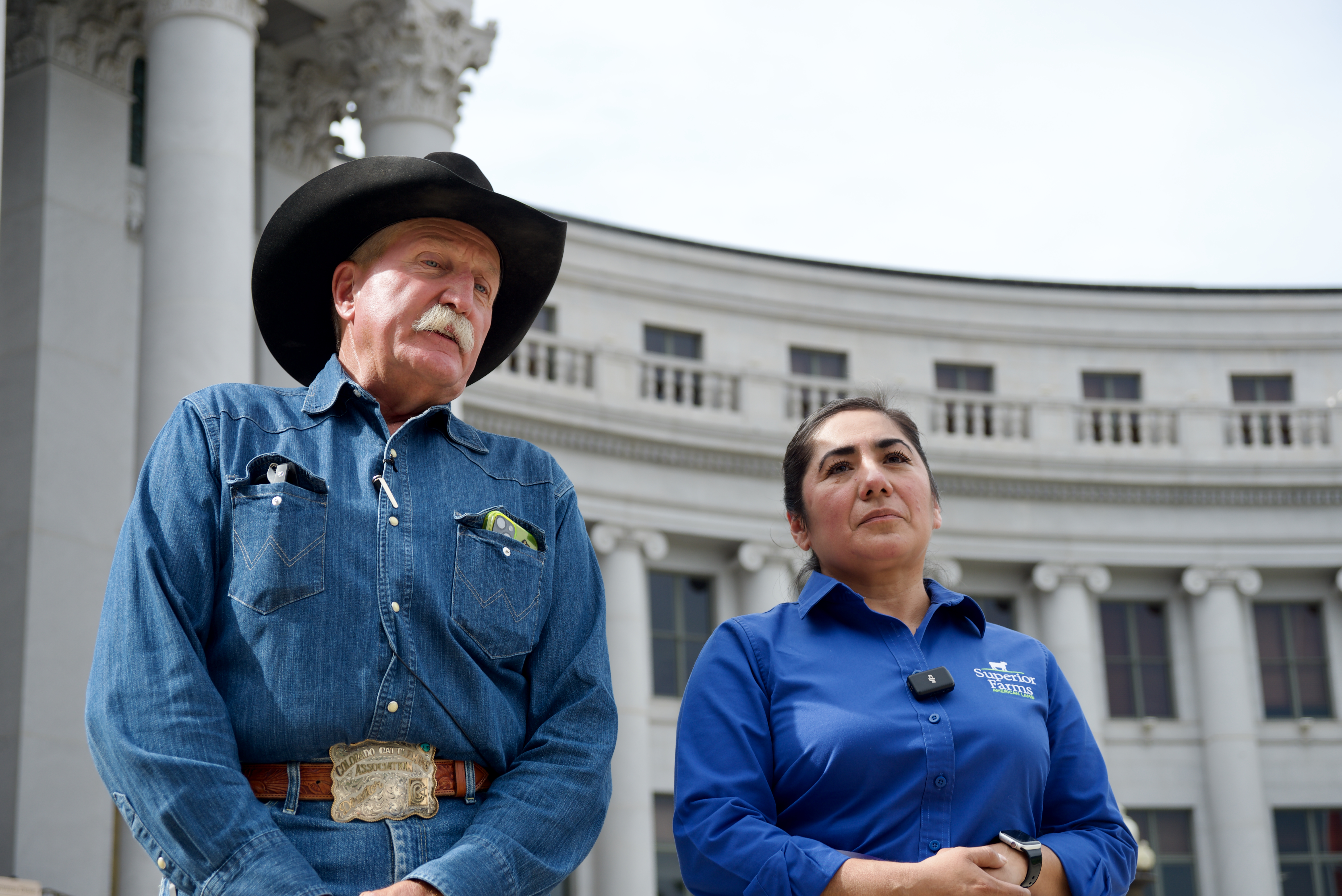
The news conference Wednesday featured speakers from the Colorado Livestock Association, award-winning chefs based in Denver and employees from Superior Farms.
“I’m here trying to support Superior Farms and local food anyway I can and this is a big opportunity to bring up how important it is to know where your food is coming from,” Jose Avila, chef and owner of La Diabla Pozole y Mezcal said.
Avila worries that if the slaughterhouse closes, he’d have to raise prices on his products. Over the past few years, prices for products and employee wages have increased more than they’ve decreased, and losing a local business like Superior Farms would incur a new cost: importing meat.
Superior Farms, in addition to being the largest lamb slaughterhouse in Denver, incorporates many of Temple Grandin’s teachings on humane slaughter. Kenny Rogers of the Colorado Livestock Association called her the “god of humane animal handling.” Her ability to understand animals is unmatched and Rogers has seen her go into a facility and find things that nobody else would have considered in the meat processing pipeline.
Grandin is responsible for many of the daily processes used by Superior Farms and stays in regular contact with the business, according to employees.
Superior Farms has been a staple of the Globeville and Elyria Swansea neighborhoods for roughly 60 years.
Globeville and Elyria Swansea occupy land just north of Interstate 70 and occupy part of the city-identified “inverted L.” This is a collection of neighborhoods that have faced redlining, severe underinvestment and high levels of pollution in the past.
Most of the neighborhoods in the “inverted L” are west of Interstate 25 and north of I-70.
If a ban goes through, the 160 people employed by the slaughterhouse won’t be the only ones out of a job, as Superior Farms contracts with delivery drivers, ranchers and many other businesses throughout the metro area and nation.
John Jaramillo, president of the Hispanic Restaurant Association, said the effect will be severely felt beyond the Denver city limits.
“When you affect supply there will be a huge demand,” Jaramillo said. “Meat will have to come from out of state and then there’s transportation costs because it’s not local. So this ban could have a big impact on prices and the economy.”
A study by Colorado State University – largely dismissed by Pro Animal Future – found that Superior Farms alone provides up to $800 million in direct and indirect economic impacts to Denver. Pro Animal Future said the study was flawed due to the author’s acknowledgment of being heavily involved in the livestock industry, despite CSU being a land grant university focusing on agriculture.
But more disturbing to people like Rogers, Jaramillo and others is their belief that PAF is supported by out-of-state “dark money.”
Pro Animal Future volunteers, who showed up to the news conference Wednesday – but did not attempt to interrupt or take over – insisted their group was started by and run by people living in Denver.
“This is an absurd claim… The story of this campaign is out of state, corporate money versus local volunteers,” Aidan Kankyoku, a member of PAF, said. “We have more than 150 citizens in Denver who have spent their time unpaid, on a volunteer basis, collecting signatures and talking to voters about this issue.”
Pro Animal Future’s campaign has been outraised by those opposed to the measure nearly four to one and Kankyoku flipped the script on them by saying most of that money has come from out-of-state interests.
According to SearchLight Denver, the city’s campaign finance tool, PAF and those in support of the ban have raised just under $230,000. Those opposed have raised $738,000.
There is no direct evidence that PAF is supported by out-of-state interests but nine of the 10 largest donations made to its campaign were from the group itself. SearchLight Denver does not list exactly where PAF got the money for seven donations over $10,000. Only one donation in their top 10 is from an individual.
Those donating to the campaign opposed to the ban include major livestock entities like the American Sheep Industry Association, the National Pork Producers Council and the National Cattleman’s Beef Association.
Other large donations included those with a vested interest in the livestock industry.
Rogers said that there’s a misunderstanding, largely due to the increasing urban-rural divide nationwide, of ranchers and their connection with animals.
“If most people knew how I view my livestock and how deeply it affects me when I have a death or one’s injured and I can’t help that animal, it really concerns me and it affects me deeply,” he said. “We care for our animals and I have yet to meet someone that isn’t just like that. We wouldn’t be in this business otherwise.”