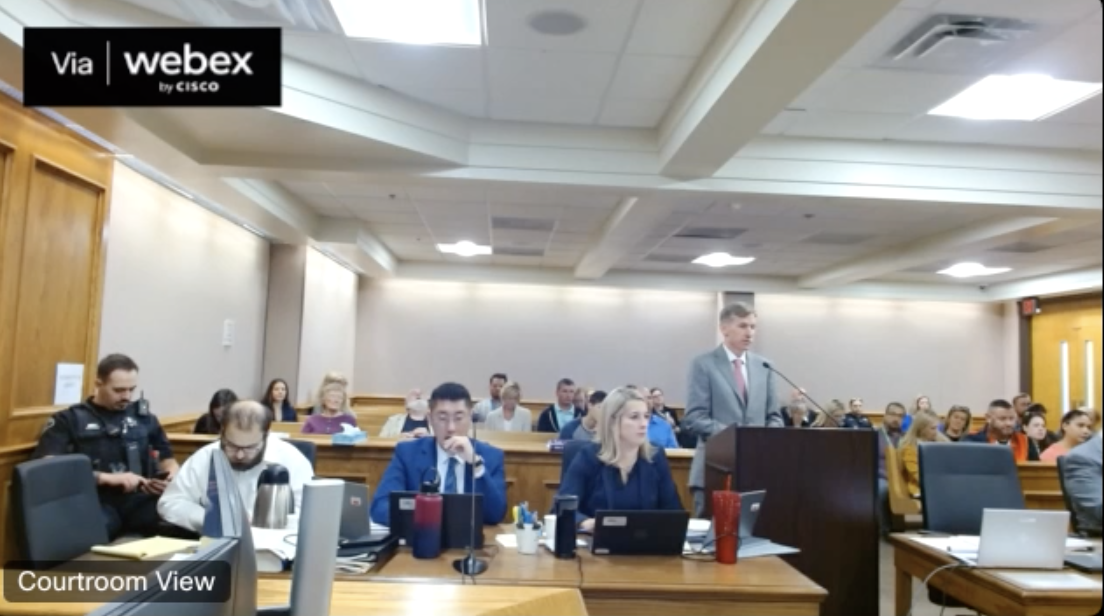
Jurors shown full footage of Boulder mass shooting for first time
The trial of Ahmad Alissa continued Friday with security camera footage of the March 22, 2021 shooting
For the first time, jurors were able to see the King Soopers security camera footage showing suspected shooter, Ahmad Alissa, rampaging through the Boulder store.
The silent footage showed the suspect running through the parking lot during the mass shooting, taking up aiming stances and shooting various victims. Then, the shooter rushed into the store, gunning down the victims and searching through the building before firing at incoming police.
The jurors watched solemnly, with some wincing away at every shot.
The footage highlighted Day 7 of the murder trial of 25-year-old Ahmad Alissa, the man who faces 55 counts overall, including 10 counts of first-degree murder, 38 counts of attempted first-degree murder, one count of first-degree assault and six counts of possessing large-capacity magazines during the commission of a felony in connection to the mass shooting that occurred at the King Soopers on Table Mesa Drive on March 22, 2021.
Along with the footage, which has only been shown in short pieces and photos over the past two weeks of trial, former Boulder Police Department lead investigator Sarah Cantu walked the jury through a timeline of events between Jan. 1, 2021 and the shooting, detailing what Alissa did ahead of the incident.
Key details of this timeline included Alissa making various searches on the internet prior to March 22.
These quarries included: “What is the most deadly type of round, bullet and where to buy ammo?” on Jan. 21, ““Are 30 round magazines legal in Colorado?” on Jan. 24 and how to make an assault rifle fully automatic on Feb. 17.
Alissa also purchased various gun accessories and ammo over the three months, including a rifle bag, ear protection, rifle sling, scope, tactical vest and gun holster.
Ultimately, the details only worked to show the potential intention behind the shooting, for Alissa’s defense attorneys have never denied that he committed the shooting. Instead, Alissa pleaded not guilty by reason of insanity.
Boulder police Criminalist Wendy Kane also walked the jury through footage of her taking photos of Alissa’s leg injuries in the hospital the day after the shooting.
Alissa did not speak throughout the entire process, Kane said.
20th Judicial District Attorney Michael Dougherty asked if he yelled or fixated on innocuous objects, talked to himself or was unaware of why he was there — pushing the prosecution’s point that Alissa was not criminally insane at the time of the shooting.
Kane said that Alissa did not act out of the ordinary, following all directions.
Mental health testimonies begin
As the presentation of evidence begins to switch over to the main theme of the trial — Alissa’s mental state and ability to tell right from wrong at the time of the incident — Twentieth Judicial Chief District Judge Ingrid Bakke denied a defense motion regarding whether the term “competency” could be used while discussing Alissa’s sanity evaluations and showing footage of interviews — in which Alissa was allegedly confused whether the interviews were determining competency or sanity.
Assistant District Attorney Ken Kupfner argued that any mention of competency during the testimonies of sanity evaluations would confuse the jury.
Bakke ruled that the court can use the terms “evaluation” or “interview,” and that the terms “will accomplish the piece of showing the confusion on the part of the defendant that may arguably reflect negative symptoms or disorganized thinking,” she ruled Friday morning.
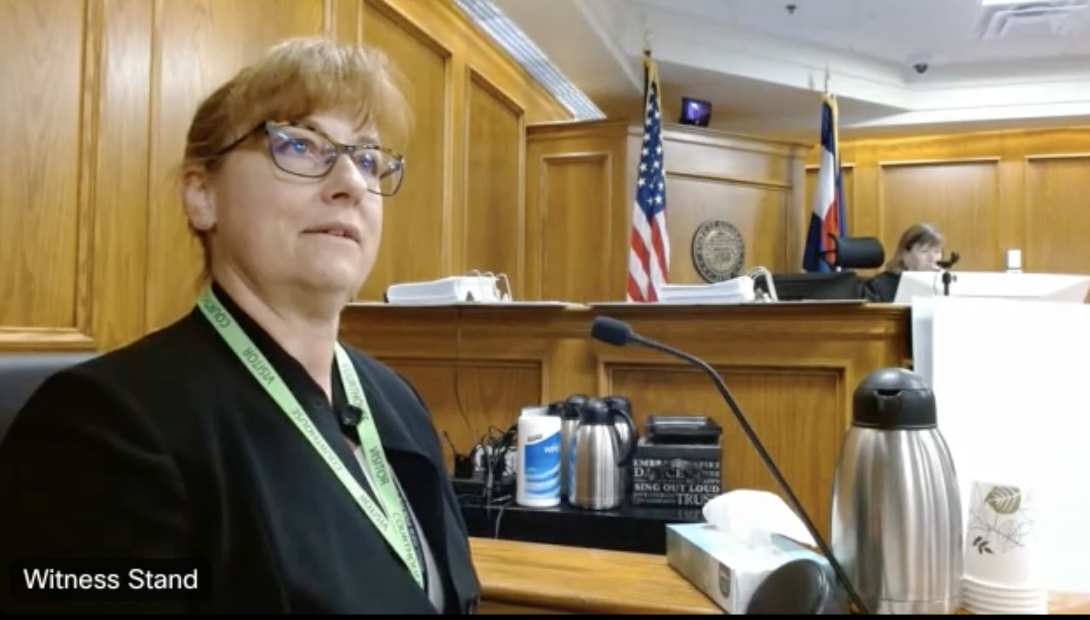
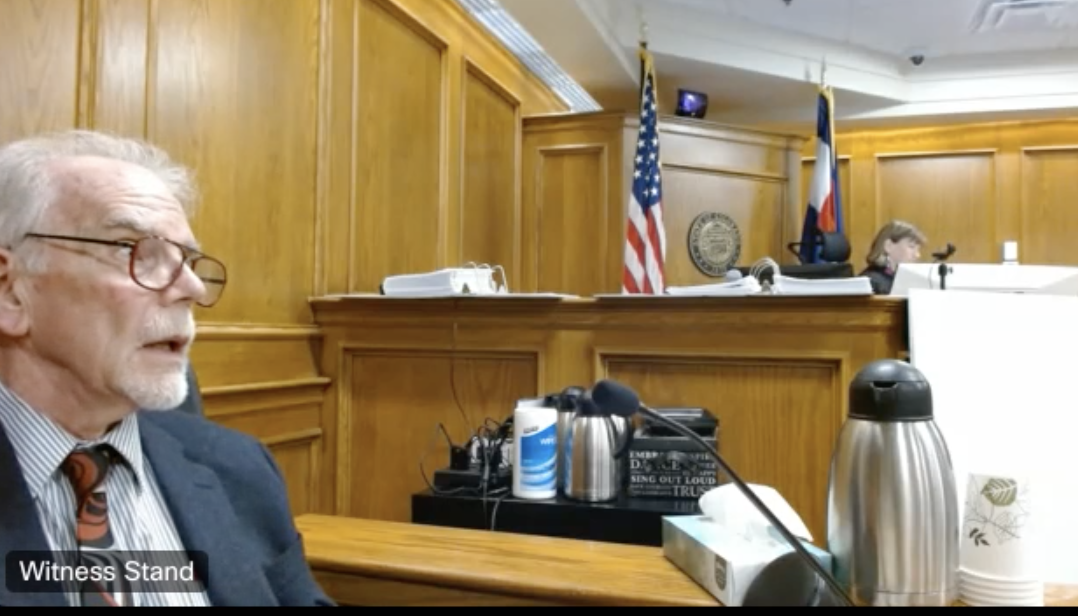
Testimony regarding Alissa’s mental health began with Dr. Thomas Gray, a forensic psychologist who helped evaluate Alissa’s sanity with another doctor at the Colorado Mental Health Hospital in Pueblo following the shooting.
Gray had been retired from the hospital for around a month before being called back to evaluate Alissa after Bakke ordered a sanity evaluation in the beginning of 2024. Alissa had been deemed competent to stand trial at the end of 2023.
Gray interviewed Alissa four times and completed one psychological test between the end of February and middle of March. The two doctors also interviewed members of Alissa’s family, including his father, four brothers and three sisters.
The interviews tended to be difficult due to Alissa’s reluctance to speak, Gray noted.
“He is simply not very forthcoming,” he said. “He doesn’t talk much. It takes a great deal to elicit information from him.”
“If left to his own devices, he would probably stay in his room 99% of the time by himself, isolating by choice,” Gray said.
Alissa’s family told the doctors that his attitude changed around high school, becoming less sociable. It picked up significantly after school.
“It was a tendency to interact very little with anyone, including family members,” Gray said. “They said that even during family gatherings, he apparently had a place on the couch in their living area where he typically sat. He would smoke a hookah and not talk to people.”
Family members also told them about signs of paranoia. He taped over his computer’s web camera and once broke a key fob because he believed someone was tracking him through it.
Alissa’s father also found him in the middle of the night talking to someone in the bathroom. There was no one there.
Alissa denied all of these stories to Gray.
Still, Alissa never received mental health care until after he was arrested, according to family members and records.
The voices
The suspect told doctors that he heard screaming voices in his head, sometimes once a week. He understood that the voices were not based in reality, though, Gray said.
In footage of one of the interviews, Alissa could be seen severely nervous, fidgeting with his face and moving around erratically in his chair. He said that he heard the voices scream at night while he was in bed going to sleep. The voices never told him to do anything, just yelled, he said.
In a clip of the second interview, when asked why he wanted to commit the shooting, Alissa said: “The voices” — a far different message than the first video.
To Gray, Alissa falls directly in line with his previous diagnosis of schizophrenia, even calling it a severe case, but that doesn’t mean that Alissa was insane at the time of the shooting.
“Sanity is a legal construct,” Gray said. “Schizophrenia is a mental health construct. Although we do try to utilize mental health information to help with legal decision making, the two fields don’t always matchup neatly.”
Gray agreed with Kupfner’s questions that being paranoid or hallucinating does not make someone criminally insane.
The idea of being criminally insane, as defined by statute, is having a mental disease or defect — which Gray said Alissa does — but the second part is being unable to discern right from wrong at the time of committing the crime, something the prosecution must prove to jurors in order to convict him.
Gray claimed there was an absence of any evidence that would indicate that the voices Alissa heard prevented him from being able to distinguish right from wrong. There was not enough evidence, through what Alissa told them, to determine that the voices impacted his decision to commit the mass shooting.
In another clip, Alissa admitted to knowing that what he did was illegal. He said he knew jail was a possibility when he went in to the store, but he planned to die, instead, because he didn’t want to go to jail.
“It was our opinion, at the time of the offense, that he was legally sane,” Gray said.
“In Colorado, someone can know that it’s against the law, and still not be able to tell right from wrong,” public defender Kathryn Herold said.
During cross examination, Herold argued that the doctors were attempting to have Alissa make sense of the situation, despite having a severe case of schizophrenia, potentially making his interviews with the doctors unreliable.
Furthermore, Alissa had been on Clozapine for around 11 months at the time of the interviews — which may have overall affected how Alissa’s symptoms appeared, if working properly.
Gray added that Alissa has a severe case of schizophrenia because some symptoms, like his lack of communication, haven’t improved while being on Clozapine, often considered the strongest anti-psychotic that “doesn’t get used until other avenues are exhausted,” Gray said.
Herold questioned Gray’s previous statement about how hard it was to evaluate Alissa because he wouldn’t give them information, seeming to imply that Gray’s evaluation may not have been fully realized due to the lack of communication over the four interviews.
She argued that Alissa didn’t want to do the evaluation, despite it being important to potentially proving he was not guilty by reason of insanity. The lack of participation may indicate his deteriorated mental state, she said.
The defense could begin its case Monday.