




Curator says Denver Art Museum will exhibit new AI art
Rory Padeken talks about AI as an artist's tool, like oil paint or graphite.
Denver Art Museum’s Vicki and Kent Logan Curator of Modern and Contemporary Art Rory Padeken has a secret he can’t yet totally reveal.
“I can say that the department has recently acquired a work created with artificial intelligence,” said Padeken, who has demonstrated that his intelligence is far from artificial. “We’re hoping to get it on exhibition in the next reinstallation in May [2025] if all goes as planned.”
Padeken, who assumed his role at the DAM in June 2022, vaguely described the new acquisition: “What you see is a painting. She [the artist] calls it a painting. Actually, if we were getting very technical, it’s a print on an acrylic sheet. There’s no computer wiring. It’s not connected in real time to the internet, for instance.”
AI draws a lot of ire from the art world, yet Miranda Lash, Ellen Bruss senior curator at Museum of Contemporary Art Denver (MCA) praised Padeken’s innovation.
“He is growing the collection in dynamic ways, always looking to the forefront of the field,” Lash said.
Padeken sees in AI new artistic opportunities: “I think that as long as artists are the ones leading the way with AI in the creation of artwork then we’ll be OK.”
“Some things are being co-opted by the tech industry, but I think AI is a tool. It’s a medium, like oil paint or graphite or pastel or found materials sculptors would use. It’s a tool an artist can use to create a work of art. It’s just one part of creating a work of art,” he added. “For a really serious artist, they’ll use it as that. They just won’t have a machine learning software output an image. It will just be one step in the creation process.”
The AI acquisition represents the latest in Padeken’s bold creative process as a curator. Born and raised in Hawaii, Padeken served as curator at the San Jose Museum of Art in California prior to his move to the DAM. He also co-curated the reinstallation of the Arts of Hawaii Gallery at the Honolulu Museum of Art.
Most notably at the DAM, he reimagined the Hamilton Building’s third and fourth levels where he curated the exhibition of permanent collection works created from 1900 to the present. The exhibition he curated, having familiarized himself with more than 8,000 works in two months, demonstrates Padeken’s eye, as well as his heart.
As a curator, he took a diplomatic approach with nods to previous exhibitions. He involved his DAM colleagues in Staff Picks and invites the constant flow of visitors to the museum’s Modern and Contemporary galleries to vote on Visitor Picks.
And he quickly managed to get a handle on the quirky architecture of the Hamilton Building, a radical design by architect Daniel Liebeskind.
He admits the challenges inherent in the Hamilton Building’s galleries.
“It’s not the easiest with the angled walls here,” he said. “I was coming to terms with very few 90-degree walls and dealing with walls with obtuse angles or walls that lean toward the viewers.”
Padeken’s approach draws praise from other top-tier Denver curators, including Joyce Tsai, director of the Clyfford Still Museum.
“I remember stepping foot in for the first time in Rory Padeken’s reinstallation of the Modern and Contemporary Galleries,” said Tsai. “He had only arrived in Denver less than a year prior, but curated in a way that made the architecture of the Hamilton building, characterized by irregularly angled enormous walls held in high, slant-ceilinged chambers, feel like it was made for the dynamic presentation of a century’s worth of global contemporary art. I felt I was watching an alchemist at work.”
Padeken’s alchemy amalgamates not only his background in art history and his curatorial experience, but also his expansive compassion, along with a determined inclusiveness and his personal connections to several artists.
“As a curator, you think broadly about the history of ideas, and current ideas, but there also needs to be something personal, as well,” Padeken said. “Curators are people. We don’t work in vacuums, and we work with other people at the museum. We’re not just one entity pulling together an exhibition. It’s a cumulation of influences.”
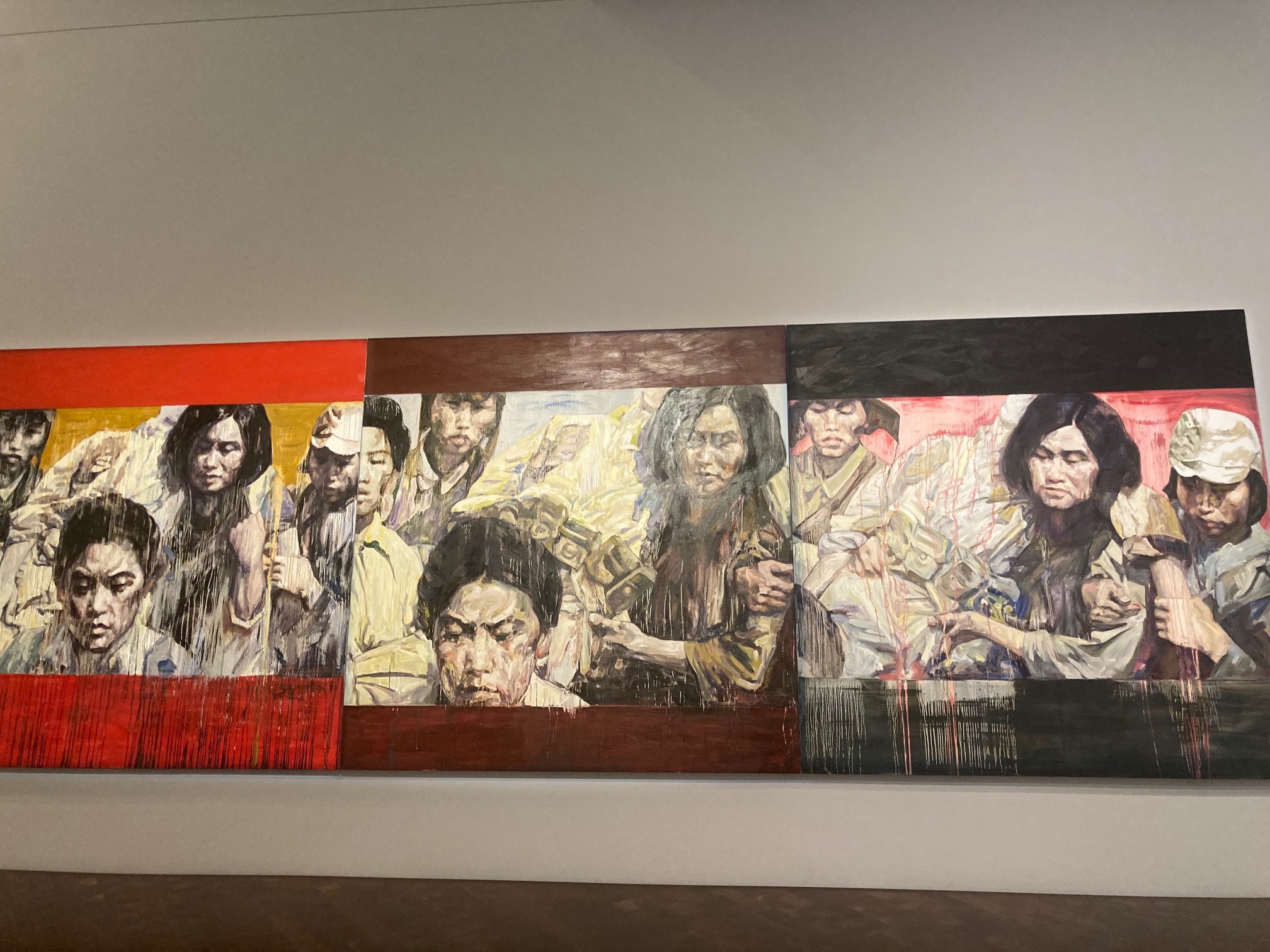
A number of the works on exhibit evoke social-justice issues. Asked whether contemporary art tends to veer into political statements, Padeken said: “I think all works of art in any time period can be viewed through a political or social lens. Nineteenth-century Impressionists painted as a resistance to academic painting, an artistic revolution. Those artists were painting views or situations that would never appear in so-called history painting.”
He added: “With contemporary art, it’s present. We’re in it right now so we recognize it more, and we might be grappling with it just as the artists are.”
For Padeken, art’s ability to give rise to questions is added value.
“Look,” he said, “a work of art doesn’t have the answer to anything. That’s not the purpose as I believe it for artists or works of art to give us the answers. It’s consistently and constantly asking the question. The artists might ask questions we might be thinking about or might be too afraid to ask.”
Padeken’s curation feels fearless. And fresh. Several works in the exhibition have never before been on view at the DAM.
“It’s important for our audience to see the riches of our collection, to see its depth and breadth and to celebrate that we have these works of art here in Denver,” said Padeken.
By design, the exhibition encompasses a wide range of artworks. Padeken said.
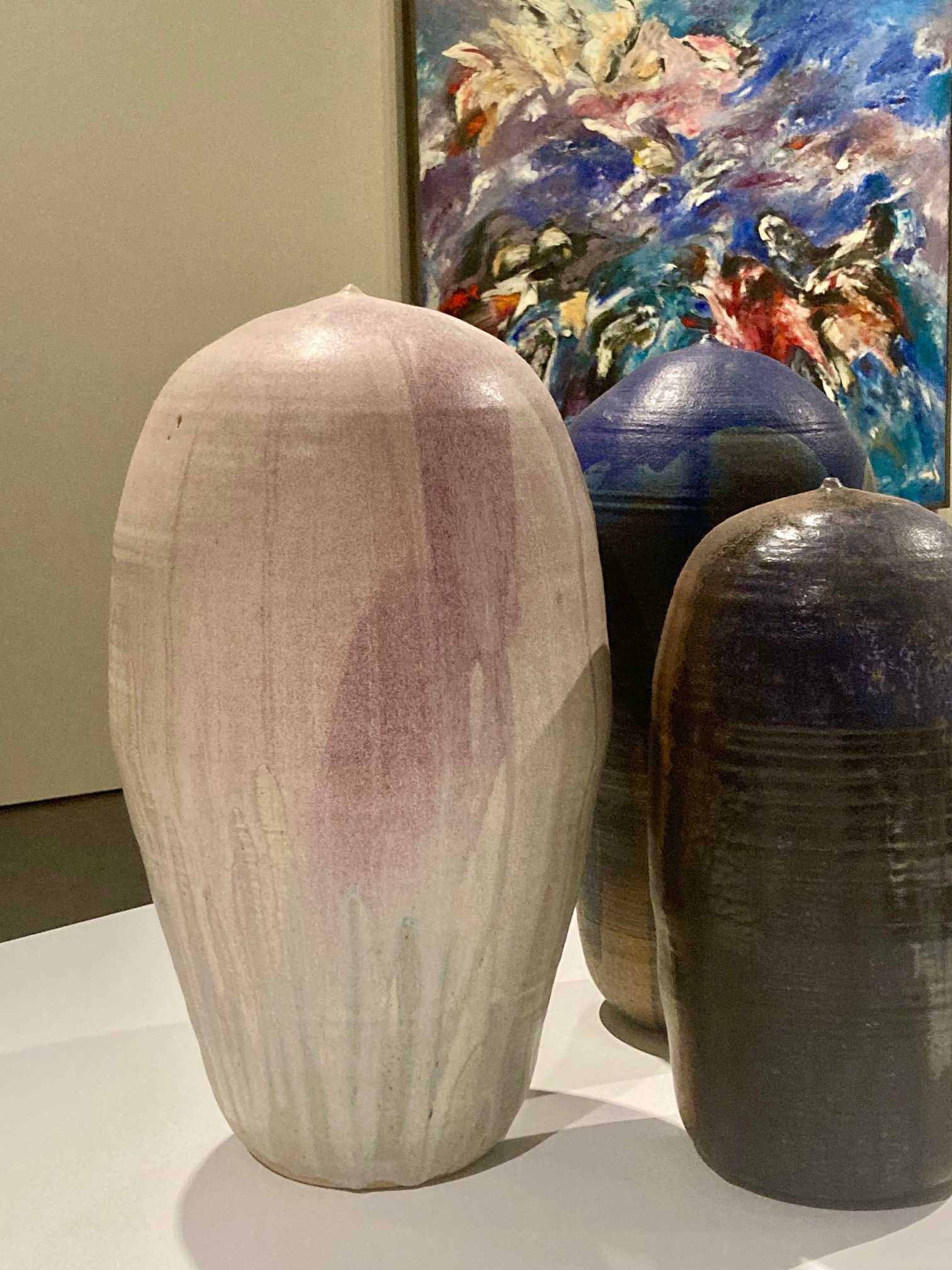
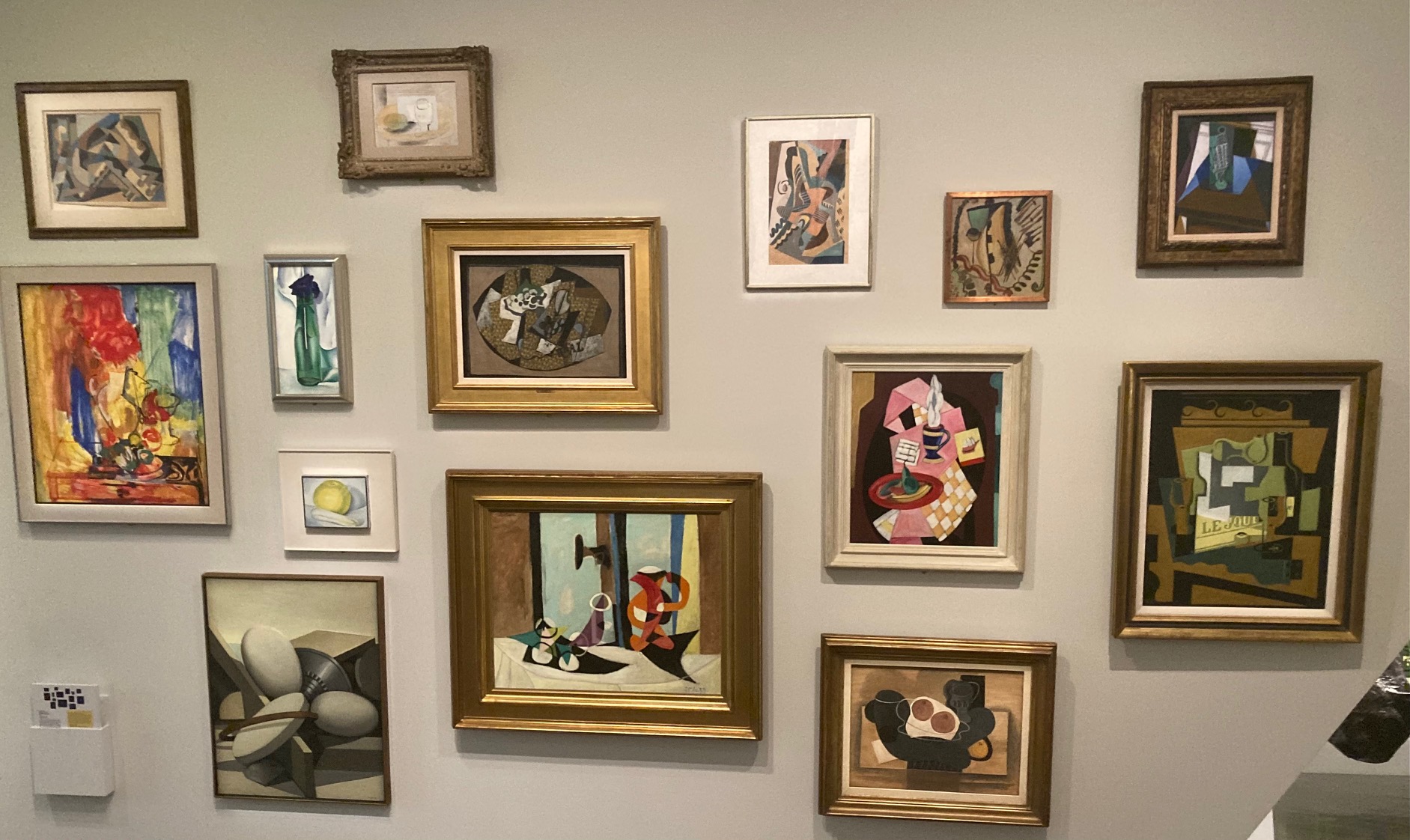
“I think there’s something for everyone in Modern and Contemporary. We have still-lifes. We have portraiture. We also have sculpture in traditional materials of bronze, vessels made from clay, and then we have the latest and greatest technology that artists are using to create their work, so it’s a spectrum of experiences.”
For Padeken the department’s interfacing with other collections at the DAM frames success: “Most of our collecting areas are collecting contemporary art. The museum works collaboratively, which is somewhat rare in large institutions with multiple collections.”
Padeken wound down our tour in a secluded gallery marked by a contemplative hush.
“I wanted this space to be quiet. Given the liveliness of the galleries on both levels, I wanted a space of respite for the visitor. We’re also dealing here with issues of race and identity and the AIDS crisis,” he said.
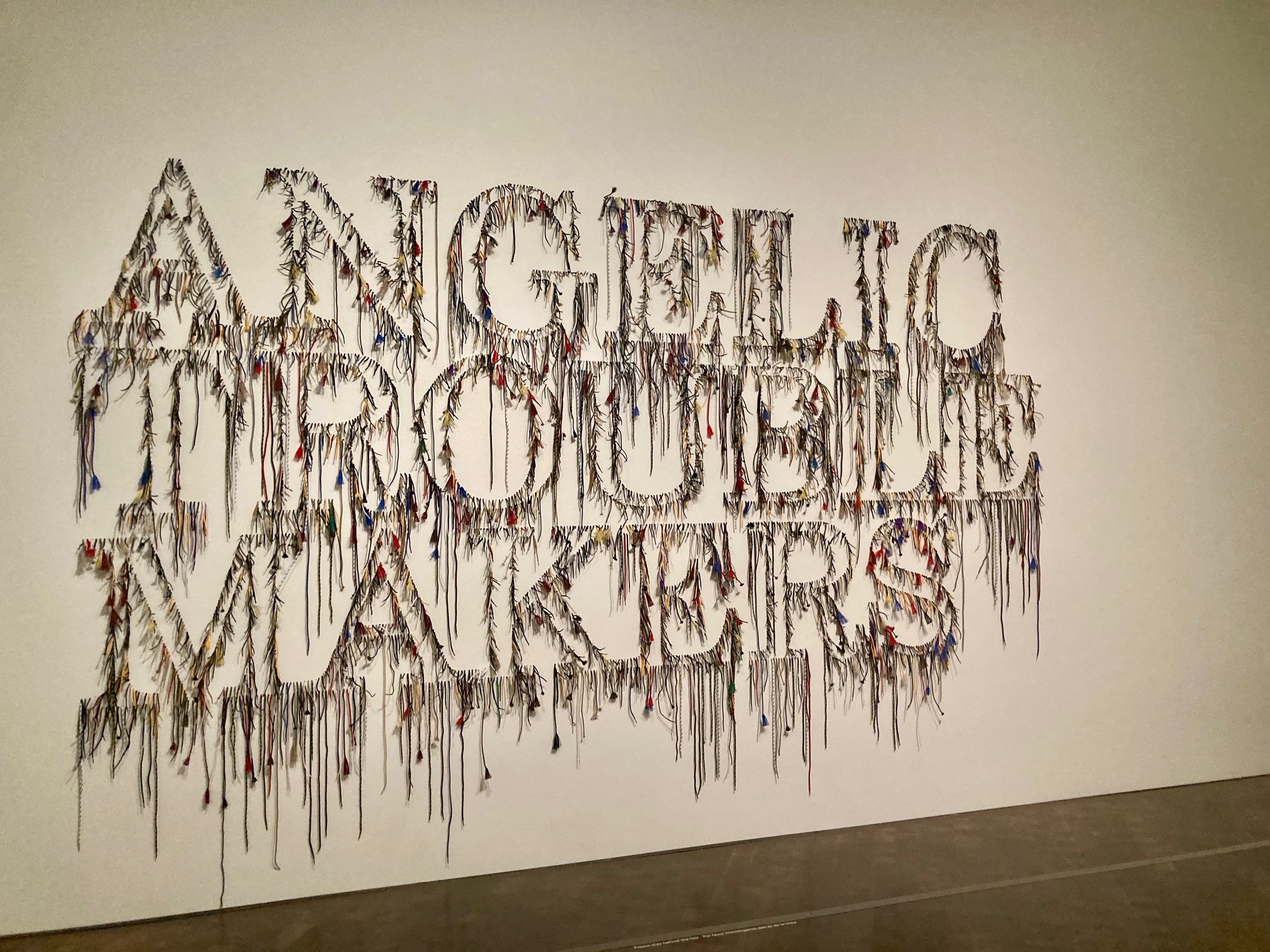
The gallery exhibits one of Padeken’s favorite pieces — a large-scale installation made of thousands of shoelaces spelling out the words “Angelic Troublemakers.” It’s a phrase taken from a speech by the civil rights activist Bayard Rustin.
Padeken, given his peaceful presence and his political bent, could qualify as an “angelic troublemaker.”
The curator closed with an invitation: “I hope visitors who come to the museum feel proud that we have a place like this that is welcoming to all, that there is something always on view for people to engage with, whether it’s to find beauty and solace or to think through questions or ideas that might be challenging or terrifying to think about on the outside.”
For Padeken’s commentary about five key works in the DAM’s exhibition of Modern & Contemporary Art, see the slide show above.

![Denver Art Museum Curator Rory Padeken had a wall taken down to unveil “Basic Maintenance,” a sculpture by Richard Serra, one of the great minimalist sculptors of the 20th century, who died in 2024. “I am glad the sculpture was set free [from the wall]. The sculpture lives here permanently installed in this position because it weighs over 6,000 pounds, so the building itself was reinforced at the point in which the sculpture stands on to carry its weight,” Padeken said. “This sculpture is held up through sheer physics. It’s two steel plates balanced in such a way that it holds itself. It’s two points and the force of gravity keeping it in place.” (Colleen Smith/Special to The Denver Gazette)](https://www.denvergazette.com/wp-content/uploads/2024/09/b5ce787d25663c163c7f2320bb2f8549.jpg)
Get OutThere
Signup today for free and be the first to get notified on new updates.
PREV
PREVIOUS

Coach Jenny Glenn earns 200th career victory for No. 2 Roadrunners | Colorado Sunshine
Glenn is 200-48 in her ninth season and 127-9 in Rocky Mountain Athletic Conference matches.
Reporter’s Notebook: Government shutdown looms as Mike Johnson searches for Plan B
Washington Examiner Congressional Reporter Cami Mondeaux joins Magazine Executive Editor Jim Antle to discuss the threat of a government shutdown as lawmakers debate the budget, how former President Donald Trump’s push for an election integrity bill is dividing Republicans, and Nebraska Republicans advocating a shift in how electoral votes are allocated. Meanwhile, Trump continues to […]