




Fight over red phone booth at Silverton’s historic cemetery reaches dead end
Some wonder if the grave marker is an attraction or abomination?

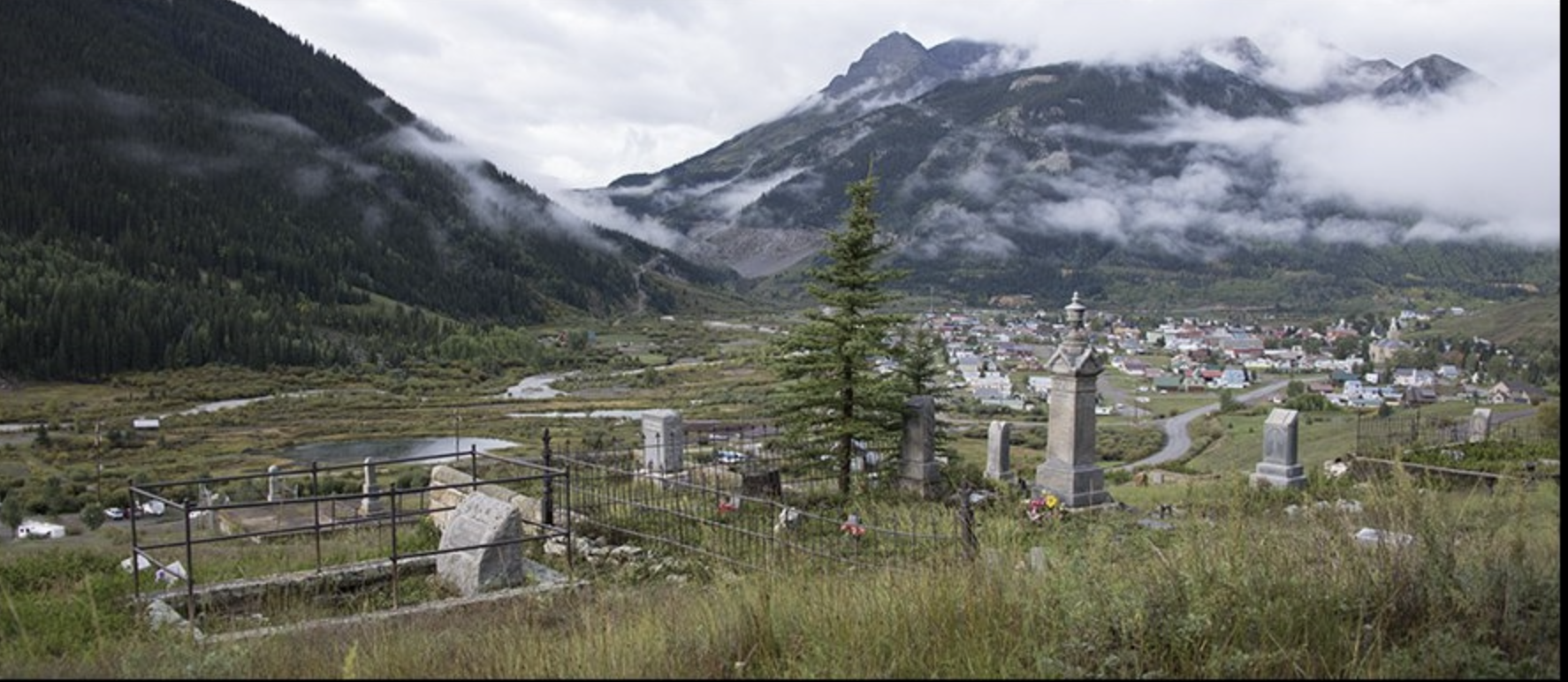
On these bitter October nights, a cherry red phone booth haunts the hallowed 19th century-ground of Silverton’s only cemetery.
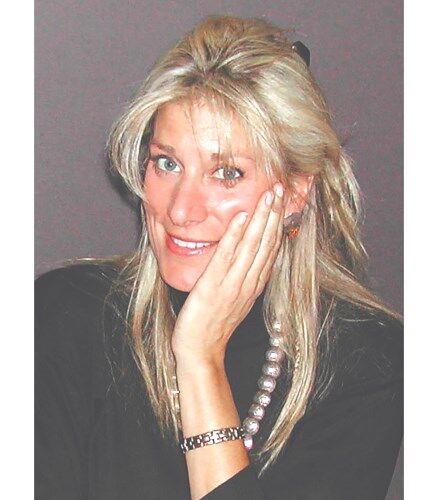
The phone booth memorializes marketing guru Nancy Brockman, a free spirit whom her friends say lived life on her own terms, and also died on them. When she got the town’s permission to put the eclectic marker on what many consider sacred territory, residents say you could hear the bodies turning.
Brockman was not a long-time Silverton resident, a fact that sticks in the craw of actual descendants of the souls buried at Hillside Cemetery.
“When I go to a cemetery to see my grandma I don’t want to see a bright red phone booth. To me it’s an eyesore,” said Dairold Lambert, who actually shoveled the hard, rocky soil for the hole where his grandmother, Hazel Jones Rich Sheer, was laid to rest.
Also in Lambert’s family plot are an older brother, who died at just a week old, and his uncle.
His aunt, Bev Rich, is a historian and former San Juan County Treasurer.
Lambert’s ties to the San Juan mountains are as connected as the mine tunnels that burrow underneath.
“That cemetery is partial to me and I don’t like the damn phone booth,” he said.
Who you gonna call?
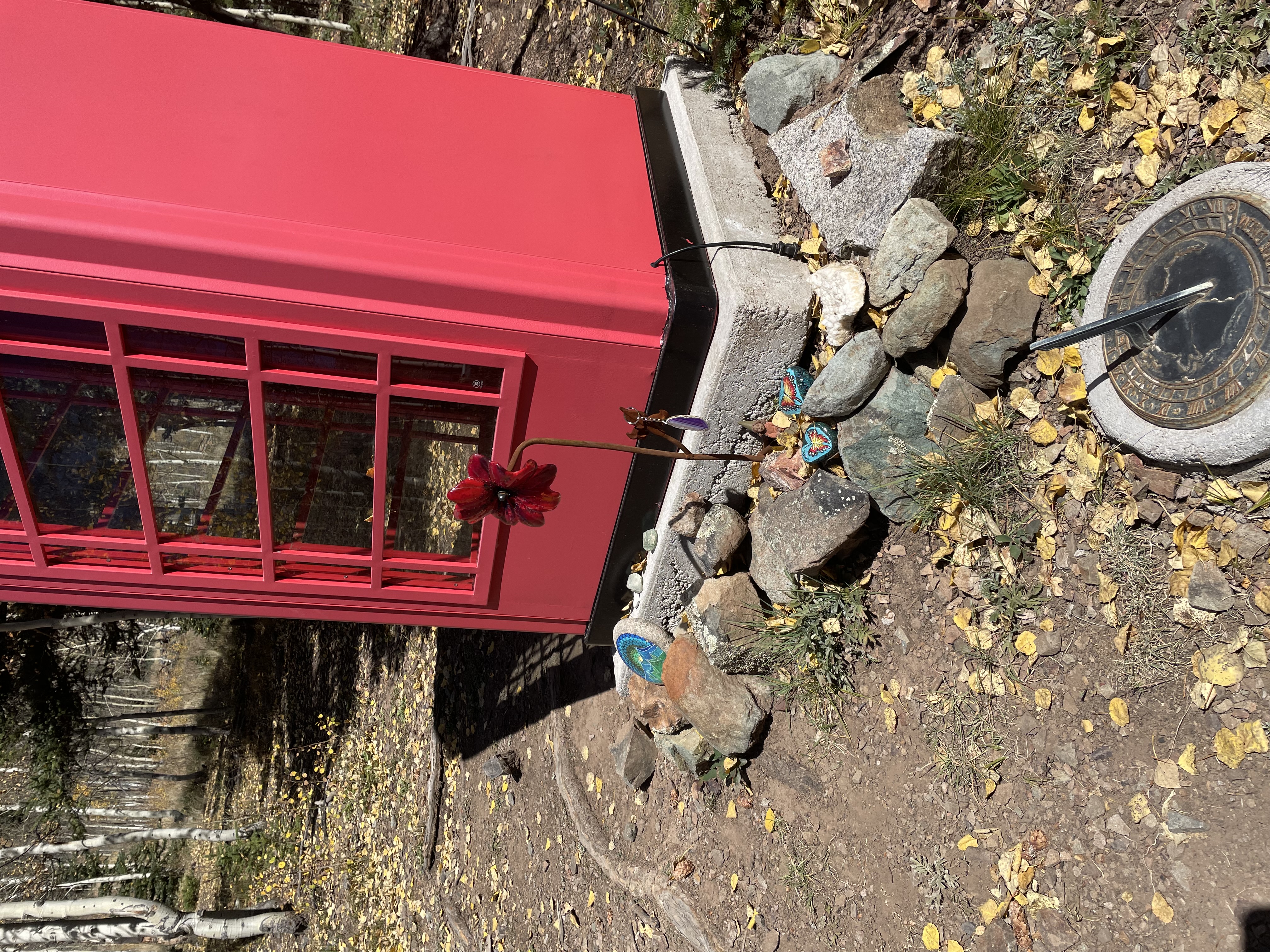
Not being from around these parts, Brockman may not have realized the hurt feelings she would unearth when she ordered the British-style call box. Today it shines in the sun like a crimson beacon among crumbling tombstones and field grass.
The dying woman bought the phone booth from a place in Connecticut. The unusual package was delivered while she was away on a trip and friends surprised her by placing it on a serene slope with a view of the San Juan Mountains.
Brockman was still alive to witness the controversy her memorial stirred up between Silverton’s old-timers and newcomers.
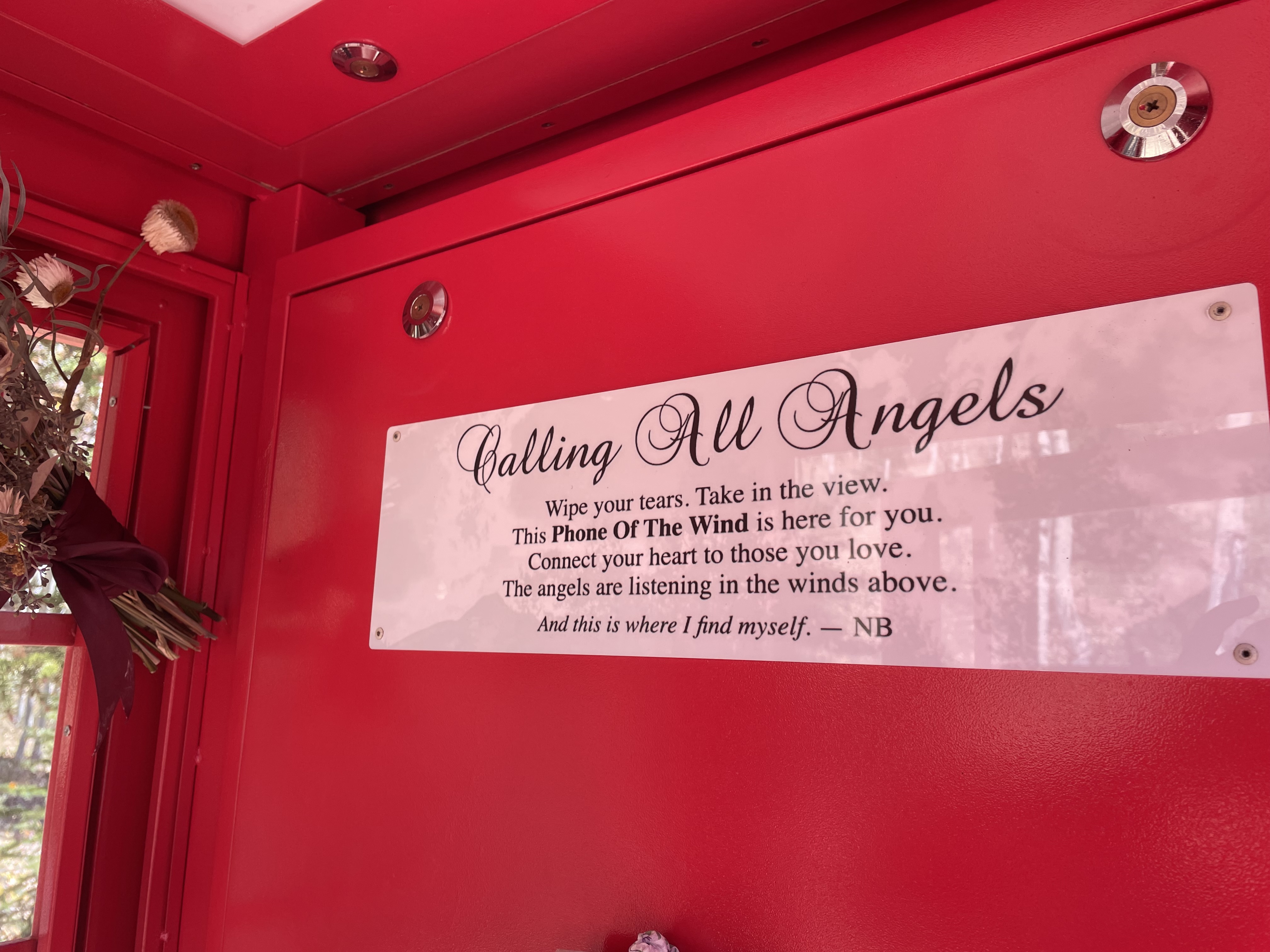
In an op-ed explanation to the local Silverton Standard newspaper, Brockman wrote: “I envisioned the Hillside Wind Phone not as a monument to me when this cancer kills me, but as a gift to those who visit the cemetery, including my friends and family, but more importantly to all.”
One of these things is not like the other
Brockman’s life-sized memorial is perched on a concrete foundation edged with flower sculptures and a sundial.
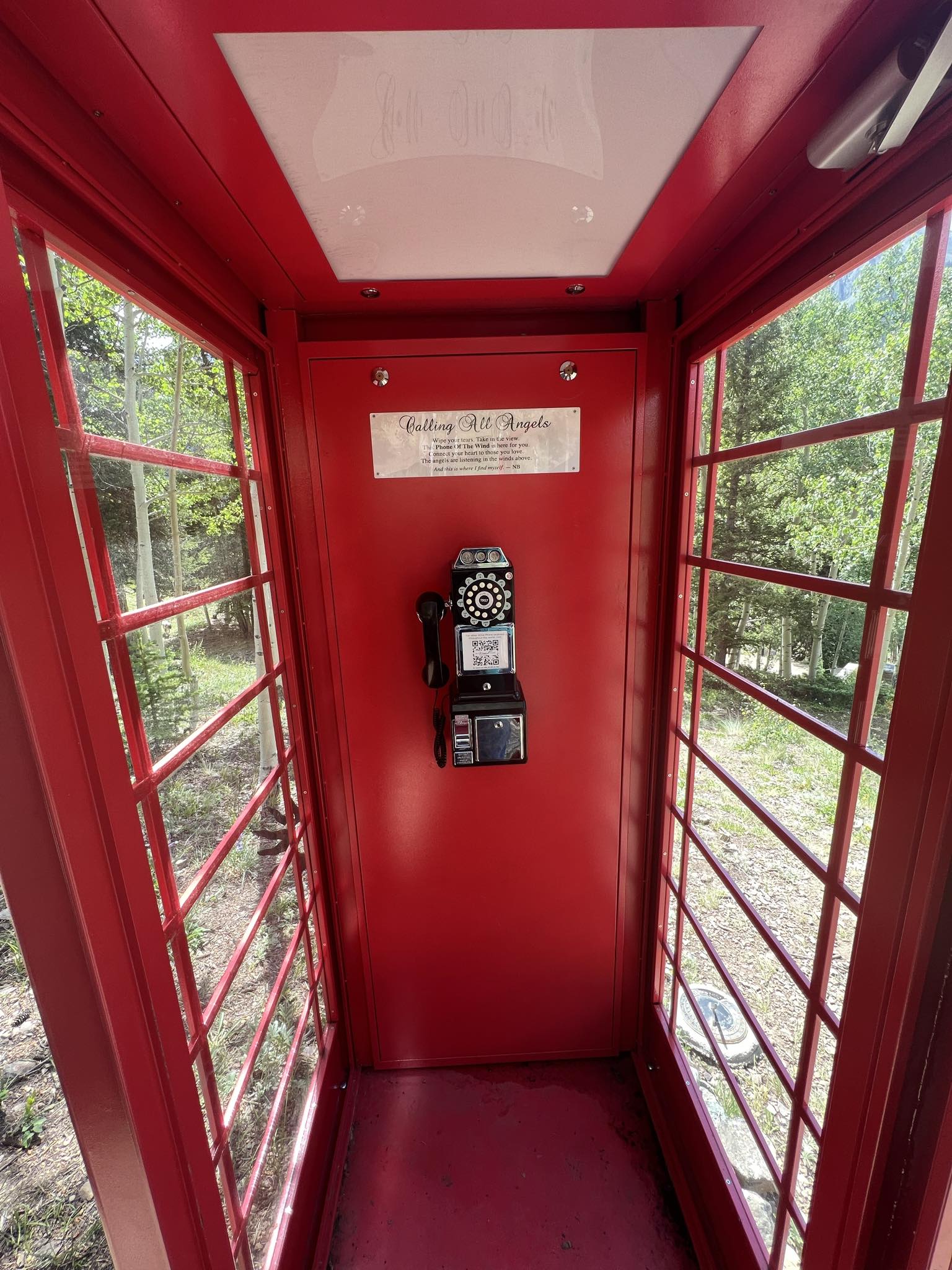
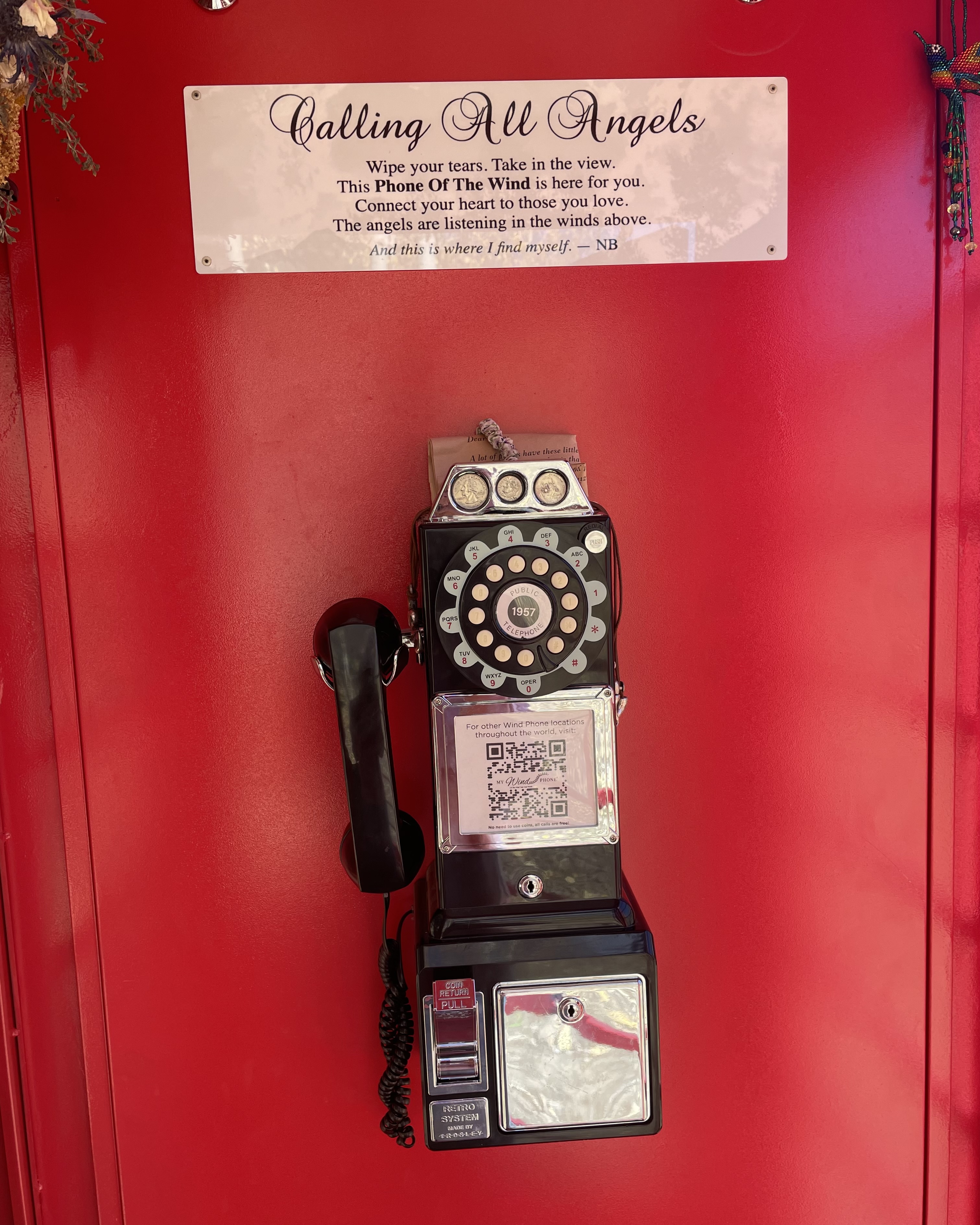
There really is an old-fashioned rotary phone with a coil wire hooked to the inside wall, but it’s not connected to anything.
Or is it?
Once inside, visitors are invited to dial up an angel and listen.
Debby Harrison-Zarkis’ first impression of the bright red box was: “Yuck that does not fit.”
Her husband Dale’s family were miners who are buried on the hill and they were looking for a plot.
Curious, she stepped inside the booth, dialed her deceased mother’s phone number and listened.
“I talked to her for a while. She did not answer, but I felt her presence in my heart,” said Zarkis, who had not allowed herself to grieve the emptiness of her mom’s passing. “It was “a breakthrough moment.”
Zarkis and her husband bought six plots at $300 each.
Not your average graveyard
Hillside Cemetery is not your average graveyard.
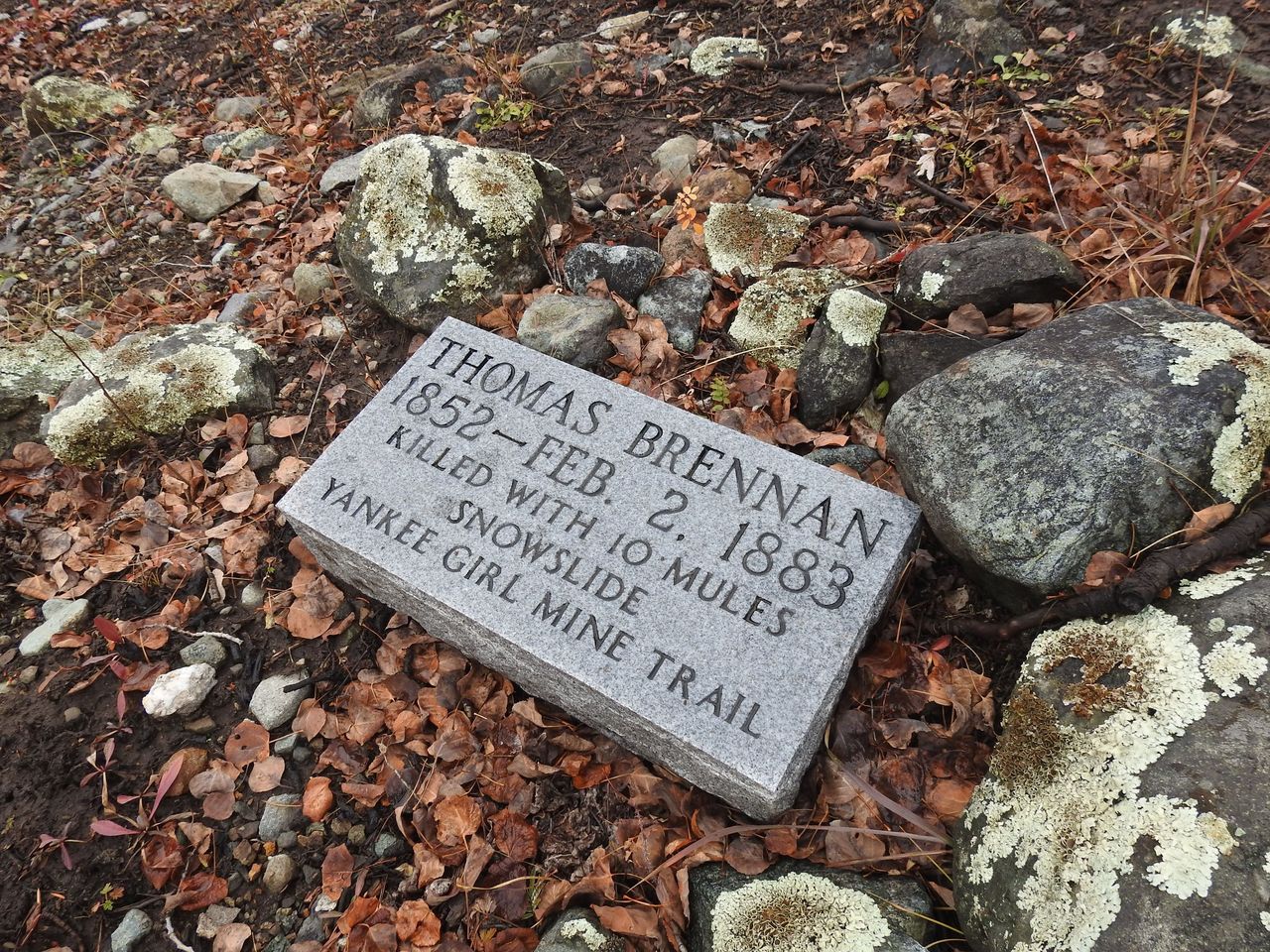
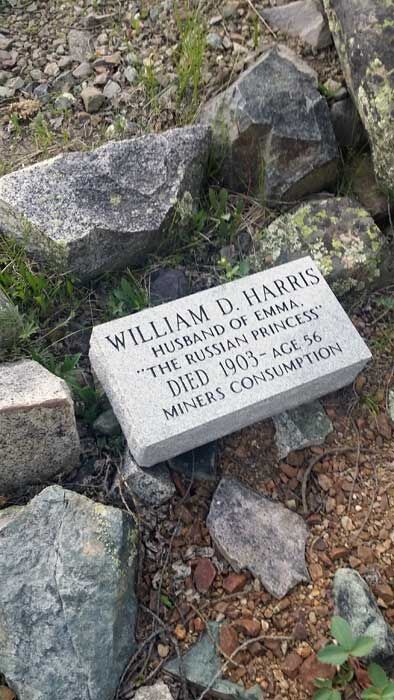
Thin trails worn into the dirt and rocks lead to markers which tell the haggard life stories of Gold Rush miners, blizzard victims, and children who died too young.
“People come from all over to walk our cemetery. We have the prostitutes’ headstones, some of which were purchased by the historical society,” said Casey Carroll, archivist for the San Juan Historical Society. “The headstones are not politically correct. Each one relates how the person died whether it was by an avalanche, killed in the mines, murder or the Spanish Flu.”
Kid Thomas, AKA Copper Colored Kid or Black Kid, was hanged in 1881 at the age of 16 by vigilantes. John Greenell, mailman and sheriff, was a “Champion on Skis.” William D. Connor, 24, was “shot by Tom Milligan” in 1878 and the engraving on Thomas Brennan’s stone marker described the tragic end of his 31 years came in a snow slide “with 10 mules.”
It took years for the town cemetery committee to obtain National Historic Landmark Status for Hillside.
The status is monitored by the National Park Service. Other cemeteries which claim the designation include Denver’s Ft. Logan Cemetery, Arlington National Cemetery, and Indian Cemetery at Cahuilla.
More than 3,000 are interred on Silverton’s picturesque burial slope, which means there are four times as many dead people in Silverton than there are live residents.
The town of Silverton gave Brockman permission for the phone booth, which caught the San Juan County Historical Society by surprise.
“The San Juan County Historical Society has taken care of the cemetery for over 40 years,” said Carroll. “It’s a national historic landmark.”
Brockman’s booth is a done deal but the Hillside Cemetery Committee is in the midst of re-organizing to prevent any possibility of future jeopardization of its landmark status.
The phone booth would not have been approved for a spot in Durango’s 10,000-plot Greenmount Cemetery, which only allows granite and marble, said the city’s Parks Manager Sara Humphrey. Greenmount is run by the municipality.
The problem is familiar to Lloyd Cox, president of the historic Oak Grove Cemetery Committee in Grove, Oklahoma. Just recently, a family received permission to have a bench erected at their loved one’s grave site, but unbeknownst to Cox, they installed it on the plot of the inhabitant next door.
And then there’s the Vietnam war pilot who petitioned to be buried in the tail section of an airplane.
“I took it to the board, but we don’t have any restrictions that specified the tail of an airplane,” he said.
The pilot, who is still alive, got his wish.
Telephone of the Wind
It all started in Japan 14 years ago when Itaru Sasaki installed an old-fashioned phone booth in his garden. His intention was too create an eclectic memorial to a cousin who died of cancer. Inside the oblong container, Sasaki hooked up a rotary phone on which he could “dial up” the spirit of anyone he wanted.
Since there were no wires or connections to the system, the intention was that anything heard on the Kaze No Denway, or “Telephone of the Wind,” would be a comfort to help get through loss.
When the great tsunami hit Japan in 2011, Sasaki relocated the phone booth to a crest on the Pacific Ocean and welcomed mourners to make calls to their friends and relatives lost in the disaster, hoping they would find a connection to help them cope with their grief as it did him.
Today there are nearly 300 wind phones, including four in Colorado.
Besides Brockman’s, there’s a wind phone in Aspen, another on Pueblo’s Riverwalk and a memorial phone booth at Columbine United Church Memory Garden in Littleton at 6375 South Platte Canyon Road.
Soon, there will be two in Canon City — one in the town’s Mountain Vale Memorial Park and the second promised for Holt Funeral Home dedicated to “all those missing from us.”
Still, the unusual memorial is a frightening sight for town folks who wanted to keep Hillside Cemetery a historic site.
An old-timer who wished to remain anonymous due to small-town gossip asked The Denver Gazette: “What’s next, a car?”
Eulogy
On Friday, Oct. 11, Brockman’s friends and family celebrated what would have been her 62nd birthday at her phone booth and then later at a party hosted by Silverton’s Grand Imperial hotel.
Friends said the former Vogue features writer and self-described “head idea tender” arranged for her ashes to be placed in bags for scattering.
Abomination or attraction, Hillside Cemetery’s newest grave marker is not going anywhere.
Brockman said it best in her final inscription:
“And this is where I find myself.”
Get OutThere
Signup today for free and be the first to get notified on new updates.