‘Order’ up: Councilman Kevin Flynn goes on a red-carpet ride
Former journalist's adapted book on supremacy takes center stage at the Denver Film Festival


There’s a reason 2024 is actually the perfect time for Hollywood to be adapting Denver City Councilman Kevin Flynn’s 35-year-old book about the rise of a violent white supremacist group back in the 1980s — and he hates it.
Because it’s hate.
“White nationalism is rising again, and this is high tide,” said Flynn, a former Rocky Mountain News city-hall reporter who spent five years investigating the 1984 assassination of Denver radio host Alan Berg and its enormous aftermath.
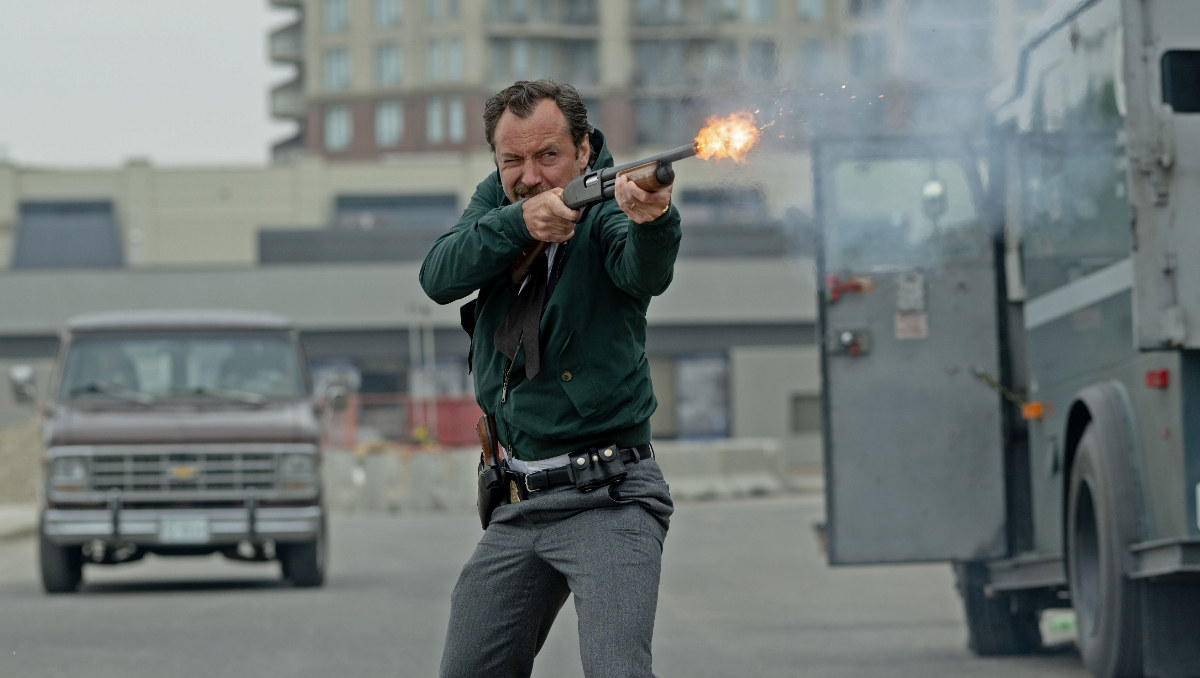
“The Silent Brotherhood,” co-written with the late Gary Gerhardt, has been adapted into “The Order,” a film starring (and produced by) Jude Law about a fictionalized FBI agent on the hunt for Robert Jay Mathews, who founded a radical splinter group of the Aryan Nations that the media renamed The Order. (Why? “Because it fit better in a newspaper headline than ‘The Silent Brotherhood,’” Flynn said.)
The film has landed a Denver Film Festival centerpiece screening on Nov. 8 at the Ellie Caulkins Opera House. It will be released in theaters nationwide Dec. 6.
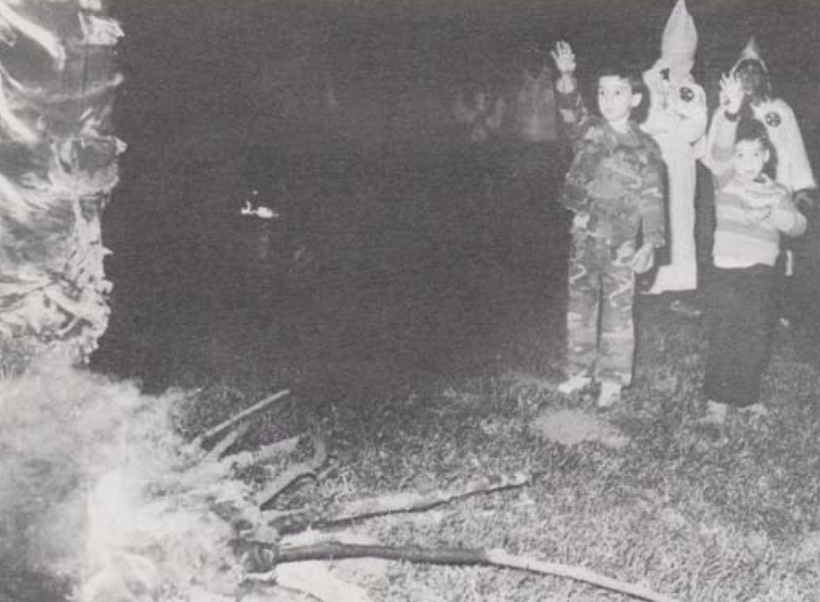
In 1983, Neo-Nazi terrorists based in the Pacific Northwest used William Pierce’s 1978 novel “The Turner Diaries” as a blueprint to launch a campaign of robberies, murder, sabotage and bombings that yielded $4 million and a huge weapons arsenal. In 1984, its members brazenly gunned down Jewish talk show host Alan Berg outside his Denver home with the ultimate goal to overthrow the U.S. government and start a race war. The group finally collapsed in April 1985, when 23 of its members were indicted on federal racketeering and conspiracy charges.
“It’s never gone away,” said Flynn. “It just resurfaces cyclically.” And because of the internet, he added, “they are more organized — and more out in the open — than ever.”
Talked to death
Kevin Flynn’s life changed forever the second Alan Berg’s ended on June 18, 1984. The shocking, gangland-style killing shook Denver to its core — and mobilized its media.
“The No. 1 reason was the massive brutality of it,” Flynn said. “Berg took 13 bullets from a machine gun that left 36 entry and exit wounds.”
No. 2 was Berg himself, who at age 50 was perhaps the most loved, loathed and recognized voice in all of Denver.

The brazen attack drew Denver into what had been playing out as a largely silent war in the northwest that would have been of no specific interest to reporters in Denver. After the Berg killing, the Rocky Mountain News quickly organized a team of 10 reporters, led by its vaunted “Gang of Three”: Flynn, Gerhardt and John Accola.
And it only took a few hours for Flynn to realize this story’s roots began much closer to home than anyone might have thought.
Berg had been shot at 9:21 p.m. By the next morning, Denver Police had identified David Lane, a graduate of Aurora Central High School, as a potential suspect. Lane, it turned out, was a Klansman and a Denver-based member of the Silent Brotherhood. He had meticulously planned Berg’s murder and drove the getaway car.
It was later learned Lane had sparred a few times with Berg on the air — and when Lane played his own recordings of those vitriolic exchanges to Mathews, Berg’s fate was sealed. But only after Mathews conceded that his preferred target for assassination would be too hard to reach: TV producer Norman Lear, whose work regularly lampooned bigotry.
The chase was on for Lane, who had gone underground.
“So we did background work and found that he was involved with the Aryan Nations,” Flynn said. That immediately transported the Gang of Three to Idaho, yielding surprising interviews with Mathews’ parents, mistress and others.
The case would occupy Flynn and his team for the next five years.
The slow burn of journalism
Asking Flynn to name three journalistic highlights from those years is a little like asking filmmakers to distill his 496-page book down to an hour and 45 minutes. But he gave it a shot:
1. Four months after Berg’s death, Flynn got a tip that the murder weapon had been found in the attic of an Idaho home owned by Gary Lee Yarbrough, former bodyguard to Aryan Nations founder Richard Butler. They also found a portrait of Adolf Hitler, Brotherhood uniforms and an arsenal of weapons that included a dozen firearms, four loaded crossbows, 100 sticks of dynamite, C-4 explosives, grenades and booby traps, the local Spokane newspaper reported.
It was, as one report put it, “time to start rounding up suspects.”
Flynn got to report on Yarbrough’s federal hearing in Boise.
“That was my first glimpse of someone who was actually in this organization,” he said.
Less than two months later, on Dec. 8, 1984, FBI agents ended a 35-hour standoff on Washington’s Whidbey Island by setting fire to the house Mathews was holed up in — and had no intention of leaving alive. The Order, at this point, was effectively over. The hunt, however, was just beginning.
In March 1985, the feds arrested Lane “in some dump in North Carolina,” Flynn said, and apprehended 22 others. A month later — on tax day! — the 23 were hit with a combined 20-count indictment. Ultimately, only 10 went to trial as co-conspirators, and each was eventually sentenced to prison terms ranging from 40 to 100 years.
That sentencing hearing in February 1986 was the Gang of Three’s final significant reporting event for the Rocky Mountain News, but Flynn was just getting started. He chuckles as he recalls the press conference following Lane’s sentencing. New York Times reporter Wayne King casually told Flynn: “A literary agent got hold of me and said, ‘Is there a book in this?”
King replied he thought there was, but that he was too busy to write it.
“I grabbed Wayne by the lapel and said, ‘Give me that person’s name!’” said Flynn, who had already tried to interest book editors in the story and had 19 rejection letters to show for it — including one from Ned Chase, father of actor Chevy Chase.
Flynn remembers monitoring a message board invented by members of The Order that has been cited as one of the first three of its kind — ever. (Yes, hate speech helped launch the internet.) Flynn remembers coming across one message that warned the Berg murder “was part of something much bigger.”
Only then did Flynn take a close look at “The Turner Diaries,” and started to see its potential as a crude, how-to guide for terror.
“It’s a frightening book, and not well-written,” he said. “But it told us that there’s a much larger story here. It told us that the Berg killing wasn’t just some random murder just because he hung up on David Lane.”
The makings of a book were underway.
At first, the tome was to be a full collaboration between The Gang of Three, but Accola lost interest and dropped out. Flynn finally scored a $15,000 advance from Free Press Macmillan (since absorbed by Simon and Schuster). So, how did they splurge?
“Gary and I bought new computers, we hired a transcriptionist, and we paid for our travel to do some additional reporting,” Flynn said with a laugh.
They were shepherded by Julian Bach, a former editor at Life Magazine and a bit of an eccentric.
“He was a Harvard guy who claimed he never missed a single Harvard football game — home or away,” Flynn said.
On their days off from the Rocky, Flynn and Gerhardt followed the Aryan Trail. They were welcomed by FBI agents, jailhouse inmates and even Butler himself. It was weeks of motels with moldy showers — “and it was the greatest professional experience of my life,” said Flynn.
Their deeper dive revealed many complicated and unsettling considerations about hate in America, the white supremacy movement and those caught up in it.
Unsettling because what Flynn and Gerhardt discovered in their search for the root causes of toxic, racist anger was … evident normalcy.
“When we went to the Aryan Nation and talked to Richard Butler, everyone was very open to us because I think they sensed that we really wanted to know who these people were, and that we wanted to understand them. Because what intrigued us the most was that most of these folks, with a few exceptions, had no criminal records. They were simply people you might see walking down the street dealing with everyday stuff — like Bruce Pierce struggling with staying employed and feeding his family.”
Flynn tells the stomach-twisting story of how Pierce was first recruited into The Order.
“Bruce came across a group of random high-school kids who were attacking a fellow student for saying something bad about the Jews,” Flynn said. “Bruce intervened and said, ‘Hey, let the kid talk. Everybody’s got the right of free speech.’”
“The next day, this kid brought his father to talk to Bruce, who tells him, ‘Thank you for sticking up for my kid. And, oh, by the way, we have a group that meets regularly’ — and it was, like, Bible study. It wasn’t cross-burning.”
This was the start of a slow, slippery slope that eventually put Pierce on Berg’s driveway, pumping him with bullets from a submachine gun.
But the interview that shook Flynn to the core was with Una Mathews, mother of the man who broke off from Butler because he was sick of waiting for the old man to turn their anger into action.
“What he discovered is that Bob’s parents didn’t raise him to hate,” he said. “In fact, they encouraged him to learn more about the world. Unfortunately, what he went out and learned was that the Jews were out to destroy the White race.”
This story, Flynn said, “is a reality check. Gary and I went in thinking these are just evil people doing evil things. And that wasn’t the case with almost all of them. It was people who did evil things because of what was going on in their lives, or, most importantly, because of who they met along the way.
“Gary and I came to believe that if these people had never met Bob Mathews, they probably would be retired and living off their 401(k)s right now,” he said. “These folks would not have done this on their own.”
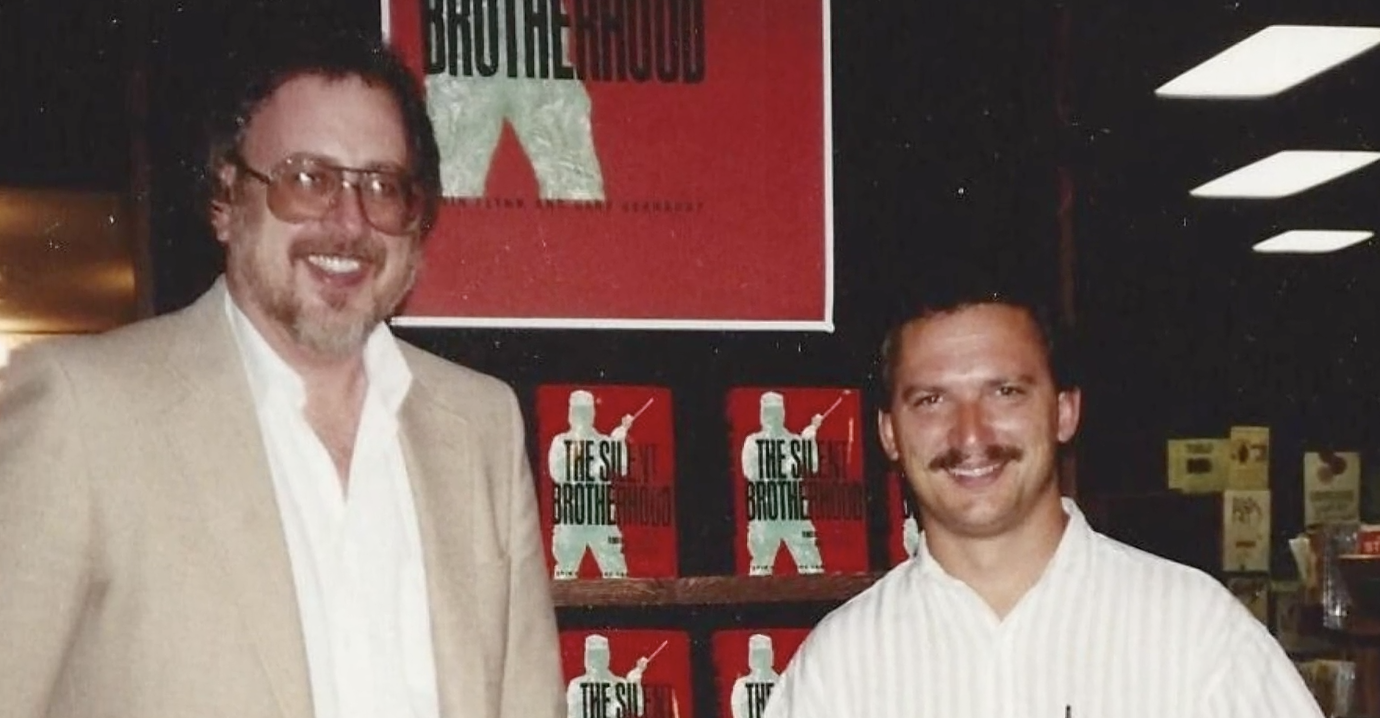
When “The Silent Brotherhood” was published, “It was not a major release for Free Press Macmillan,” Flynn said with a laugh. He and Gerhardt were sent out on two press tours, and the book eventually sold about 20,000 copies. Which to Flynn was good gravy, because they did not set out to write a best-seller that might bring a Hollywood bidding war. They set out to do journalism.
“Our target audience was sociologists and criminologists,” he said. Flynn wrote to the heads of the criminal justice departments at colleges throughout the northwest and had great success asking them to add the book to supplementary reading lists for their courses.
As for reader reaction, Flynn said, “I’ll never forget the day that we got favorable reviews from both a neo-Nazi group in Oregon and a communist organization in Atlanta. I said to myself, ‘This means that we struck a balance.’”

Start of a new life
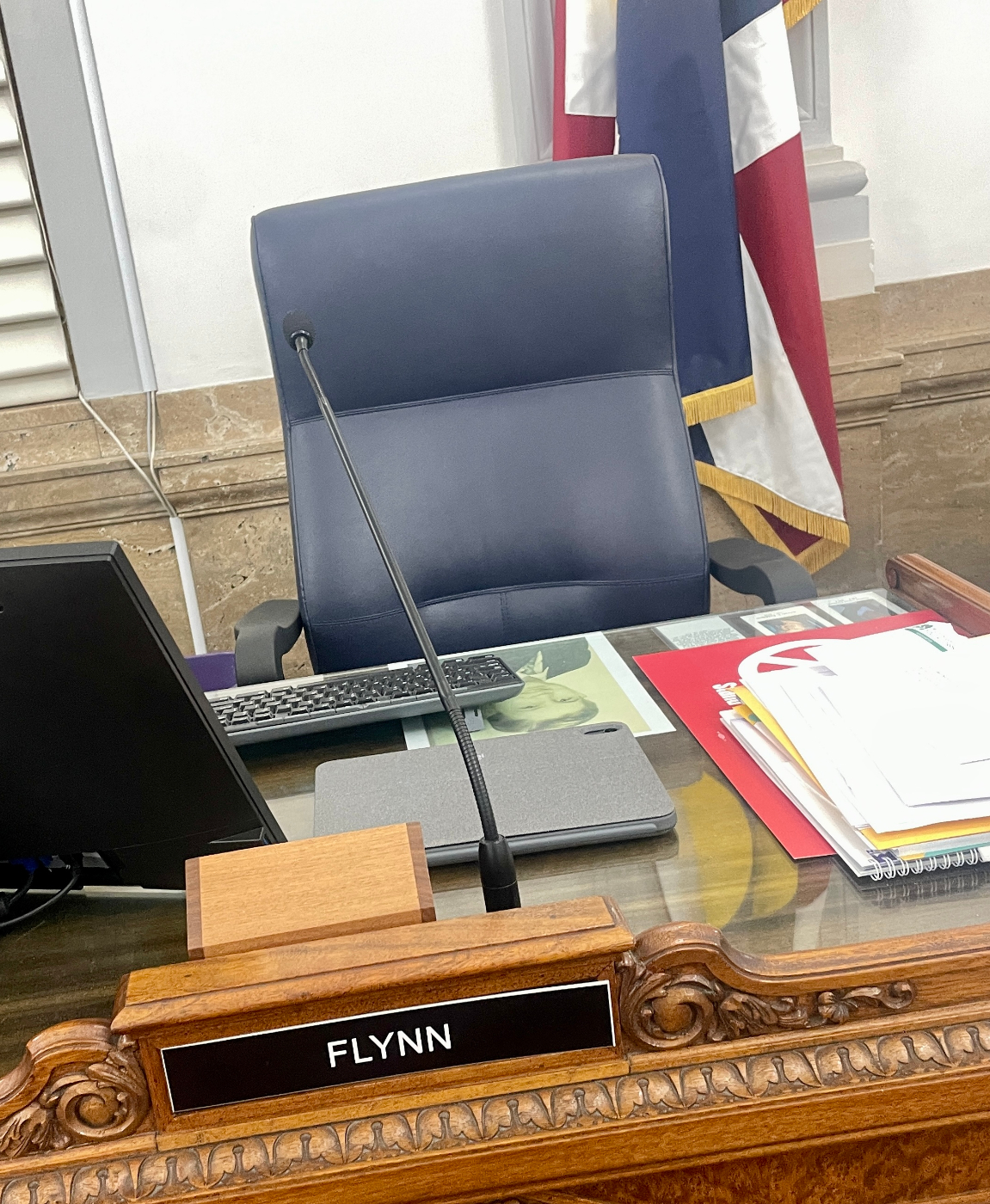
Flynn, who grew up in Lehigh Valley, Pa., banged his fingers on his Rocky Mountain News laptop until the day the paper ceased publication on Feb. 27, 2009. In one of the most sublime pivots imaginable, he was elected in 2015 to the very same Denver City Council he reported on for the Rocky. He has been twice re-elected by the residents of his southwest Denver district.
In 2021, Flynn was sent an out-of-the-blue script treatment by Zach Baylin (“King Richard”) adapting his book for the screen. But Flynn is a busy guy.
“I actually didn’t read the whole thing,” he said with a laugh. “I read the first few pages and the last few pages — and then I had to get ready for the next council meeting.”
In 2023, it was announced that Baylin’s film had a green light, with Law and Nicholas Hoult set to star, and Australian Justin Kurzel (“Macbeth”) to direct.
Flynn was tickled. Especially for Gerhardt, who died in 2015.
“After all, it was Gary who first said, ‘This book would make a really good movie,’” Flynn said.
He didn’t worry about the compromises that inevitably would have to be made to transform the scribes’ 500 pages of journalism into a compelling narrative drama. Instead, Flynn gave himself fully over to the fact that any film of this story could only tell a slice of it.
Baylin focuses squarely on the central conflict between the hunter and the hunted: The damaged, driven FBI agent and the messianic and charismatic cult leader.
In the book, and in real life, that FBI agent is Wayne Manis, a straight-shooter who, by all accounts, has no apparent flaws. Which generally does not make for a compelling film protagonist. So, for the movie, Baylin creates fictional Terry Husk as a composite of Manis and other agents who worked the case. (There were eventually 42 of them.) What was most true of Manis, however, is also most true of Husk, Flynn said, and that is his dedication to the task.
“We made the decision early on that it was imperative we not base Terry on any of the (real) special agents who investigated this case,” Law said at a press conference. “We didn’t want to invent an unhappy home life for someone who really exists. So, it helped an awful lot (for us to make someone new). It meant that we were really free to create Husk in any way we needed him to lean: The fragility, the physicality, the smoking, the drinking, the fatigue, the shattered family. All of it.”
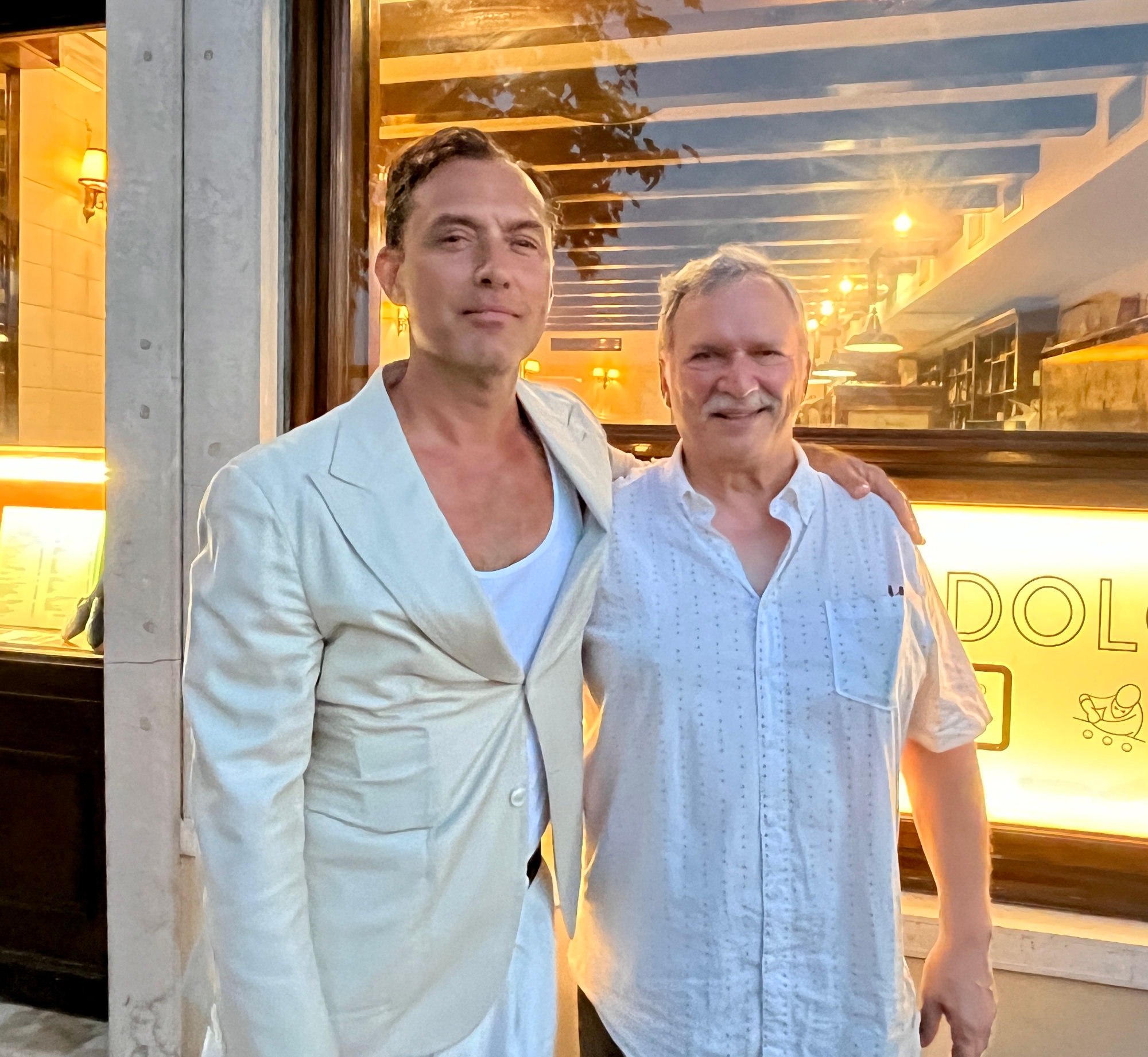
That a star of Law’s stature signed on as both star and producer, Flynn said, “told me that he was truly committed to telling the story — and that it would be faithful to the book.”
Flynn and his wife were able to make one brief visit to the film set in Calgary. When the day’s work was done, Law engaged Flynn in a 45-minute conversation as the two stood together on the dusty pullout of a mountain road. Law was a sponge. He wanted to know the smallest details about people and pieces of the story that didn’t even make it into the film script. The next day, Law’s driver stopped Flynn and told him the conversation he’d had with Law really made an impression.
“That’s all he talked about for the hour and a half drive back to Calgary,” Law’s driver told him. “He really took that all in.”
But because the film necessarily leaves many details out, you might think that would bother the journalist who spent so many years carefully laying it all out.
Not so, said Flynn.
“My main concern was that the film tell the 30,000-foot story of White nationalism in America,” he said. “You don’t have to tell every detail to do that. It’s like when I’m flying over Nebraska: I don’t need to know that’s Omaha, and that’s Lincoln. I can see the landscape. I don’t need to know what’s actually happening down there.
“I didn’t sit there watching the film saying, ‘That’s not how that happened.’ Because the story they told is what happened. That’s the important part to me.”
Besides, if audiences want all the details — they can read the book. (It’s being reissued by Simon and Schuster, only now with a title to match the film (“The Order”).

Stand and deliver
“The Order” had its world-premiere screening on Aug. 31 at the Venice Film Festival, which is considered one of the top five in the world. Granted, at Venice, it’s not whether your film will get a standing ovation. (It will.) It’s how long the ovation lasts that counts. And a Venice audience of 1,000 gave “The Order” a nine-minute and 23-second ovation.
Flynn later shared a special dinner with Law and the team, but his full-circle moment was smaller, while surrounded only by a few family members and Gerhardt himself.
Wait, what?
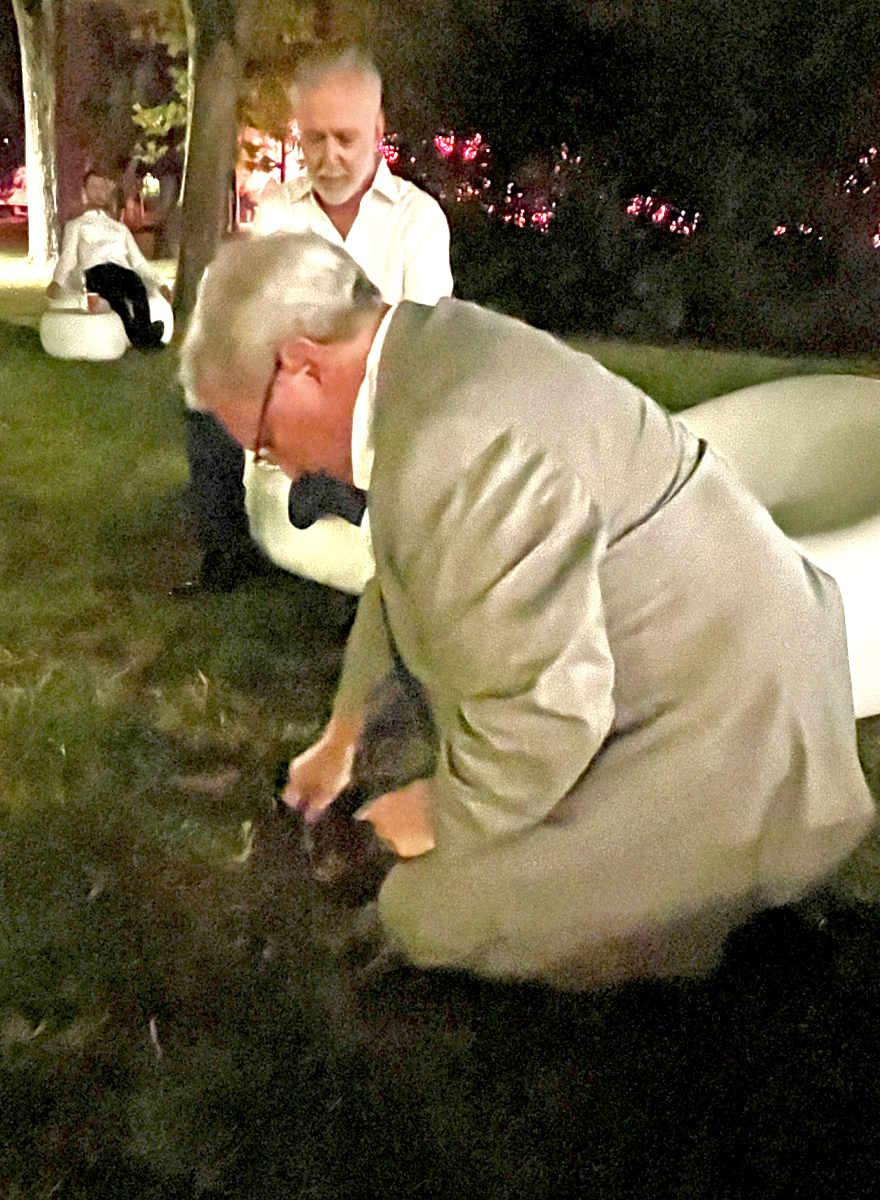
“I had Gary in my pocket,” Flynn said of his hulking, 6-foot-5 writing partner. Gerhardt’s widow, Nancy, had given Flynn some ashes to bring with him to Italy. After the premiere screening, Flynn stole away to the nearby Palazzo de Casino.
“With my sister-in-law on one side and my brother on the other, I got down on my knees and dug out a little bit of a hole and poured Gary’s ashes in,” said Flynn. “So, I took that dirt I had dug up and put it in a clean plastic bag to bring home to my wife — because her hobby is collecting dirt from all over the world.”
Asked how he thinks Gerhardt would feel about the completed film, Flynn said: “He’d be floating on air.” After a pause, he continued: “And come to think of it … he is.”
Last question: Asked what it will mean to him for “The Order” to be the centerpiece film of the 2024 Denver Film Festival, Flynn said: “Not to sound trite, but … it’s very cool.
“And this is a good benchmark to remind people that what happened in ’84 is still happening in ’24.”
PRIMARY PLAYERS: A GLOSSARY
• John Accola: Rocky Mountain News journalist who reported on the Alan Berg murder. Died June 25, 2006.
• Zach Baylin: Screenwriter of the movie “The Order.”
• Alan Berg: Denver radio talk show host who was gunned by a supremacist at his home on June 18, 1984.
• Richard Butler: Founder of the National Socialist Aryan Nations who lost younger followers to the more militant Robert Mathews. Born in Bennett, Colo. Died Sept. 8, 2004.
• Jean Craig: Wyoming mother of Robert Mathews’ mistress, Zillah Craig. Sent by Mathews to Denver to surveil Alan Berg’s movements and confirm he would be a viable assassination target. Died in prison on April 18, 2001.
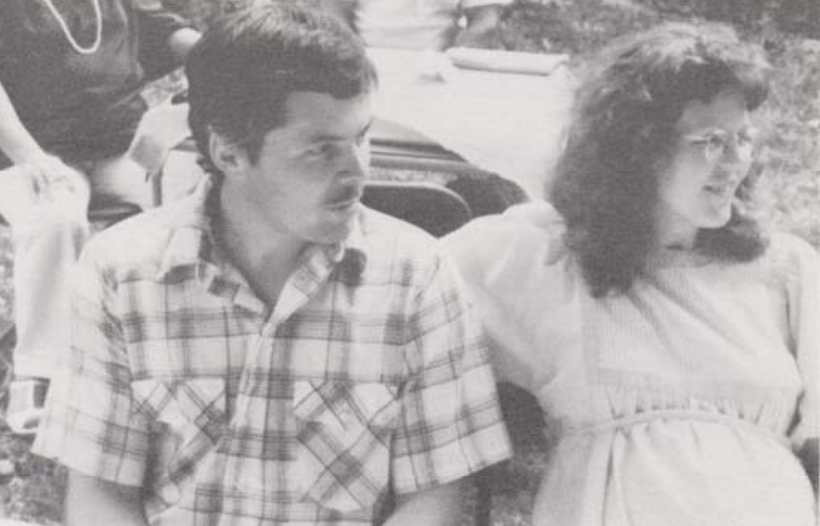
• Zillah Craig: Former mistress of Robert Mathews who told a jury that Mathews ordered the death of Alan Berg.
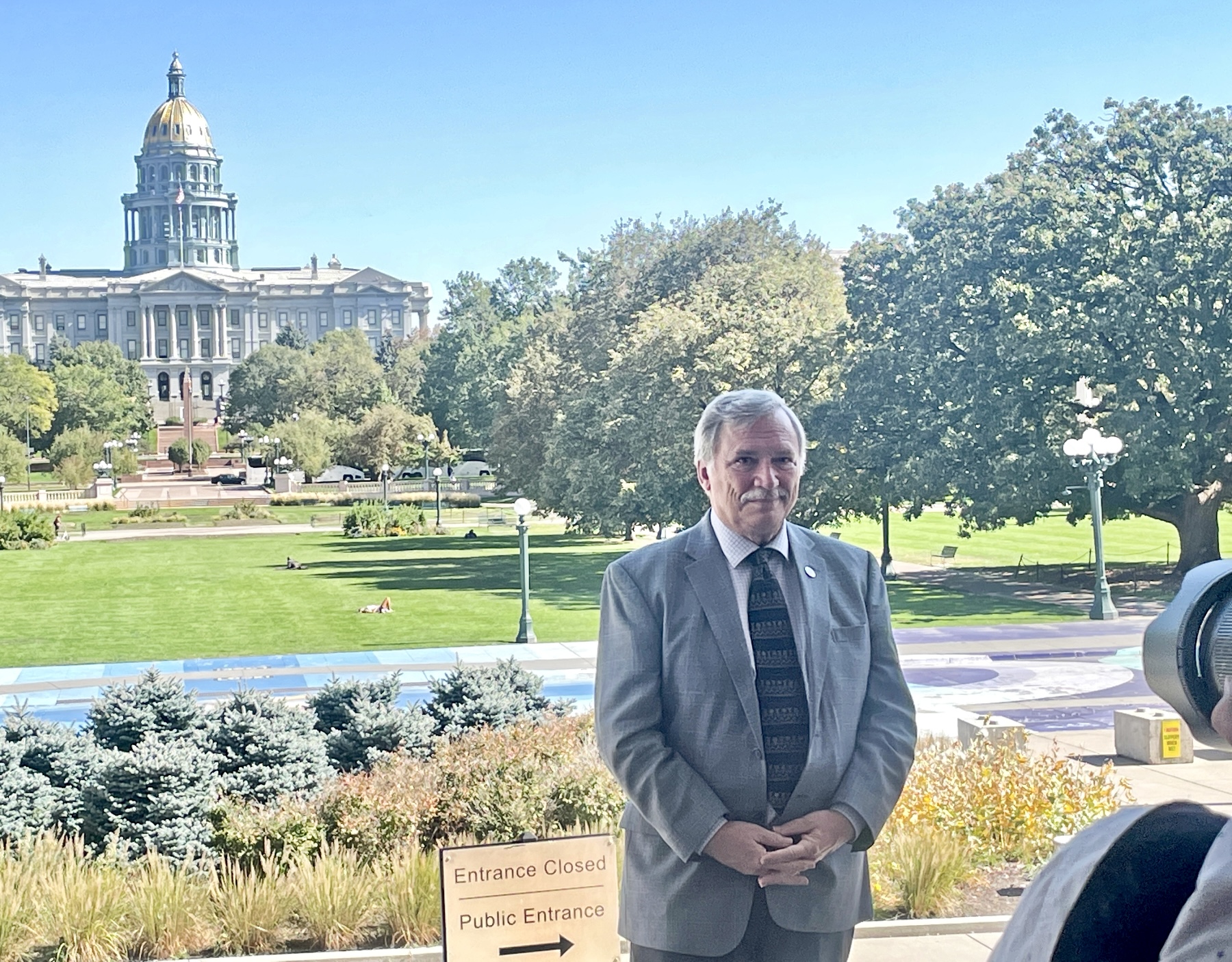
• Kevin Flynn: Rocky Mountain News journalist who reported on the Alan Berg murder, co-authored “The Silent Brotherhood and now serves on the Denver City Council.
• Gary Gerhardt: Rocky Mountain News journalist who reported on the Alan Berg murder and co-authored “The Silent Brotherhood.” Died Dec. 4, 2015.
• Nicholas Hoult: Actor who plays Robert Mathews in “The Order”
• Terry Husk: Fictional FBI agent played by Jude Law in “The Order.”
• Justin Kurzel: Director of the movie “The Order.”
• David Eden Lane: Planned the Alan Berg assassination and drove the getaway car. Attended Aurora Central H.S. Died in an Indiana prison of an epileptic seizure on May 28, 2007.
• Jude Law: Actor who plays a fictionalized version of FBI agent Wayne Manis in “The Order.”
• Wayne Manis: Veteran FBI agent who pursued Neo Nazi Robert Mathews to his death in 1985.
• Marc Maron: Actor who plays Alan Berg in “The Order”
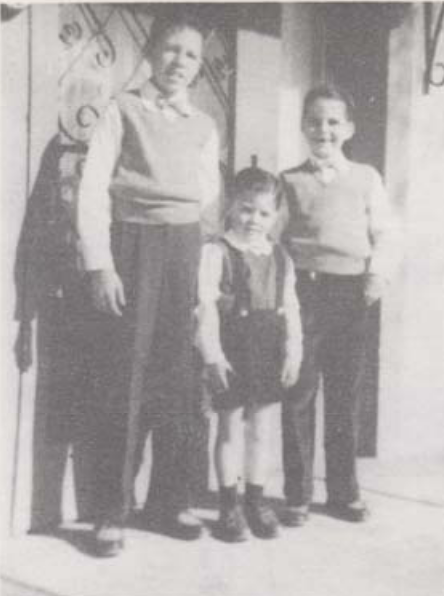
• Robert Jay Mathews: Founder of the anti-government, white supremacist group The Silent Brotherhood (aka The Order), whose stated goal was “to annihilate the Jewish race.” Ordered the assassination of Alan Berg. Burned to death during a standoff with federal authorities on Dec. 8, 1984, at his home in Coupeville, Wash.
• Richard P. Matsch: U.S. District Court Judge who oversaw the 1987 trial of four accused of killing Alan Berg. Died May 26, 2019.
• Bruce Carroll Pierce: Founding member of The Order and gunman in the murder of Alan Berg. Died on Aug. 16, 2010, while serving the 23rd year of a 252-year federal prison sentence.
• William Luther Pierce: Author of the 1978 novel “The Turner Diaries,” an apocalyptic tale of genocide against racial minorities. Died on July 23, 2002.
• Richard Scutari: Serving a life sentence for his part in robbing more than $4 million in armored car heists to fund plans for a white supremacist revolution. He was acquitted of violating Alan Berg’s civil rights despite his part in the murder. He is scheduled to be released in 2025.
• Gary Lee Yarbrough: Member of The Order whose attic was found to be hiding the submachine gun that killed Alan Berg. Died from cancer in the Supermax prison in Florence on April 2, 2018. Had he lived, he was scheduled to be released this coming Monday.