







Year-round gardening: Add color around your Colorado home with holiday cactus
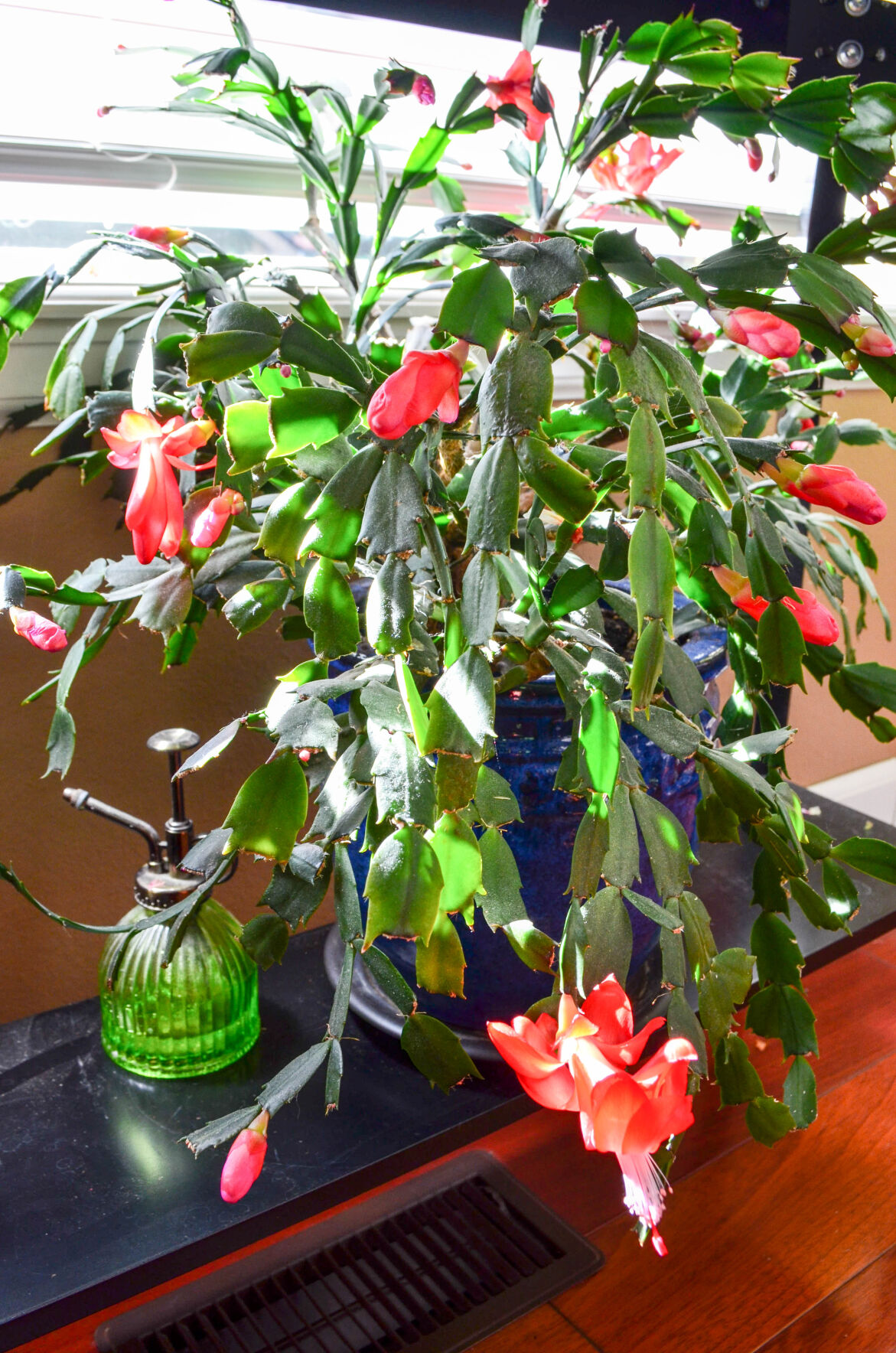
Once gardens become dormant, Coloradans could long for flowers to brighten their homes during the holiday season.
Holiday cactus (Schlumbergera sp.) is a great choice. These natives of Brazil grow in the crotches of trees but are not parasitic. Because they’re understory rain forest plants, they will get enough light near a sunny window.
Holiday cactus will thrive in your home with little care. The best thing about these plants is the succulent foliage is neat and attractive even when not in bloom.
Keys to success with holiday cacti are:
• Plant in well-draining soil.
• Only transplant to a larger pot when they really outgrow the space; they like being slightly pot-bound. Transplant is best done in spring or summer after the bloom finishes.
• Fertilize monthly during the period between blooms.
• Water regularly, especially when buds are set. Allowing the soil to dry can cause the buds to drop.
Schlumbergera are true cacti, featuring flattened stem segments with scalloped edges. The leaf structures are tiny hairlike appendages at the tip of the stem segments. The flowers form at the tip of the stem segments. There are three types of holiday cacti: Thanksgiving cactus, Christmas cactus and Easter cactus. There are also numerous hybrids within the genus.
Thanksgiving cactus (S.truncata) is actually the most commonly sold of these three types. They bloom during November to late December and will soon be ubiquitous in the stores. Colors range from white to red, lavender and salmon-orange, with many shades in between. The bloom within this type is controlled by temperature and day length. Blooms will form when the plants have an uninterrupted dark period of 14-16 hours; temperature should be 55-70 degrees F. Keep plants moist but do not overwater during bloom formation.
Christmas cactus (S. x buckleyi) is a hybrid between S. truncata and S. russelina. They will produce red flowers between November and early February under the same conditions as the far more common Thanksgiving cactus.
Easter cactus (S.gaertnen) blooms in March to May with pink or red flowers. These are far less common and have a more regimented temperature and light requirement. They require temperatures in late fall of 60-70 degrees for three to four weeks, followed by temperatures of 47-55 degrees for four to six weeks. Easter cactus will not bloom if the conditions are not met.
When shopping for these plants, you might find they are sold with different names than Schlumbergera. The taxonomy has changed over time and old names might still be used by growers. The plants are distinctive enough in appearance that, unless you have strong evidence to the contrary, if it is marketed as a Christmas cactus it is almost certainly S. truncata or a hybrid of S. truncata.
Submit gardening questions to [email protected] or call 719-520-7684. The in-person help desk is closed for the season; questions submitted via email will be answered remotely. Find us on Facebook at Colorado Master Gardeners – El Paso County.