







Denver superintendent to release school closure list
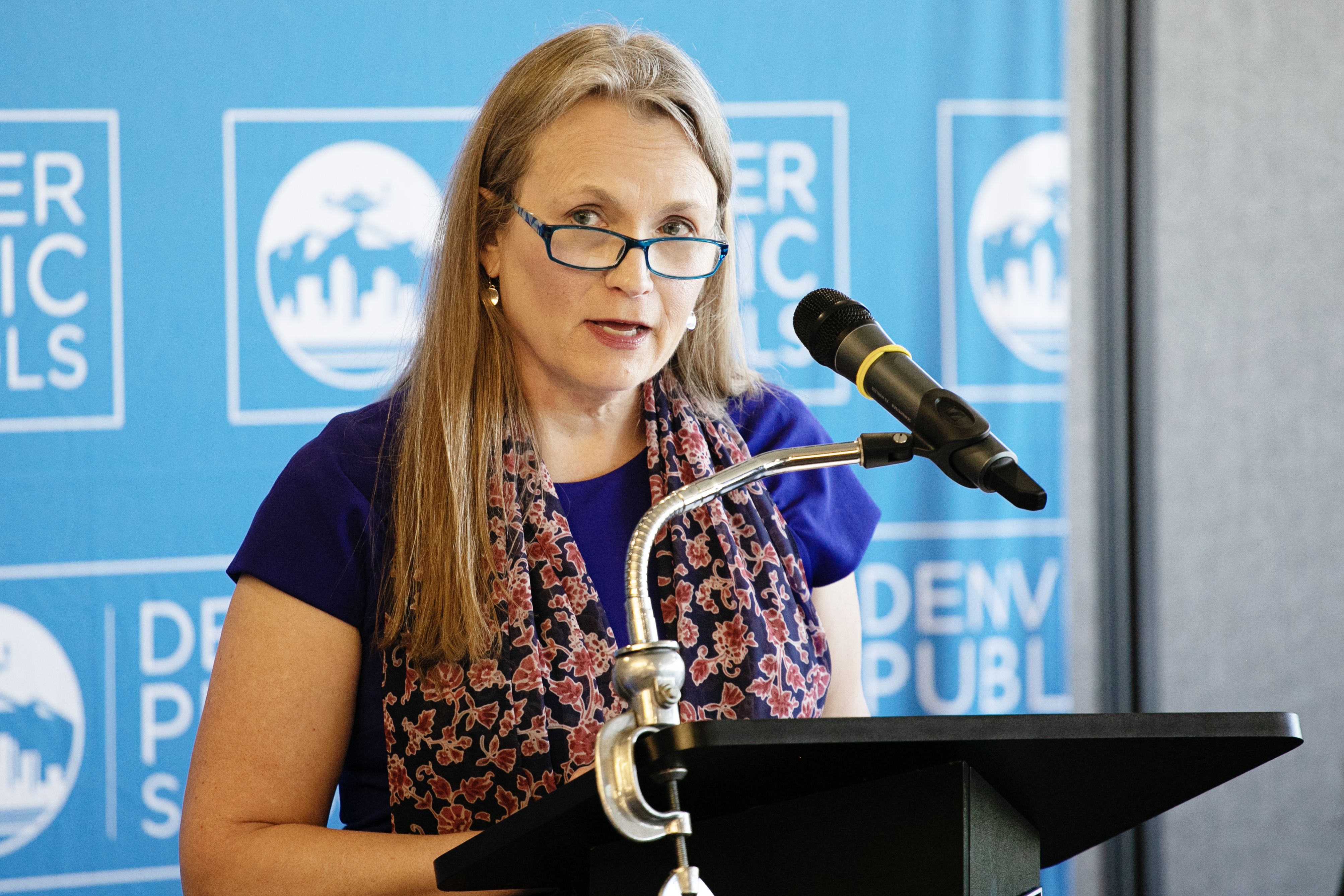
Declining enrollment could face a reckoning on Thursday, when Denver Public Schools Superintendent Alex Marrero publicly discloses his school closure list.
It’s unclear just how many schools could be on the chopping block, as district officials have been tight-lipped about the process.
Given a projected loss of tens of millions annually and the roughly $5 million per campus cost — on average — the list could contain a handful of schools or more than 14, according to a Denver Gazette analysis of district data.
“I never thought that I would be on a board that was going to close schools,” Board President Carrie Olson said.
When Olson was sworn in seven years ago, declining enrollment had not yet bubbled up into a full-blown crisis.
“This is a really personal to all of us and I think that’s something that gets lost in all of this,” Olson said.
In Colorado, enrollment is tied to funding.
And enrollment in Denver has been declining since 2019.
“There are places in DPS’ school portfolio where we have too many schools for the number of kids that we have,” Andrew Huber, the district’s executive director for Enrollment and Campus Planning said during a board meeting last week. “And, what’s best for kids in each of these areas is extremely contextual.”
On the eve of the school closure list becoming public, officials could not say the how much would have to be shaved from the budget to address declining enrollment.
The district, however, expects to lose $70 million in funding each academic year for at least the next four years, said Chuck Carpenter, the district’s chief of finance.
“Because we will have fewer students and will have fewer needs to provide services, we are confident we will be able to make the budget align,” Scott Pribble, a district spokesperson, said in an email to The Denver Gazette.
“Unfortunately, changing our overall number of schools is part of that work.”
Regardless of enrollment, every campus has built-in cost drivers that include utilities, facility maintenance, classroom materials and supplies, staff salaries — the bulk of the costs — and administrative overhead, among others.
The cost — on average — to operate a Denver school is about $4.7 million, Pribble said.
But Pribble also noted that the average cost can be misleading. Campus costs vary from $2 million to $19 million for each school.
Should officials — and this is a big if — look to close the roughly $70 million annual shortfall, that means as few as four to 14 schools or more could be recommended for closure.
Two years ago, Marrero had recommended 10 schools for closure. After a very public backlash, he pared that down to three.
All three schools — Denver Discovery, Mathematics and Science Leadership Academy and Fairview Elementary — had fewer than 120 students, significantly below what officials had identified as having “critically low-enrollment.”
Critically low enrollment is defined as having fewer than 215 students.
At the time when the board voted to shutter all three of the schools that Marrero recommended, the district had 38 schools with fewer than 215 students.
At least 17 campuses had fewer than 215 students last school year, the most recent state data shows.
School officials and others have identified lower birth rates, skyrocketing home costs and gentrification have been identified as the biggest factors driving enrollment declines.ional data, enrollment is 19% in the southwest region over the past five years.
‘Major shifts in demographics’
Colorado practices school choice, which means the law allows parents to register students outside their assigned neighborhood schools.
School choice starts in January.
The district will also start holding job fairs in January for laid off teachers who are guaranteed a position in the district and who are non-probationary.
The district’s enrollment has fallen since the student population hit a peak of 93,815 in 2019. Last fall, the district saw 88,235 students enrolled — a 6% decline over the past five academic years.
Because enrollment is tied to funding, fewer students mean less money.
The district has lost about $107 million in revenue since 2019, district officials said.
Parents are bracing for the closure list.
“There about two-to-three years behind schedule on closing schools,” said Steve Katsaros, co-founder of the Parents Safety Advocacy Group, or P-SAG. “They’re behind.”
P-SAG formed last year in the wake of a shooting at East High School that wounded two administrators.
“I think it’s going to be a shockingly high number,” Katsaros said.
With economic forecasts showing a persistent decline — despite temporarily being buoyed by new immigrant students — the district’s revenue is expected to continue shrinking.
‘We have too many schools’
Officials, too, are bracing for the fallout.
After weathering public criticism on how Marrero conducted the process 18 months ago (after the school choice process had already begun), officials held six community meetings across the district to gather input.
Officials heard from more than 700 attendees in tightly scripted community meetings in which the majority of the time was dedicated to outlining the need to shrink the number schools.
The top theme that emerged from these town halls was “transparency,” followed by “community engagement” and “communication,” among others.
“(T)he fact that we’re doing it now, not only is it going to allow for a better educational experience immediately, it’s also preventing quite frankly a full-blow crisis,” Marrero said last week.
In June, the board created guardrails that require the superintendent to consider multiple factors when recommending a school’s closure. This includes not making decisions solely on enrollment or test-score data. In addition, staff also examined facility conditions and planned upgrades, as well as family choice patterns, school demographics and special programming, which includes gifted and talented as bilingual programming, according to an 18-page report.
“The crisis could come next year because we don’t have ESSER money to bail out schools,” Marrero warned the board last week.
ESSER — or Elementary and Secondary School Emergency Relief — refers to the federal funding provided school districts during the COVID-19 pandemic.
“We just don’t have the lifeline,” Marrero said.

