







Book on Colorado’s historic cemeteries tells of forgotten people, places
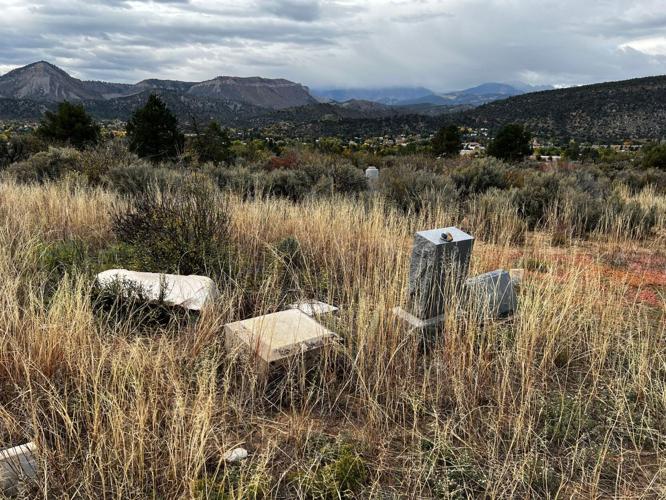
Animas City Cemetery is among places visited by Eilene Lyon in her new book, “What Lies Beneath Colorado: Pioneer Cemeteries and Graveyards.”
courtesy of Eilene Lyon


Eilene Lyon has a curious hobby.
“Going to antique stores and picking up old photographs that have a name on them, and I research these people and I write about them on the blog,” she explained from her longtime home in Durango. “The aim is to return the photographs to relatives. That’s been very rewarding to do.”
Equally rewarding has been her past couple of decades researching her family history and genealogy, the springboard to her first book. The New York Times praised “Fortune’s Frenzy,” released in 2023, as “a fresh look at the California gold rush.”
Now comes Lyon’s latest, “What Lies Beneath Colorado: Pioneer Cemeteries and Graveyards.” The book is part of a series exploring some of the oldest burial places across the West and the stories of people interred.
“That was right up my alley,” Lyon said. “Going around and writing about dead people from Colorado history.”
For any casual student of state history, many names in the book will register. Names like Evans, Tabor, Palmer, Moffat and Meers.
But Lyon was most interested in lesser-known names, anonymous names on faded, crumbling tombstones — not unlike those names on crinkled pictures from the antique store.
“Pioneer” is in the book’s title, and indeed many of those pioneer politicians, entrepreneurs, city founders and road builders are chronicled. “But I tried not to dwell on them too much,” Lyon said, “because I wanted to find new stories.”
Stories of triumph (the Jewish people to thank for Trinidad’s early development) and stories of tragedy and folly (the San Luis Valley’s tiny Bad Booze Cemetery is colloquially named for a deadly cocktail of pharmacy alcohol, water and rock candy).
Stories of the disenchanted Civil War soldier seeking to start anew in the mysterious West. Stories of the everyday miner and rancher who similarly left the comforts of a former home for the plains and peaks that posed more peril than promise.
Stories of people on the margins. “Not just the old white guy stories,” Lyon said.
Around the mountains of Georgetown lies Charles Osborn Townsend, “a respected barber” who lived from 1846-1911, Lyon notes. He was one of the town’s early Black residents, born to an enslaved woman in Alabama before going on to business and land of his own in Colorado.
Elsewhere in the mountains, at Greenwood Cemetery in Red Cliff, Lyon found the grave of Dr. Joseph Gideon Gilpin (not the namesake of the county; that would be Col. William Gilpin, the first territorial governor). The doctor was “a benevolent fellow,” Lyon writes. He would embark to sick miners stranded across rugged terrain, charging them little or nothing.
“His grave is marked by a metal mortuary sign and a legible wooden headboard once painted with his name and death date,” Lyon writes.
Equally ambiguous is the grave for Joanna Swayze Sperry at Pueblo’s Roselawn Cemetery.
Lyon found Sperry to be a small woman with a big heart, tending to those in need around Pueblo and beyond. Sperry was known to help Red Cross founder Clara Barton in Cuba, and she also helped relocate Filipino people around Los Angeles during the Spanish-American War.
“She’s just buried under a super-simple headstone with her name and birth and death year on it,” Lyon said. “Just kind of unsung.”
At Denver’s Fairmount Cemetery, there are names sung more than Caroline Westcott Romney. She was “a globe-trotting pioneer, newspaperwoman and inventor,” by Lyon’s account, which includes a hint of dry wit:
“In 1876, she fabricated a marriage to ‘John Romney’ and became ‘a widow’ three months later. As a widow, she had much greater freedom than she would have had as a spinster.”
Colorado’s early days were of oppression and violence.
The book offers a somber chapter on the Sand Creek Massacre. In southeast Colorado, a national historic site recounts the military attack of 1864 that killed hundreds of Cheyenne and Arapaho men, women and children.
The plains would be home to later episodes of greed and bloodlust. Death followed the feud of ranching families Tuttle-Irwin and Meenan, Lyon writes in one passage seemingly out of a Wild West movie.
Aside from the plains, she writes of “boot hill” graveyards being common across Colorado. Hilltops served practical and sentimental purposes for burials, while the name “boot hill” comes “because the young adults buried in them ‘died with their boots on,’ meaning in the prime of their life (often dying of a gunshot or by hanging).”
The book took Lyon high to the remote wilds of her local San Juan Mountains and low to the Dolores Mission and Cemetery, tucked in the remote depths of Picket Wire Canyonlands.
“This really was a fabulous opportunity to get to learn more about my home state,” Lyon said.
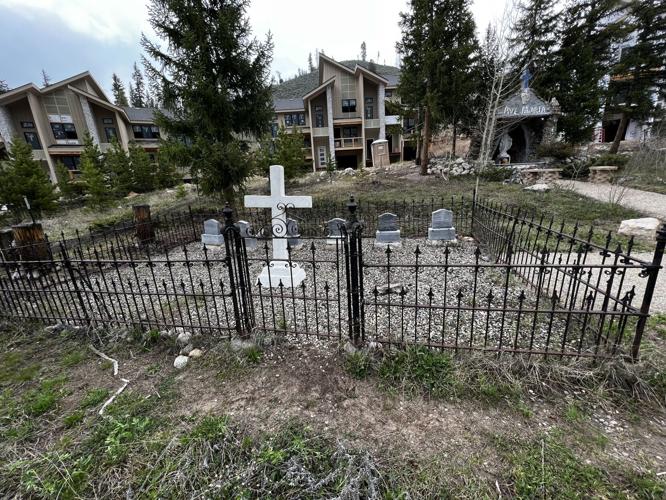
And more about her own family. In Fraser, she found ancestors at a pioneer cemetery that she had thought would be forested, judging from old images.
“Now it’s not in the forest. There’s a whole brand-new development of condominiums,” Lyon said. “It’s straight in the middle of a parking lot basically.”
However forgotten many of the graves she visited, she spotted encouraging sights here and there: fresh-looking flowers on the ground.
“You can tell some of these people are not forgotten by their descendents,” Lyon said. “And I think that’s fabulous, because we all came here from somebody, and they did a lot to make us who we are today.”