







Fast-rising Colorado mountain runner sets records across Himalayas
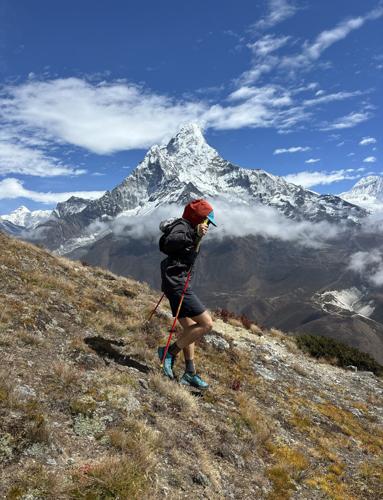
Colorado’s Chris Fisher spent the past couple of months running around the high country of Nepal.
photos courtesy of Chris Fisher

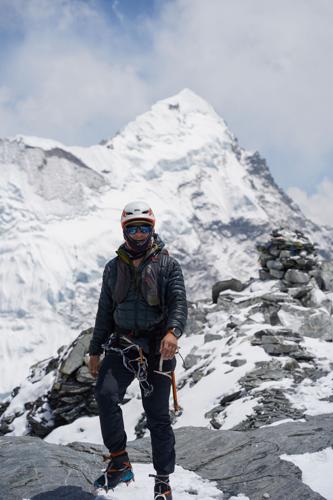
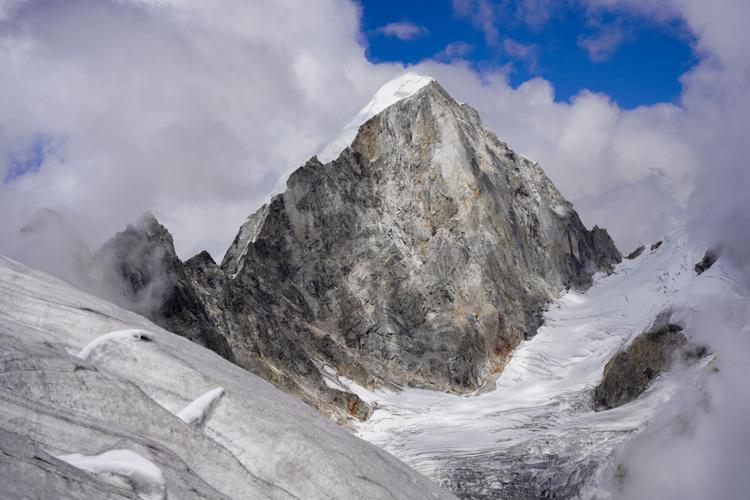

Alongside a few fellow American mountaineers, Chris Fisher recently celebrated his 29th birthday in an Irish pub perched high amid the Himalayas.
This was no occasion for contemplating the future, the confines of time. And yet there Fisher was nights later, contemplating just that. The young Coloradan was near the end of a record-setting odyssey around Earth’s highest peaks.
“I’m starting to realize I’ve got maybe a decade of potentially really healthy climbing left,” he said by phone from Lukla, Nepal, where he and fast-moving friends had left their marks across the mountains over the past two months.
“Of course I’ll climb a lot more after that (decade),” Fisher continued. “But at some point you get to your prime and it goes down. I’m starting to realize I’ve only got so much time to go do it all.”
He just did a lot in Nepal.
He had a companion to thank, Tyler Andrews, one of the world’s fastest mountain runners with prior knowledge and speed records in the region. In September, the two settled some old scores on Manaslu, the world’s eighth-highest mountain: Andrews logged a fastest known time, reaching the summit near 26,800 feet in under 10 hours, while Fisher embarked on a separate bid. He was not so much focused on speed but rather claiming his first 8,000-meter peak, which he did without supplemental oxygen over a 15-hour push.
“I literally had nobody else on the summit,” Fisher recalled. “I’m just by myself up there. It’s one of the best feelings ever. You can’t get that on fourteeners anymore.”
Manaslu was next in what has been a fast rise for Fisher.
Last year, not long after leaving Texas for life in Colorado’s mountains, he set one of the more fearsome, rarely-attempted records known by fellow chasers: He climbed all of the state’s 14,000-foot peaks in a single winter over 72 days. That was two weeks faster than the previous mark.
Fisher checked off the snowy fourteeners amid other far-flung efforts that established him as a sponsored athlete and one to watch.
“It’s happened a lot faster than I expected,” he said. Which is how he prefers things — fast, always moving, as he is when he’s back in America. In relocating to Colorado, he took up life in a van.
“It was just diving fully into the mountain scene,” Fisher said, “and seeing where it could take me.”
It took him beyond Manaslu.
Fisher and Andrews worked their way across the Khumbu Valley, setting their sights on Mera Peak above 21,000 feet. From their Lukla base, they did not hike as one typically does, but instead ran to the peak and back in what they believe was an unprecedented endeavor. They covered over 50 miles and 20,000 feet of climbing in 16 hours.
They would run elsewhere in the valley, dashing to more peaks and alpine lakes. They were joined by Erin Ton, Fisher’s Colorado-based girlfriend and fellow speedster. While she would claim fastest-known times of her own across several summits, Fisher found himself sick with stomach aches for days on end through October.
He pulled through in time for his November date on Ama Dablam. From the Pangboche village, Fisher charged up the regal peak above 22,300 feet in seven hours — beating a previous record by Andrews. (Andrews, meanwhile, claimed a record from base camp to the summit.)
Fisher was “stoked” by his summit, he wrote on Instagram, “even though I missed my personal goal by a good bit.”
His goals keep getting bigger. He and Andrews are eyeing a spring return to Nepal, with plans in the works for Lhotse, the world’s fourth-highest mountain, and also the biggest mountain of all.
A record on Everest? “It will be quite a spring for sure,” Fisher said.
But first: a project circumnavigating Aconcagua in Argentina. And before then: Thanksgiving back home with family in Texas.
It’ll be a return to the place of a “typical” upbringing, as Fisher has called his former life. It was a life of sports and fitting in and college and career expectations.
So much for that.
Maybe some 9-to-5 would’ve granted more certainty than this life as a mountain athlete. “It’s a scary thing to jump into something so big,” Fisher said. “I’m not making enough money to put anything in the bank to save for later.”
But then there’s the alternative, he thinks.
“Maybe you’re working a job you hate but you’re making good money. … Sixty years from now, you look back and think, What did I do? I never want to look back and think, What could I have done?”