







A year after crossing into U.S., Venezuelan family in Denver mulls going home, agrees with Trump on border security
“What I liked about Trump was that he was talking about closing the border,” Gabriel, 33, says through an interpreter
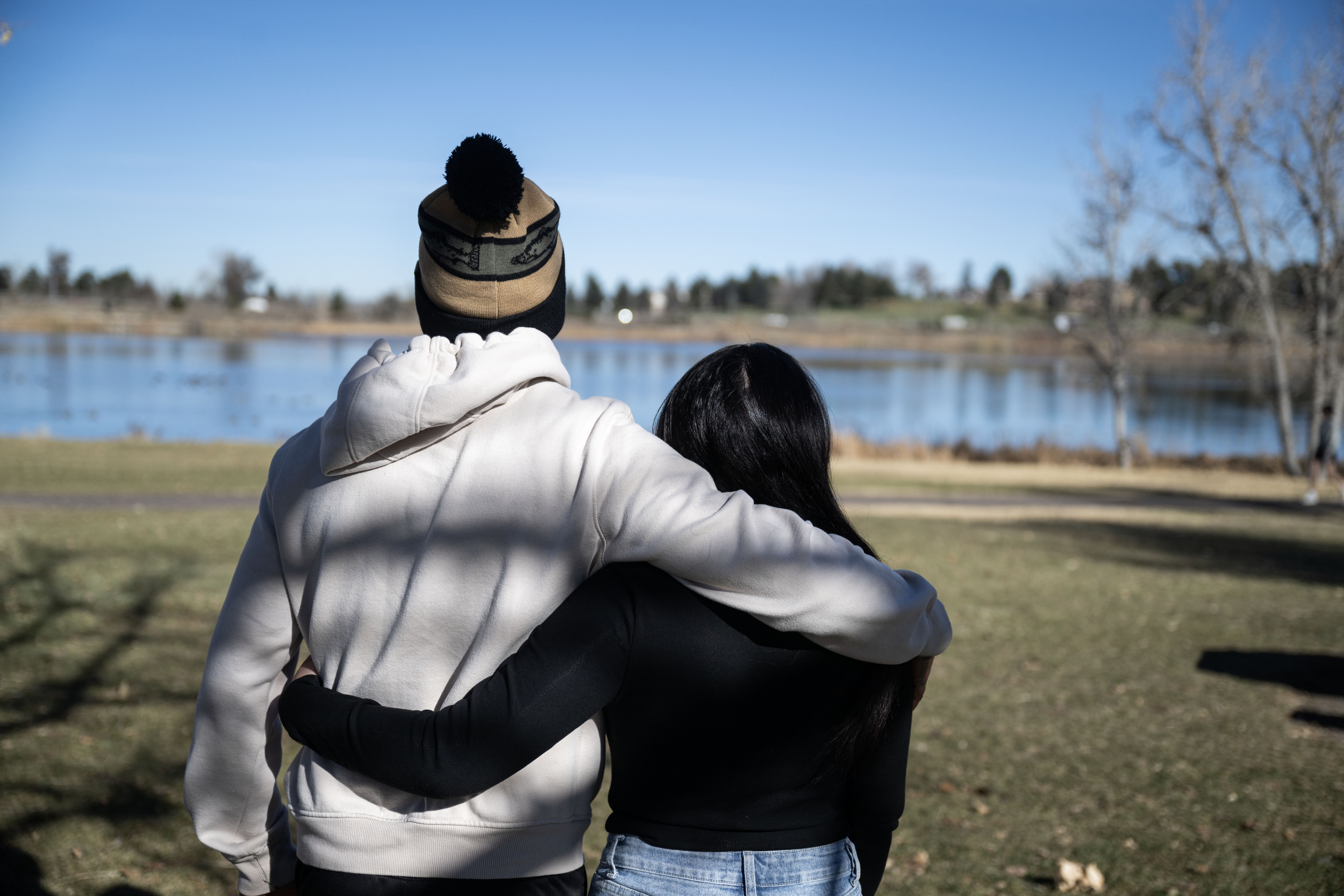
Exactly one year after they swam the Rio Grande River into the U.S., a young Venezuelan couple and their school-aged child were coming out of the Thanksgiving holiday in Denver with mixed feelings of gratitude — thankful to be alive and sheltered but doubtful about everything else.
Gabriel and Ana — who consented to an interview by The Denver Gazette on terms that their real names not be used — intimately know the mess that illegal immigration has become in large cities.
They are part of it.
Their answers to basic questions — why did you come? How rough was the crossing? Would you do it again? — yielded several surprises.
At a moment when a new administration in Washington is pledging to conduct the largest mass deportation program ever, the pair said that the U.S. border with Mexico should become much better protected.
“What I liked about Trump was that he was talking about closing the border,” Gabriel, 33, said through an interpreter, two weeks after the election.
“There are people coming across who do not intend to work. It’s making the situation much harder for those who are working, obeying the laws and acting responsibly,” he added.
The interview comes at a moment when Venezuela has gained outsized attention as a major departure point for immigrants. A week ago, the Wall Street Journal reported Trump is being pressured by advisors to drop his longstanding opposition to Venezuelan oil trade, as a means to prompt dictator Nicolas Maduro to reduce the influx of immigrants to the U.S.
Gabriel’s and Ana’s experience in Denver has been far from typical. After arriving last November, the family found a temporary shelter at a motel near downtown, then made a connection to a household willing to open their home to an immigrant family. Their quarters now include a bedroom and bath, and a separate bedroom for their grade schooler, who is attending a public school in Denver.
Exactly a year ago, with the child riding on Gabriel’s shoulders, the pair set foot on the Texas side of the Rio Grande, with $50 in their pockets. Minutes before, they had each paid 200 pesos to operators of a cartel-run immigrant camp on the river’s Mexican side for permission to cross.
Despite struggling to get a work permit here, they’ve each picked up odd jobs, earning enough to buy a used SUV for $1,800, pay for groceries and utilities, and pay a lawyer $2,300 to work on getting them permit and an asylum application.
That picture is nothing close to how they had expected this all to go, after hearing accounts from other Venezuelans about how easy it would be to cross through Central America and enter the U.S., and what it would be like here.
“We kept hearing about the ability to cross the border,” Ana said of her conversations with others in 2022. “‘My cousin got in,’ ‘This guy got in,’” she said.
The chatter, she added, was that it would be easy to cross and to make money.
“You’ll work a little, you’ll get a house, that’s all lies,” added Gabriel.
The couple said their decision to go was prompted in large part by word of mouth accounts about the ease of crossing through the jungle border into Central America, about lax border enforcement at the U.S. border, and about easy pathways to asylum in the U.S.
Those messages are widely attributed to propaganda promoted by drug cartels and other transnational criminal organizations, who, by some estimates, have turned human trafficking into a multi-billion dollar enterprise. According to some accounts, criminal groups further exploit the human traffic at the U.S. border, where immigrant caravans are used as decoys for drug smuggling operations carried out simultaneously.
The couple had opted to leave Venezuela after their baby arrived, well into the decade-long rule of Maduro, who succeeded as head of the Socialist Party of Venezuela following the death of Hugo Chavez in 2013. Everyday commodities — food, milk, diapers — were impossible to find in the stores, Ana said.
The family packed and made the relatively easy trip across into Colombia, where goods and better paying jobs were comparatively plentiful.
But as more Venezuelan refugees followed them west over the border, wages dropped and jobs became harder to find. The couple saw their prospects fall, then moved on to Ecuador, only to see more Venezuelans arrive.
“We thought about (heading for the U.S.) for a year, then decided, ‘Let’s go,’” Ana recalled.
The pair saved for travel expenses. Despite having seen scary videos about the 60-mile-wide Darien Gap rainforest separating Colombia and Panama, they picked one of three entry points into the gap — where they were each charged $200 USD to a non-governmental group patrolling the border, possibly the Marxist guerilla group FARC.
That was the first of many waypoints, in which migrants are charged to pass, each run by guerillas or criminal groups. A boat ride through part of the gap was $40 each, plus $25 for the kid. At the Panamanian frontier, they turned and fled south after three gunmen assailed them.
The walking part through the jungle had taken three and a half days, where they overnighted in camps that Ana described as “horrible.” At one point, the route passed a “river of death” that reeked of human remains. Each saw bodies of the dead along the way, some appearing to have lost limbs, whether to animals or humans wasn’t clear.
The worst part? Mexico
The Denver Gazette asked whether the Darien Gap was the worst part of the journey.
“No,” the pair replied. “Mexico.”
After crossing five countries, the low point of the trip began as they headed north by train from Mexico City.
At some point, Ana began hearing stories from travelers that the “narcos,” who were ever present along the route, “will steal women and children, and turn them into sex workers.”
She now said she couldn’t sleep during the long train rides, following circuitous routes to avoid authorities and ticket checks.
At the northern end of the route was Piedras Negras, across the river from Eagle Pass, Texas. There, in sight of the U.S., the pair was waylaid by Mexican immigration police, who put them on a bus back to the Guatemalan border, 1,200 miles south.
Ana said they had little choice there but to turn around and head north again.
“We couldn’t stay in Mexico. I would rather have gone back to Venezuela than to stay in Mexico,” she said.
Meanwhile, the story from other travelers about their chances of crossing into the U.S. was turning more ominous.
“Everyone was saying they’ll kick you out now, you need to go these other routes,” she said.
One year ago, the pair again arrived at the Rio Grande, at the immigrant camp run not by the Mexican government but by one of the cartels. On Nov. 21, they were part of a group of 300 people who were taken to a crossing point, where their escorts charged them each the 200 peso crossing fee. Some other immigrants couldn’t pay, and the pair witnessed when the escorts summarily stripped those of their possessions.
Then all were told to enter the water.
Gabriel said that point on the river chosen by the escorts was not where it was lowest and slowest.
“We crossed at the worst part,” he said. “They said they would call (Mexican) immigration if we didn’t cross.”
Gabriel put the child on his shoulders and he and Ana held hands with 15 others and waded into the current. The water grew deeper, and as he struggled to keep the child above the water, at some point he could no longer touch bottom.
“Gabriel, Gabriel!” Ana recalled shouting as he disappeared.
Gabriel said that neither really knew how to swim, but that it didn’t matter because the current was so strong.
“I was starting to drown, we were dying,” he said.
At some point, Gabriel felt the river floor under his feet. He has no recollection of how he had made it. He said he believes that he and the child were saved by God. A U.S. patrol boat arrived and began throwing life vests to the party.
A year later, the border and its sojourners are growing in the headlines as the transition between administrations looms.
The day before Thanksgiving, President-elect Trump phoned the new Mexican President Claudia Sheinbaum, with Trump claiming Sheinbaum had agreed to close down immigration through Mexico. Sheinbaum later denied the account.
In large metropolitan areas where illegal immigration has grown as a hot button issue, Venezuelans have become an outsized component of the debate. The Venezuelan gang Tren de Aragua has gained infamy over the past year for criminal activities, including human trafficking and dealing in drugs and arms.
The gang reportedly included among its members Jose Antonio Ibarra, convicted Nov. 20 in Georgia for the murder of nursing student Laken Riley. Here in Colorado, the group’s activities at apartment complexes put Aurora under the national spotlight.
Trump has vowed to crack down on gang members and other criminal elements in what he has dubbed as “Operation Aurora.” Trump said he would start that crackdown in Colorado’s third most populous city.
Asked about the phenomenon, Gabriel singled out recent Venezuelan immigrants in particular as a reason why he now advocates closing the border. Some Venezuelans, he said, bring along a gangster culture with them, using the Spanish word “delincuentes” — criminals — in describing them.
What does the couple make of their own experience in transiting the Americas into the U.S.? Was it worth it?
“I wouldn’t recommend it,” said Ana.
The couple added that despite their relatively comfortable situation now and their limited success finding work, they have discussed going back to Venezuela.
That option looked all the more attractive last July 28, when Edmundo Gonzalez’ Unity party was favored to win the Venezuelan presidential election that would have ended Maduro’s socialist rule. Gabriel and Ana joined other Colorado Venezuelans in an election night rally here on behalf of the opposition, but the festive event turned to mourning as Maduro declared victory.
Two weeks ago, after Trump’s own victory, Biden’s Secretary of State Antony Blinken recognized Gonzalez as Venezuela’s legitimate president-elect.
Meanwhile, Maduro’s government continues to watch over an exodus of immigrants. According to U.S. Border Patrol interceptions, Venezuelan immigration increased ten-fold in 2022 and had surged another three-fold by 2023, when 334,914 were intercepted.
Since 2022 Venezuelans have at times been reportedly ranked as the second largest population of immigrants crossing the border, and at moments have been the largest.
Aside from their view that the border should be better enforced, Gabriel and Ana said they remain grateful to President Biden for letting them into the U.S., and that they “worry a little” about being deported.
Denver Mayor Mike Johnston has pledged to make a goal line stand to prevent federal agents from deporting immigrants. Ana told The Gazette that if the couple does end up being deported, they will have to accept it.
But the pair has gained some words of reassurance from their lawyer, whom they paid $2,300.
“The first thing (Trump) is going to do is kick out criminals,” Gabriel cited their attorney as telling them. “If we keep working and don’t do anything bad, we’re not going to be people of interest.”
“Stay out of Aurora,” the attorney cautioned them, they said.
The couple reported that their child is doing well in school, rapidly picking up English, with math as a favorite subject.