







Matching gift: Kidney donation is a two-way exchange of kindness | John Moore
2024 TRUE WEST AWARDS: DAY 22


Mare Trevathan donated a kidney to her best friend’s husband on April 3 after his organ function had fallen to just 7%.
She didn’t think of it as a gift. More like a matching gift.
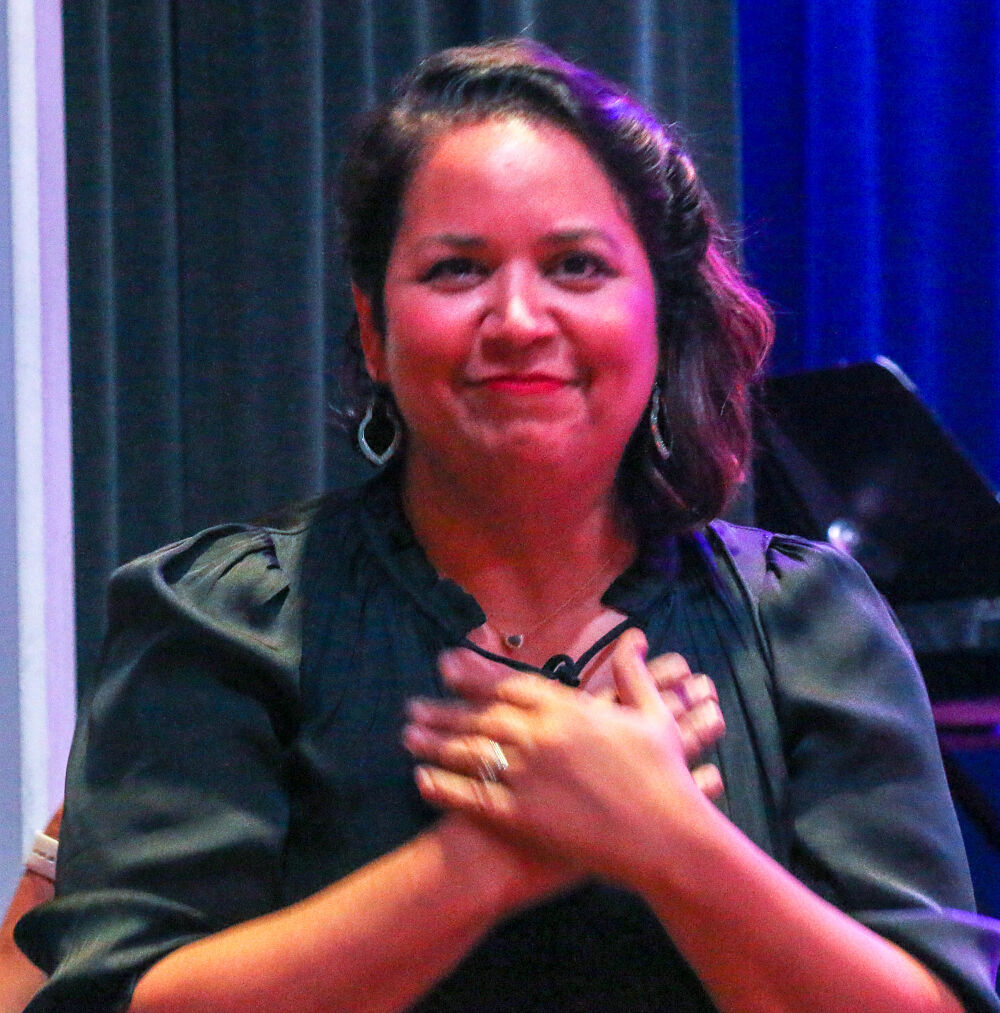
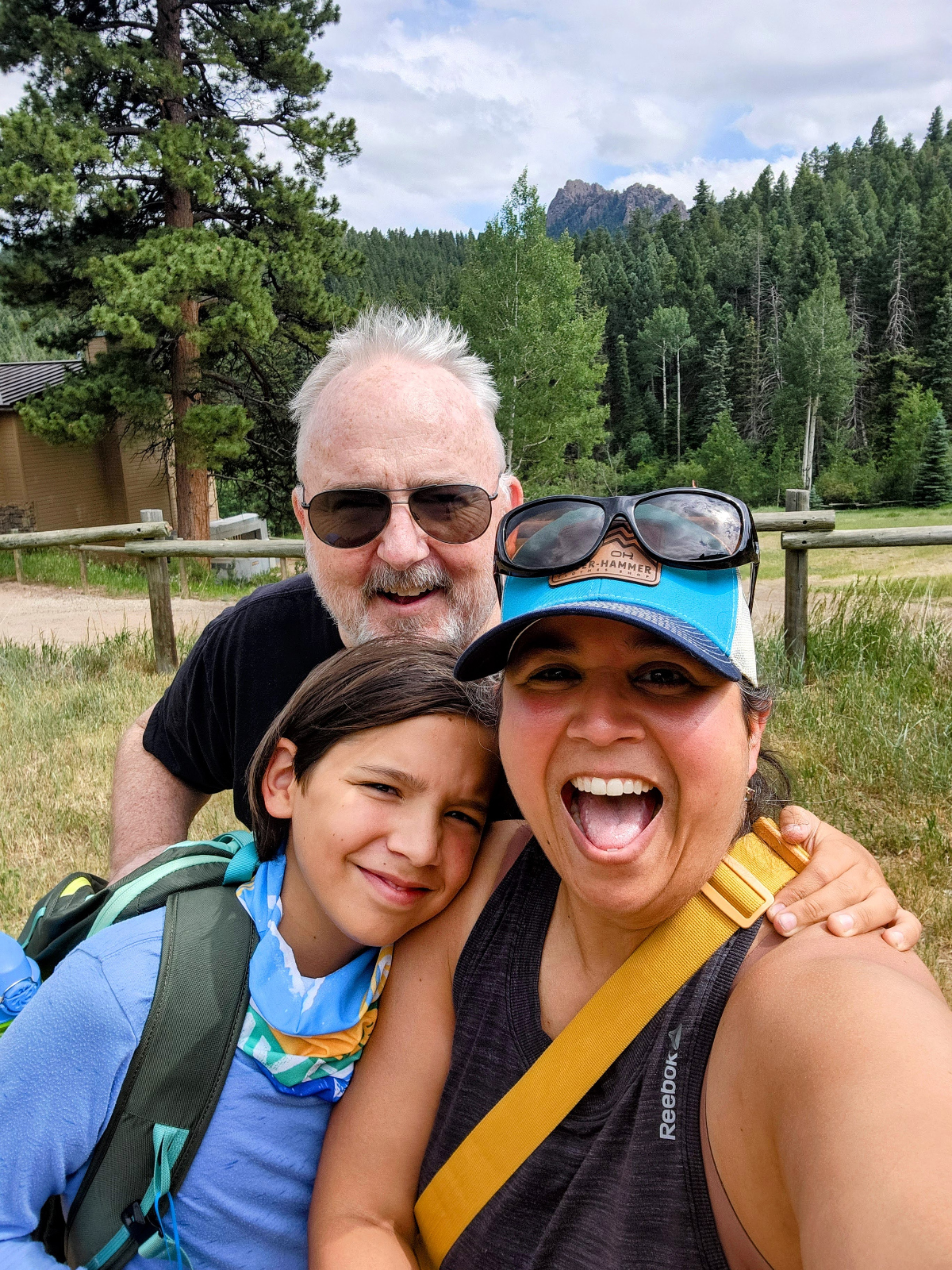
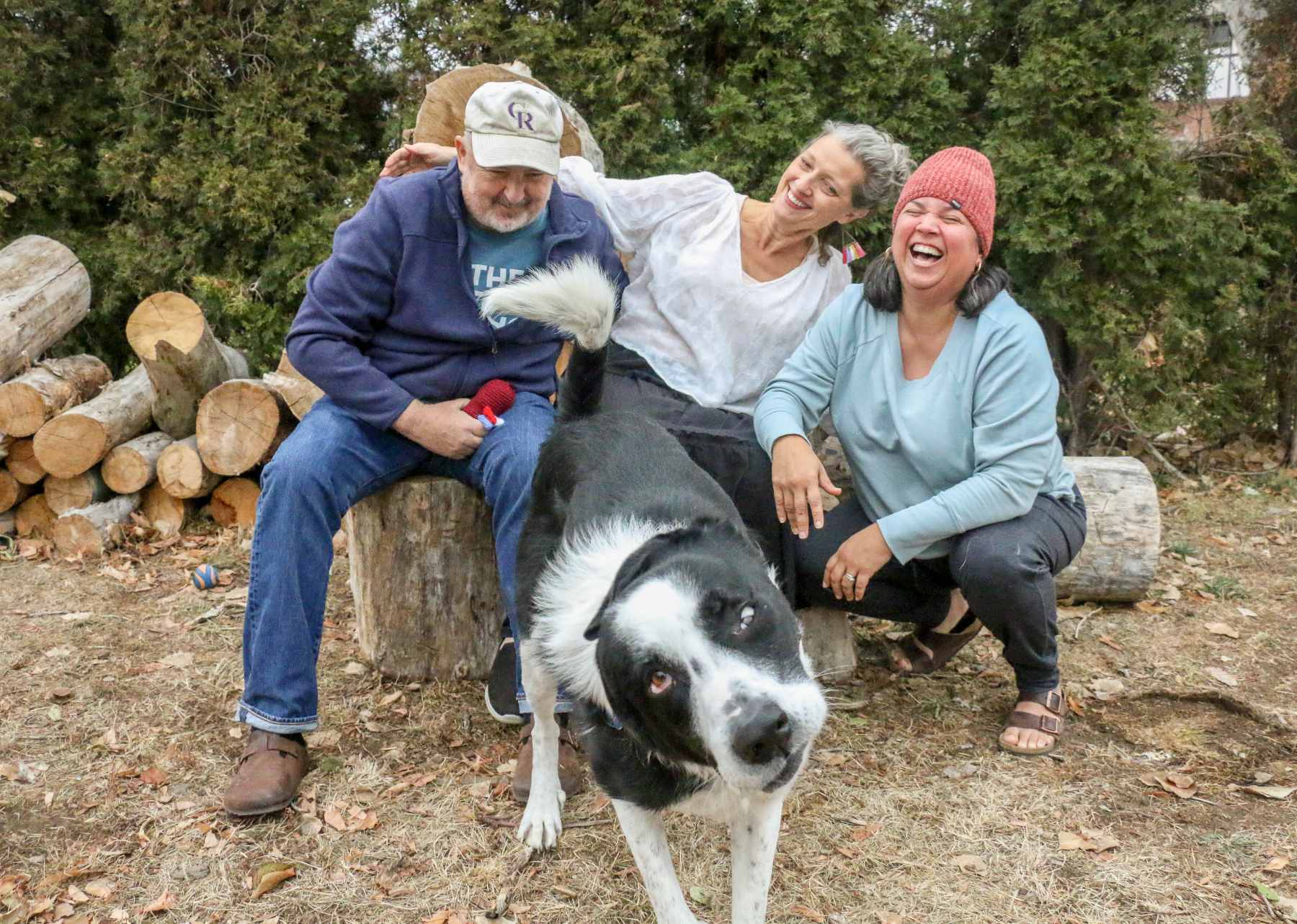
“Having the opportunity to show up for somebody is an amazing gift to receive,” said Trevathan, a veteran Denver theater practitioner who has been happy and healthy with one kidney since the surprisingly straightforward surgery that allowed Yancey Lee Anderson to forego his difficult nightly home dialysis treatments and slowly start to resume a normal life with his wife, GerRee Hinshaw, and their 12-year-old son, Jackson.
The two major events of Trevathan’s 2024 have been donating a kidney that has helped Anderson to live a better life, and gently helping her mother through the end of her home hospice journey at age 92.
“And I’m proud of both of those things,” Trevathan said. “But the reason I am able to say this was a pretty decent year is because Lee and GerRee said yes to me. I needed the joy, the gift of being a donor this year – and they gave that to me.”
These words stop Anderson, a gruff, ex-Air Force teddy bear who wears his caustic wit like a suit of armor, right in his tracks. After a pause, he says, with halting deliberation:
“This whole experience has completely changed the way I look at people. Sometimes it feels like there’s not a lot of good and kindness in the world. And then every so often you run into somebody who becomes a part of your life and shows you that goodness and kindness are still out there. And I can’t stress enough what that meant to me … meant to my family. I feel like I’ve gotten the greatest gift.”
But both his wife and donor say it like a mantra: It doesn’t take courage or bravery to become a living organ donor. It only takes the first step of filling out a living organ donor card.
A real-life campfire story
When GerRee Hinshaw met Anderson on a group camping trip 21 years ago, sparks flew only from the campfire.
“Well, GerRee thought I was gay,” Anderson said.
It’s true, Hinshaw confirmed. The outing brought together a hodgepodge of friends and strangers, and Anderson and his pal, Chris Hedlund, were last to arrive.
“All day long, all I was hearing about was ‘Chris and Lee,’ ‘Chris and Lee,’” Hinshaw said with a laugh. “And when they finally arrive, they are holding court telling this epic caper of why they were late. I mean, they are finishing each other’s sentences. There is nothing about these two men that does not look like a couple to me.”
But it wasn’t long before “Chris and Lee” turned into the more poetic “Lee and GerRee.”
The first flicker ignited a month later when Hinshaw was added to a group camping email. She noticed two things: “I learned that his full name is actually ‘Yancey Lee Anderson,’ and that he had an Air Force government email address,” she said. So Hinshaw sent Anderson a playful, one-word email that simply said: “Yancey?” His response: “Yeah, I can tell you the story behind that name – but we’ll have to do it over a beer.”
Smooth move, Staff Sergeant.
The two moved in together the next year and married in 2005.
Hinshaw swears to experiencing a life-changing epiphany after sending that email. “I hit send, and the next thing I knew, I was driving across the Eighth Avenue bridge with my windows down on a beautiful summer evening,” she said, “and I remember suddenly thinking, ‘Something’s just shifted.’ I felt like my life was about to change.”
And it was. For a first date, Anderson invited Hinshaw to his friend’s mom’s 50th birthday party at Charlie Brown’s. (Yes, he was that kind of guy.)
“There was something that drew me to his energy,” she said. “It was his sense of humor. It was his smarts. And it was his friends.” It was also his 1967 Vespa GL.
“I thought, ‘Well, even if I hadn’t had a great time on our date, I know I want to get to know these people. If he keeps this kind of company, then I want to be a part of this.’ It all just made sense.”
Anderson was an itinerant broadcast journalist for his decade in the Air Force. He was stationed in South Korea, Tokyo, Italy and the former Lowry Air Force Base in Aurora. It was a thankfully peaceful time, but it hardened him. “Just seeing so many different human circumstances broke my heart,” he said. “By the time I met GerRee, I was out of the Air Force, in my mid-30s, and I had seen a lot of stuff that put a shell around me.”
Anderson loathes sentimentality. So believe him when he says: “When I met GerRee, she felt like a part of me that didn’t exist anymore. She was hopeful. She was kind. She was generous. She was not cynical. And I definitely was.”
It was on.
(BTW, that completely apocryphal ‘Yancey’ story? “My dad found it in a book of baby names,” Anderson said. “It was supposedly an Iroquois Indian word for ‘Yankee.’ It means ‘foreigner.’ And because my mom was British, my dad thought it fit. So I became ‘Yancey.’ He may or may not have been drinking. When I was 12, we moved to Japan, and I asked my mom to register me as Lee so I didn’t have to fight kids anymore.”)
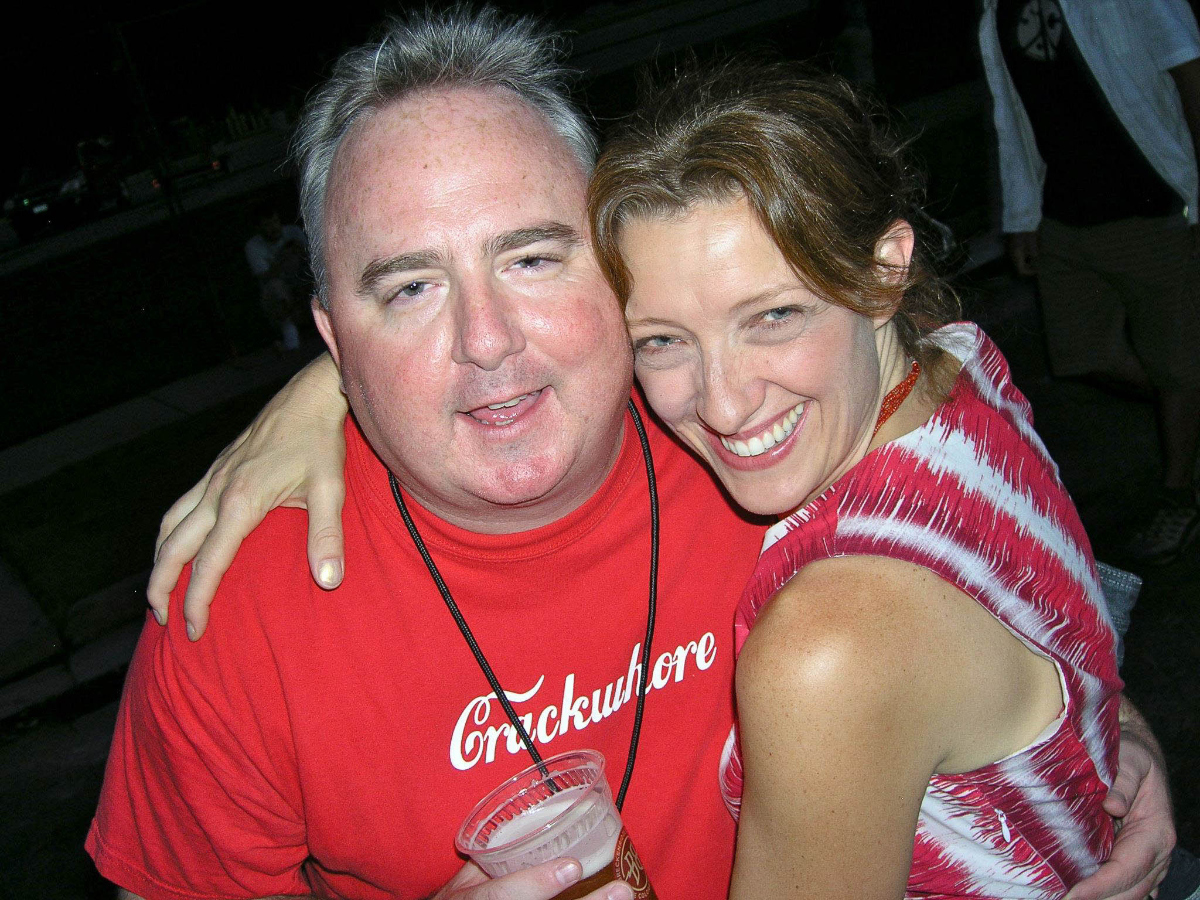
Trevathan moved to Denver in 2001, met Hinshaw and they instantly bonded over their mutual participation in local theater. But it turns out, when they met, Hinshaw already knew Trevathan’s future husband. Eryc Eyl is both a respectable career-development coach and a local counterculture icon who long performed under the name DJ Savior Breath. Back in 1999, Eyl and Hinshaw worked together at a since-sold Boulder IT technology hardware distributor. So you can be sure Hinshaw had opinions when Eyl and Trevathan had their first date in 2008.
“I was dating a few people at the time, so when it came to Eryc, GerRee told me, ‘You have to give him at least as many dates as this other person you are seeing,’ Trevathan said. “And that is what I needed to hear at the time. I think that is probably why we are still together today.”
Listen to your girlfriend
Trevathan and Hinshaw’s main message to anyone reading this story is simple: “Almost anyone can be a living donor – and there’s zero risk to filling out the application form.”
Anderson’s main message is simple, too: “Trust your girlfriend when she says your urine looks funny.”
Anderson’s medical journey began in 2004 with the simplest of bathroom etiquette violations.
“I peed before getting in the shower and didn’t flush,” he said. When Hinshaw walked in and took a pee(k), she asked her then-boyfriend: “Has your pee always looked like this?” His response? “Yeah, that’s what pee looks like.” Her response: “Um … No, it doesn’t.”
The extra protein in Anderson’s urine was making foamy bubbles – like a latte, as he described it. He said it had always looked like that – but it signaled a major health problem.
Doctors determined that Anderson’s kidney capacity was already down to 38%. Most healthy people’s number is around 85%. Anderson immediately changed his diet and other habits, but his kidney function steadily declined each year. Just as the pandemic shutdown began, he fell below the 20% threshold – which is when you go on the kidney transplant list. By January 2024, his kidney function was down to 10%.
According to the National Institutes of Health, more than 808,000 Americans are living with kidney failure. More than 123,000 are currently on the National Kidney Foundation’s transplant waiting list and another 101,000 need one – but only about 17,000 people receive a kidney each year. Every day, 12 people die waiting for a kidney, but Anderson’s life was technically never in danger. So Trevathan did not in fact save his life. She made the life he has immeasurably better.
In late January, Anderson was put on a daily dialysis regimen, but not the kind most commonly known from pop culture. Peritoneal dialysis is a home treatment for kidney failure that uses the lining of your belly to filter the blood inside your body using a catheter tube while you try (and usually fail) to lie down and sleep.
“You have the machine at home, and you hook up to it every night,” said Anderson. It pumped him with six liters of fluid over nine hours – and this would be his nightly regimen until he got a donor kidney.
It’s awful but, compared to the alternative, “it’s awesome,” Hinshaw said.
Anderson could have survived indefinitely by continuing that routine, but by then he knew that he would be receiving a donor kidney three months later, on April 3. The only question was, whose?
There are several criteria for matching a donor to a patient, including blood type, tissue and antibody compatibility. Hinshaw was a match, but doctors at UC Health were concerned about issues in her family health history. “They got really focused on making sure that I would not be in danger of needing that kidney after letting it go,” she said.
Meanwhile, tick, tock. In September 2023, Trevathan asked if she could throw her hat in the ring. More accurately, Trevathan finally had to shake Hinshaw and say, “Send me the form!”
Three years earlier, Trevathan had wanted to donate a kidney to her father-in-law, but doctors didn’t think he would survive the surgery. The important thing was, she already had gone through the mental process of deciding that kidney donation was something she was prepared to do. That this would be a friend made it more special but, Hinshaw emphasized, “Mare would absolutely have done this for a stranger.”
Trevathan and Hinshaw learned on the same day that both of their kidneys were acceptable matches for Anderson. It’s a major process that is ultimately decided by a committee of experts from UC Health. Anderson could choose either, but doctors also made it clear that Trevathan’s kidney was the superior option.
To Trevathan, the decision was simple. She thought of Jackson.
“I didn’t like the thought of both of his parents recuperating from surgery at the same time,” Trevathan said. So it was settled. In theater parlance, Trevathan’s kidney would be the star of this show, and Hinshaw’s would be the understudy.
How to change a life
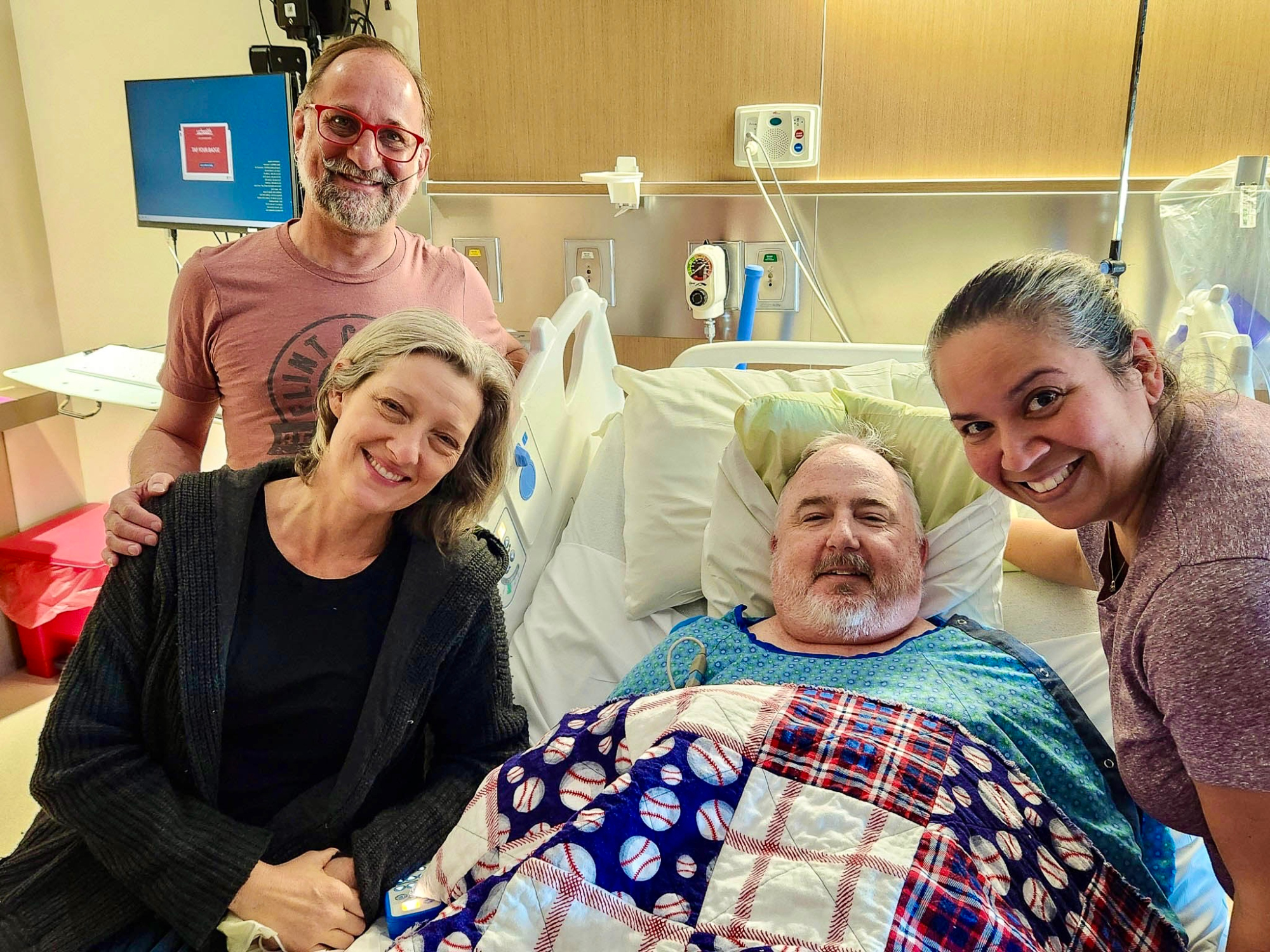
The Anschutz Medical Center was nearly deserted in the early morning hours of April 3, when Anderson, Trevathan and their spouses arrived for the separate surgeries. They were being prepped in the same pre-op room, allowing Hinshaw to bop between the two beds. In one was her husband, who was by now “so (bleeping) tired, there was hardly any emotion he could articulate,” she said. In the other was her best friend, draped in a quilt handmade by Anderson’s sister-in-law, “and Mare’s just got all this hope in her eyes,” she said.
When the time came for Eyl and Hinshaw to withdraw to the waiting room, they took a moment to hug and reflect on their friendship now dating back 25 years. “We’ve known each other since 1999,” Hinshaw said. “Would we ever have known then when we were hanging out at a bar after work that we were destined to be sitting in this waiting room while both of our spouses are going through some amazing circumstances?’” she said, “What a gift.”
Hinshaw describes with enthusiastic wonder the details of the respective surgeries, which were carried out by doctors using new-age robotic equipment that both increases precision and cuts down on infection, increasing the average lifespan of the donated kidney, Hinshaw said.
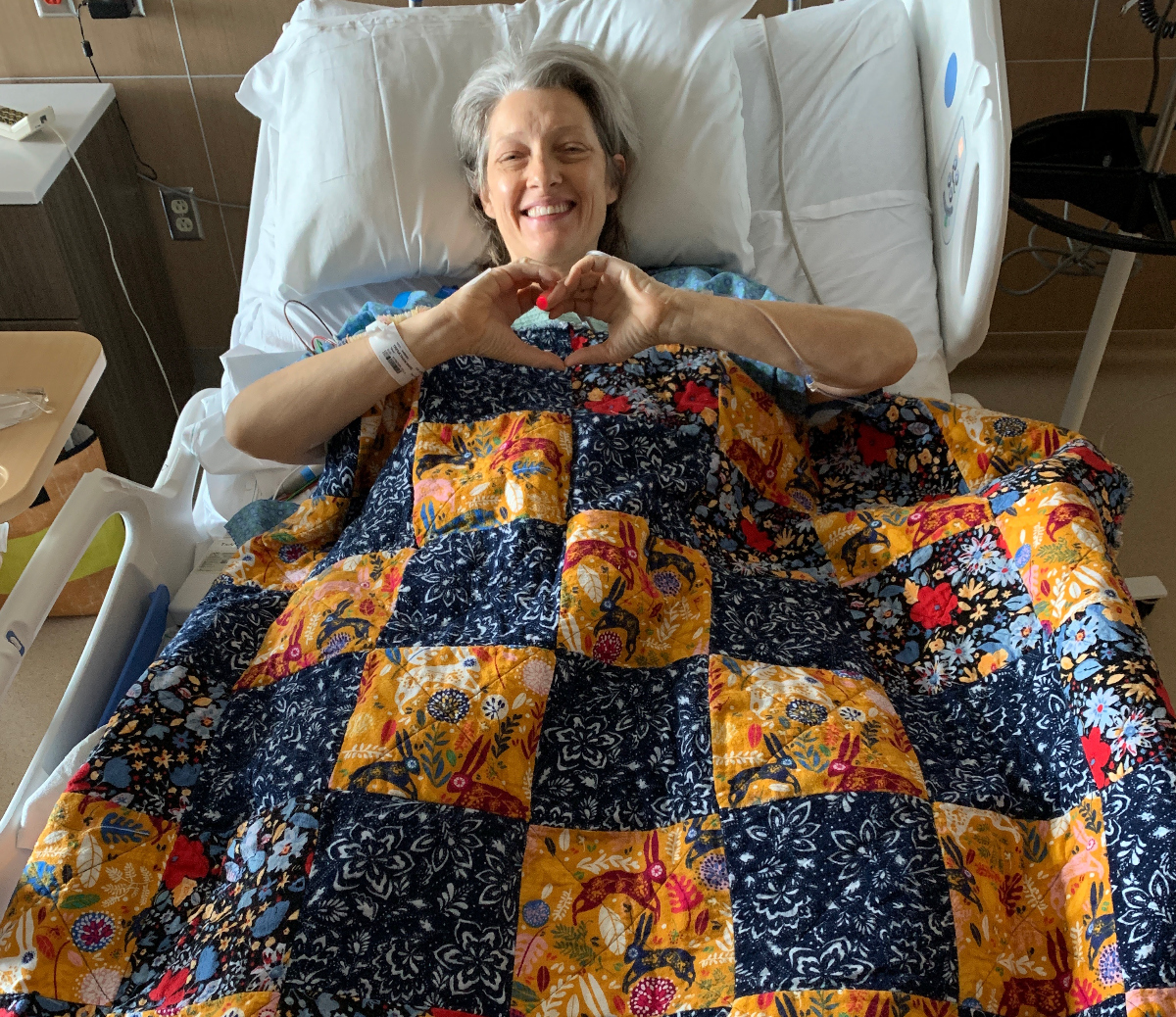
Trevathan was in surgery at 8:02 and out before 10 a.m. Anderson’s began at 8:32 and was over less than six hours later. He was discharged in two days, an unusually fast turnaround. Each expressed unending admiration for the medical personnel who pulled the whole thing off.
“The UC Health team has got it down,” said Anderson. “I almost liken it to a pit change in an auto race. A six-hour pit change, sure, but one where everybody knows exactly what they are doing at all times. I can’t say enough about them. They were phenomenal.” Added Trevathan: “I want anyone reading this to know that if you do this at Anschutz, I know you’ll have a good experience. I know it.”
Bonus kidney trivia: Anderson gained a kidney, but he lost neither of his own. “What you’re creating is a new connection to the new kidney, which they placed in his pelvis,” Hinshaw said. His two existing kidneys remain hooked up and undisturbed. Turns out it’s safer to leave well enough alone, given that anything you cut is something that can go wrong in the healing process.
The new kidney started producing (non-foamy!) urine as soon as doctors hooked it up, Anderson said. Feeling better, though, has been a more gradual process.
Lessons learned
Now eight months since the transplant surgery, Trevathan is living a completely normal life with no complications from her donation. Anderson’s kidney capacity has jumped from 10% with two kidneys to 60% with one. If Trevathan had 10 kidneys, she said she would happily donate nine of them.
“My main purpose now is getting other kidneys in other people’s bodies,” she said.
And she would like anyone considering becoming a living organ or tissue donor to know that almost anyone can do it. “Once you fill out the application form, there are so many safety measures in place that you are never going to get near that operating room unless it’s absolutely right for you,” she said. “And if you decide you don’t want to do this, you can back out all the way up to the anesthesia.”
It is also important to differentiate between living donors and cadaver donors. What Trevathan has done is a living donation because, obviously, she is alive. When you check the box on your driver’s license renewal, that is consenting to donation at your death. Both kinds save lives, but signing up through the DMV does not make you a living donor – you have to sign up for a program like the one at UC Health. It’s all spelled out on their website.
“I really want to stress that it never would have occurred to me to become a living donor until it was put right in front of me,” Trevathan said. “I have had the box checked on my driver’s license for forever because it was put right in front of me. My great hope is that this story puts it right in front of somebody else. Being a donor is just as easy as hitting that little checkmark on your driver’s license. But being a living donor, you get to actually see the impact and the value of what you’ve done. To that, I say: What a great use of a spare part.”
Trevathan might not see it this way, but Anderson wants to make it completely clear “that I am the recipient of an amazing gift,” he said. ”There’s no way to say thank you to something like that. There just isn’t.”
To which, she replied: “I feel like I owe Lee a thank-you as well. Because this does not feel like a unilateral gift to me. It feels more like an exchange.”
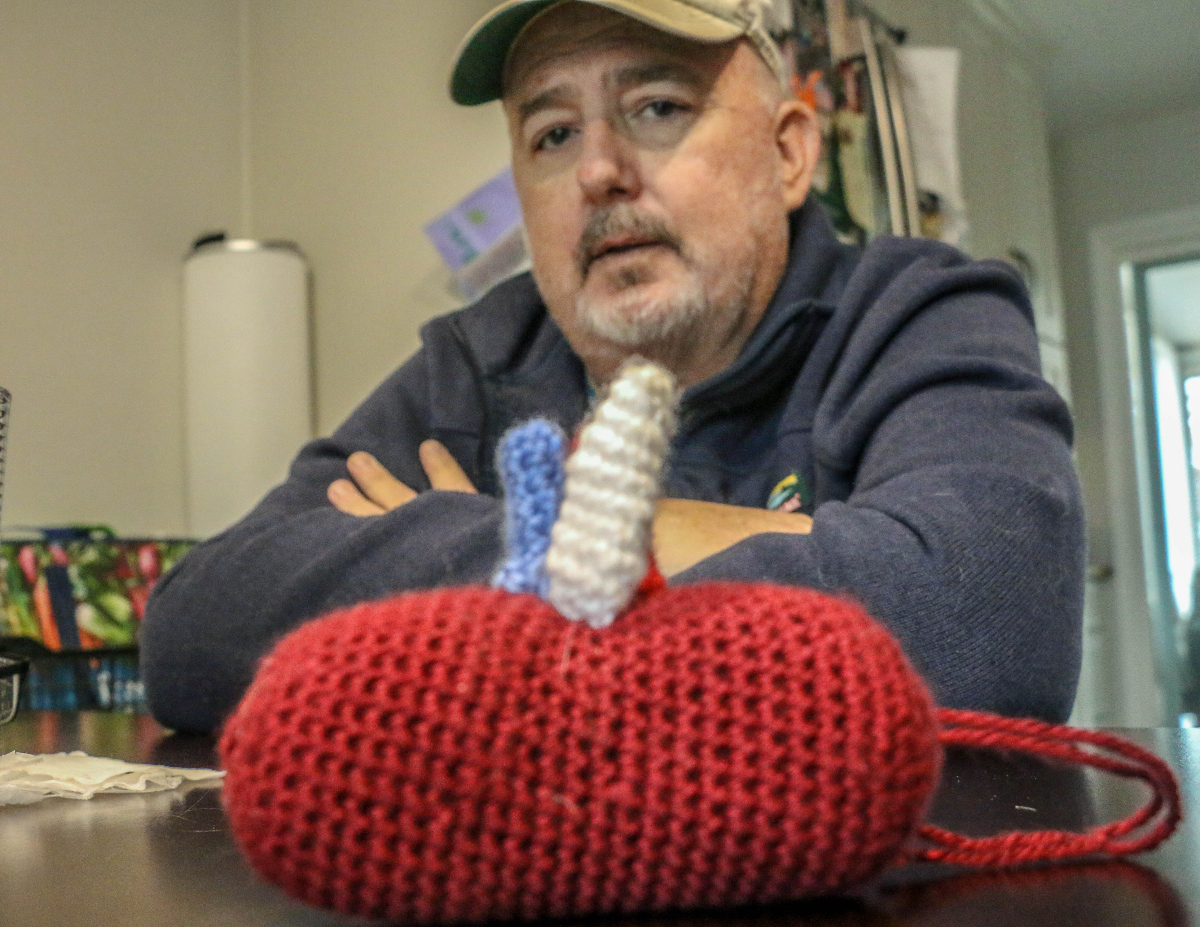
And that, he replied, “is what a hero would say.”
There is one reward from all of this that Trevathan has happily accepted. It came from Anderson’s son, Jackson, when he started to fully understand what all of this really means. After realizing that one of Trevathan’s kidneys is now in his dad, and that’s what’s been making him slowly feel stronger and healthier over these past eight months, he approached Trevathan and told her:
“That makes us blood relatives now.”
Note: The True West Awards, now in their 24th year, began as the Denver Post Ovation Awards in 2001. Denver Gazette Senior Arts Journalist John Moore celebrates the Colorado theater community by revisiting 30 good stories from the past year without categories or nominations.
Unsung hero of the day
To Mare Trevathan, the unsung hero of her kidney-donation story is the Colorado theater community, which she says “was very active in supporting both of our households during recovery.”
In particular, she singles out Kate Roselle, former executive director of Boulder’s Local Theater Company, who organized meals and other forms of assistance.
Roselle is now organizing efforts to support another Colorado theater company navigating a cancer diagnosis. “I would happily uplift Kate as an unsung hero,” Trevathan said.