







How a colorful woman’s death gives life to Denver arts
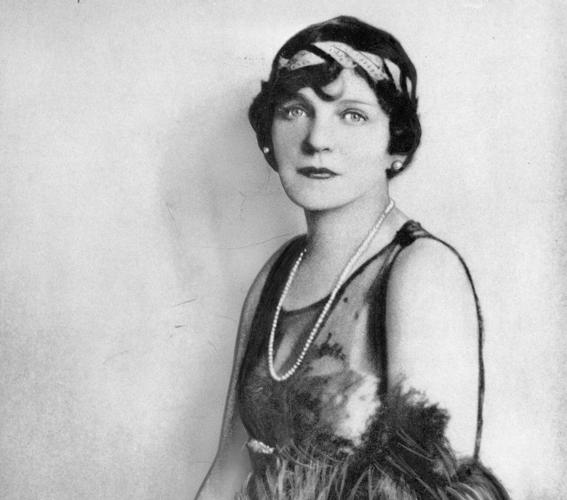
Mary Madeline "May" Bonfils-Stanton, whose husband Ed Stanton founded the Bonfils-Stanton Foundation in Denver after her death.
Courtesy photo, Denver Public Library


Anybody involved with almost any aspect of Denver’s arts and culture scene likely has noticed the name of the Bonfils-Stanton Foundation. Since 1981, the small foundation has made an enormous impact by granting more than $90 million to Colorado causes.
Yet few people have more than a passing familiarity with the foundation’s namesake philanthropist, Mary Madeline “May” Bonfils-Stanton. A colorful socialite, gracious patroness of the arts and one of Denver’s biggest benefactors, her largesse made possible the benevolence of this far-reaching foundation.
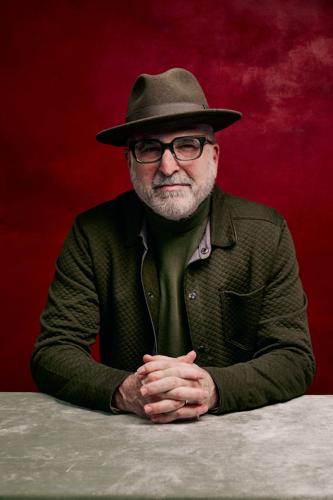
Gary P. Steuer (pronounced STOYer) has served as the foundation’s president and CEO since 2013.
“When I came to Denver for this job, I kept learning little tidbits of history here and there,” Steuer said. “I remember very early in my tenure I was invited to dinner with [then mayor now U.S. Senator] John Hickenlooper, and he gifted me his copy of ‘Timber Line’.”
Steuer read “Timber Line: A Story of Bonfils and Tammen” by Gene Fowler and was captivated by the portrayal of Fredrick Bonfils, co-founder and publisher of The Denver Post. Steuer, in turn, commissioned Tom Noel — a history professor known as Dr. Colorado — to write a profile of May Bonfils-Stanton, one of Bonfils’ two daughters.
May Bonfils-Stanton: a colorful character
According to Noel’s research, May was a trailblazer with a creative mind of her own. Born in 1883, in Troy, NY, May grew up in Denver, where she attended St. Mary’s Academy. Much to her Catholic father’s chagrin, she married outside of the church, which estranged her from her family.
She fashioned a lavish, nontraditional lifestyle complete with a chauffeur-driven Rolls Royce, luxurious Italian-tailored clothes and exotic furs. She amassed a collection of world-class jewels such as the storied Idol’s Eye — a 70.21-carat blue diamond set as a pendant in a necklace with 35 carats of smaller diamonds — and also the Liberator —a 39.80-carat Venezuelan diamond.
May hired the architect Jules Jacques Benois Benedict to design her Lakewood estate known as Belmar Mansion. She later hired the architect Burnham Hoyt to add a gallery where she exhibited her blue chip art collection featuring a Hans Holbein portrait of Queen Elizabeth I, along with paintings by Picasso and Modigliani. The impressive provenance of May’s antique furnishings ranged from Marie Antoinette’s bed to a chair from Queen Victoria, a piano played by Frédéric Chopin and — in homage to her great-grandfather’s service in Napoleon Bonaparte’s army — a Chippendale case containing the silk gauntlet Napoleon wore when crowned France’s emperor.
Yet in tandem with her glamorous lifestyle, May practiced noblesse oblige and bestowed her charity upon the city of Denver. Her magnanimity led to her donation of the land that would be developed as Denver Botanic Gardens. She underwrote the Clinic of Ophthalmology at the University of Colorado Medical Center, the library and auditorium of Loretto Heights College and the Bonfils Wing at the Denver Museum of Natural History. She also funded the interior décor of the Catholic Chapel at the Air Force Academy in Colorado Springs and many more community endeavors.
May’s controversial personal life involved separating from her husband for 10 years, a Reno divorce followed by a second marriage in 1956 at age 73 to Ed Stanton, age 46. The couple met while he worked on the interior design of the Central City Opera House — one of May’s beneficiaries. May had no children but doted on her beloved poodle and became something of a recluse.
After May’s death at Belmar Mansion in 1962, her widower established the Bonfils-Stanton Foundation with proceeds from May’s auctioned property and elaborate personal effects.
“Her life serves as a reminder of the complex dynamics of wealth, family, and social responsibility,” Noel wrote.
A well-laid foundation
Social responsibility remains a lodestar for the Bonfils-Stanton Foundation (BSF). In 2024, the foundation together with Denver Arts & Venues selected the first three Social Impact Artist Awards Honorees and recently distributed $50,000 each to Jeff Campbell, Suzi Q. Smith, and Chelsea Kaiah. Also in 2024, the BSF and Think 360 launched Equity in Arts Learning for Colorado Youth and awarded $400,000 to 21 arts education projects throughout the state.
The BSF investment portfolio further reflects a commitment to social responsibility. To manage the foundation’s endowment, BSF works with Morgan Stanley’s Blue Rider Group investing assets in alignment with the arts and cultural concerns.
Steuer said: “We now have 71 percent of the foundation’s $85 to $90 million corpus invested to do good in the world and generate a market return.”
In addition to disbursing grants totaling roughly $3.5 million annually, the foundation makes low-interest loans. And while the BSF always supported arts and culture, in 2012 Steuer’s predecessor, Dorothy Herrell, and the board of trustees opted to pivot fully toward funding the arts. Since 2014 — the foundation’s first year of grantmaking focused entirely on the arts — BSF granted $35.6 million. Steuer said the number of grants awarded each year has risen from 52 in 2014 to 148 in 2024 with funds provided to major organizations such as the Colorado Symphony, Denver Art Museum and Denver Botanic Gardens, but also to smaller entities such as Su Teatro and Access Gallery.
Leaders of local nonprofit arts organizations are grateful. Co-founder and executive director of Denver’s Lighthouse Writers Workshop, Michael J. Henry said: “In general, the Bonfils-Stanton Foundation is a cornerstone of the arts community in Colorado. They’re not just a major funder, they’re a powerful advocate for the importance of the arts in our culture, and they bring together many of the large and small institutions to share ideas and resources, and they nurture a host of collaborative opportunities.”
The BSF helped underwrite construction of the new Lighthouse headquarters opened in 2023.
“For Lighthouse and the literary arts, they’ve been a source of significant financial support as well as mentorship. They fully understand how literature and creative writing can build a more compassionate and inclusive society,” said Henry. “Plus, the staff are such generous and positive people. They’re a joy to work with.”
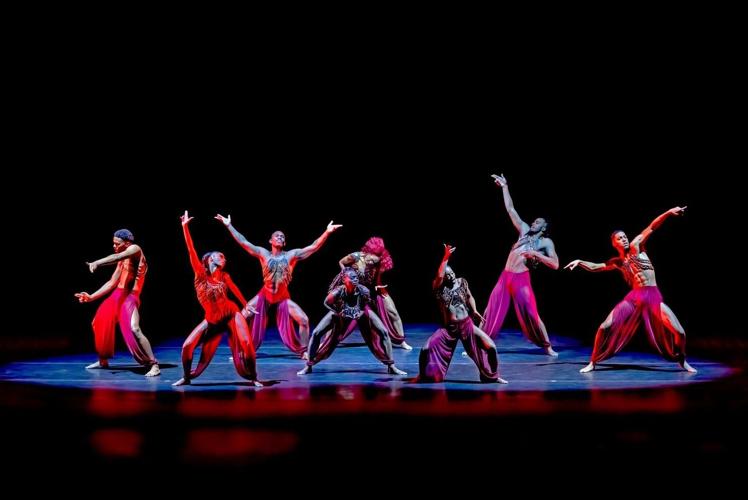
BSF also supports Wonderbound, the Denver dance company whose mission is to deepen humankind’s common bond through uncommon endeavors of discovery and creation.
“Continued support from the Bonfils-Stanton Foundation empowers Wonderbound to deliver transformative, high-quality productions that are accessible to everyone in our community, enriching lives and fostering a deeper connection to the arts,” said Kelley Bergman, general manager of the Fanum Entrepreneurship Club in Greenwood Village and a Wonderbound board member.
Arts not merely nice, but necessary
“Some people think of the arts as nice to have but not need to have,” Steuer said. “The arts are critically connected to every aspect of a thriving society. If folks care about community they should also care about a strong, robust cultural center.”
The foundation’s CEO emphasized that it supports arts organizations large and small, nonprofit and for profit because the foundation understands the interdependence of the arts.
“Recognizing that the arts thrive as an ecosystem means we need a diverse cultural sector that includes small organizations and culturally specific organizations that all matter in the same way our economy needs small businesses,” he said. “There’s a parallel. We see our biggest institutions as very important, and we’re wonderfully blessed with many. But those institutions need a whole array of smaller organizations that in a corporate analogy function as the R and D (research and development). Artists get their first opportunities in a tiny theater or a small gallery, and they’d never get to the point of exhibiting at the DAM if they didn’t.”
Steuer, his staff and the BSF board believe the arts grow ever more crucial in an era of entrenched division and violence, isolation and epidemic loneliness. The BSF website includes a persuasive section devoted to “Why Arts?”
“We are the standard-bearer for why arts and culture are important in this community,” Steuer said. “We’re making connections between the arts and economic development, but also the arts and employment, the arts and youth, the arts and health care and all the other issues folks may be interested in.”
Fostering the arts ecosystem
A case in point: The BSF partners with Redline Contemporary Art Center, a Denver nonprofit “fostering education and engagement between artists and communities to create positive social change.”
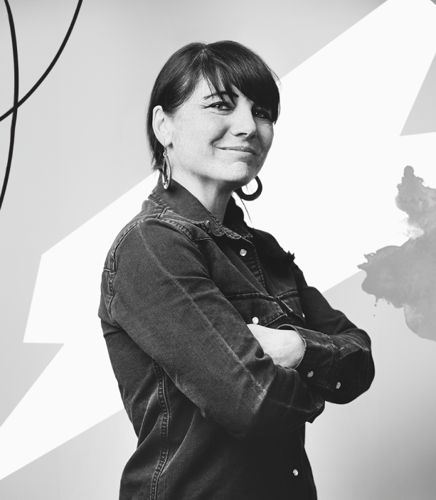
Louise Martorano serves as executive director of Redline, a major foundation grant recipient. In 2017, Martorano received a BSF Livingston Fellowship for leadership in the arts sector and she is completing her first year as a BSF board member.
“I’m always so proud of the foundation because it really is aggressive in creating programs and funding streams that reflect its values and its ability to evolve over time and respond to the needs of our arts community,” Martorano said.
“It’s the only foundation that says that it is solely standing behind arts and culture in Denver metro and has found so many ways to do that on so many elevations, small to large,” she added. “The foundation does so much and does it so collaboratively. The foundation knows how to leverage its position and helps people build relationships, so support is found beyond, as well.”
Martorano also sits on the advisory committee for the Visiting Artist, Scholar & Design program at Rocky Mountain College of Art + Design, is the board treasurer for the Global Women’s Empowerment Fund and is a trustee for the Harmony Hammond Trust. She oversees Redline’s partnership with BSF in a statewide program known as Arts and Society — a multi-funded program granting a million dollars every two years for cross-sector work in rural and urban areas across the state.
The BSF website notes that Arts and Society “fosters cross-sector work through the arts by supporting the integration of arts and culture into multiple disciplines critical to the health and well-being of Coloradans.”
The arts remedy societal ills
“I am biased because I see at Redline how artists change my life every day and how supporting artists can change the life of others,” Martorano said. “It’s undeniable: Nobody wants to wake up in a city devoid of culture and creativity and hope. The arts have a responsibility of carrying out visions of a new future and a new way of being, raising awareness that other futures are possible. The BSF is all in on arts to participate and traffic in conversations to build just a society by involving creative minds of the communities.”
Both Martorano and Steuer emphasize the BSF’s commitment to women and marginalized.
“We don’t consider that a political stance,” said Martorano, “we consider that a human stance.”
For Steuer, the best part of his job is attending arts and cultural events and hearing expressions of appreciation for the BSF. One of the foundation’s listed values is “Imagine what it possible.” Yet it’s impossible to imagine the immeasurable impact of the foundation’s support for local museums and galleries, dance, theatre, music, architecture, media and literary arts.
Steuer acknowledged the devoted BSF staff and the dedicated board of trustees. And let’s not forget the joie de vivre and generosity of the woman who started it all: May Bonfils-Stanton. Even from her grave, she is a commendable and dependable fairy godmother, of sorts.
“It was May Bonfils’s wealth and generosity that enabled Ed Stanton to establish the Bonfils-Stanton Foundation,” Steuer said. “May’s spirit of adventure and risk-taking, her love of this community, continue to drive our work, and I think she would be proud of her legacy.”