







Colorado Wildlife Commission denies ranchers’ petition to delay more wolf releases
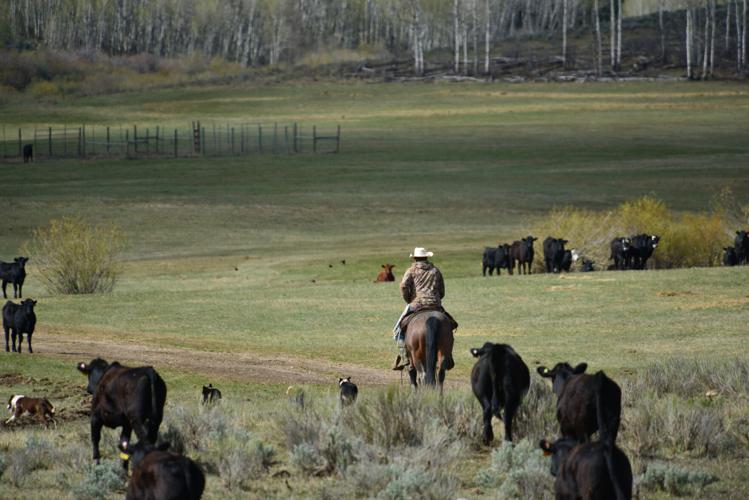
Middle Park rancher Conway Farrell, whose parents settled in Williams Fork, heads out into a pasture to begin rounding up 300 Angus yearlings on May 25, 2024.
Scott Weiser The Denver Gazette
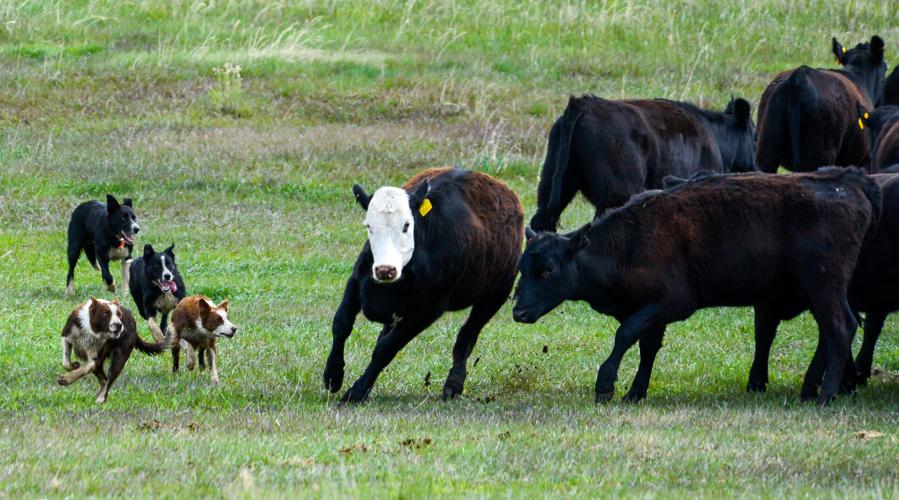
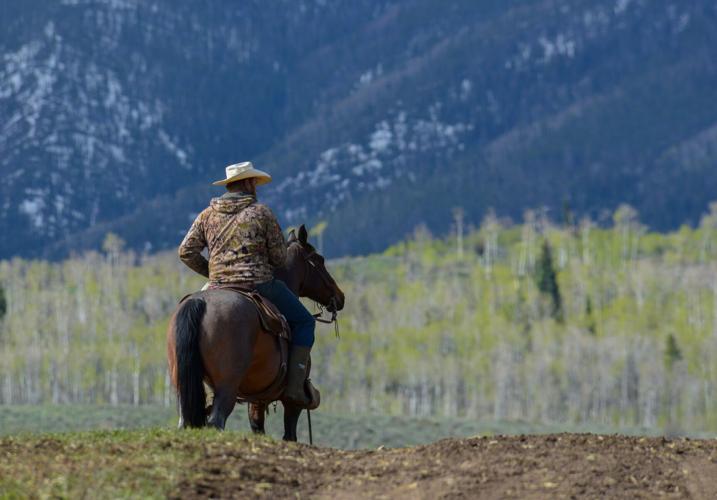
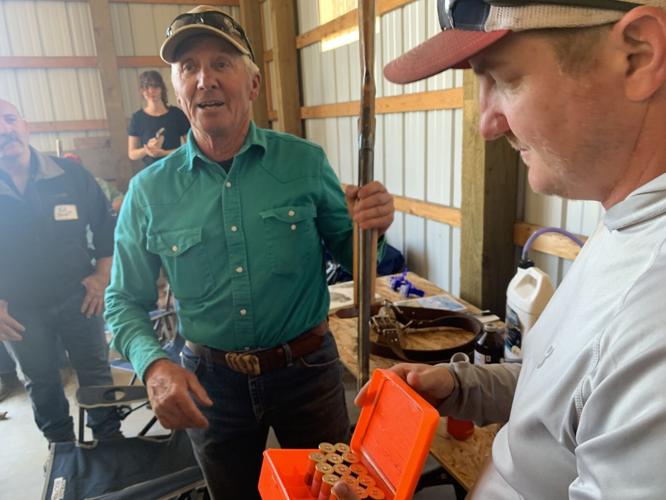
Wolf supporters and livestock operators clashed during a Wednesday meeting of the Colorado Wildlife Commission, when officials considered arguments for and against delaying the release of the batch of wolves.
About 75 members of the public testified in a five-hour hearing.
Ultimately, the commission voted, 10–1, to accept the Colorado Parks and Wildlife’s recommendation to deny the petition filed in September by a coalition of 26 organizations representing agricultural and livestock interests. The group sought the delay, arguing many of the state’s conflict mitigation programs — whose efficacy they also question — have yet to be implemented. Without those tactics in place, producers would be right back where they started when the first group of wolves were released in Grand and Summit counties, the groups said.
On Saturday, CPW announced that it has begun the process of capturing wolves in Canada for the next round of reintroduction.
About 75 speakers testified during the hearing. Of these, 45 spoke in favor of continuing the wolf reintroduction plan without delay, and about 30 favored the delay until the livestock protection programs are up and operating.
Delay supporters noted that in the first full year of the reintroduction program, claims for $580,000 in damages have been filed, citing missing livestock, lowered reproductive numbers, lowered birthrates, and diminished sale weights of market livestock that producers attribute to stress and harassment by wolves.
One wolf supporter said the end-of-year accounting, which is specifically authorized in the wolf management plan, is unreasonable.
“You can’t walk into CPW and say, ‘I can’t find 100 of my livestock, so you’ve got to pay me for all of them,’” said Ellen Kessler, an animal rights activist. “I hope some of the claims are rejected.”
“Two wolves were shot. This was yet another attempt to undermine the reintroduction program. One dead wolf was part of Colorado’s first wolf pack,” Kessler added.
“He sired at least four pups making history and allowing us to celebrate the program’s success until someone decided these wolves needed to be slaughtered, and two, not one, were shot — both in Colorado. Perhaps the poacher is sitting behind me. I’d gamble that at least one person in this room knows who did it.”
Kessler was appointed to the State Board of Veterinary Medicine in 2020 but resigned in 2022 over her comments about livestock producers. She had called ranchers “lazy” and “nasty,” responding to a Facebook post by Marlon Reis, a friend of Kessler’s. Reis is the spouse of Gov. Jared Polis. She resigned from the board two days later.
Jeff Davis, the Parks and Wildlife director, said the state is committed to resolving conflicts.
“Halting reintroduction until largely subjective milestones are met to the satisfaction of the petitioners would only serve to harm the reintroduction program and its other stakeholders,” he said. “CPW is required to and committed to preventing and resolving wolf-livestock conflicts in Colorado and is dedicated to continuous improvement in how it does so.”
Tim Ritchard, president of the Middle Park Stock Growers Association, who was sitting behind Kessler with several other livestock producers, testified that the state isn’t prepared to deal with more wolves at the moment and argued that range riders hired by the state need first to be trained and deployed before increasing the risks to livestock.
Ritchard said it’s not enough just to send someone out on a horse to ride around. A range rider must know the signs that wolves are around by watching and understanding herd behaviors that indicate the livestock is aware of a threat, he said.
“We know how important it is to have an active range rider. During the 2024 calving season, a range rider hazed wolves 23 days out of 126 days,” said Ritchard. “Without range riders, we would’ve had significantly more dead livestock. When we go back and look at the start of the wolf introduction, and knowing what we know now, we would’ve contacted a range rider as early as February — we started having depredations weeks after the wolves were released.”
“The animals will tell you what’s going on. Seeing livestock bunched up, making lots of noise, and running away is a dead giveaway. Something’s going on,” Ritchard added.
Rhonda Dern said the voters of Colorado approved Proposition 114 and that voter propositions are “direct democracy.” She said the process is under attack by those seeking to overturn Proposition 114.
“I was one of the over one and a half million voters that voted for Prop 114. Wolves won 51% of the votes,” said Dern. “The fact that the numbers are close gives no one legal permission to dismiss the vote of the people. With the dwindling number of wolves alive in Colorado to being poached, we’re nowhere near the numbers we need for success”
Proposition 114, which mandated wolf reintroduction, won by 56,986 votes in 2020, with 1,590,299 in favor and 1,533,313 opposed.
Commissioner Marie Haskett, the sole commission member who voted to reject the CPW’s recommendation to deny the petition, was critical of wolf supporters’ comments about livestock producers.
“The lack of empathy for others is disturbing,” said Haskett. “As a livestock owner, the comments about producers to me are offensive. I have attended all the wolf meetings and training seminars I can, and until your life is changed by a vote, you don’t know how it feels.”