







Previewing Mayor Mike Johnston’s 2025 Goals; here’s what we know so far
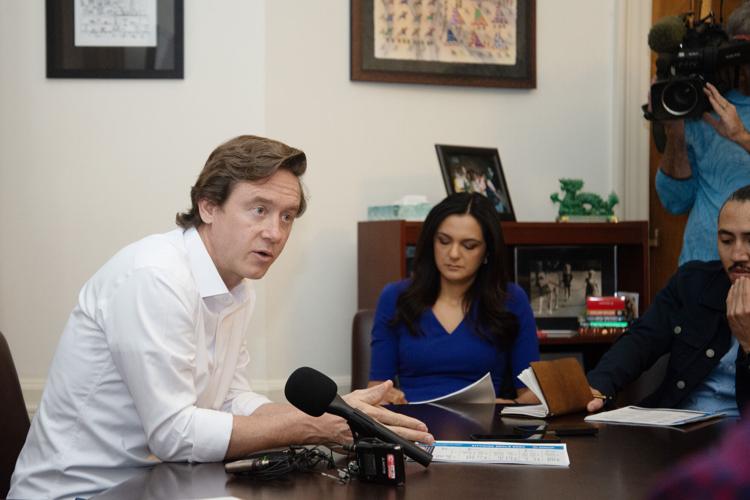
Mayor Mike Johnston discusses his administration's ongoing efforts in housing, economic development, homelessness and more at the Denver City and County Building on Monday, Jan. 6, 2024.
Tom Hellauer [email protected]
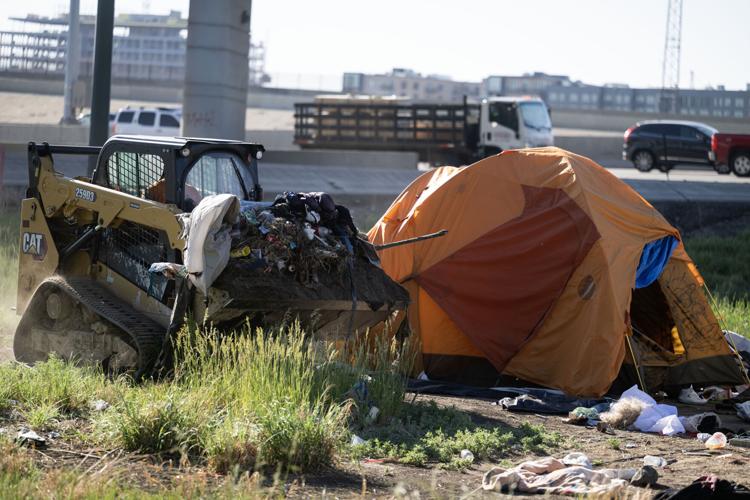
Denver Mayor Mike Johnston is expected to focus on homelessness anew this year, although questions abound about where he would get the money to fund his initiatives amid moves by the Trump administration to withhold funds from “sanctuary” cities.
Johnston will release goals for the city on Jan. 29 and has already dropped a few hints at what he has planned for the Mile High City in the new year.
Among the items atop his list are housing and homelessness.
In his 2024 report card, published earlier this month, Johnston touted moving 2,233 people off the streets and into shelters.
For 2025, the mayor’s homeless initiative program plans to build on that by bringing not only 2,000 more people off the streets and into shelters but also an additional 2,000 people into “permanent” housing, a doubling of the number he promised in November 2024.
The number of homeless families in metro Denver spiked last year by more than 134%, according to an annual report by the U.S. Department of Housing and Urban Development.
All told, the number of homeless individuals grew by roughly 2,200 — an increase of more than 40%.
Johnston’s efforts to curb homelessness and promote affordable housing have been expensive, relying heavily on millions of federal dollars from the American Rescue Plan Act.
This year will be “tougher for us,” Johnston told reporters at a recent media roundtable held in his office.
In November, voters narrowly rejected a ballot measure that would have raised sales taxes to fund affordable housing, a setback for Johnston’s plan to create more than 3,000 new units.
HOST spokesperson Julia Marvin told The Denver Gazette that for 2025, funding for the mayor’s homelessness initiative will come from several different sources, including federal, state and city dollars, “including grants, remaining ARPA funding, and dedicated affordable housing and homelessness resolution funds.”
“At this stage, we’re gonna look at every creative resource we have … public-private partnerships, use public land and use the ability to do rental subsidies in some units to make them affordable,” Johnston said. “So, affordability continues to be a top priority for us. We’ll stay focused on that. We’ll have just to do it without those (ARPA) resources.”
So, from where will the money come with ARPA dollars running out?
According to Cole Chandler, who leads the mayor’s homeless initiatives, one possible solution is moving “some of our investments in short-term shelter into long-term investments in permanent housing.”
In a presentation to Denver City Council’s Safety, Housing, Education & Homelessness Committee, Chandler pointed to the closing of the Radisson Hotel at the end of March.
“We’re currently working on winding that site down and helping everyone from that site move into permanent housing so that we can ship those dollars into more, longer-term housing outcomes as we move forward,” he said.
Chandler said those dollars are somewhere around $10 million per year, not including an estimated $3 million for associated services.
“That’s an insane amount of money,” District 9 Councilmember Darrell Watson said.
By focusing on better case management of those entering the city’s shelter, Johnston said it becomes easier to move more people from the street and into more permanent accommodations.
“We want to more effectively and efficiently get you stabilized, supported, and then get you access to a job, access to housing, access to mental health and addiction treatment, and then up and on your own,” Johnston said. “But the real trajectory is, if we have about 1,000 units of housing right now, and it takes everyone 12 months to get stabilized and moved on, we can move 1,000 people up and out each year.”
He added: “If it takes them six months to move up and on, we can move 2,000 people out each year. If we can get that down to three months for case management, we can move 4,000 people off the streets and into permanent housing every year.”
When asked if the city’s homelessness initiative has a safety net in the event new executive orders from Trump affect federal funding, HOST spokesperson Julia Martin said, “Denver has been compliant and responsive to presidential administrations regarding grants as we intend to be with the new administration. In every administration, the city has worked closely with state and federal partners to ensure continued funding for public services and infrastructure, and we will continue to do so.”
Another initiative likely to be on Johnston’s 2025 to-do list is to synchronize the State of the City address with the city’s fiscal year.
“So, the state of the city is in July, but our budget, by charter, runs through the calendar year,” he said. “So, if you come to me in July, we shouldn’t have 17 new plans in July. We should be implementing the ones we all started in January, aligned to the budget and our goals for the year.”