







Does Wanda James care at all about kids? Or CU? | Jimmy Sengenberger

For years, we’ve been told to follow “the science,” especially on medical issues. At a time of deep distrust in public health institutions, the University of Colorado’s School of Public Health is cutting through the pot-fog to deliver fresh data on marijuana’s effects on youth and unborn babies in digestible ways.
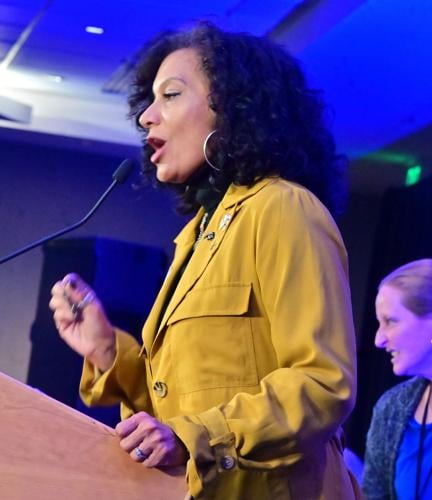
Yet astonishingly, CU Regent and pot industry pioneer Wanda James is working to discredit and defund her own institution’s efforts to protect children — calling its research-based campaign “blatantly racist,” “deeply harmful” and an “intentional and calculated attack on Blackness.”
In 2021, the legislature passed HB21-1317, instructing CU’s public health school to review scientific research on high-potency THC’s effects on mental and physical health and to launch an educational campaign on “the developing brain and mental health.” Lawmakers allocated $4 million from the marijuana tax fund to the initiative. Enter “Tea on THC,” an outreach campaign developed by the school with Initium Health, a public benefit corporation.
On Jan. 26, James expressed “outrage” on LinkedIn over “troublesome images” and claims that she insists “have been debunked for years.” She demanded its Instagram feed and website, TeaOnTHC.org, be “taken down immediately” and called for “transparency” in its funding and development.
James accused the campaign — which in part depicts a Black child in utero and at later stages of life — of “weaponizing Black babies, Black boys, and Black men” to push a “false and dangerous narrative that cannabis use stunts brain development.” She ignores how the campaign also uses near-identical drawings of white children — and presents hard science backing the claim she calls “debunked.”
CU researchers, notably clinical psychologist Dr. Annie Collier and associate professor Dr. Gregory Tung, based the campaign on a systematic review of scientific literature. Does James believe her credentials outweigh theirs?
On KOA in December, Collier and Tung noted today’s marijuana is “fundamentally different” from the past, with THC levels magnitudes higher. In the ‘90s, pot averaged 3% THC; now, it’s averaging 20%, with some products hitting 95%.
“I think I’m shocked to see… people assume that it’s good for you (and) safe for pregnancy,” Collier said. “But it actually can cause great harms to the developing fetus.” Tung added that “it’s just weed” is a myth. “(T)hat’s just not true.”
It doesn’t take a scientist to imagine the negative effects on youth — including cognitive impairment, memory and learning problems, and increased psychosis risk in the short-term; cannabis-use disorder, schizophrenia and suicide in the long-run. THC likewise poses risks to newborns, as it lingers in fat cells and breast milk — though researchers acknowledge more study is needed.
As pot innovation evolves rapidly, Tung admitted, scientists are “playing catch-up.” They acknowledge some medicinal benefits, like treating epilepsy and pain. But the goal is balance — equipping people with necessary facts to make “informed and healthy choices,” especially regarding kids. Sounds reasonable.
Let’s be clear: This campaign is rooted in a growing body of scientific research, which is precisely why it targets young people under 25 and pregnant mothers. But somehow, James calls it “dehumanization.”
“We will not allow our tax dollars to fund our own erasure and oppression,” she declared.
Dramatic much? Informing people about marijuana’s risks to unborn babies and children isn’t “unconscionable.” Does she care about Black kids using pot, or is it all about defending her industry? The data on marijuana’s effects on developing minds — psychologically, emotionally, mentally, physically — should be an eye-opener for everyone.
In the ‘90s, we watched “Cartoon All-Stars to the Rescue,” an animated anti-drug film featuring countless childhood favorites from Bugs Bunny to Winnie the Pooh. If made today, but with Black characters in the lead — James would undoubtedly cry foul.
She ignored my emailed questions.
A self-described “pothead” who “get(s) elevated daily,” James co-founded the nation’s first Black-owned legal dispensary in 2009 and opened Simply Pure, a recreational pot shop, in 2015. Govs. John Hickenlooper and Jared Polis tapped her to help shape marijuana policy.
She founded Black, Brown & Red Badged, an advocacy group that supported minority-owned cannabis companies and was led by political operative and James’ close ally, Hashim Coates.
In 2021, Coates testified for a state-backed loan program they’d helped develop with Polis’ office to support marijuana businesses. Simply Pure was among the first two loan recipients.
In 2019, Simply Pure failed an underage compliance check. Instead of accepting accountability, James had Coates lobby Attorney General Phil Weiser’s office for a meeting with him, alleging racial bias and “unfair targeting” by marijuana regulators. She didn’t get her meeting — but got off with a slap on the wrist: a promise to follow the law. Meanwhile, two employees lost their jobs and licenses.
Here she goes again. As CU’s medical school spotlights marijuana’s real risks to kids, James brushes it off it, cries racism — and invokes her political clout to strip its funding.
In the “Green Market Report,” she said she’d spoken with the governor and his team, “and we’re looking at pulling funding from (the school) for this.” She griped that HB21-1317 “was not able to be vetoed” by Polis — conveniently ignoring its bipartisan, veto-proof majority. Will Polis bail out his longtime pal this time?
James’ reputation and bottom line reek of pot. As an elected university board member, she’s flipping off research and youth — hurling hyperbole, playing the race card and peddling her influence to defund the very institution she was elected to help oversee. And it’s all to protect her industry, her business and her brand as a Black pot trailblazer.
Let’s be real: Does Wanda James care about kids’ exposure to marijuana — let alone CU students under her watch? Or is this just about Wanda?
Jimmy Sengenberger is an investigative journalist, public speaker, and longtime local talk-radio host. Reach Jimmy online at Jimmysengenberger.com or on X (formerly Twitter) @SengCenter