







Denver Mint presses on despite potential penny pause
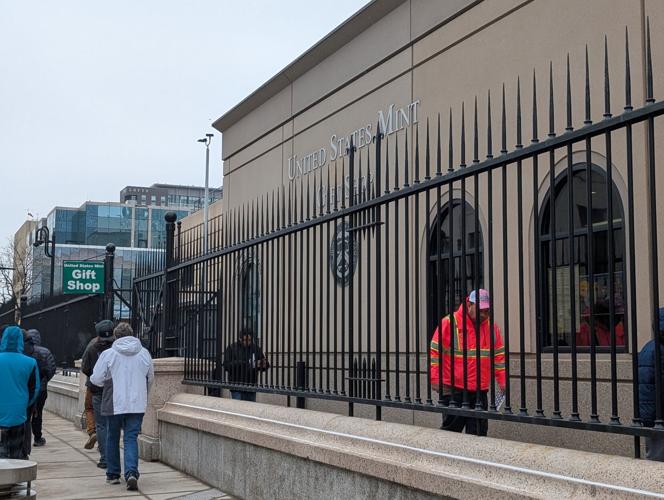
Tourists walk up to the Denver Mint for a tour Tuesday afternoon. The mint, built in 1904, has been providing guided tours since it officially started producing currency in 1906.
Sage Kelley/Denver Gazette

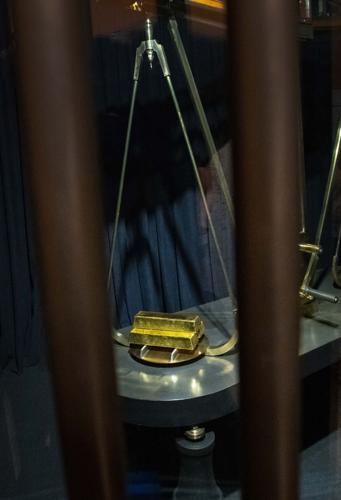
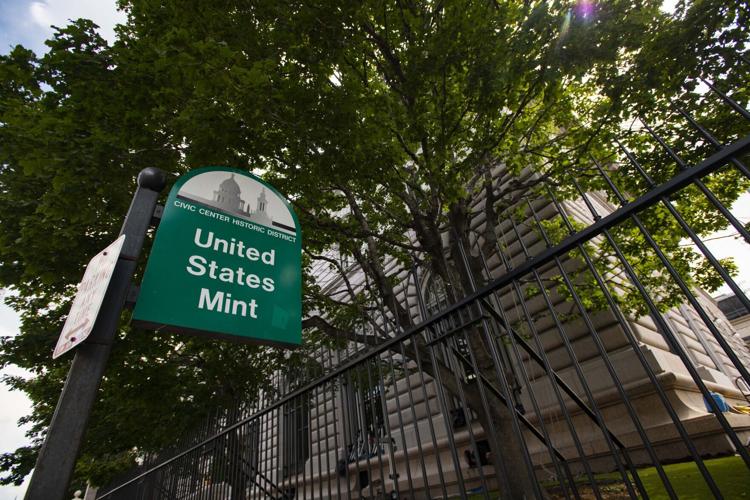
A group of 30 tourists stood in the foyer of the Denver Mint on Tuesday afternoon, surrounded by the sparking marble sourced from Vermont when the building was built in 1904.
An American eagle and flag stood above them on the flecked wall, engraved with gold and platinum — a monument to the importance the Denver historical building has had on the country for more than a century.
Just a few yards away, 54 coin pressers, multiple sorters and pick-and-place robots buzzed away, continuously stamping circular materials to make the coins the United States Federal Reserve Bank then uses for circulation.
The Denver Mint is one of two mints in the country that has circulating coin presses and strikes the currency, with the other being the original — and more theatric — Philadelphia Mint.
Despite President Donald Trump calling for the end the production and circulation of pennies, the Denver Mint will continue on with its longstanding history behind it.
“Let’s rip the waste out of our great nation’s budget, even if it’s a penny at a time,” Trump wrote in a social media post Sunday evening.
But, according to the tour guide during the Tuesday afternoon endeavor, the Denver Mint still continues to be a top tourist destination. The 30 people piling into the halls during the frigid weekday afternoon certainly backed up the claim.
Where the country makes cents
The history of the Denver Mint stretches a bit shorter than the creation of the country’s currency in 1792.
While the Philadelphia Mint, then settled in the country’s capital, was the first mint, the Denver Mint followed around 100 years later.
The Denver Mint’s history starts with the discovery of gold in the Platte River in 1858, according to the U.S. Mint’s website.
Miners in the area needed something to do with their gold dust, and the U.S. Congress approved the mint for coinage of gold at 16th and Market on April 21, 1862.
Congress then authorized the Denver Mint to start making coins in 1895 and the site for a new building was purchased at Colfax Avenue and Cherokee Street — where it still sits today.
Construction was not complete until 1904 and coin production did not start until 1906.
Tours started as soon as production began, still running multiple times a day 119 years later.
Now, the blue machines and yellow railings line the production area, with the tour towering overhead in a row of rooms filled with the manufacturing artifacts of the mint’s past.
A circulating coin press strikes 750 coins per minute, according to the mint’s website. The Philadelphia Mint produces 47,250 coins per minute if all of its 63 presses are operational and the Denver Mint makes 40,500 coins per minute.
How money makes money
Interestingly, the both of the mints outsource the zinc and copper plating needed for pennies from a production company, Artazn, in Tennessee. The penny is the only coin officials outsource materials for.
But, the tour guide theorized that the outsourcing of the material is not the reason that the penny is losing value.
The mint makes its money by selling the coins to the U.S. Federal Reserve Bank at face value, despite lower production costs. These numbers fluctuated recently, though.
According to a 2024 report from the U.S. Mint, a penny cost 3.7 cents to make — including the 3 cents for production costs and 0.7 cents per coin for administrative and distribution costs. A nickel also costs 13.8 cents to make, with 11 cents of production costs and 2.8 cents of administrative and distribution costs.
The mint does not take a total loss, though, with the dime, quarter and half dollar still being significantly less to make than what they are sold for.
The mint also sells uncirculated coins and special-edition coins that are sold for a significant profit.
In 2024, the mint returned around $50 million to the general fund to help pay down the country’s fiscal deficit.
In the same report, the mint reported losing $85.3 million in the 2024 fiscal year that ended in September on the nearly 3.2 billion pennies it produced.
Even if the penny was scratched from the future currency inventory, the mint will continue its longstanding history of pressing coins and giving out hour-long tours to golden-eyed visitors.
“It was absolutely wonderful,” said Terry Alford, a man on the tour who traveled out to Denver from North Carolina.
“Maybe we should lose the nickel, too,” Alford laughed. “It was great to see the mint, but maybe we should do without coins.”
His wife, Jenny Alford, added: “Tradition is one thing, but when it’s not making sense, you got to move on.”
No pun intended, we’re sure.


Front Range Passenger Rail pitches to Colorado Springs ahead of possible ballot measure
Savannah Eller
savannah-eller@denvergazette.com
Updated 17 minutes ago
If all goes to plan, a measure for a sales tax to fund passenger rail service could be coming to Front Range ballots in 2026. “We have a plan that we think is viable, and we’ll actually be able to...

Savannah Eller
Reporter

Denver area events for Feb. 28
Carlotta Olson
carlotta-olson@denvergazette.com
Updated 57 minutes ago
If you have an event taking place in the Denver area, email information to carlotta.olson@gazette.com at least two weeks in advance. All events are listed in the calendar on space availability. Saturday Après at The Terminal: Patio Sessions — With live DJ,...

Carlotta Olson
Reporter

US and Israel launch a major attack on Iran and Trump urges Iranians to ‘take over your government’
The Associated
the-associated@gazette.com
Updated 59 minutes ago
The U.S. and Israel launched a major attack on Iran on Saturday, and President Donald Trump called on the Iranian public to “seize control of your destiny” by rising up against the Islamic leadership that has ruled the nation since 1979. Some of the first...

The Associated
Reporter
What is the state legislature trying to hide?| Vince Bzdek
Vince Bzdek
vince-bzdek@denvergazette.com
Updated 52 minutes ago
What is it that the State Legislature is trying to hide? A bill that passed out of committee last week lets governments squirrel away important public notices on their own websites rather than publishing them in newspapers and other news...

Vince Bzdek
Reporter

Boulder’s Connie Carpenter-Phinney wins gold medal in road cycling | July 29, 1984 | Colorado’s Top 150 Sports Moments
Chris schmaedeke
chris.schmaedeke@gazette.com
Updated 18 hours ago
Happy birthday, Colorado — and Colorado sports. Leading into the state’s 150th birthday Aug. 1, The Denver Gazette has partnered with the Colorado Sports Hall of Fame to publicize the definitive list of Colorado’s top 150 sports moments. Colorado Sports Hall...

Chris schmaedeke
Reporter
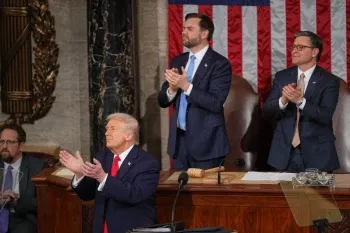
Additional thoughts on State of the Union address/rally | Cronin and Loevy
Tom Cronin Bob Loevy
tom-cronin-bob-loevy@gazette.com
Updated 52 minutes ago
The U.S. Constitution’s Article II states that “He (the president) shall from time to time give to the Congress Information of the State of the Union, and recommend to their Consideration such Measures as he shall judge necessary and expedient...

Tom Cronin Bob Loevy
Reporter

Competing overtime bills for agriculture workers split Colorado Democrats
Marianne Goodland
marianne-goodland@denvergazette.com
Updated 22 hours ago
Competing bills setting the overtime threshold for farmworkers have split legislators at the Colorado state Capitol, with one group saying a law passed in 2021 has harmed, rather than helped, farming operations and workers alike, while the other side insists...

Marianne Goodland
Reporter
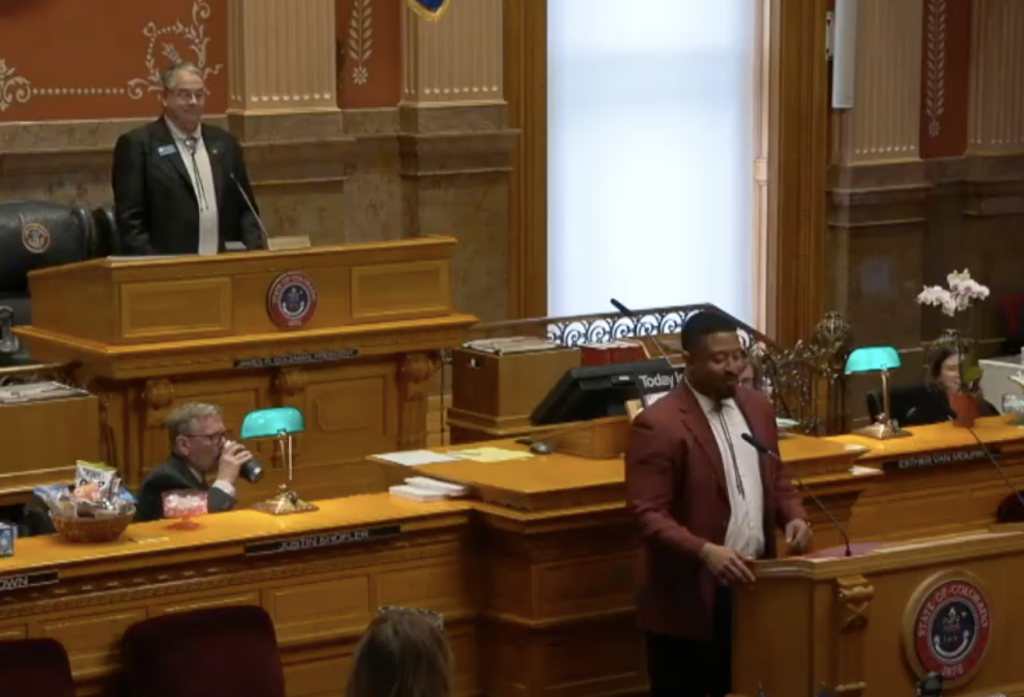
Cute puppy overload and an audition of a different kind: Capitol M | Week of Feb. 28, 2026
Marianne Goodland
marianne-goodland@denvergazette.com
Updated 2 days ago
The lighter side of the Capitol, and most days, you ought to be really grateful for it. There’s a rumor (jk) floating around that an amendment is coming for the bill to legalize prostitution. The amendment would ban condoms made...
Marianne Goodland
Reporter

PIKES PICK: A ‘K-Pop Demon Hunters’ day awaits
Linda Navarro
linda-navarro@denvergazette.com
Updated 5 days ago
It’s the music that makes you move and Black Sheep plans a dance party to the soundtrack of “K-Pop Demon Hunters” coming up April 18, 11 a.m. Costumes expected and it’s for all ages. $21.12-$24.21 at blacksheeprocks.com — Linda Navarro

Linda Navarro
Reporter
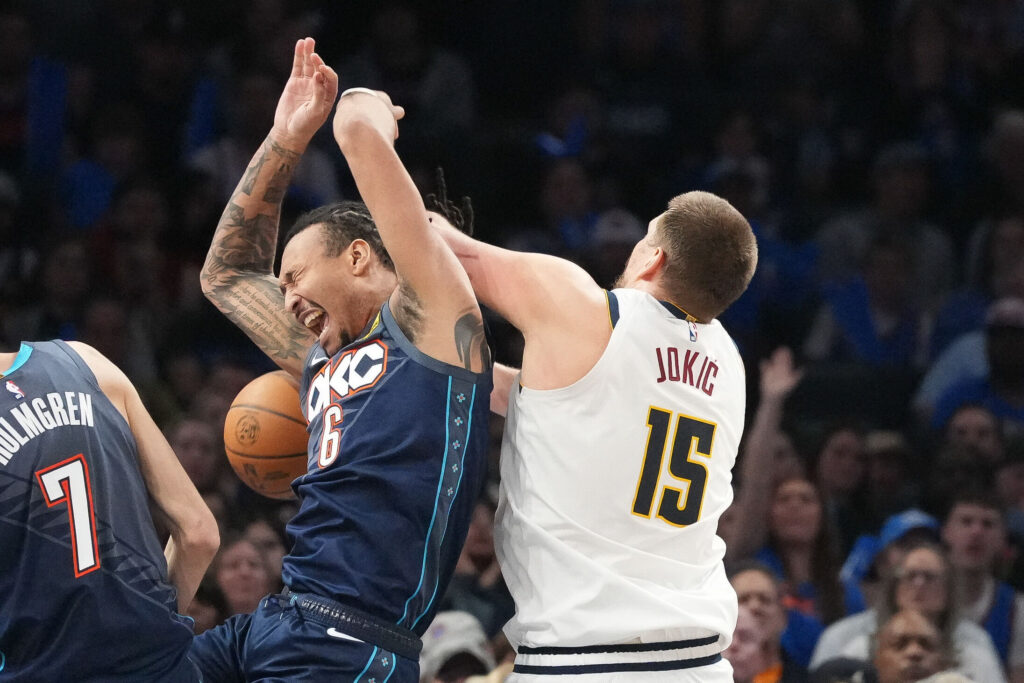
Tempers flare during another tightly contested matchup between Denver Nuggets, Oklahoma City Thunder
Vinny Benedetto
vinny-benedetto@denvergazette.com
Updated 8 hours ago
OKLAHOMA CITY – The temperature of one of the NBA’s most heated rivalries got turned up a couple of notches Friday at Paycom Center. Things reached a boiling point with eight minutes left in regulation after Jared McCain gave the...

Vinny Benedetto
Reporter