







Speed cameras coming to Colorado roadways amid alarming spike in construction zone deaths
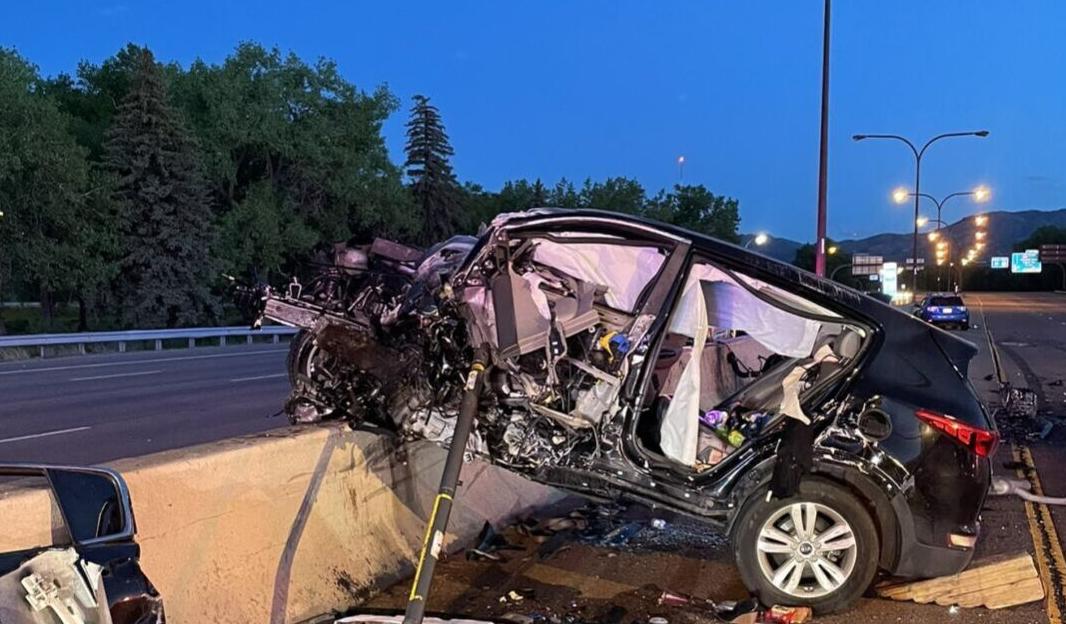
Colorado Springs Fire Department
The state’s latest effort to crack down on speeding and reduce traffic fatalities comes amid an alarming increase in construction-zone deaths, which nearly doubled in 2024.
The Colorado Department of Transportation released preliminary data from 2024 that reflects a roughly 5% decrease in traffic fatalities overall compared to 2023. Continued efforts by CDOT and the Colorado State Patrol hope to further reduce the number of traffic-related fatalities and serious injuries by 22.5% by 2027, as part of Gov. Jared Polis’ overall safety goal for Colorado.
Statewide construction-zone deaths totaled 31 in 2024, up 94% from the previous year, which saw 16. In El Paso County alone, 13 construction-zone deaths were reported. Four of those fatalities were in Colorado Springs, according to CDOT.
A dashboard with all Colorado traffic fatality data can be found here.
To address this growing concern, CDOT has plans to implement a Speed Camera Safety Program starting in the spring, which the agency hopes will reduce crashes involving excessive speed.
The speed safety cameras will be installed first in construction zones due to the significant increase in fatalities in those areas. Deployment of future cameras in school zones and other “strategic corridors” will be evaluated in the future, said Stacia Sellers, CDOT strategic communications lead.
According to Sam Cole, CDOT traffic safety communications manager, traffic zones are inherently more dangerous for a variety of reasons, especially when drivers speed through them.
“The lanes in construction zones can be narrow and curvy, plus there is often heavy equipment in use,” Cole said. “Our guys are out there working. They are vulnerable to drivers who speed and are careless. They want to make it home to their families.”
State Patrol posted on social media in early January that, in 2024, speeding was the second-most-common factor in injury and fatal crashes in Colorado. Operator impairment was listed as No. 1.
The new cameras are intended to supplement traffic stops regarding excessive speed, but speedsters will also receive mailed citations if detected by the cameras.
CDOT said this priority will aid traffic safety in other ways. For example, one goal of the cameras is to reduce congestion from traffic stops. If more speeding citations can be issued through the mail, officers will have more time to focus on other traffic safety concerns.
Sellers said the camera systems use multiple cameras to measure how fast vehicles travel between them. The cameras are activated by “pucks” in the road that trigger the speed-detection cameras.
“If the average speed of a vehicle that travels by each camera is 11 mph or higher above the speed limit, a warning or violation is issued,” Sellers said.
The speed cameras are estimated to reduce traffic fatalities and injuries by 20% to 37%, an estimate from a Federal Highway Administration statistic based on past and current speed camera deployments in other states and cities, according to Sellers.
States across the country who have implemented the cameras say they are working well. Pennsylvania, Connecticut, New York City and Illinois have all published results of the impact the cameras have.
Motorcycle fatalities
Not only were construction-zone deaths up, motorcycle fatalities also saw an increase. In 2024, 162 motorcyclists lost their lives, marking a 23% increase over the previous year and accounting for 24% of all traffic deaths for the year.
A lane-filtering law was introduced in 2024 to promote rider safety. However, Cole says it is “too early to see safety outcomes.”
“We are not seeing anything to indicate the law is having a negative effect,” Cole said. “We will do a study after there is enough data in place to determine if the law’s intended purpose is being met.”
CDOT said additional efforts to decrease motorcycle deaths will include encouraging helmet use, supporting enforcement programs aimed at impaired drivers, and establishing speed limits that “ensure the safety of all road users.”
Sellers clarified the new speed safety cameras alone will not determine areas that require decreased speed limits. Instead, a traffic engineering study determines permanent speed limits.
New laws in 2025
In addition to traffic safety measures to be implemented by CDOT in 2025, new laws have been enacted or updated to promote safe driving.
The updated Hands-Free Law prohibits the use of hand-held phones while driving, encouraging hands-free accessories. Penalties start at $75.
CDOT also is reminding drivers that Colorado’s child-restraint system law has been updated for 2025. More information can be found at CarSeatsColorado.com.
Finally, enforcement of weaving in and out of express lanes is being expanded in 2025. Drivers who enter and exit express lanes outside of designated areas will face $75 fines or more between Interstate 25 and Chambers Road, between Larkspur and Monument and the U.S. 36 corridor.
“Our goal is to cultivate a robust transportation safety culture and to ultimately reduce fatalities and serious injuries for all users on all Colorado roadways,” Cole said.