





The skiing soldiers who revolutionized the out-of-doors | Vince Bzdek
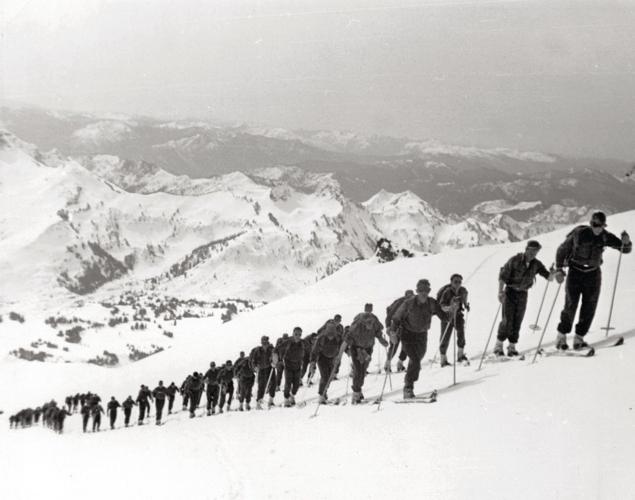
Soldiers of the 10th Mountain Division, stationed at Camp Hale near Leadville, ski uphill along the Continental Divide. The World War II-era Army unit is credited with setting the foundation for ski patrol as it is known in Colorado and is chronicled in the historical picture book “Ski Patrol in Colorado.” The photo above is reprinted from “Ski Patrol in Colorado” by John B. Cameron and Eric D. Miller.
courtesy of Arcadia Publishing
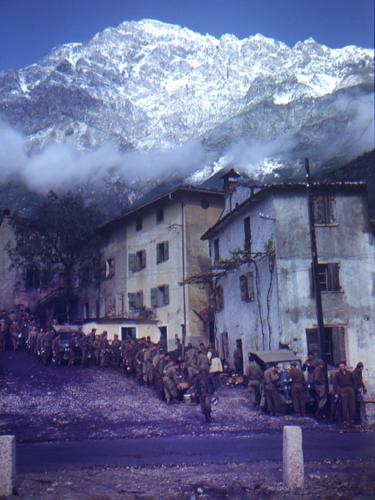
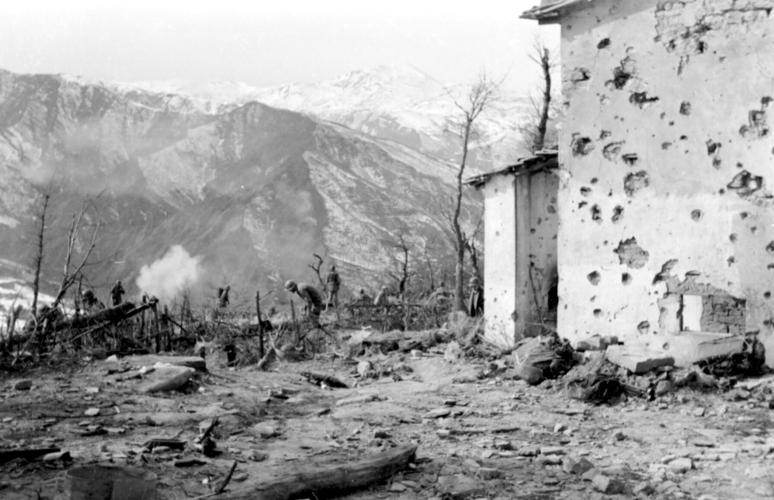


In the dead of night 80 years ago this week, five columns of mountain troops who had trained in Colorado began scaling the face of Riva Ridge in Italy. The Germans had held the high ground for months but had posted no sentries on the cliff side of the ridge because they were convinced no one could climb 3,000 feet of shale.
Using ropes and iron pitons and carabiners, the 1,000 elite soldiers of the 10th Mountain Division did exactly that, climbing all night long. At dawn, they slipped over the crest of the cliff and caught the Germans asleep in their foxholes. In just a few hours they captured the ridge and cleared the way for a series of attacks that finally opened up the Po Valley to the Allies after a six-month standoff. It was the beginning of the end of Germany’s military dominance in Europe.
“What is important is that if you did not take Riva Ridge and hold it, there was no way to do the rest of that attack,” Lance Blyth, author of “Ski, Climb, Fight,” told me in an interview. “The rest of that attack would have been far more costly and taken far more time and far more casualties.”
Blyth is up in Vail this weekend for a slate of commemorations of that victory on Riva Ridge and the storied 10th Mountain Division.
Gen. Dwight Eisenhower had called the division, which was made up of world-class skiers, alpinists and outdoorsmen, a bunch of “playboys.” Many were from Ivy League schools or foreign-born from Norway, Sweden and Austria. One of them was a member of the von Trapp family, immortalized by the 1965 film, “The Sound of Music,” according to Flint Whitlock, son of a 10th Mountain Division veteran.
After the war, many of those playboys would return to Colorado’s mountains where they had trained, and revolutionize the out-of-doors.
“It’s hard to overstate what a touchpoint the 10th Mountain Division is to the outdoor community in Colorado,” said Blyth, the command historian of the North American Aerospace Defense Command and the U.S. Northern Command in Colorado Springs (how about that for a title?). Blyth also teaches at the U.S. Air Force Academy and skis the backcountry in his downtime.
Skiing after the war was mostly limited to the upper middle class in major urban areas like New York, Philadelphia, Boston and San Francisco.
“So you now have all these guys who had skied and had climbed, who were, many of whom, from a demographic that did not do those things,” said Blyth.
They came home and democratized the sport.
In 1955, the United States had 78 ski areas. Over the next 10 years, the country added 580, Blyth said. At least 20 of the areas were developed directly by 10th Mountain vets, including Pete Seibert at Vail, Larry Jump at Arapahoe Basin and Freidl Pfeifer in Aspen. Ultimately, Camp Hale, where the 10th trained, would be ringed by five ski areas, Ski Cooper, Vail, Breckenridge, Copper Mountain and Beaver Creek.
“Tenth alumni fundamentally created the ski industry, not just developing ski areas but managing at least 62 ski schools, and providing nearly 2,000 ski instructors, along with making films, owning shops and manufacturing equipment,” Blyth wrote in “Ski, Climb, Fight.”
Vets of the 10th turbocharged other outdoor recreation powerhouses, as well.
Vet Bill Bowerman cofounded a small athletic footwear company known as Nike.
Monty Atwater, a graduate of the 10th, invented avalanche science, creating the technical language still used today to assess and prevent avalanches.
Camp Hale continued to train people in mountaineering after the war, and one of the instructors there, Jim Whittaker, was the first employee and later CEO of a company called REI. He also went on to become the first American to summit Mount Everest.
“But I think there’s another piece of this,” said Blyth. Because the Army thought it would need a lot more mountain troops than it did, it produced a huge excess of ski and mountaineering gear.
“I’ve seen numbers as high as like 100,000 sets of skis, boots and parkas and sleeping bags and rucksacks and you know, all these ropes and pitons and carabiners. And so there is this massive surplus of all this outdoor gear,” which gets snatched up in Army surplus stores after the war. It’s sold for pennies on the pound, and for a few bucks, you could outfit yourself in 1946, 1947 with all the ski gear or climbing gear you wanted.
All of a sudden, everyone and their mother was skiing or climbing.
With all this gear circulating, people begin to realize — oh, wait a minute, there are business opportunities here, and that begins to drive the larger outdoor industry, Blyth said.
Howard Head bought a pair of those military hickory skis and thought he could improve on them. He started making them out of metal, then started laminating pieces of aluminum to plywood cores, resin bases and attaching metal edges to them. A few years later, fiberglass skis came into being. Our skis today are still made in that laminate manner. “That’s because Howard Head had skied a pair of crappy wood military skis.”
Yvon Chouinard, dirtbag climber, “looks at all these old, you know, Army-wrought iron pitons and goes, ‘These are way too heavy. I can do better than this,’” Blyth said. He started making hardened steel and aluminum pitons and sold them out of the back of his car. He eventually reinvented crampons, ice axes and other equipment. He created a company to sell the gear, decided to add in clothing as well, and called it Patagonia.
All these developments driven by the 10th made outdoor recreation “far more for the masses. There are far more people out there who did this than had been doing it before.”
Though there are no living survivors of the 10th, the descendants have done an inspiring job of keeping the spirit of the 10th alive, as evidenced by the week of commemorations up in Vail and Leadville last week.
“They do keep the memory alive, and they knew they were doing something unique, even then,” Blyth said. “They understood how hard it was to do mountain combat, and they wanted to figure out how to do it well.”
“In doing that, they found the mountains. They were the original ski bums. ‘How do I get back and make a life, make a living in the mountains?’ they asked. ‘Because that’s where I really want to be.’ I think large numbers of us can completely understand that.”
Not only did they reinvent the outdoors, Riva Ridge remains one of only two successful nighttime climbing assaults in the U.S. Army’s history.
The 10th was the only American division specially trained for mountain and winter warfare and never lost a battle or gave up an inch of ground.
General Hays, the 10th’s commander, told his men, “I am proud, indeed, that the knockout thrust has been spearheaded by the 10th Mountain Division. … When you go home, no one will believe you when you start telling of the spectacular things you have done. There have been more heroic deeds and experiences crammed into these days than I have ever heard of.”


The next Nickelson? Your new white knight just might be a Black Cowboy
John Moore
john.moore@denvergazette.com
Updated 5 hours ago
2025 DENVER GAZETTE TRUE WEST AWARDS: DAY 4 The founder of Emancipation Theatre ‘is a prophet,’ says Denver blues legend Erica Brown’ I asked “the” Erica Brown how she would introduce formidable independent Denver theater practitioner Jeff Campbell to a...

John Moore
Reporter

Splurging, exploring and enjoying: 48 hours in Steamboat Springs
Seth Boster
seth-boster@denvergazette.com
Updated 1 day ago
For the truest sense of Steamboat Springs, you might want to mark your calendar for early February. That’s the scheduled return of Winter Carnival, the weeklong celebration of ski jumping, parading, dancing, s’mores-eating and more. “It’s our Super Bowl,” an...

Seth Boster
Reporter
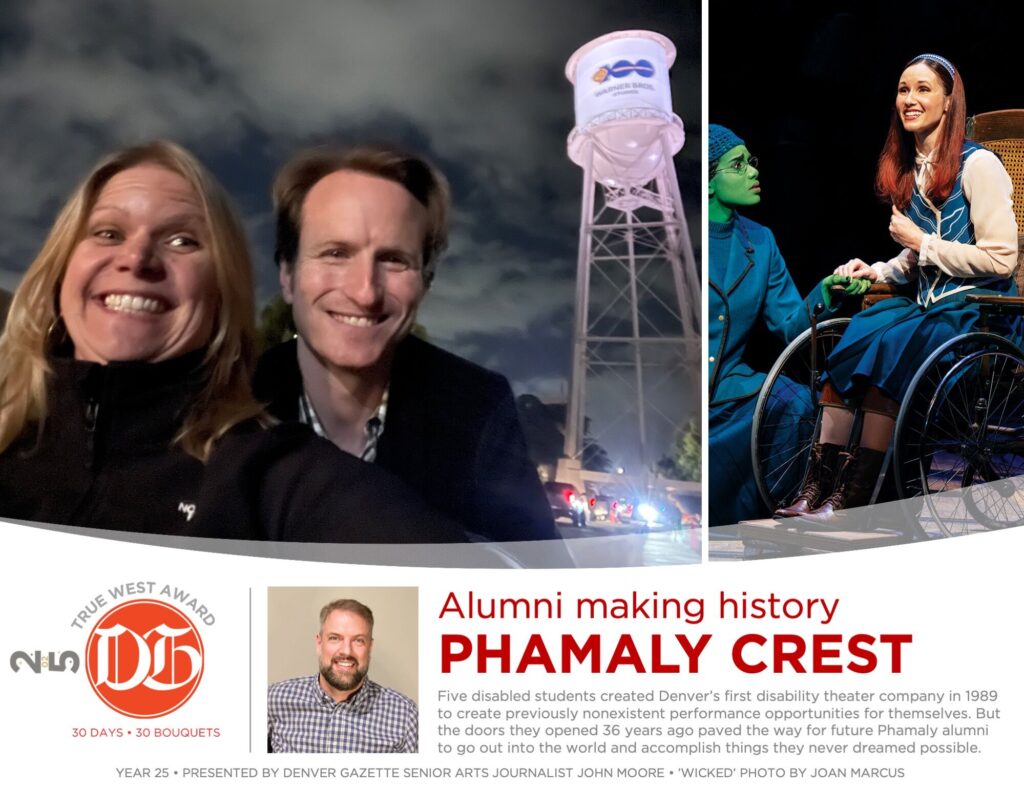
Mission possible: Phamaly alumni made national impact in ’25
John Moore
john.moore@denvergazette.com
Updated 10 hours ago
2025 DENVER GAZETTE TRUE WEST AWARDS: DAY 3 From film to Broadway, Denver disability artists ‘are living proof that anything is possible’ When five students created Denver’s first disability theater company back in 1989, it was to create performance opportunities...
John Moore
Reporter

Mayo Clinic scientists create tool to predict Alzheimer’s risk years before symptoms begin
Mayo Clinic News Network
mayo-clinic-news-network@gazette.com
Updated 1 day ago
ROCHESTER, Minn. — Mayo Clinic researchers have developed a new tool that can estimate a person’s risk of developing memory and thinking problems associated with Alzheimer’s disease years before symptoms appear. The research, published in The Lancet Neurology, builds on...

Mayo Clinic News Network
Reporter

Savvy Senior: How to locate an age-friendly doctor
Miller Jim Miller, Special to The Gazette
jim-miller@gazette.com
Updated 1 week ago
Dear Savvy Senior, My husband and I are relocating to a nearby state to be closer to our daughter and will need to find a new primary care physician when we arrive. We are both in our late 70s and...


Red alert: After 24 years, Rattlebrain is tying Santa’s ‘Sack’
John Moore
john.moore@denvergazette.com
Updated 1 day ago
2025 DENVER GAZETTE TRUE WEST AWARDS: DAY 2 More than 35,000 have enjoyed Dave and Jane Shirley’s irreverent seasonal sketch comedy When funnyman Dave Shirley told me his venerable if itinerant Rattlebrain Productions will be opening up its smirkily-titled seasonal...
John Moore
Reporter
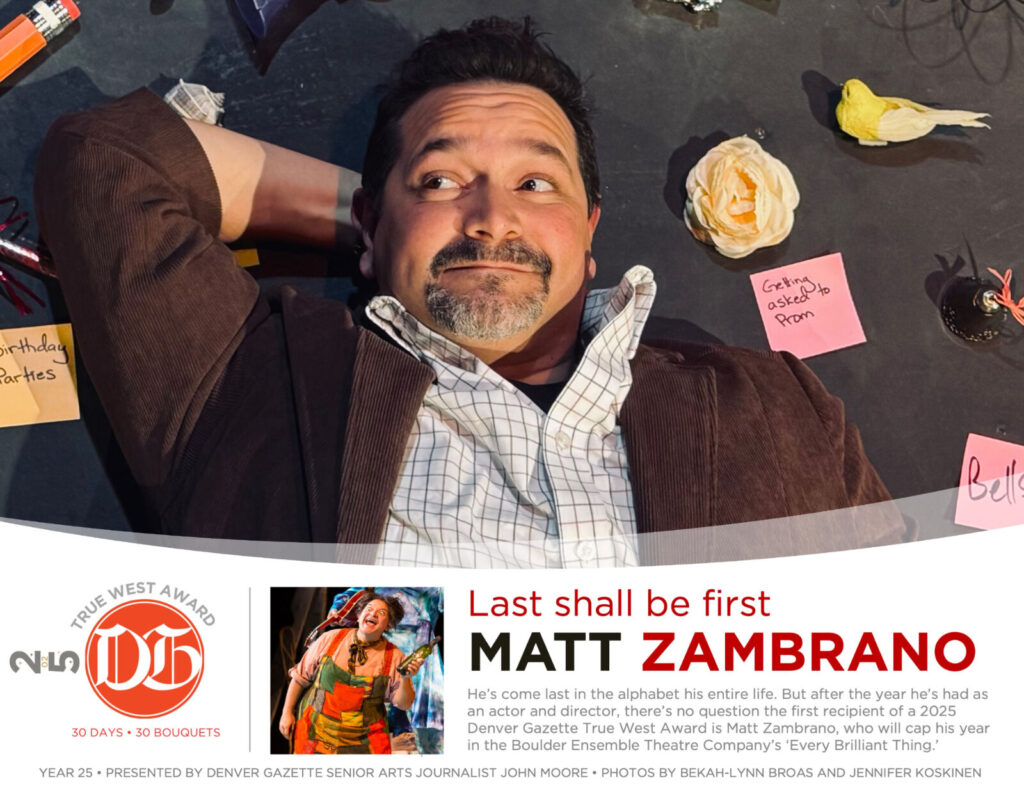
Matt Zambrano: Last by letter, first by feats
John Moore
john.moore@denvergazette.com
Updated 2 days ago
2025 DENVER GAZETTE TRUE WEST AWARDS: DAY 1 Here’s every brilliant thing busy and beloved actor and director did this year Matt Zambrano is such a nice guy, he will give you the shirt off his back – and the words...
John Moore
Reporter
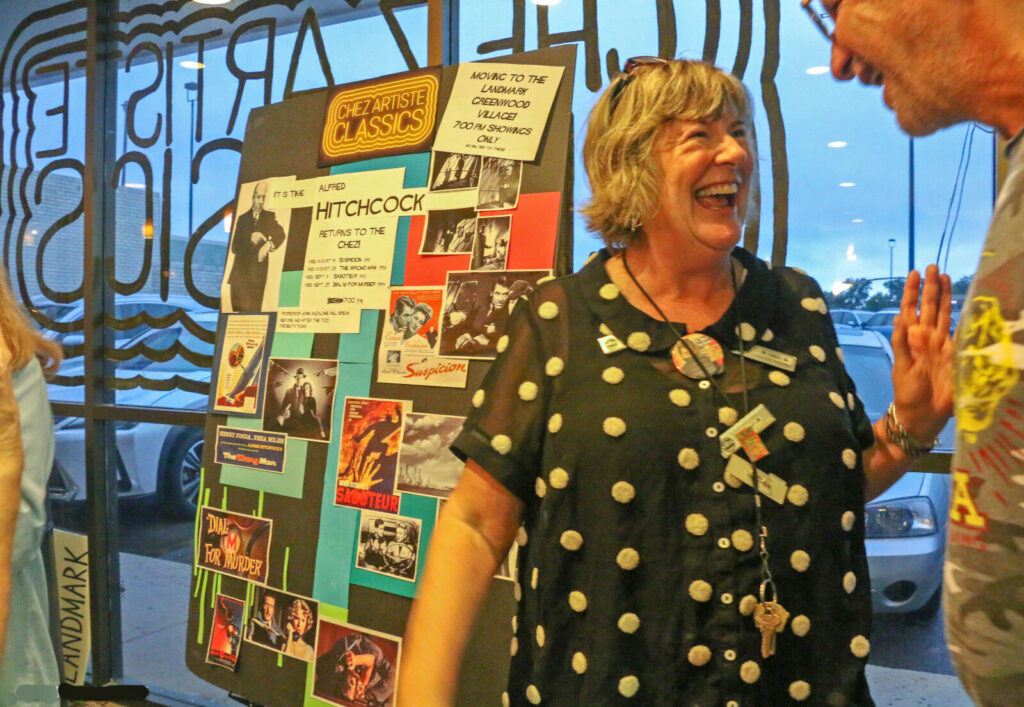
Roll credits: ‘The Chez Lady’ is leaving Landmark’s Mayan Theatre
John Moore
john.moore@denvergazette.com
Updated 4 days ago
The face of Denver arthouse film for the past 27 years has popped her last corn and seen her last cinematic Colorado sunset When I walked into the Mayan Theatre on Wednesday and asked the young woman behind the concessions...
John Moore
Reporter

Peyton Manning drops the mic as an actor in Bradley Cooper’s new stand-up film
John Moore
john.moore@denvergazette.com
Updated 7 days ago
Plus: NFL QB’s five greatest on-screen moments Casting announcements can be funny. Take the press release from April that announced the A-list cast of the (quite good) new Bradley Cooper-directed film, “Is This Thing On?” It’s a story inspired by...
John Moore
Reporter

Savvy Senior: What are the early signs of Parkinson’s disease?
Miller Jim Miller, Special to The Gazette
jim-miller@gazette.com
Updated 2 weeks ago
Dear Savvy Senior, What are the early signs of Parkinson’s disease? My husband was recently diagnosed after noticing a slight thumb tremor but we’re wondering if we missed any other early warning signs. — Curious Wife Dear Curious, Recognizing the...
PREV
PREVIOUS

Changes to know ahead of big-game hunting season in Colorado
Colorado Parks and Wildlife’s annual big game brochure has been hitting hunters’ mailboxes — the annual reminder to start planning for the seasons ahead. The brochure is also available at CPW offices and posted online. And the agency is urging hunters to view it ahead of the primary draw application period, running March 1-April 1. Hunters […]

Year-round gardening: It's time to start working in the garden
“In March winter is holding back and spring is pulling forward. Something holds and something pulls inside of us too.” – Jean Hersey, American author What a deliciously cold winter we’ve had. Hopefully, March will bring us an equally delightful spring that provides rain, sunshine and perennials that have survived the winter temperatures. Here are […]