







GUEST COLUMN: Cuts to research funding harm all Coloradans
Make no mistake, reductions in federal research funding will harm Coloradans.
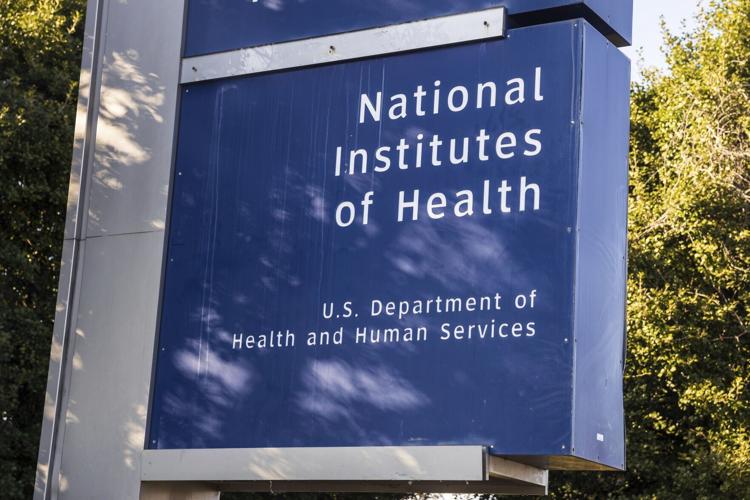
Earlier this month, the new administration signaled that major changes were on the horizon in the way federal agencies support research at America’s universities, and one of its first actions focused on the National Institutes of Health, restricting billions in research-related funding at universities across the country. While a court-issued temporary restraining order is now in place, the threat of cuts remains. The University of Colorado Boulder is open to needed reform, but the approach must be based on transparent dialogue, not haphazard action.
For more than 150 years, the United States’ higher education system has been the single most valuable source of research and development, generating unbiased research, developing intellectual capital, and creating new technologies.
America’s leadership in technology, medicine and agriculture, our robust national security, and our global economic leadership are all a result of government-university partnerships.
Consider that federally funded research helped identify a specific gene that increases a person’s chances of breast cancer, allowing doctors to save countless lives through earlier detection. It led to artificial heart valves, 3D printers and night vision goggles and much of the technology that underpins our military strength, counterterrorism and cybersecurity efforts also originated in research at American universities.
When government agencies, charitable foundations and individual philanthropists fund research, most of that work happens in university-based labs.
When a university receives a federal grant, whether from NIH or any other agency, most of the funding supports “direct costs,” which includes the personnel conducting the research and laboratory supplies. Some funding also goes to support “indirect costs” or “facilities and administrative” (F&A) costs.
At the University of Colorado Boulder our F&A rate is 56.7%. That means that, outside of exceptions, for every $100 of federal funding we spend on direct costs for research, we also receive $56.70 for F&A costs. At CU Boulder last year, we received approximately $77.9 million in research funding from the NIH and $495.5 million in total federal research funding. Of the $495.5 million, $111.1 million was F&A.
Like many of its peers, CU Boulder spent about half of the F&A funding on the basic infrastructure needed to conduct research — expenses ranging from utilities to specialized lab equipment; professionals such as plumbers, electricians, mechanical workers and lab technicians who keep labs operating; safety staff that ensures employees are safe; and accountants who oversee expenses. Approximately 30% of F&A was used for maintenance and improvements to research buildings, with the remaining 20% obligated to debt payments associated with construction of these research facilities.
The F&A funds are not institutional profit; they are a necessity. Each university negotiates its F&A rate with the federal government based upon the actual, documented costs of conducting research, and then those rates are reassessed every two to four years and regularly audited by the government to ensure compliance.
So a cap on F&A funding from NIH to 15% that has been proposed would result in a loss of at least $11.7 million to CU Boulder and another $73.3 million to the three other campuses in the CU system. A similar reduction to the F&A rate from other federal agencies, such as the Department of Defense, NASA, and the National Science Foundation, would result in much more significant losses.
These facility and administrative expenses do not disappear when the federal funding dries up, as they must be funded or critical research cannot succeed.
And if our American research efforts are hindered, then America will quickly fall behind our global competitors in a manner that may be impossible from which to recover.
It will result in fewer jobs and depressed economic growth, a slowdown of life-changing research, and a decline in American leadership on the global stage.
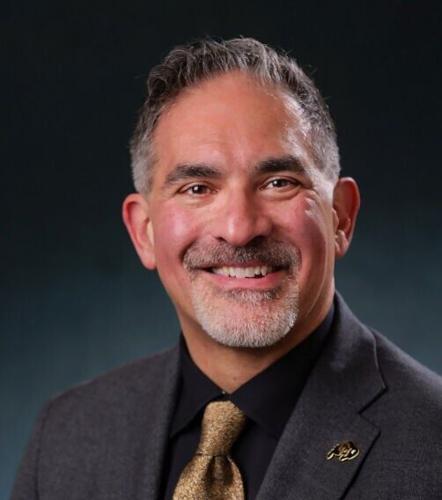
Justin Schwartz is the chancellor of the University of Colorado Boulder.