







Denver 911 proposes to double fee to improve response time, keep operations afloat
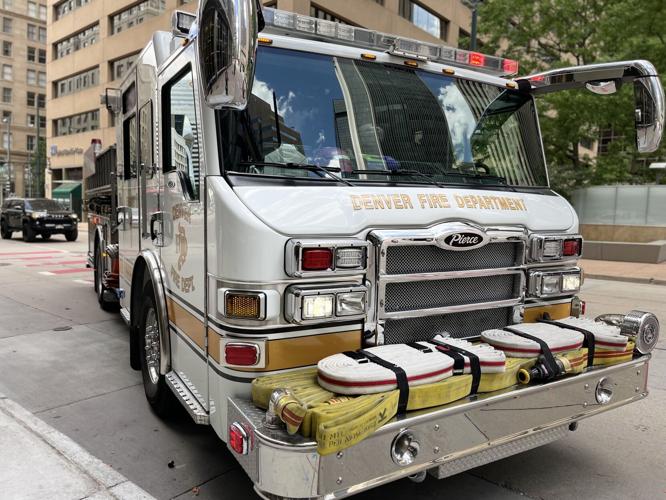
A Denver fire truck responds to an emergency in downtown Denver on June 27, 2023.
Luige Del Puerto luige.delpuerto@gazette.com
Denver’s public safety agency is pushing to roughly double the fee for 911 emergency services, arguing it’s necessary to keep operations afloat and meet response time requirements.
The proposed fee hike — from $1.20 to $2.12 per month — would apply to all residents who have a phone, whether landline or mobile, registered in the city.
“This change will allow us to maintain operations through the rest of 2025 and set us up for success in some of the infrastructure and staffing moves that we’ve been making over the last few years,” Denver 911 Director Andrew Dameron said.
The fee hike would also help keep afloat the 911 Trust afloat, which funds Denver 911 via the service charges, solvent, the official said.
Dameron said that without the increase, the 911 Trust fund would dip below $0 balance and raising the fee to $2.12 would “keep us solvent through the end of the year,” assuming it goes into effect on June 1.
The last time the city saw a 911 fee increase was in 2019.
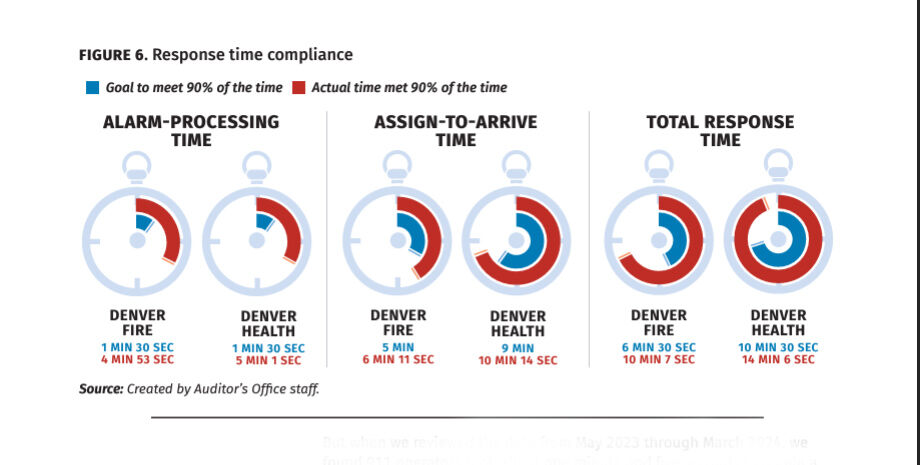
An audit, conducted late last year, concluded that Denver’s emergency first responders were failing to meet their own response time goals.
Along with call volume and employee burnout, managers partly blamed new laws coming out of Colorado General Assembly that resulted in less control over how often staffers could take leave of absence.
Dameron told members of the Safety Housing Education and Homeless committee on Wednesday that, without the additional funding, the city would face continued failure to meet emergency call answer times, risk losing advanced technology tied to reducing call volume and improving customer service, and have to shift personnel costs back to the general fund.
Under Colorado law, the use of the 911 Trust Fund dollars is restricted to the technology, networks, facilities, training and infrastructure required to provide a robust 911 system for a municipality.
“It is very explicit that only after those costs have been covered can you use those fees to pay for personnel expenses as well as some equipment outside of the 911 center,” Dameron said.
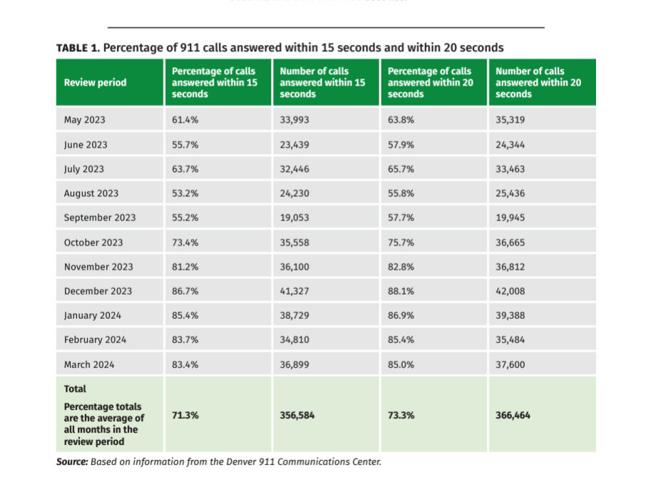
Denver 911, the sole emergency communications center for the entire city and county, handles nearly two million calls annually. It benchmarks its goals using standards set by the National Emergency Number Association — to answer 90% of all 911 calls within 15 seconds and 95% of all calls within 20 seconds.
Denver’s 911 fees are currently among some of the lowest in the state, with Pitkin County at $4 per month and San Luis Valley at less than $1.
Dameron said adding 41 new employees and AI-based technology to help rescue call volume could help the city’s emergency nerve center solve its call-answering woes.
Last year, he told auditors that to afford additional FTE, Denver 911 would have to raise the 911 fee, “at which point we will have the funds necessary to hire at least 19 additional staff to start.”
Dameron agreed with auditors and said staffing shortages have been a significant problem since the pandemic when, at one time, turnover rates were as high as 77%.
Shortages also resulted in 911 operators being required to work up to 14 hours in a 24-hour period and averaging 163 hours of overtime during the 11-month review period.
While the center has made significant strides in hiring and retaining personnel — with turnover rates now at less than 10% — Dameron said recent changes in labor laws still present challenges.
“In 2024, with the introduction of the Colorado Healthy Families and Workplaces Act, along with family leave and the city’s version of that being CARES, we’ve seen a 334% increase in the amount of leave being taken by our team,” Dameron said. “I want to be clear that this isn’t leave abuse — this is employees using the benefits that are available to them as employees of the City and County of Denver, and it’s just one of those unintended consequences of these acts and changes that we’re seeing.”
Even operating at more than 80% of the authorized number of employees, Dameron said the center is not meeting the specified call answer times, largely due to the amount of leave being taken.
“We just have so many people who are out at any one time that it negatively impacts and kind of negates the effects of that additional staff,” he said.
Councilmembers appeared supportive of the request.
“I don’t see a whole heck a lot of waste in the 911 system,” District 6 Councilmember Paul Kashmann said. “So, if there was ever a justified increase, I think this is one.”
The proposal will be moved to the full council later this month. If the city council approves, the rate increase would become effective June 1.


Josh Manson hitting high marks offensively for Avalanche heading into Olympic Break
Evan Rawal
evan-rawal@denvergazette.com
Updated 22 minutes ago
The Colorado Avalanche encourage all their defensemen to get involved offensively throughout the game. Josh Manson is taking advantage of it. The veteran defenseman scored the game-winning goal in Wednesday’s 4-2 win at Ball Arena, blasting a shot from the...

Evan Rawal
Reporter

Senior Emily Adams keeps rolling with career-high 23, helping Air Force women win second in a row
Brent Briggeman
brent-briggeman@denvergazette.com
Updated 2 hours ago
Emily Adams can clearly see the finish line and intends to run through the tape. The Air Force senior shattered her career high with 23 points and added 12 rebounds for her first double-double as the Falcons crushed Utah State...

Brent Briggeman
Reporter

Nuggets vs. Knicks | More Nikola Jokic history not enough for Denver
Vinny Benedetto
vinny-benedetto@denvergazette.com
Updated 2 hours ago
A couple of extra periods allowed Nikola Jokic to make a little more NBA history Wednesday, but it wasn’t enough to prevent the Nuggets’ first three-game losing streak of the season. Jokic recorded the 181st triple-double of his career and...

Vinny Benedetto
Reporter

Olympics broadcast schedule: Thursday/Friday
Brent Briggeman
brent-briggeman@denvergazette.com
Updated 4 hours ago
Events streamed through Peacock unless a network is noted Thursday 2:05 a.m. – Curling (Norway v. United States, Sweden vs. Chechia, Great Britain vs. Estonia, South Korea vs. Italy, 3:30 a.m. – Alpine skiing (men’s downhill: training) 4:10 a.m. –...
Brent Briggeman
Reporter
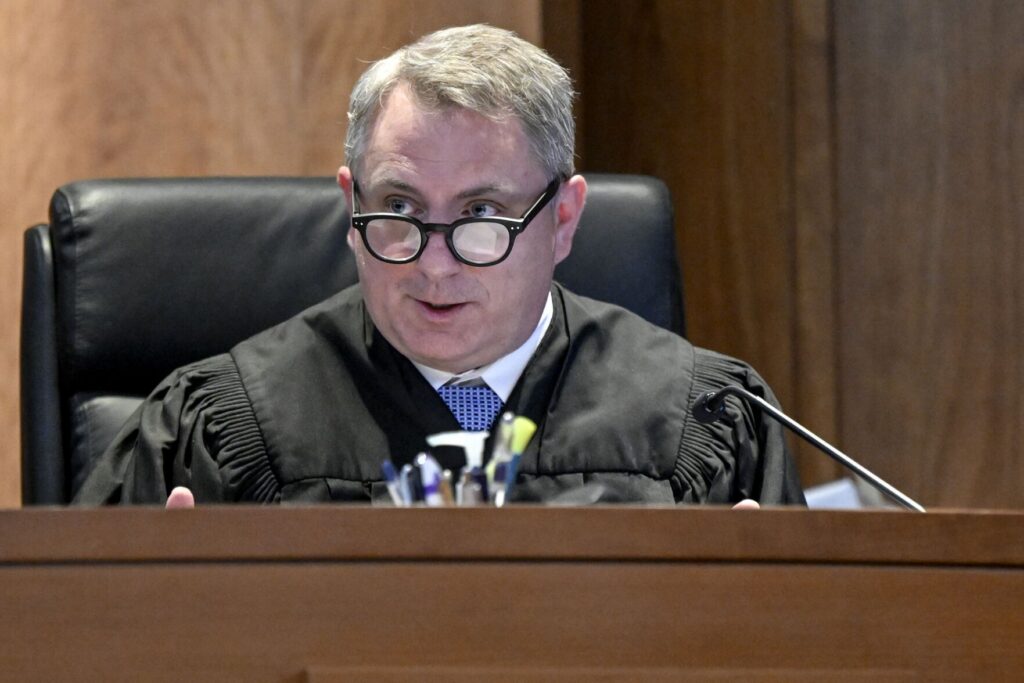
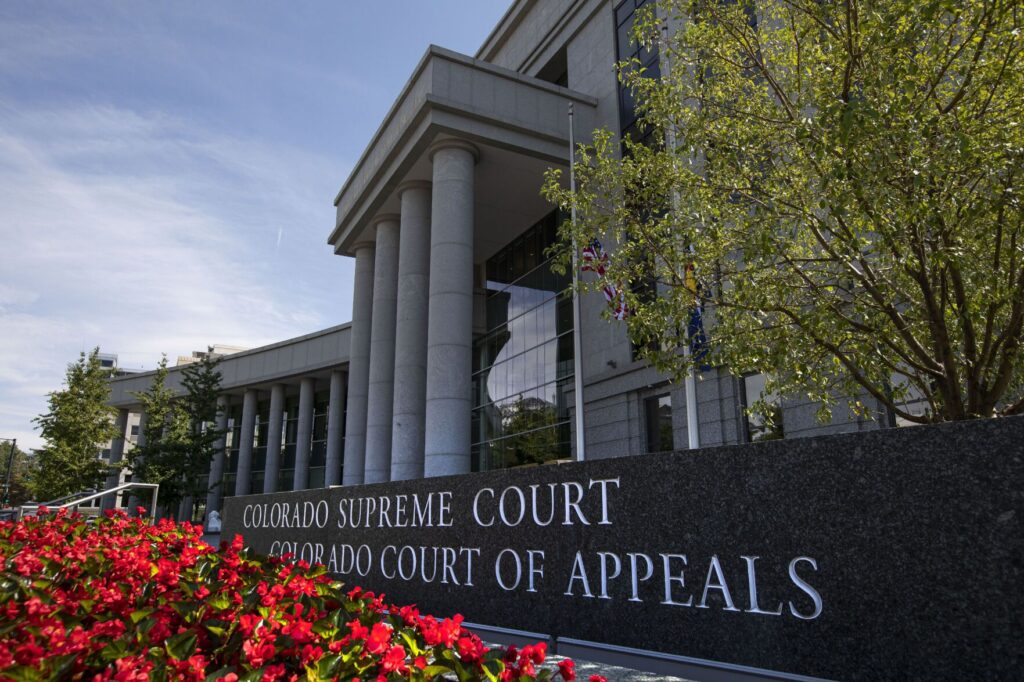
Christopher Zenisek, trial judge experienced with high-profile cases | SUPREME COURT FINALISTS
Michael Karlik
michael-karlik@denvergazette.com
Updated 4 hours ago
After the Marshall fire burned through Boulder County in the final days of 2021 and wound up destroying more than 1,000 homes, the sprawling 4,000-plaintiff litigation was assigned to District Court Judge Christopher Zenisek of Jefferson County. Zenisek would go...

Michael Karlik
Reporter
Andrea Wang, water and energy expert | SUPREME COURT FINALISTS
Michael Karlik
michael-karlik@denvergazette.com
Updated 4 hours ago
When the late Chief Justice Mary Mullarkey authored a 2002 opinion in the complex and long-running Taylor Ranch case involving landowners’ claims to access a 77,000-acre tract in the San Luis Valley, she worked with her law clerk, Andrea S....
Michael Karlik
Reporter
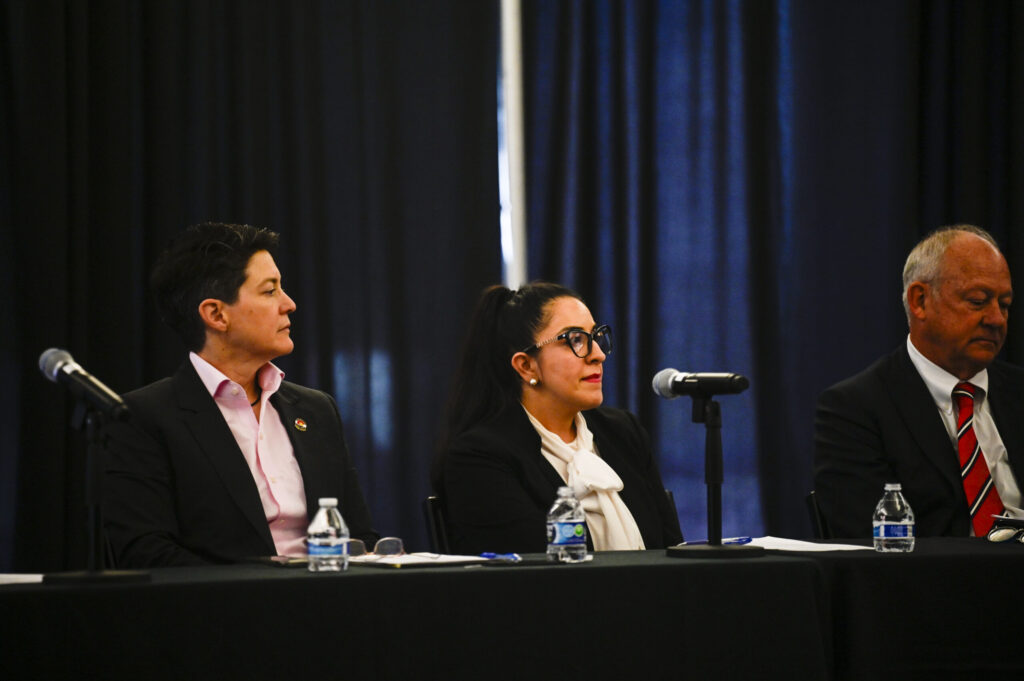
Susan Blanco, innovator in the judiciary | SUPREME COURT FINALISTS
Michael Karlik
michael-karlik@denvergazette.com
Updated 4 hours ago
Less than 24 hours after her selection as a finalist for a Colorado Supreme Court vacancy, Chief Judge Susan Blanco was back on the bench in Fort Collins, moving methodically through the variety of complications she encountered. “Your goatee might...
Michael Karlik
Reporter

New York ❤️ Colorado Symphony
John Moore
john.moore@denvergazette.com
Updated 30 minutes ago
Arts news: ‘Shrek’ drama deepens; important internment play in Brighton; John Irving salutes Olympic grandkids The Colorado Symphony is still floating on an apex after last weekend’s historic tour gave 15,000 New Yorkers a listen to the best our state...

John Moore
Reporter
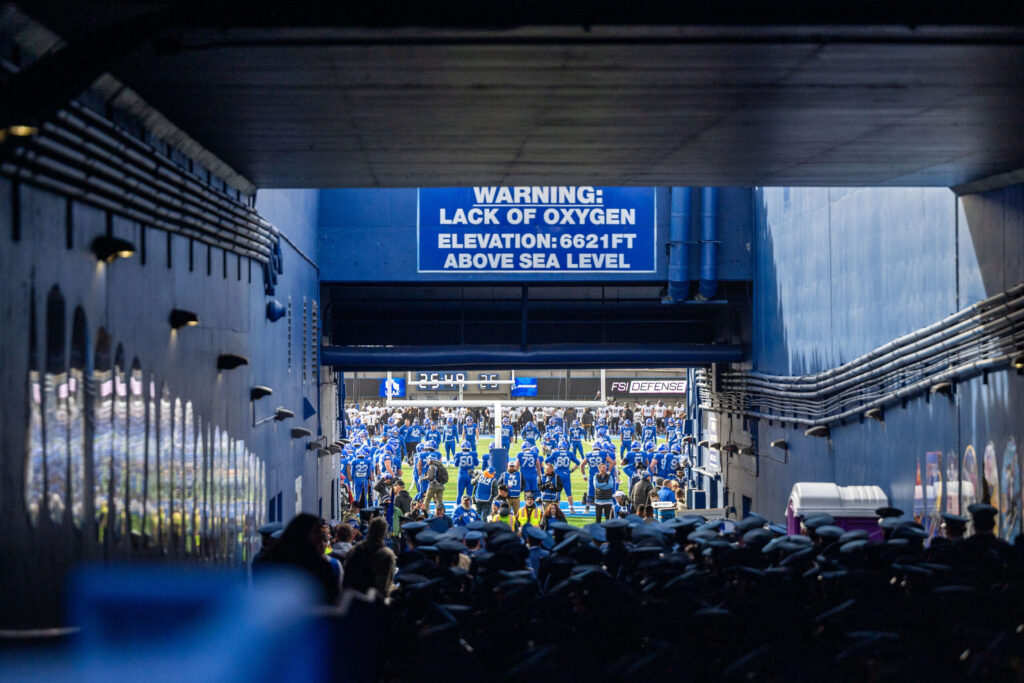
Signing Day | Air Force football 2026 recruiting list
Brent Briggeman
brent-briggeman@denvergazette.com
Updated 2 hours ago
This list of players, compiled independently by The Gazette, have signed nonbinding agreements with Air Force. The Falcons cannot release signing lists because of the appointment process. Ezekiel Alkire DB 5-11 185 Pearland, Texas Jackson Andrews P 6-0 180 Loganville, Ga. (Walnut...
Brent Briggeman
Reporter

Denver 911 wants upgrade to $24M dispatch system
Deborah Grigsby
deborah.smith@denvergazette.com
Updated 5 hours ago
After 23 years on the job and millions of calls, Denver 911 hopes to retire its aging dispatch system in favor of a new $24 million computer-aided dispatch system from Motorola. The system, sometimes referred to as CAD, documents all...

Deborah Grigsby
Reporter