







CU regent & pot purveyor Wanda James — under scrutiny | Jimmy Sengenberger

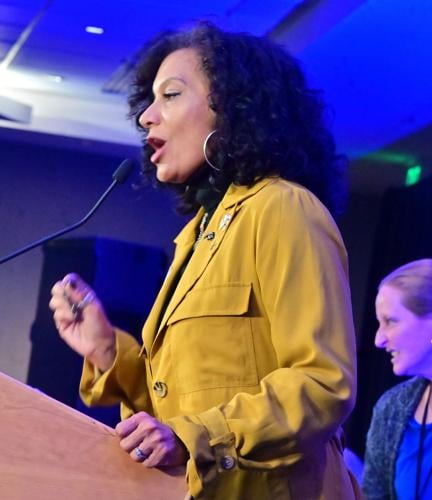
Did CU Regent and marijuana retailer Wanda James break Board of Regents policies and state law to advance her own business interests — at the expense of the institution she’s sworn to serve?
That’s the question at the heart of a legal memorandum to the board’s leadership. It regards James’ crusade to terminate a public health education program mandated by the Legislature and funded with $4 million in marijuana tax revenue.
In 2021, lawmakers directed CU’s School of Public Health to research high-potency THC and educate the public about its impact on the developing brain and mental health. CU’s researchers systematically reviewed over 60,000 scientific articles showing how today’s high-potency marijuana can affect youth under 25 and pregnant mothers. With Initium Health, the school launched the “Tea on THC” campaign to raise public awareness.
James co-founded the nation’s first Black-owned legal medical-marijuana dispensary in 2009 and later opened her recreational pot shop, Simply Pure, and she helped Govs. John Hickenlooper and Jared Polis shape state marijuana policy.
In January, the self-described “pothead” who “get(s) elevated daily” alleged on social media that the campaign featured “troublesome images” that “weaponiz(ed) Black babies, Black boys, and Black men.”
The awareness campaign merely had depicted a child in utero and at subsequent stages of life. In one series, the child was Black and in another, White.
James also claimed the campaign pushed a “false and dangerous narrative that cannabis stunts brain development,” demanding its website TeaOnTHC.org be “taken down immediately.”
Also covering the flap was the pot industry publication Green Market Report, which quoted James saying she had spoken with Polis and his team about “pulling funding…for this.” Days later, budget director Mark Ferrandino sent a letter to the Legislature’s Joint Budget Committee advocating a slate of budget cuts, including to “fully eliminate” the project’s funding — a big shift from the governor’s November request to halve it.
In a bipartisan action last month, Board of Regents Chair Callie Rennison, a Democrat, and Vice Chair Ken Montera, a Republican, requested a legal discussion of their fellow board member James’ actions. A joint email I received from them in response to my questions called it “our fiduciary responsibility.”
James initially demanded campus leadership remove the entire “racist” campaign, escalating after they only agreed to take down the specific imagery. She demanded Polis “defund the program and redirect funds” and took to social media and Westword. Faculty, staff and constituents started raising concerns. “At that point, we asked our general counsel to draft a memo outlining the facts,” Rennison and Montera said, stressing it was their decision.
University counsel Jeremy Hueth’s subsequent Feb. 28 analysis, sent to Rennison and Montera, concluded James “impaired the work of the Colorado SPH staff and contractors” through efforts to pull funding that “directly related to her business and financial interests.” Regent policy, he observed, requires exercising “independent judgment” free from financial conflicts of interest, and their fiduciary duty requires acting in the university’s best interest while staying independent of “external and internal stakeholders.”
When I emailed James for a response, her email back to me deflected — calling it a “Republican-led smear campaign” to “silence Black leadership” while attaching a letter from Black political leaders claiming she’s “being targeted” for “standing against racism.”
Rennison and Montera stressed “the Board is acting in a bipartisan manner on this issue.”
James dismissed the memo, nitpicking at semantics and technicalities. She warned me to “be very careful with your words” because it “has no legal standing” and “was not signed by any attorney.” She insisted “ZERO conflict of interest” exists from her “standing up against racist, taxpayer-funded propaganda” — boasting her advocacy “produced real results” because she’d gotten apologies and the images removed.
But even if her spin on the images had merit, why the crusade to defund the entire program?
Let’s be real: This isn’t about race — it’s about her bottom line and her political viability. Any research highlighting youth brain impacts threatens James’ financial interests and political brand as a Black marijuana trailblazer.
Hueth’s memo appropriately asks whether James violated policy by allowing her “independent judgment” to “be impaired by her own financial interest” — potentially breaking state law barring regents from using their official position to benefit their own businesses.
“This attack is not about ethics, it is about retaliation,” James claimed, telling me she only “challenge(d) systemic racism.” Projection much?
The only person retaliating is James — undercutting her own university while publicly smearing employees for presenting scientific data inconvenient to her industry.
The memo merely raises legitimate questions and suggests next steps — including possible censure, the board’s one direct remedy. That’s why Rennison and Montera forwarded it to Attorney General Phil Weiser and Colorado’s Independent Ethics Commission.
Regents can’t ignore Hueth’s legal questions. Did James violate policy by exerting “undue influence” and using her position to pressure university employees? Did she break the law through “unauthorized exercise of her official function” by threatening economic reprisal and lobbying the governor’s office — exceeding her individual regent authority?
Did she violate statute prohibiting attempts to influence public servants through deceit or threats — a class 4 felony that’s put elected officials behind bars, accounting for much of ex-Mesa County Clerk Tina Peters’ nine-year sentence?
In 2019, James’ pot shop failed an underage compliance check. She cried “racism” and escaped with a slap on the wrist. Now, Westword reports, she not only wants “the entire Tea on THC campaign pulled” — she’s demanding the funding gets redirected to “grants for marijuana business owners who qualify for social equity licenses.”
The kicker? James helped create those very licenses for Black and brown entrepreneurs. In 2020, lobbyist Samantha Walsh pushed the legislation for James’ company and advocacy group. A year later, James’ associate Hashim Coates testified for a state-backed cannabis loan program they developed with Polis’ office. Simply Pure was among its first recipients.
Let that sink in: James crafted the “social equity” system, secured funding for her business — and now wants to divert youth education dollars to benefit companies like hers.
No wonder CU’s lawyer is raising red flags. Wanda’s conflicts of interest are staring her right in the face.
Jimmy Sengenberger is an investigative journalist, public speaker, and longtime local talk-radio host. Reach Jimmy online at Jimmysengenberger.com or on X (formerly Twitter) @SengCenter.