




Fountain Creek erosion project nearing completion, but future watershed projects may hit funding roadblock
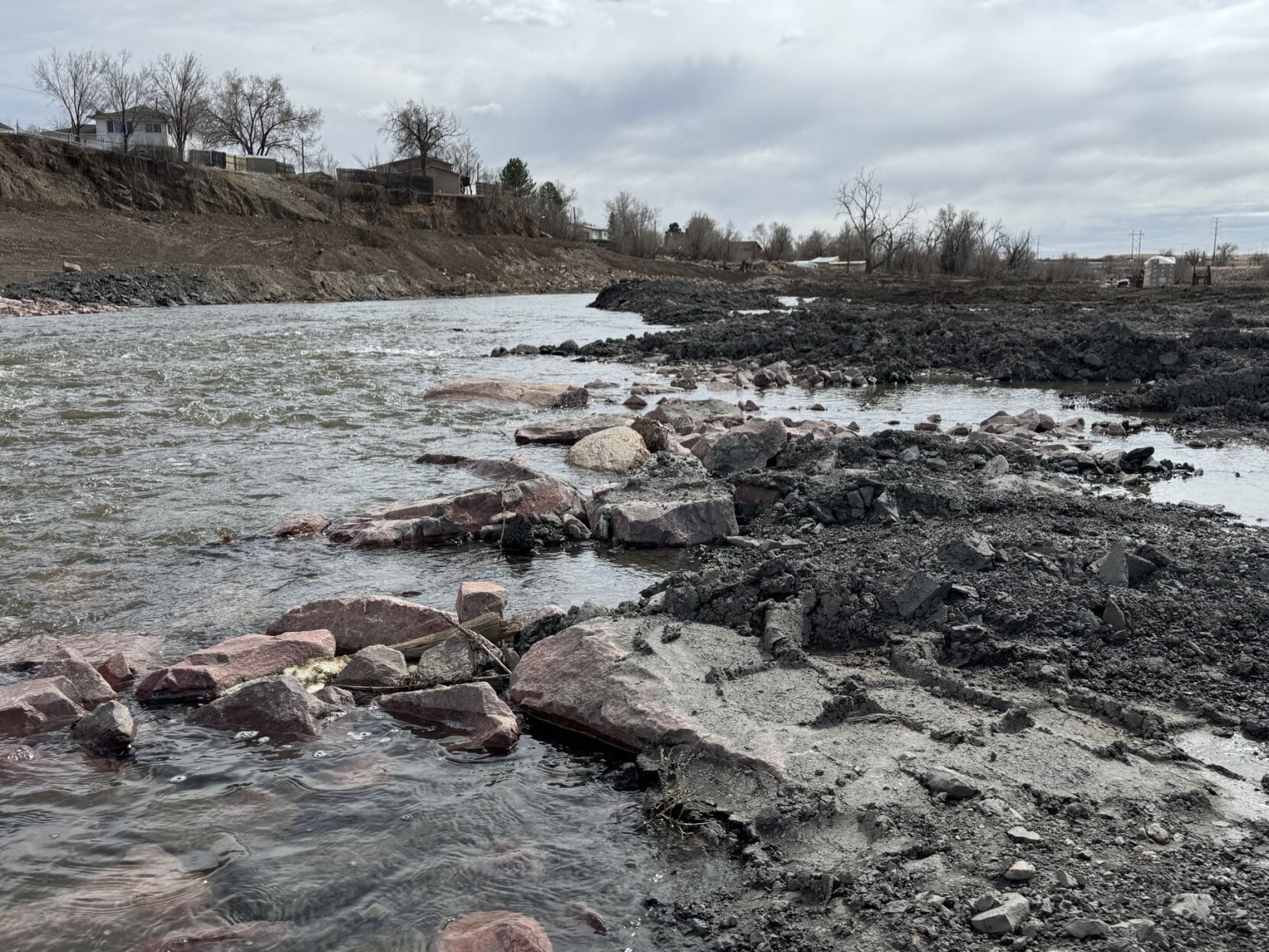
The stretch of Fountain Creek that bends sharply between Interstate 25 and Southmoor Drive south of Colorado Springs is not a place to visit — yet. Years of erosion have carved a cliff on the east side as high as 70 feet, pouring millions of tons of sediment into the beleaguered stream.
“You can’t really walk around without possibly taking a header off there,” said Fountain Creek Watershed District operations manager Steve Rodriguez at a site visit last week, pointing to a commercial building that until recently sat perched at the top of the drop off.
The cliff edge grew so precarious it endangered a part of Southmoor Drive, which has been closed since 2020. It also caused problems downstream by clogging the irrigation channels of farmers and destroying the breeding habitat of fish.
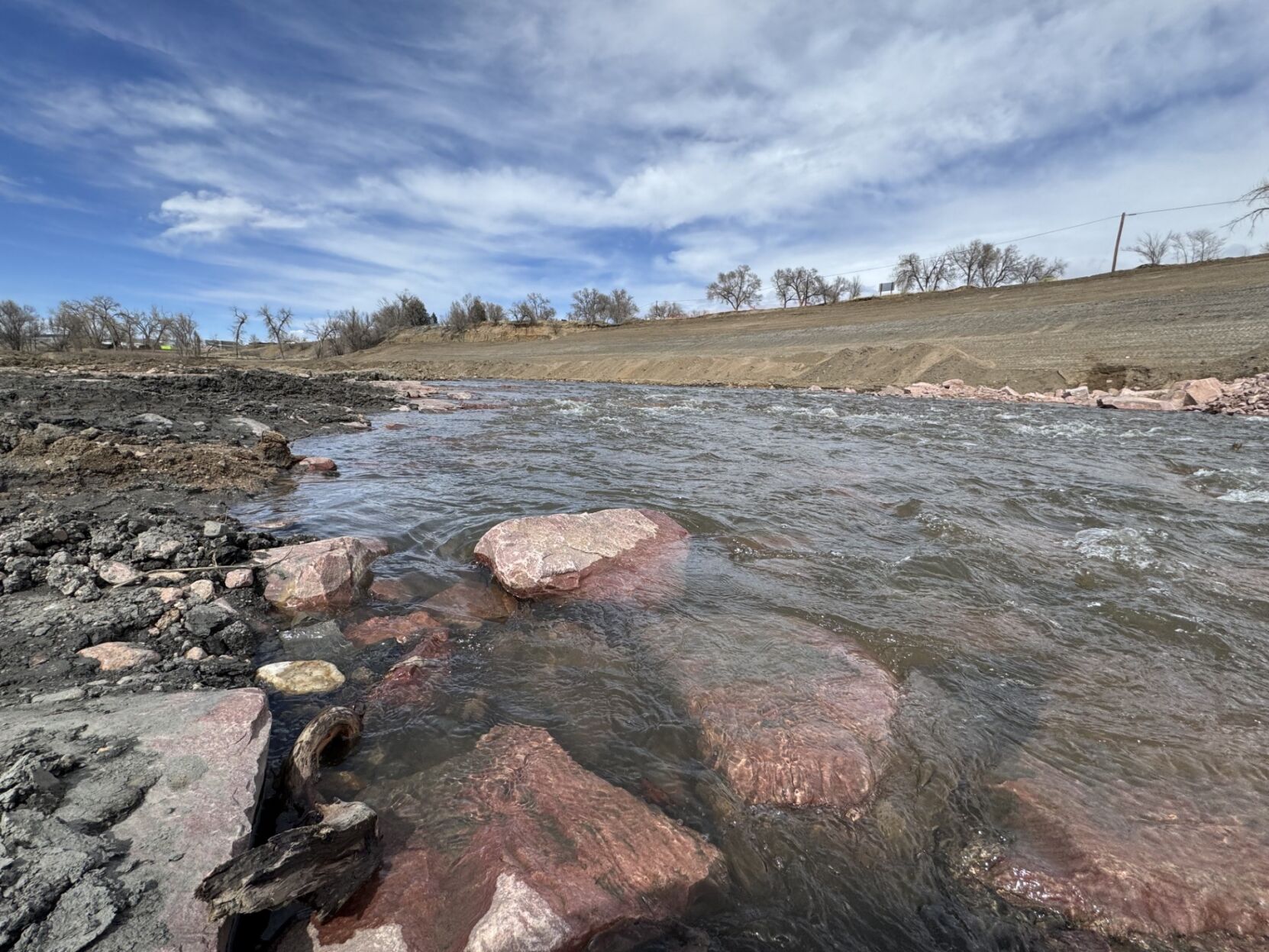
To fix the problem, the district has spent more than $6 million in the past few years on a project to soften the grade of the creek sides, moving over 130,000 cubic yards of dirt and rock to create a sloping, if not gentle, bank. The project fixes in place the naturally shifting borders of the sandy-bottomed creek, said district Executive Director Allison Schuch.
“As Fountain Creek comes down it acts like a pingpong, it goes back and forth from bank to bank,” she said.
The result is not a natural oasis. The project required removing all vegetation around the creek, which now runs in a rocky channel in the middle of the dirt slopes. Schuch said the next phase of the project is rehabbing the area for use by people and wildlife by planting tens of thousands of willows, cottonwoods and other native species. Replanting the area will also help stop erosion during flash flooding events.
Eventually, the district plans to reopen the Fountain Creek Regional trail along the creekside.
In its natural state, Fountain Creek would not likely have created such a drastic cliffside so quickly. Schuch said the creek is suffering from the long-term impacts of human development, especially in the form of the Southern Delivery System bringing water north from the Arkansas River to Colorado Springs and area communities.
That water eventually makes its way into the creek to flow back down south, which contributes to the transformation of Fountain Creek from a waterway with big ebbs and flows to one with at least some constant volume year-round.
“Fountain Creek used to be an intermittent stream within our lifetimes,” said Schuch.
Pueblo was aware of the possible impacts of the SDS and designated money to mitigate them from the project’s permit money. The $50 million generated from the permit is the bucket of money from which the Southmoor Drive creek project draws its funding.
The watershed district is limited in how it can use the permit money on Fountain Creek. First, the project must provide “a significant and not merely incidental benefit” to Pueblo County — not Colorado Springs. Second, it can only be used for new projects, not the maintenance that Schuch says is also vital to rehabilitating the watershed over time.
The Southmoor Drive project, by stopping the erosion of sediment into the soil, does provide benefits to Pueblo, said Schuch. But the long-term maintenance of the project is still unfunded. The watershed district has about two years budgeted for maintenance on all of its completed projects.
The $50 million is also quickly depleting, with about $10 million left for new projects. Schuch said that the district has identified about $1 billion in needed projects along the 75-mile Fountain Creek, which runs from Woodland Park in Teller County to join with the Arkansas in Pueblo.
“I think we’re very lacking when it comes to a long-term watershed management plan,” said Schuch.
She said that managing the watershed can make the difference in disaster scenarios, a lesson other parts of Colorado have learned the hard way. The Mile High Flood District, for example, was created to protect the Denver metro area from flood damage after the South Platte River flood of 1965, which killed eight people and caused almost $500 million in damages. The district receives a taxpayer mill levy.
More recently, a September 2013 flood caused 9 deaths and $4 billion in damages across the Front Range. The disaster prompted the creation of the Big Thompson Watershed Coalition, a nonprofit that has completed $15 million in projects around the Big Thompson River.
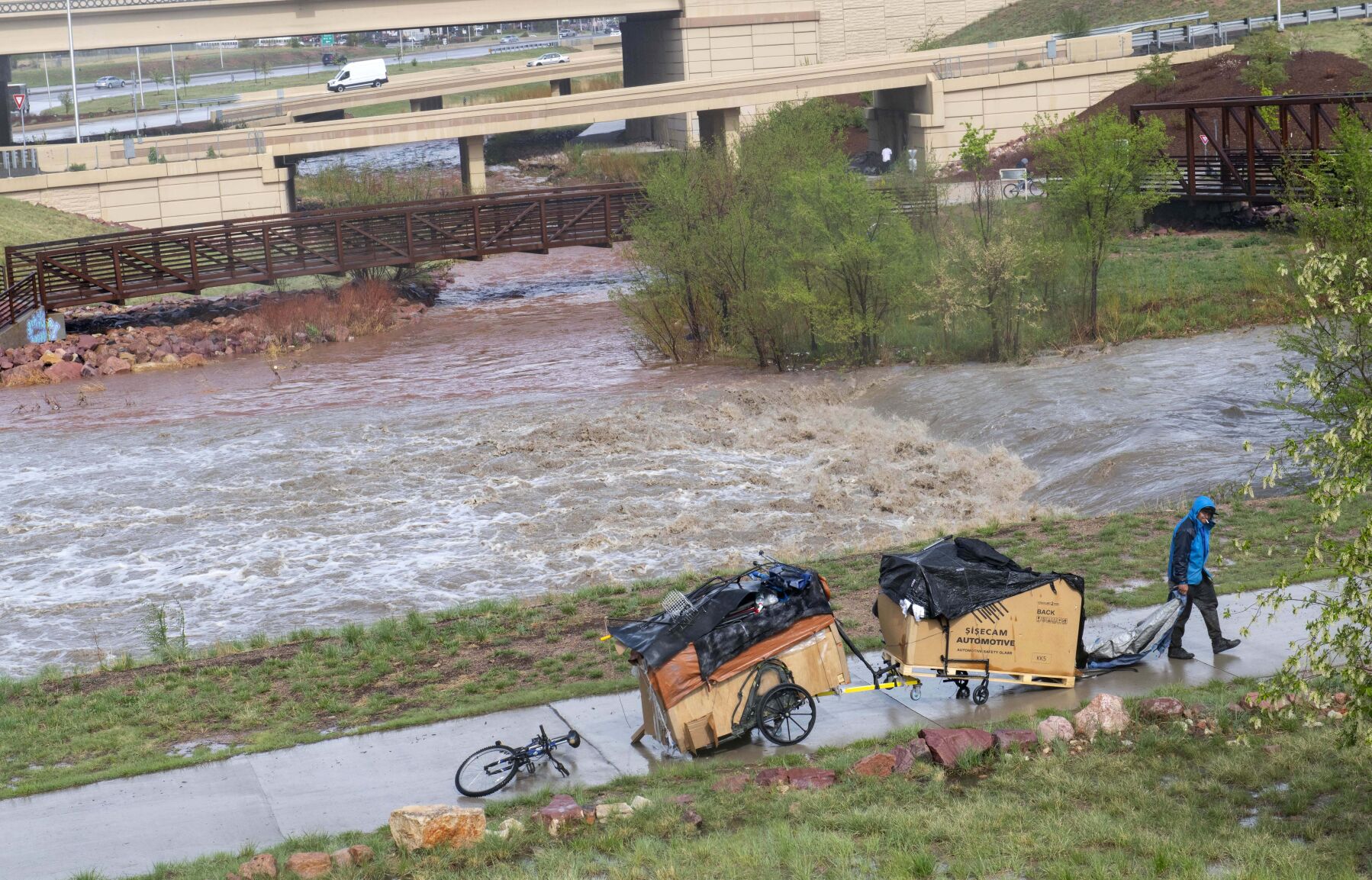
Fountain Creek — called Fontaine qui Bouille or “boiling fountain” by 19th-century French trappers and traders — can flood dramatically. It swelled beyond its borders in Manitou Springs during deadly flooding in July and August of 2013. The city later spent millions on infrastructure to prevent a similar disaster.
One of El Paso County’s fatalities in the September 2013 floods also happened in its waters.
Those events have not yet triggered the same calls to action that other waterways around the state have experienced when it comes to managing the watershed as a whole, Schuch said.
“I’m trying to be proactive and really hopeful that we can make something happen here before a catastrophic event does occur,” she said.
Get OutThere
Signup today for free and be the first to get notified on new updates.
PREV
PREVIOUS

BYU coach Will Voigt recalls time with Mike Dunlap, Metro State powerhouse
Ask Will Voigt about his time as an assistant coach at then-Metro State with Mike Dunlap, and two things spring to mind. Early mornings and winning. Oh, and Dunlap’s basement, where Voigt made his home for half the year. Voigt, who is back in Denver as an assistant coach with BYU, was on the Metro […]

Texas A&M's Wade Taylor IV looking to extend increasingly rare college career with trip to Sweet 16
There aren’t many constants in college basketball these days, but there’s been one in College Station the last four years. He goes by IV. “IV has broken nearly every record that has to do with scoring, including being the leading scorer in school history and SEC tournament history,” No. 4 Texas A&M coach Buzz Williams […]