







Aurora’s new police chief confronts Venezuelan gang Tren de Aragua
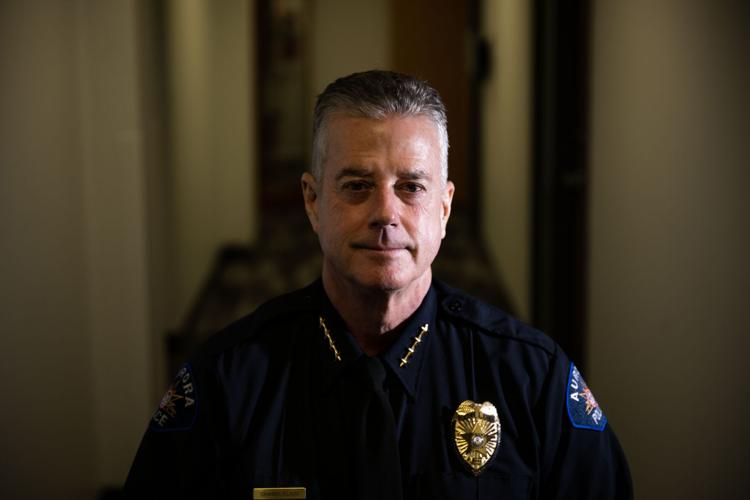
Todd Chamberlain, the new police chief for the Aurora Police Department, stands for a portrait near his office on Tuesday, Sept. 24, 2024 (Stephen Swofford, Denver Gazette)
Stephen Swofford / Denver Gazette
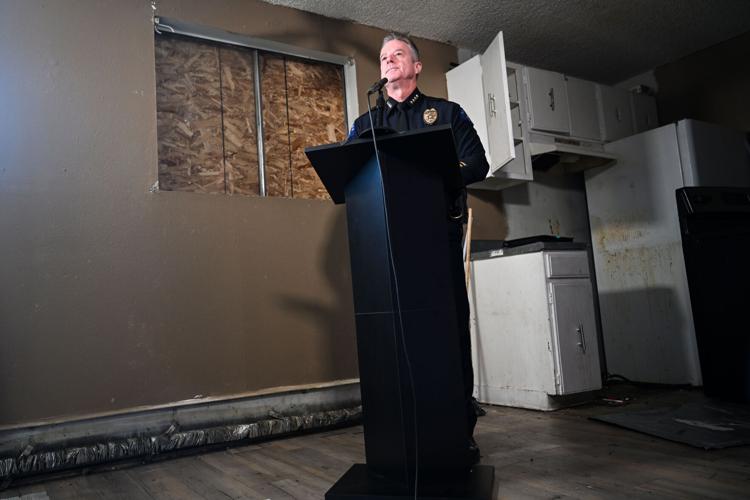


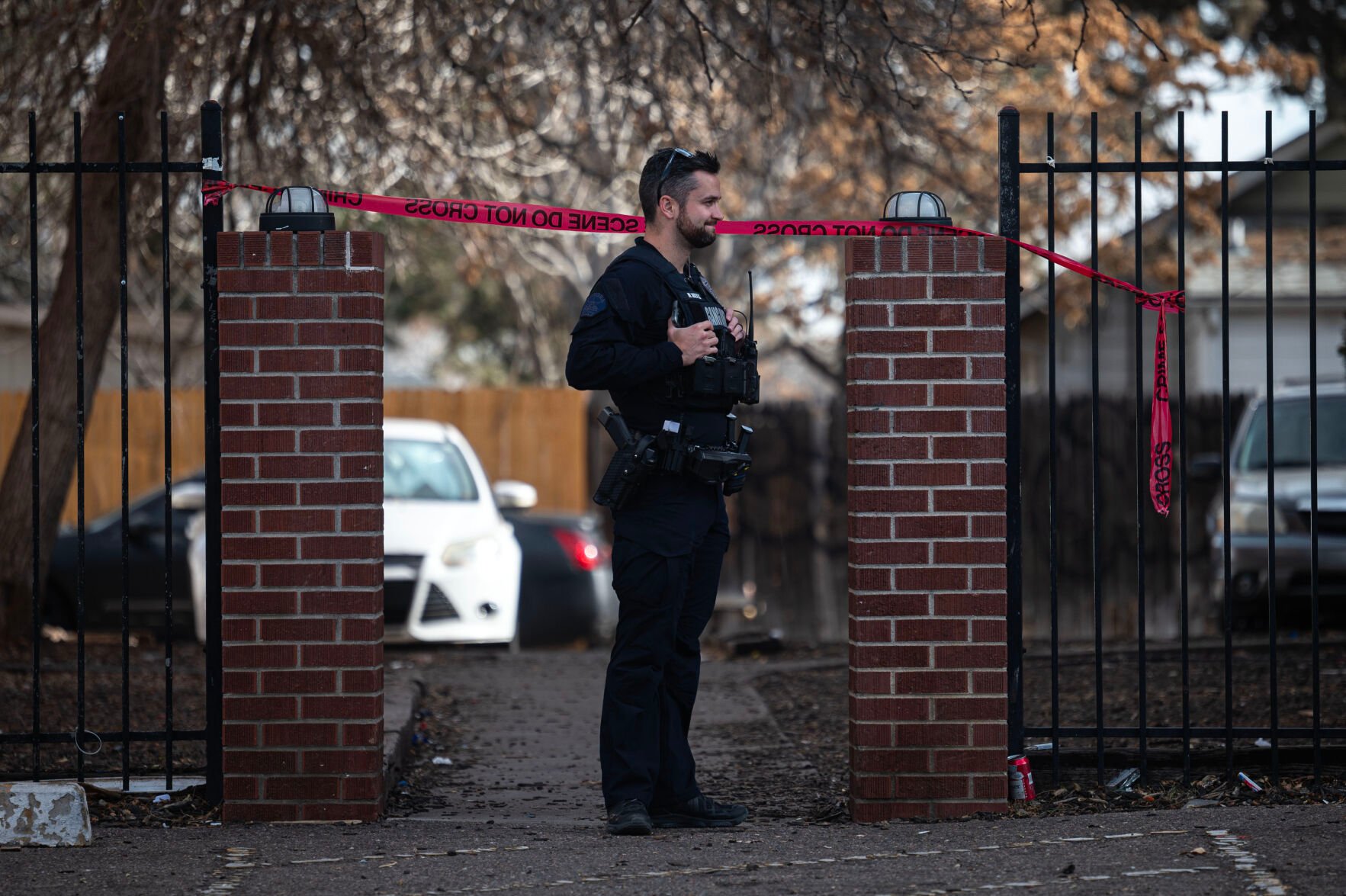
It’s been seven months since the Aurora Police Department’s new chief stepped into an agency that is grappling with a transnational gang, a city that is suffering from a public relations black eye, and a community that found itself at the center of a raging national debate over illegal immigration.
Todd Chamberlain swears he knew what he was getting into when he accepted the job as police chief, but even coming from Los Angeles, a city almost 10 times as big as Aurora, few could have imagined the national attention and scrutiny that unfolded over the last several months, particularly with the country’s new president launching “Operation Aurora,” aimed at rooting out the Venezuelan gang Tren de Aragua and rounding up the criminal elements among Colorado’s population of immigrants unlawfully staying in the U.S.
Since Chamberlain started his position, the Tren de Aragua situation in Aurora has “changed for the better — without question,” he told The Denver Gazette.
While the city is safer from TdA today, the issue hasn’t been entirely snuffed out, he said.
Just last week, the acting administrator of the U.S. Drug Enforcement Administration told Denver 7 during a visit to the city that Colorado is “ground zero for some of the most violent criminals in America” and “the command and control for TdA in the entire United States.”
Leaders in Aurora have praised Chamberlain’s leadership, saying his strategy made the city safer and his outreach to communities helped rebuild trust that was lost at the beginning of the crisis, when city officials downplayed the gang’s presence and minimized the extent of its tentacles.
Others are wary of his collaboration with federal immigration agencies, saying that it is at odds with his promises to help crime victims regardless of their immigration status.
Stepping in with ‘eyes wide open’
When he joined the department, Chamberlain said he was fully aware of what was unfolding in Aurora.
“When I stepped into it, I kind of stepped in with my eyes wide open and realized that there was a problem, but I also knew that this department was incredibly committed to addressing it and trying to rectify it,” he told The Denver Gazette.
Chamberlain came from the Los Angeles Police Department, so he is no stranger to handling gang problems.
He joined the city, he said, at “the right time at the right place for my skillset.” He wasn’t apprehensive — he needed to understand what the situation was, he said.
“I had a feeling for what it was and a process in my mind that I knew we were going to undertake to address it,” he said.
Aurora Mayor Mike Coffman agreed, saying Chamberlain’s decades of experience in Los Angeles gave him “unique” advantages when it came to understanding the culture of gangs like TdA.
While in California, Chamberlain had watched the evolution of Mara Salvatrucha, or MS-13. Originating in Los Angeles, Salvadoran immigrants formed MS-13, whose members had trained in guerilla warfare and the use of military weapons. The Justice Department said the gang — notorious for deploying violence — extorts payments from businesses, traffics stolen cars to Central America, and engages in weapon smuggling and drug distribution.
MS-13’s evolution, Chamberlain said, was “almost exactly the same as TdA.”
And if authorities fail to address TdA effectively and quickly, “they will become the next MS-13,” he said.
“I’m actually very thankful that I did step into (Aurora) because I had life experiences that I think really related to this time and this period,” he said. “I think those life experiences were really important to understanding then stopping the victimization.”
New chief walks into a ‘mess‘
Chamberlain in August took over for Interim Chief Heather Morris, who announced last year that she would not pursue the permanent position.
Morris faced a lot of criticism during her stint as interim chief, heading the department just as it was coming to light that Aurora officials knew — or strongly suspected — violent TdA activities in the city long before they publicly disclosed that information.
Initially, city officials denied the Venezuelan gang had anything to do with the closure of the Aspen Grove apartment complex closure and solely blamed “absentee” landlords for the deteriorating conditions at the complex.
Stephen Elkins, who is running for Aurora City Council in this year’s municipal election, said Chamberlain walked into a “mess” left behind by the prior leadership.
“(Chamberlain’s) predecessor, Heather, denied that there was even a problem, so he walked into a big mess,” Elkins said. “He saw the issue that was happening and he acted on it.”
Attempts to reach Morris were unsuccessful.
Aurora City Councilmember Danielle Jurinsky, who helped bring the TdA issue to light, said Chamberlain has done his best “with what was dealt to him, which is a bunch of lies and a flat-out cover-up.”
“What I see with Chief Chamberlain is he sees andhe knows the truth,” she said. “I acknowledge that he can’t come out and say there was police leadership in place that flat-out lied, but that is, in fact, the truth.”
Gianina Horton — who is also running for City Council and is a former member of the Citizen’s Advisory Council that oversees the Aurora Police Department’s consent decree — said Chamberlain’s response can’t be compared to Morris’ handing of the situation since the two operated in “different public awareness spheres.”
‘Lack of understanding’
Chamberlain said he quickly noticed when he joined the police department that there was a lack of understanding about what it was dealing with — and that exacerbated the problem.
In the beginning, Aurora’s reluctance to identify the issue as a TdA challenge was “misplaced,” and the city spent more time pushing back from the problem, instead of addressing it, because of “the lack of understanding about what they were confronted with,” the chief said.
Now, the police are in the process of repairing trust with the community, he said.
“There was a lot of the community who were frustrated, I think they felt abandoned, and in a sense, I’ll be honest with you, I think they were,” he said.
The issue also “came quick” because of “complete mismanagement” of the illegal immigration crisis into the Denver metro area, according to the police official.
Since 2022, some 43,000 immigrants — who illegally crossed the southern border with Mexico — have arrived in Denver. Early in the humanitarian crisis, Denver officials decided to assume the responsibility for the response, which has cost more than $80 million.
Train, bus, and plane tickets for immigrants to travel elsewhere suggest about half have stayed — roughly the size of the population of Golden. Officials in El Paso, Texas, the epicenter of America’s immigration crisis, said Denver’s promise of free shelter and onward travel drew the immigrants to Colorado.
“If this would have been a more systematic or controlled approach, I think there would have been more time to assimilate, both for the victims and for the community and department,” Chamberlain said. “But this was not the situation. This was a completely uncontrolled influx with no supervision.”
TdA preyed on its people
The TdA situation in Aurora presented three major problems, Chamberlain said.
First, the Denver metro area saw a “huge influx” of immigrants “in an incredibly poor, incredibly unorganized fashion.”
“They were brought into a major city, there was a large number of them, and they were placed into this community and weren’t really given any kind of guidance or direction,” Chamberlain said. “That’s a big problem because these people were suffering and being victimized by their own community.”
The second prong dealt with living conditions, he said. The apartments taken over by TdA were “run by people that were basically slumlords,” he said.
To date, at least two apartment complexes owned by CBZ Management or a subsidiary company have been shuttered — officially, the city blamed health and safety issues. The apartment management had maintained that the gang’s presence made it dangerous for staffers to care for the buildings.
Apartments taken over by TdA had limited water, plumbing, and electricity, cables pulled from outside and a variety of other problems that made for “incredibly poor” living conditions, he said.
What’s worse, TdA is a gang notorious for victimizing its people with the understanding that immigrants would be less likely to report crimes against them to the police, Chamberlain said.
“They weren’t randomly picking at people, they were picking at people they knew were weak,” he said. “They also knew that there was a high propensity that those individuals would not report to police based on their status and their belief of what law enforcement was in their own country of origin.”
Chamberlain’s strategy
When Chamberlain took over, the department’s strategy was “mass force,” he said. He scaled it back.
“I looked at it more strategically of identifying the individuals, as opposed to looking at it as everybody that in that place was problematic,” he said.
Then he honed in on collaboration, organizing daily calls between the various task forces and organizations involved to make sure everybody knew what was going on.
The strategy, he said, included near-term, mid-term, and long-term components.
The near-term strategy dealt with hot-spot policing, he said. That involved identifying the activity, who was involved, and who was a victim, then focusing specifically on that with available resources.
“It was a lot of deployment,” he said, “and a lot of tracking.”
The mid-term strategy included a place-based and heavy community outreach, he said. That focused on the specific complexes, in which TdA had extended its tentacles.
“Right away, we knew we had a problem with the management company (CBZ Management),” he said. “We knew we had a problem with the living conditions for people living there … I had officers go in there multiple times, knock every single door, pass out flyers and say, ‘Hey listen, we are here to serve you. It doesn’t matter your immigration status.”
This eventually led to the closure of the Edge at Lowry apartment complex, a decision that he said addressed both the gang’s presence there and the owners and managers, who, he said, “allowed this crisis to unfold unchecked.”
At that time, about 85 individuals lived in the complex. City officials paid $94,375 to relocate the residents, some outside of Colorado.
Long-term, Chamberlain said, the strategy is to figure out how to make sure TdA doesn’t just move around to other parts of the city.
The police have turned a corner, he said.
He quickly added: “I’m not saying that thisis conquered at all.”
Today, it’s about staying proactive and on the lookout for any activity related to the gang — and addressing it immediately.
‘I’m not doing a victory lap‘
The chief has repeatedly urged people to come forward when they’re victimized, regardless of their immigration status.
In late December, Chamberlain provided details of an alleged home invasion involving the torture and kidnapping of two people by TdA members, saying the people who reported the crime were immigrants staying unlawfully in the U.S.
At the same time, he said the department is going to support any federal organization, such as U.S. Immigration and Customs Enforcement, coming into the city to apprehend criminals.
He emphasized that immigration enforcement is not under the purview of a municipal law enforcement agency like Aurora.
“At the same time, I’m going to support … anybody that is involved with the apprehension or in connection to curtailing the violent victimization of community members,” he said.
At the end of the day, immigration enforcement is “warranted,” he said because there are “people who didn’t come here with the right intentions.”
“That is the big question,” Chamberlain said about the extent of TdA activity in Aurora now.
“We definitely, without question, got our arms around it. We understand it. We know what they are and how they operate, and that has been incredibly beneficial,” he said. “But I’m not doing a victory lap and saying we have it all under control.”
TdA members generally commit crimes that go under the radar, such as sex trafficking, narcotics, andextortion — “things that aren’t out on the streets,” he said.
“We have to not let off the accelerator on our review and analysis of what’s occurring,” he said. “We have definitely turned a corner and I think Aurora is 100% safer than it was in September.
He added: “But now it’s the due diligence. It’s the awareness to continually assess that it doesn’t pop up somewhere else. If it does, we’re going to get incredibly proactive with it.”


Colorado breweries win top awards in beer competition
Piper Russell
piper.russell@outtherecolorado.com
Updated 15 hours ago
The Colorado Brewers Guild has recently announced the winners of the annual Colorado Brewers Cup, which “showcases the exceptional quality of craft beer in Colorado.” Glenwood Canyon Brewing won small brewery of the year, which includes brewers with under 675...

Piper Russell
Reporter

Suspect arrested in hit-and-run that killed teen
Kyla Pearce
kyla-pearce@denvergazette.com
Updated 14 hours ago
Thornton police arrested a suspect in a hit-and-run crash that killed a 14-year-old boy late Saturday night, police said Sunday afternoon. The crash happened just before 9:45 p.m. Saturday near the intersection of Thornton Parkway and Huron Street, just west...
Kyla Pearce
Reporter

‘Soul Power’: Long live the ABA
John Moore
john.moore@denvergazette.com
Updated 20 hours ago
Fifty years later, new documentary series takes nostalgic look at how the rebel American Basketball Association changed the NBA – and the world Three-point ABA trivia question: What do rapper-actor Common and Grammy Award-winning singer India.Arie have in common? Answer: Their...

John Moore
Reporter
Denver archdiocese announces new archbishop James Golka
Michael Braithwaite
michael.braithwaite@gazette.com
Updated 2 days ago
The Denver archdiocese announced the appointment of its next archbishop Saturday morning. James Golka, 59, who received the appointment from Pope Leo XIV, will make a move up from Colorado Springs, where he has been serving as the third bishop...

Michael Braithwaite
Reporter

PHOTOS: Goldens in Golden
Stephen Swofford
stephen-swofford@denvergazette.com
Updated 2 days ago

Stephen Swofford
Reporter
Deaths by suicide decrease at Royal Gorge Bridge following safety upgrades
Debbie Kelley
debbie-kelley@denvergazette.com
Updated 2 days ago
CAÑON CITY – Jay Valusek stared at “that damned railing” for hours that bled into days after his beloved 28-year-old daughter jumped in 2018 from atop the metal edge of the Royal Gorge Bridge to her death 956 feet below....

Debbie Kelley
Reporter

9 great Colorado story lines to follow in the Olympics | Vince Bzdek
Vince Bzdek
vince-bzdek@denvergazette.com
Updated 2 days ago
The Broncos may not have quite made it to the Super Bowl, but you know what, there’s another Super Bowl this weekend for a certain Colorado team. Boasting 33 athletes plus one alternate, Colorado has the most athletes of any...

Vince Bzdek
Reporter

Rich Cowden abruptly exits top job at Aurora Fox
John Moore
john.moore@denvergazette.com
Updated 2 days ago
Executive producer of city-owned theater organization says ‘it was clear it was in the best interest of the theater.’ Rich Cowden has abruptly left his position as executive producer of the city-owned Aurora Fox Arts Center after just 2½ years....
John Moore
Reporter

Aurora City Council to discuss tobacco retail license to address youth access
Kyla Pearce
kyla-pearce@denvergazette.com
Updated 3 days ago
On Monday night, Aurora City Council members will discuss a possible retail license that would limit and impose certain requirements on businesses that sell tobacco and psychoactive products. The intent of the license is to prevent youth access to such...
Kyla Pearce
Reporter
Record-low snowpack persists in Colorado, but two waves of snow should hit in upcoming days
Spencer McKee
spencer@outtherecolorado.com
Updated 3 days ago
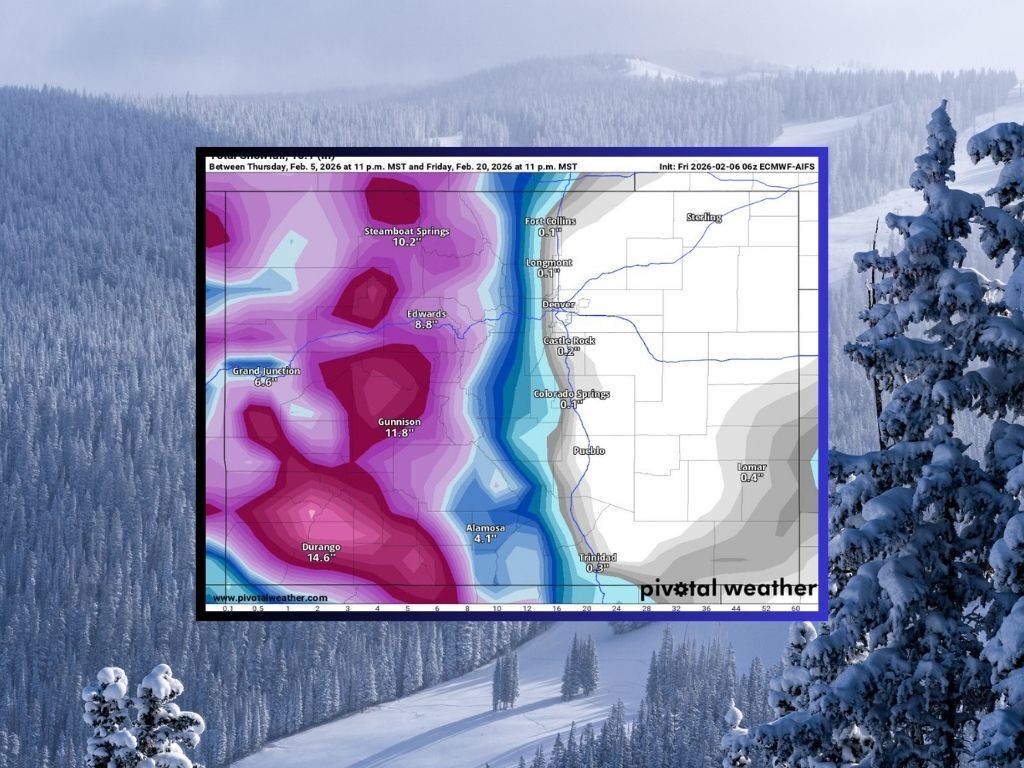
Colorado’s snowpack is the lowest it has ever been on Feb. 6 since tracking started in 1987, setting a new record-low for the 25th day in a row. That said, skiers and snowboarders can look forward to two winter storms...

Spencer McKee
Reporter
PREV
PREVIOUS

Aurora councilmember Steve Sundberg announces re-election campaign
Aurora City Councilmember Steve Sundberg announced his campaign for re-election to Ward II, joining a large crowd of candidates for five council seats that will go to the November ballot. Sundberg, a business owner who has represented Ward II since 2021, announced his campaign in a news release, saying he wants to keep his focus […]

Aurora sales tax revenue flattens out, officials 'concerned' as budget shortfall looms
Sales tax revenue in Aurora has remained flat over the last two years as the city heads toward a budget deficit in 2026, raising concerns from lawmakers and budget officials. Robert Oliva with Aurora’s Finance and Budget Department presented numbers in sales tax revenue over several years to City Council members during a planning and […]