




Brian Vogt grew Denver Botanic Gardens and cultivated community
DBG CEO leaves a fruitful legacy after 17 years of leadership
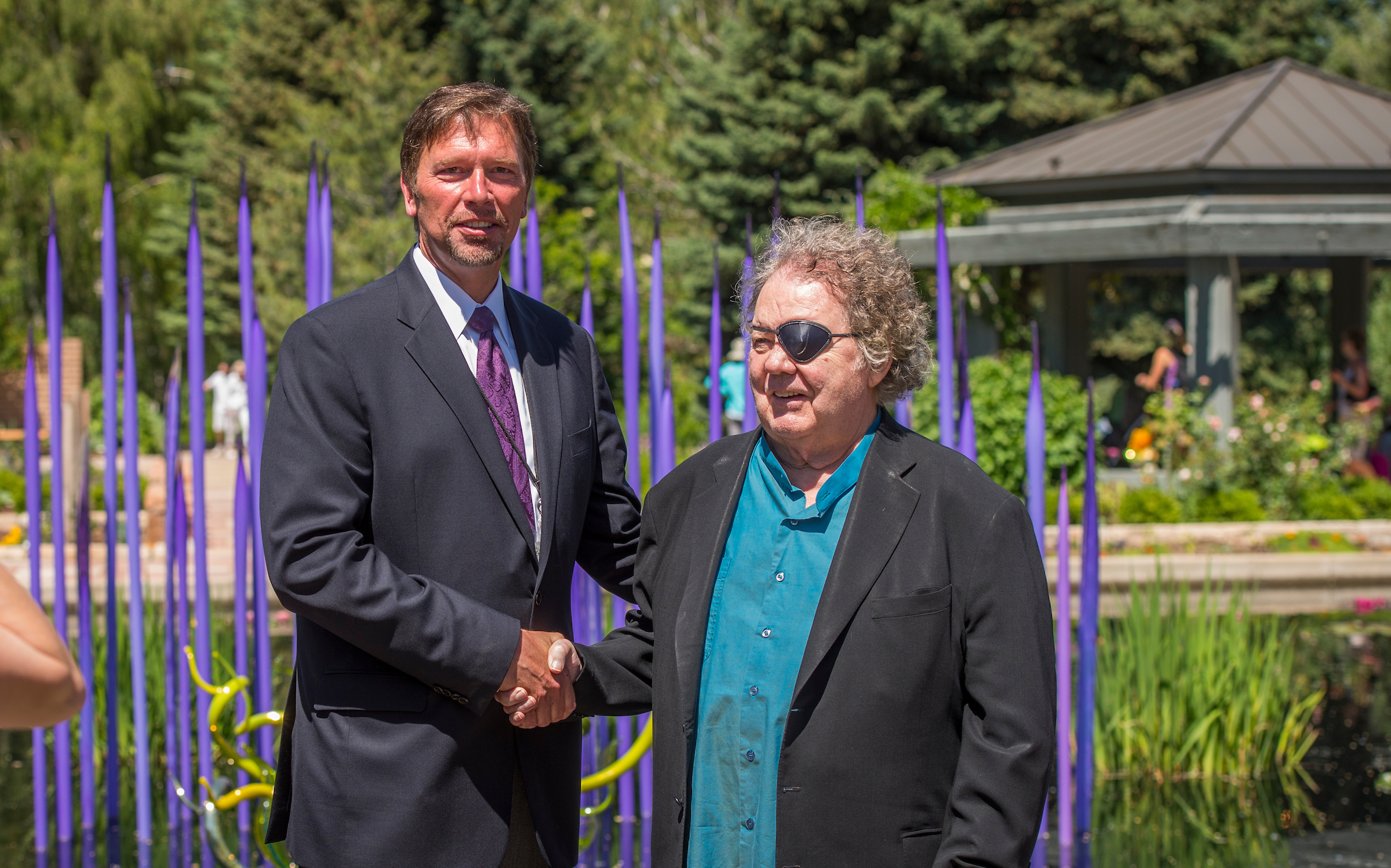
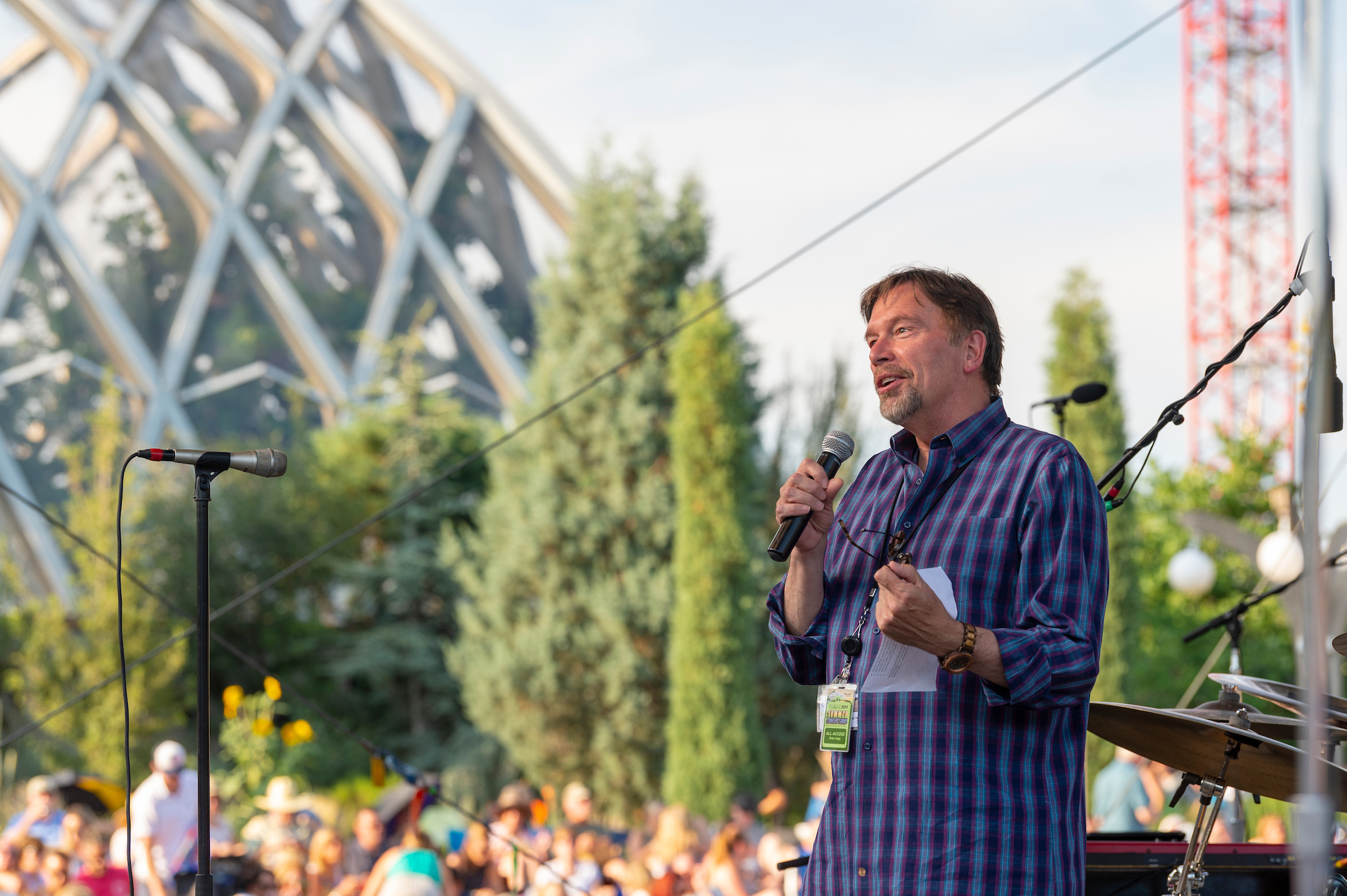
As spring brings the Denver Botanic Gardens back to life, the staff and community mourn the death of DBG’s widely revered CEO Brian Vogt, who died on Tuesday from complications of cancer. He was 66.
A towering man in stature and in spirit, Vogt stood 6-feet, 5-inches tall. If he were a plant, he might have been a sunflower — tall with a bright, cheerful disposition. And like a sunflower, Vogt leaned into the light.
In a one-on-one interview in 2019, Vogt said: “We’ve created DBG through respect and ascension — a process about the lifting of the human spirit. This natural world we live in: How do we think of it in loftier terms? How do we build toward that? Here, we appeal to our sense of grace and humility and service and respect: That’s what inspires me, and that’s what we teach here by people interacting with gardens.”
Vogt’s extraordinary legacy will long flourish at DBG’s York Street campus, Chatfield Farms in Littleton and Mount Goliath in Arapaho National Forest — sites cultivated through Vogt’s inspired and inspiring leadership since 2007. A homegrown Denver native born June 10, 1958, Vogt grew into his role as the taproot, the stem and the seed head of DBG, though far too humble to consider himself as such. His ever-positive presence, his enthusiastic intelligence, business acumen and compassionate interpersonal skills helped DBG blossom into one of the Mile High City’s leading tourist attractions and a world-class botanical institution.
“Brian was an amazing friend,” said a former DBG board chairman Michael Imhoff. “He would spend time and share his wisdom with anyone who asked for help. That is part of what made him one of the best servant leaders in Denver and nationally.”
“Brian lived a life of gratitude and wanted to see all boats rise, all communities be included and successful. He loved the amazing staff, volunteers and donors at the gardens. He transformed the culture there from scarcity to abundance, from stagnation to innovation. Any idea to improve was worth exploring,” Imhoff added. “Brian was taken from us too early. There was more he wanted to do for the gardens and for this world. I hope all those he touched carry that torch for him.”
One of the longest tenured DBG staff members, Panayoti Kelaidis, senior curator and director of outreach, described Vogt in a previous interview: “Brian is capable of bold action and possesses a great vision. At the same time, he’s incredibly sensitive and attuned to thoughts and feelings of everyone on staff. He’s the most powerful listener I’ve ever known.”
Vogt led DBG’s 10-year development plan
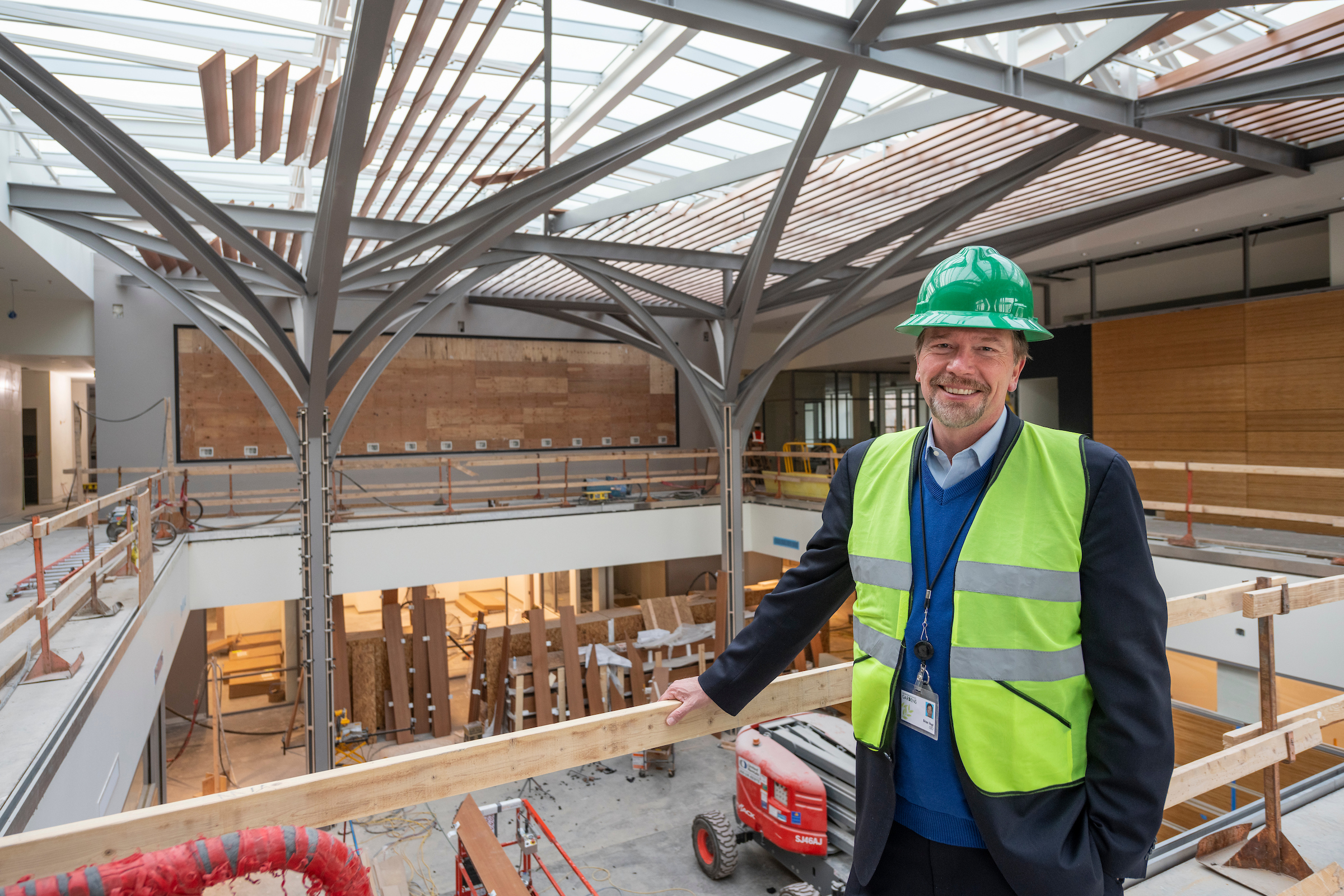
Vogt listened to the community and the community listened to Vogt. In various capacities, he contributed 40 years of leadership in Colorado. After assuming his DBG position, Vogt didn’t let the grass grow under his feet. Bolstered by a bond initiative, he seeded an ambitious 10-year master development plan and spearheaded 50 construction projects. When completed, the plan accomplished capital improvements and endowment support totaling more than $115 million. Vogt closely oversaw the building of the Bonfils-Stanton Visitor Center, the Greenhouse Complex, the Science Pyramid, the Ellipse Garden, the Hive Garden Bistro and more.
In an interview as we looked back at the comprehensive rebranding of DBG, Vogt said with a tone of incredulity: “We tore everything up in 2008, and it looked like a war zone. All at the same time, we did the parking structure and Mordecai Children’s Garden, the visitor’s center, the core infrastructure loop, Marnie’s Pavilion, the green roof, the whole plaza outside the Morrison Center. We made everything ADA accessible. We were parking people in a gravel lot north of the site of the new building. We were checking people in with a portable shed, and people kept streaming in.”
In 2014, when DBG staged the luminous exhibition of glass art by Dale Chihuly, Denver led the continent as the most visited public garden, surpassing even the National Botanical Gardens in Washington, D.C.
Vogt understood the importance of consultation and collaboration.
“For our master plan development, we made a big push in the very beginning to talk to trustees, neighbors, staff, volunteers, donors,” said Vogt, the rare human species who was both a dreamer and a doer.
“Whenever we have a new board chair, I always ask, ‘What is your dream?,” he said.
So I asked Vogt: “What is your dream?“
“To make a continental shift in our culture and broaden the gardens to help create that shift,” he answered.
Vogt’s sense of inclusiveness seemed as expansive and varied as the Plant Kingdom. He graciously interacted with people from all walks of life, from major donors to any one of the thousands of school kids on field trips. He led a staff of 321 at several locations, 2,000 volunteers and an esteemed board of trustees. He oversaw 700 adult classes and a variety of seasonal celebrations.
“Our intention is by having all the varied, dynamic programming we can appeal to the usual suspects who are already garden lovers and plant mommies and daddies, but also connect with people who don’t understand the natural world at all and have never grown a plant.”
More recently Vogt launched the master plan now taking root at Chatfield Farms, where phase one of construction is nearly complete on a new welcome center, infrastructure for technology and accessibility, a market square and restrooms by the DBG Corn Maze.
Vogt cultivated a flourishing institutional culture
In 2010, in a one-on-one interview in his handsome office in what had been the main bedroom of the historic mansion on the York Street campus, Vogt spoke excitedly about the Henry Moore sculpture show he was about to show me. But the marquee art exhibit wasn’t the only feather in Vogt’s cap at the time. Under his leadership, DBG had flourished with more employees, more buildings, more community outreach programs and services, more educational and cultural classes, more members, visitors and revenues, more endowments and net assets. I asked him his secret to his success.
“I think the word is ‘alignment,’” said Vogt, who understood DBG as a singular institution amalgamating other cultural branches.
“We have a library, an art collection, musical performances, scientific collections, living collections, beauty and contemplation,” he said. “We have a history of Denver’s legendary architects: the Waring House by Jacques Benedict, our conservatory by Victor Hornbein and Ed White Jr, our parking structure by David Owen Tryba. It’s a wonderful celebration of all the interactions plants have in our lives.”
Vogt got his hands dirty
Asked about the plants in his personal life and whether he got his hands dirty, Vogt emphasized he had enjoyed gardening since boyhood when his parents assigned him yardwork. He described his own yard: “I have a rock garden with ice plants, penstemons, mystery plants — a lot of volunteers. I have a creek bed with ornamental grasses and large boulders. I have two shrubs known as witch’s brooms. My garden is a fan page for DBG plants purchased at our annual plant sale. But my favorite is a 20-feet tall columnar white pine the staff gave me on my first anniversary.”
Cultivating a flourishing institutional culture
Even above the many concerts and art exhibits and the enchanting gardens, Vogt cherished his staff. I once asked him the best aspect of his job.
“The people,” he said. “I love these people. I don’t think they know, even though I try to express how inspired I am by them, but I don’t know if they get it.”
His eyes teared.
“I get choked up a lot,” he said. “Maybe it’s the old stereotype in my head that as a leader, my job is to build everybody’s morale and make sure they’re raising the bar and thinking bigger every year. I find this group lifts each other, as well, and protects our culture so powerfully.”
Like a gardener devotedly tending plants, Vogt nurtured his staff.
“If they tell me, ‘I want to do this’ or ask ‘What if we do that?’ my job is to find them support they need to live their dream. It’s an incredible privilege and honor, and these people are raising the bar all the time,” he said.
“Ideas pay off here. Not every idea gets tackled, but we tackle a lot. Meaningful work is my prime motivator. Also joyful work,” he said. “For people who work here, what they do every day matters.”
We discussed gardening as a spiritual endeavor, and veered into the topic of religion: “I studied Classics — Classical Antiquity and Egyptology — and I am always interested in why people believe what they believe and how ritual gets us there,” he said. “I have my own core beliefs, and I’m respectful of those of others. I’m not trying to find holes or pitfalls.”
A weather man, a conservationist and a champion of science
One pitfall for Vogt, a factor far out of his control, was Denver’s weather — a steppe climate typified by significant storms. Vogt was an engaging conversationalist, and even when he spoke of the weather, he was remarkable. I once interviewed him after a severe storm in Denver.
“I was more depressed than the horticultural staff. I was sanguine about it,” he confessed, “but they work in a world where that sort of thing happens. We’ve had devastating losses. We’ve had plant cells full of water that exploded. We had a 40-feet tall twisted-willow that just died, and we had to cut it down. It was really devastating. We’ve had hailstorms that left plants like a giant salad bowl. We’ve had rare and unpredictable temperature extremes go from 60 degrees to minus seven.”
“I don’t think anything happening today is by accident. We created all of this. We need to sing a better song. It begins with respect. Natural teaches you have you to have respect. If you don’t, you pay a price.”
Vogt recognized interconnections of the natural world, the web of life and death. He mentioned the decrease in the fox population that led to the proliferation of rabbits that teased the two beagles he had at the time.
Though Vogt often expressed appreciation for the beauty of DBG, he also understood the mission as far beyond the magnificent spring bulb display or the Blossoms of Lights extravaganza during the winter. He had a green thumb and a green vision and lead the city and the state to embrace landscape design better suited to the semi-arid environment.
“We’re doing activist work in the community shifting the aesthetic for public places, teaching people to see beauty in a new way and learn why it’s important. We can have landscapes that look like Colorado, but don’t require as much irrigation or maintenance and don’t use chemicals that jeopardize the lives of our public work staff,” he said.
“We’re introducing a palette of plants and design ideas that cities and counties can take and plant wonderful native and adaptive plants. We need people to connect to the natural world and we’re helping people do that in a natural way.”
DBG’s Director of Research and Conservation, Jennifer Neale said: “Brian raised the profile of science and conservation work at the gardens throughout his tenure. It was Brian’s leadership and vision that led to both the creation of the Science Pyramid and the integration of science and art in the Freyer – Newman Center. Not only did Brian bring our research activities to the public through these spaces, but he supported the growth of our programs from local botanical surveys to engagement in global biodiversity conservation.”
Vogt spoke glowingly of “the pageantry of the gardens on York Street” and equally passionately about a program involving veterans growing vegetables at Chatfield Farms.
“One of our most successful outreach efforts started with a kernel of an idea,” Vogt said. “When you’re involved in affecting people’s lives in positive ways, you want to stay and do more.”
A down-to-earth intellectual
Vogt was a multi-disciplinary intellectual, yet down to earth. I once asked him what he was reading, and he rattled off a list of varied book nonfiction titles spanning environmental science to fine art.
Lisa M.W. Eldred serves as DBG’s director of exhibitions, art and learning engagement and as head curator of art. Together with Vogt, she planned and executed major art shows at DBG including — in addition to Moore and Chihuly — the famous American kinetic sculptor Alexander Calder and the Chapungu stone sculptures from Africa.
“It is in large part because of Brian’s vision that the arts have become integral to experiences and learning at the gardens. He saw the unique opportunity to integrate art with science to connect people to each other and to the natural world,” Eldred said. “He championed transdisciplinary curiosity and the Freyer – Newman Center for Science, Art & Education stands as testament to this vision of inquiry.”
A 40-year career of community service
Vogt contributed four decades of community leadership. In one interview, I asked Vogt whether his career had followed the path he envisioned.
“I never planned my career. I never anticipated this career so I must be the luckiest person on Earth,” he said. “I’m most attracted to teams of people who want to make the world a better place.”
Vogt did just that.
For his contributions, Vogt received numerous honors including, in 2019, The Cynthia Pratt Laughlin Medal — one of the highest awards bestowed by The Garden Club of America.
In a interview for a University of Colorado Boulder publication about alumnus, Vogt was quoted: “When I’m at the gardens, I’m not thinking about the five-year plan. I’m thinking about the 50-year plan or the 100-year plan, the 150-year plan — what makes an institution endure. Studying the classics tends to foster appreciation for the long view. You realize, and it’s very humbling, that we’re not the be-all and end-all.”
Vogt is survived by by his sister, Teri Bray; brother-in-law, Brett Bray; niece, Eliann Carr; nephew, Brandon Bray and great-nephews, Charlie and Michael Carr. He was preceded in death by his parents, Dorothy and Roy Vogt, both elected local officials: his father a sheriff in the 1960s, his mother a treasurer in the early 1980s.
No information was yet available about a memorial service or where memorial contributions may be sent. Meanwhile, all who knew him hold close the example of Vogt’s fruitful life — forever lofty, forever, in the best sense of the word, grounded.
Get OutThere
Signup today for free and be the first to get notified on new updates.
PREV
PREVIOUS

Analyzing the 2025 Rockies season: Hope and concerns | 2025 Rockies preview
What should concern Rockies fans with the 2025 club? What areas provide hope after consecutive 100-plus loss seasons? Here are three things to watch on each side of the worry and hope spectrum: Worries Corner outfield: Last season, Colorado’s left fielders ranked 29th in OPS (on-base percentage plus slugging percentage) at .623 while right fielders […]
North Korea building land bridge with Russia to combat international sanctions
Pyongyang and the Kremlin are working together on building a land bridge between North Korea and Russia to increase transnational cooperation. Russian Ambassador to North Korea Alexander Matsegora announced the project to the Russian state media this week. “The parties are carrying out preparatory work, finalizing design documentation, forming construction crews and columns of equipment,” […]