Q&A with Thomas Mason | Director of Los Alamos National Laboratory talks about nuclear modernization
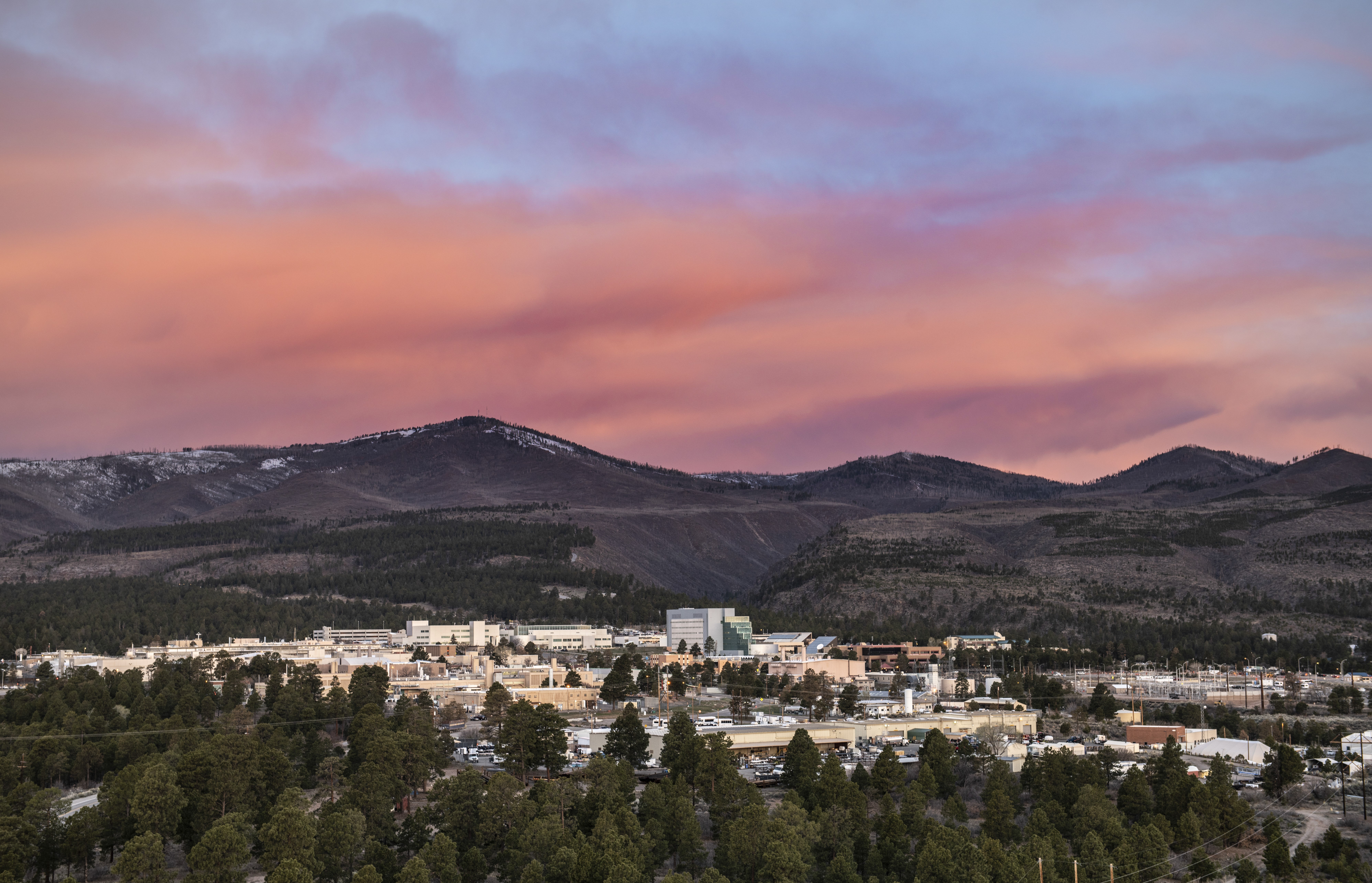
At the Nuclear Deterrence Summit in Washington, D.C., in January, Denver Gazette correspondent Jim Carrier sat down with Thomas Mason, the director of the Los Alamos National Laboratory. A native of Nova Scotia, Mason, 60, a PhD condensed-matter physicist, was appointed in 2018 after 10 years of directing the Oak Ridge National Laboratory in Tennessee.
These excerpts from their conversation were edited for space and clarity.
The Denver Gazette: Way back in 1995, on the 50th anniversary of the bomb, the lab really didn’t know what to do with itself.
Thomas Mason: At the end of the Cold War, there was a lot of hope. The Soviet Union is collapsed. Maybe we’re transitioning to a world where there will be less need for the iron fist of deterrence, if you will. There was hope for a peace dividend.
It was only, in the last 10 or 15 years that things started to shift again. China abandoned its peaceful rise policy and began to shift to a more kind of aggressive posture and a significant military build up. And, of course, Russia seeking to, you know, reestablish some version of Peter the Great or something, with military action in peripheral countries … Unfortunately, we find ourselves in a situation where deterrence is still important.
DG: When did the ($1.7 trillion) nuclear modernization start?
Mason: The modernization program that’s underway now was really conceived when the New START Treaty was being ratified in about 2010, and that kind of set out a path to modernize the infrastructure and modernize the deterrent. A treaty has a high bar for ratification in the Senate. And that meant there had to be an agreement reached that was bipartisan to get done. You had people who felt it was really important to have an arms control treaty ratified, and people who felt like, if we’re going to limit the numbers (of weapons) we have to make sure that the ones we have are safe, effective and reliable. And given the fact that the deterrent was largely built in the ’80s, it was reaching a point where we’re going to have to modernize the weapons. And in order to modernize the weapons, we were going to have to modernize the infrastructure to do the weapons. In 2014 Russia invaded Ukraine. The commitment to modernization, I think, got reinforced by that geopolitical point.
DG: But who’s the one that’s compiling this dossier and making these arguments that says this stuff is wearing out, that we’ve got to do something about that.
Mason: We have a responsibility for the nuclear explosives packages, and we have an annual assessment process. We’re pulling parts out of the stockpile and taking them apart and subjecting them to all kinds of tests and valuations. And if we find something that’s starting to exhibit signs of aging, then that would be why we do life extension programs. The first major life extension program was the W-76 (First deployed in1978 in Trident submarine missiles). We take them back to Pantex, take them apart. Some parts we can reuse. Other parts need to be replaced. We reassemble that warhead, which is now called the W76-1 which has a mixture of legacy components that are still in good shape and new components that need to be replaced. Send it back out. That was completed in 2019. We had a celebration in January of the completion of the final production unit of the B61-12 — another one of these life extension programs. B61s (Gravity bomb first deployed in 1966, the oldest design in the stockpile) were pulled out of the stockpile, brought back to Pantex, disassembled. Some parts were suitable for reuse. Other things were replaced. There was also an opportunity, in that case, to improve the accuracy with the tail kit, so-called JDAMs, (a guidance kit that converts dumb bombs into precision-guided munitions). The W88, which is another Navy system is undergoing what’s called a major alteration that’s nearing completion. There are some components that have aged out, that are being replaced. There are things that we can do to improve safety or surety. It’s still fundamentally the same warhead but it’s now got an extended life because of that intervention.
DG: It’s clear to me that the lab is now again the center of weapons production.
Mason: I would say not so much. Most of the production actually happens at the plants, Kansas City, Pantex, Y-12. We have a production mission for pits for that one specific component (W87-1) but our primary role is actually what’s called the design agency. We’re responsible for the design of the nuclear explosive packages, and then we work with the production sites to realize those designs.
DG: You have inherited the mantle of Oppenheimer as director of the lab. Does that weigh on you? Do you think of it that way?
Mason: I’m the 12th director, and Oppenheimer was the first one. So yes, you know that’s that’s true. It’s interesting, though, all the DOE labs, all 17 of them, have somewhat different personalities as institutions. And I think that the personality of Los Alamos owes a lot to Oppenheimer. As the first director, he had to almost, in a way, invent the job of being a lab director. And, you know, I think the tradition of Los Alamos — a fierce dedication to following the science all the way to its ultimate conclusion, or questioning things and questioning authority — that’s sort of wired into people today, remarkably, over eighty years later.
DG: You feel that?
Mason: Absolutely.
DG: In rereading the history of the Manhattan Project, I sense that the bomb was created basically by scientist — philosophers. Do you share that? Do you have a sense of history and philosophy about your role, the greater role?
Mason: I’ve always had a strong interest in history. I don’t do a lot of scientific papers these days, but my sideline is revisiting some of the history of that era. Anyone who’s working in this field, you think a lot of about the consequences of what you’re doing, and you know what it means for safety of the country and future of humanity.
DG: When you come to this (deterrence) meeting, you essentially give us an almost mechanical thing: we’re doing this and that, numbers, and all the stuff you do as an administrator, as opposed to a science philosopher. Is that a fair assessment?
Mason: At the end of the day in the Manhattan Project the goal was to build the bomb to accelerate the end of the war. And you know, one can philosophize a lot about the implications for humanity. And there’s a lot of this, especially between Oppenheimer and people like Niels Bohr – what the implications would be post war. But, you know, they also had to build a bomb to accelerate the end of the war. In that sense, it’s not that different. Our broader mission is strategic deterrence. And by having a strategic deterrent, hopefully achieving strategic stability, I would say right now, unfortunately, we seem to have lost strategic stability. I mean, if you look at what’s happening in Europe and the Ukraine, if you look what’s happened in the Middle East. If you look at China’s actions in the South China Sea, I think we’re in a position where we’ve lost strategic goals. The question is, how do we re-establish that? And part of re-establishing that does turn into weapons that are going to be on alert, reinforcing the fact that it would be a bad move to challenge the United States in a fundamental sort of way, and that does turn into numbers ultimately.
DG: You understand how easy it is to think of this as another MAD [Mutually Assured Destruction] We have a lot of weapons already. Do we need more in order to counter whatever?
Mason: I would say mutually assured destruction never went away. Christopher Nolan — One of the reasons he made the movie is, in talking to his kids, they said, “what’s the relevance of this today?” And the reality is mutually destruction has been global reality since the 60s, and it did not go away at the end of the Cold War. People stopped worrying about it, maybe, people stopped having nightmares, like when I was growing up as a kid in the ‘70s, about you’ve got half an hour to say goodbye to all the people you love. But you know, it’s the reality, and that hasn’t changed.
DG: Do you ever stand up at a meeting and say, “Do we need this? Do we need another one of these?”
Mason: At the lab, our role is actually not to set policy or even to set the demand signal. Our role is to provide the best scientific and technical expertise and tools to respond to the national need, which is actually articulated by the Department of Defense. Now that may mean saying, ‘“that’s not going to work,” or, “here’s a better way to do that” but from a technical (point of view) and I think that’s actually important, because I’m not a political appointee. In fact, through the annual assessment process, I write a letter about the assessment, which the political appointees don’t get to change. And part of being trusted to provide your best technical judgment is that you’re not part of the policy apparatus. There are others who will determine what’s the size of the stockpile, or what particular weapons capabilities do we need. It’s our job to figure out the best way to accomplish this.
Carrier: Today, designers don’t sign (the bombs), but their work is, in a way, delivered or is on alert around the world. And so the signature, the Los Alamos signature, if you will, the links between Los Alamos and its weapons, are really a spider web of power. The nation’s defense rests primarily on that web, which positions Los Alamos, the lab on the hill, as the epicenter of American strength and dominance.
Mason: Well, I think there is an element — there are weapons that are on alert, and some of them, like submarines, you’re not going to find them so, so, and you know that’s, that’s a form of deterrence. But there’s another form of deterrence, which is the capability to respond to changes that may emerge. That’s part of what an institution like Los Alamos provide. Yes, we have weapons that we’ve designed on alert and ready to be used, God forbid, but also that if people find weaknesses or gaps in our deterrent that they could try and exploit, we have the capability to overcome them.
I like to say the James Webb Space Telescope actually is, in a way, contributing to our deterrence, because it’s a fundamental science marvel, and it’s just looking at far distance things that have no direct impact on human life, understanding, you know, the early evolution of the universe and so forth. But you know, to get that thing to the branch point there — there were 300 (potential) single points of failure between launch and having that telescope on point. And it says a lot about what the U.S. government can do in cislunar space, and what a team of really capable, smart scientists and engineers can accomplish.
DG: Have you been to Hiroshima and Nagasaki?
Mason: I have not.
DG: Do you have any interest in going there?
Mason: Well, I’ve been to Japan many times. I just never had an opportunity to go to those two cities. I go to Tokyo, Kyoto and Sendai and various other places.
DG: Does anything keep you awake at night?
Mason: Well, you know, I have 18,000 people working for me in facilities that are of high consequence, yes.
DG: But in terms of the global “What have I wrought?” kind of question.
Mason: The thing that concerns me now is, we have lost strategic stability. And what keeps me awake at night is, how can we re-establish that. For the first half of the Cold War, we really didn’t have strategic stability. It was just an open-ended arms race, and there was every expectation that the Warsaw Pact tanks were going to roll through the Fulda Gap and we would be in another world war. Fortunately, that didn’t happen. I would say for the second half of the Cold War, the combination of mutually assured destruction and arms control created strategic stability, so that our competition wound up being mostly technological and economic to the Soviet Union. And of course, the U.S. came out on top in terms of technological and economic competition to the Soviet Union. That’s why it fell apart in the post cold war era. The U.S. was basically the world’s only superpower for a couple of decades. And so we had strategic stability. Unfortunately, I think today in 2025 we no longer have strategic stability, and we need that in order to have our competition with other countries, who may have a different set of objectives, be limited to the technological and economic domains. We don’t want to get into conflict. And so that’s the thing that I really work on. How do we re-establish strategic stability.