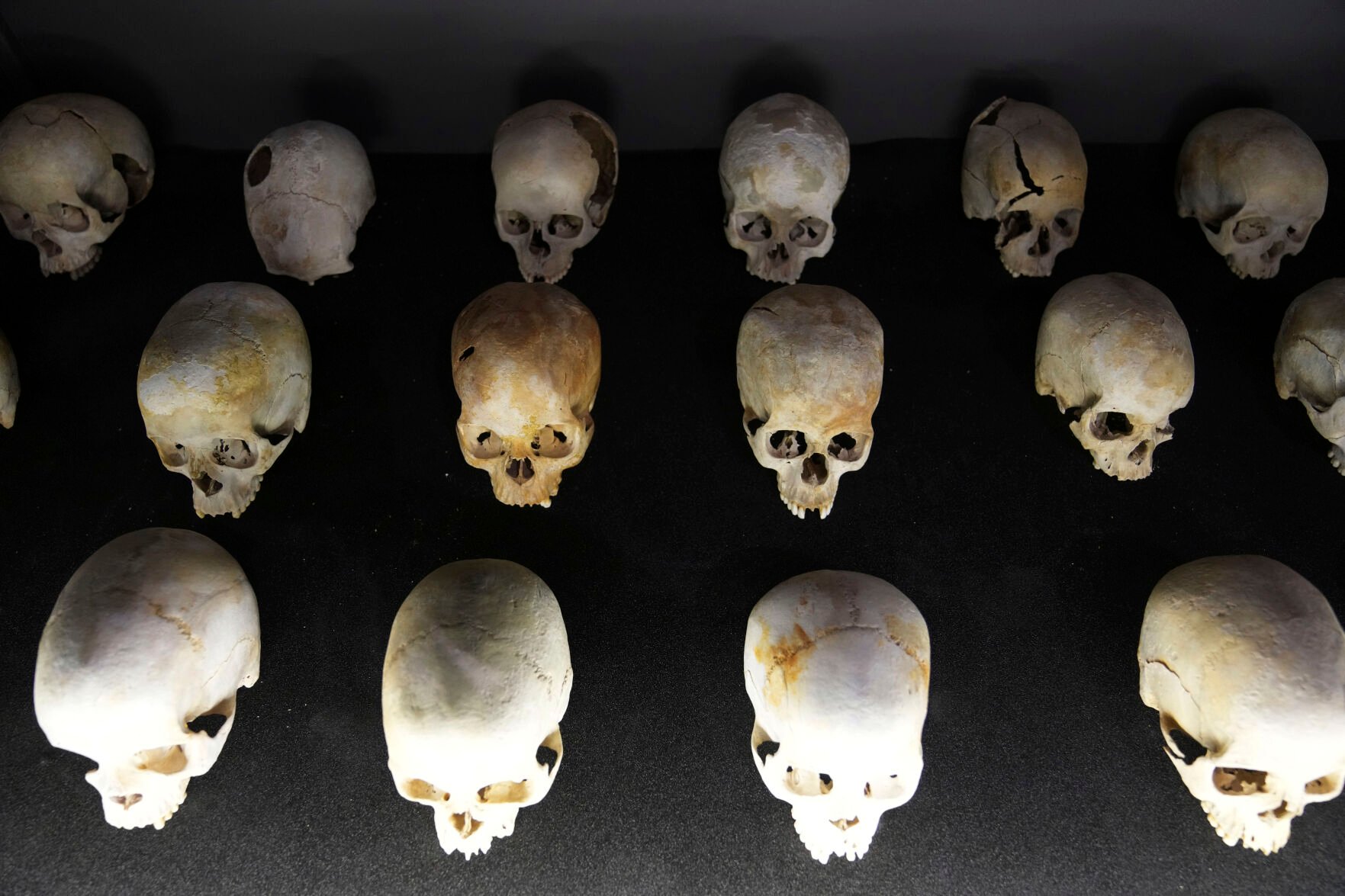
In genocide’s wake, there’s much healing to do | Pius Kamau

I recently interviewed a woman who witnessed the Rwanda genocide for a podcast I host for CoAGG — Coalition Against Global Genocide, an organization I belong to. The interview served to correct my own erroneous impressions about the Rwanda genocide. I too was moved to learn of the deep psychological trauma many victims live with, that have not abated after 3 decades.
Our “Never Again” interview was to mark the Global Genocide Awareness month: the Rwanda genocide, Cambodian genocide, Armenian genocide, all took place in April though the Holocaust Remembrance is on May 5-6. If hearing details of her experience was jarring to me, I can only imagine how much more painful the hundred days’ experience that the genocide lasted must be to her. I could see how some of my questions awakened unpleasant feelings in her. Because what she saw and remembers from the genocide were part of the interview, it briefly felt like an inquisition.
The point is, for many years I believed I knew all there was to know about genocides that keep popping up in our modern world. I am well acquainted with the holocaust having read countless books and seen many movies about human tragedies. I believed I understood other people’s pain and suffering. But my feelings were theoretical; a sterile, sanitized impression of other people’s unfortunate lives.
It was truly touching to listen to my guest’s story of the Rwanda genocide. She could describe in detail, the contours of the killings. The red rivers of blood that had a characteristic blood smell, contrasted to clear, odorless natural rivers’ waters. It’s a smell familiar to me from my surgical trauma experience.
Over time the Hutus and Tutsis intermarried, they were the same people who looked alike and spoke the same language — Kinyarwanda. In the past I had erroneously learned that Tutsis were tall and resembled Kenya’s Masai, while the Hutus were short and rotund.
For a year before the genocide, TV and radio stations undertook a misinformation campaign against the Tutsis — perceived enemies of the government. Then suddenly the 100 days of killings started. My guest’s family hid in separate groups. If the killers found them, at least one group would survive. In fact three of her siblings were murdered, as was her father in a relentless carnival of bloodthirsty killings that saved neither babies, the infirm, women or men. A senseless killing spree in which neighbors set upon former neighbors — the world’s civilized nations’ eyes looked on. The UN and the US didn’t lift a finger.
When genocidal tides overtake tribes or groups of people, the killing waves usually drown everyone: children, women and men. And yet there’s a group that perpetually suffers more. It was true of Rwanda’s women and girls, whose mass rape was undertaken by armed neighbors. The result was post-genocide babies; and women and girls suffering from HIV/AIDS.
Time and time again — in all recorded genocides — women are buffeted in convulsive waves of man’s murderous seizures. Men with guns or machetes are always empowered to rape and pillage. It happened in Bosnia where Muslim women and girls were tortured in “rape camps.” In Darfur Black Muslim girls and women were raped and murdered by Arab Janjaweed — and it’s now happening all over again. And who can forget what ISIS did to Christian Yazidi women in Iraq, Syria and Gaza? Indeed, Nazi rape of non-Aryan women is legendary. Propped up by genocidal masculinity, man’s debauchery knows no bound.
What the woman I interviewed went through, what continues to haunt her is incomprehensible to me. She tries hard to forget what she saw, but it still appears behind her closed eyes. Talking about that genocidal 100 days, rekindles what she’d rather forget.
And yet, how can humanity learn from the Rwanda tragedy if not through retelling of the bloodshed? How can other women who traversed those bloody fields, children who saw what a child should never see, men who were forced to witness the torture of their families, ever heal, unless they learn to confront the devilish images in their heads?
My takeaway is, humanity has a lot of work to do. It begins by listening to the stories of victims of genocide. It must somehow be drilled into our heads that torture and cruelty have no place in human affairs. Since women are frequent targets in genocidal upheavals, cultivating more women leaders will create an antidote to toxic genocidal masculinity.
Pius Kamau, M.D., a retired general surgeon, is president of the Aurora-based Africa America Higher Education Partnerships; co-founder of the Africa Enterprise Group and an activist for minority students ‘STEM education. He is a National Public Radio commentator, a Huffington Post blogger, a past columnist for Denver dailies and is featured on the podcast, “Never Again.”