Lockheed Martin builds on 50 years of spaceflight perfection for Mars Sample Return
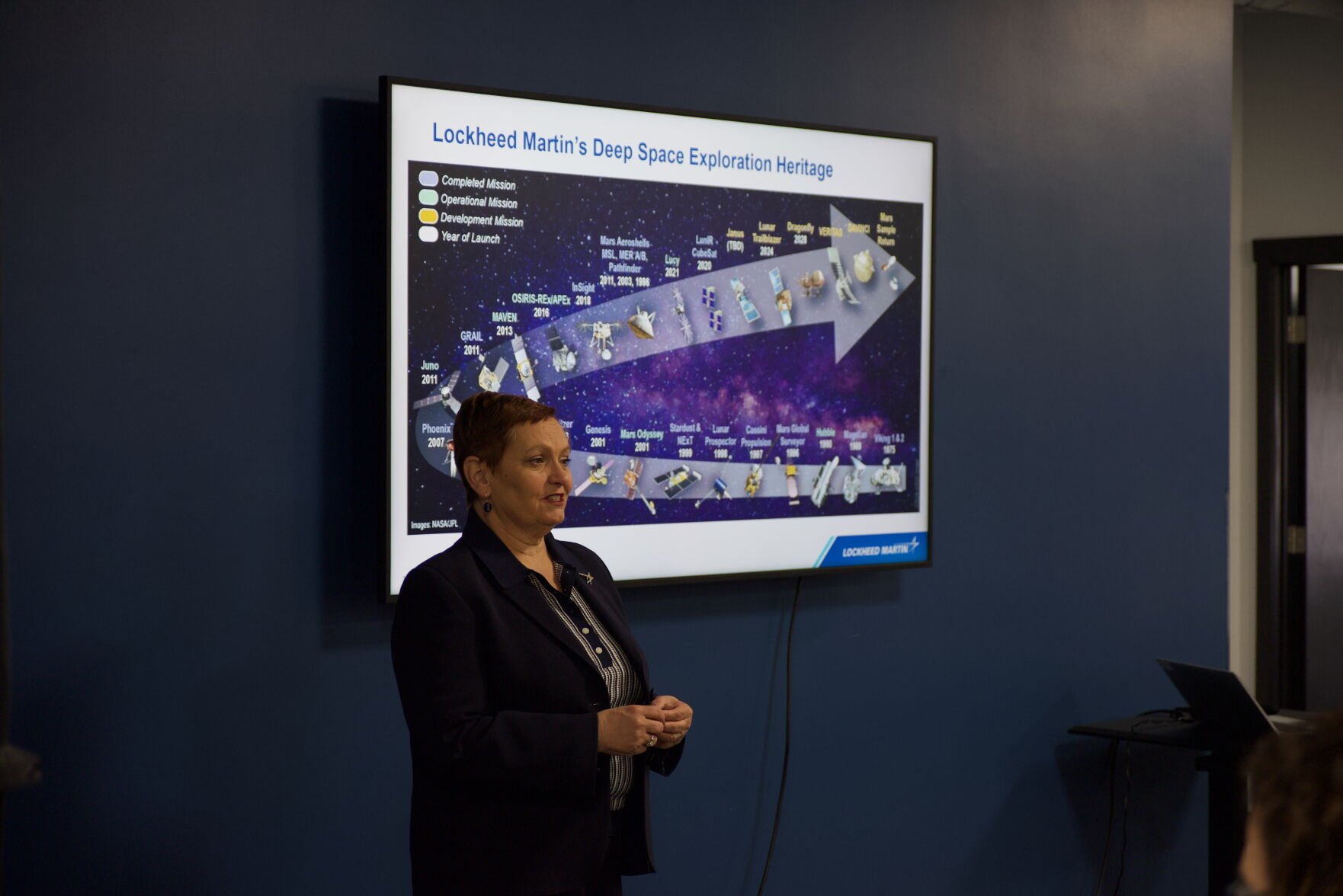
Lockheed Martin has been part of all NASA Mars missions to date and it has been part of every single sample return mission to date. And, with the Mars Sample Return mission on the horizon, Lockheed Martin is looking to continue that streak.
The Mars Sample Return is one of NASA’s flagship missions, meaning it will likely be one of the costliest, but also most capable missions the organization will undertake. But the Mars Sample Return mission is so complex and expensive that NASA is not working on it alone. It is partnering with the European Space Agency to get samples and safely return them to Earth.
The Perseverance Rover has already collected and stored several samples. But more detailed analysis, which may answer the question of life existing on Mars, may only be done on Earth. Lisa May, the senior manager of deep space exploration strategy with Lockheed Martin said the science happens on Mars (collection) and Earth (analysis).
A sample return is just the beginning and can serve as a stepping stone for one of humanity’s ultimate goals: landing a person on the red planet. The mission is set to land on a site that scientists believe highlights the red planet’s “on again, off again” relationship with water, giving them the best chance to find evidence of life.
And there may be hazards lurking beneath the Martian soil that we have yet to discover.
“Generally, Mars is full of surprises. We remember the Spirit Rover that got stuck on a Bisquick-like surface and never moved again,” she said. “Half of the science being done on the samples is called hazard analysis. It is determining if anything in the sample is so hazardous we cannot release them to additional laboratories for additional investigation.”
Mars is already known to have high levels of substances like chromium-6 and perchlorates, making its soil toxic. And, if humanity wants to have anyone set foot on Mars, which it seems we very much do, these risks need to be understood before a crewed mission sets out.
But, beyond the health and safety of future astronauts, there is one small detail that needs to be figured out: getting the sample from Mars back into orbit and back to Earth.
May calls this “nested transportation” and argues it is at the core of everything.
Fortunately, Lockheed Martin has some experience in this field. The OSIRIS REx mission sent a probe to an asteroid and sucked up some of the material on the surface. After that, the samples were sent back to Earth and landed in the Utah desert.
“And those samples are being found to have things like amino acids and salts that could only have been dissolved in water and evaporated out,” she said.
But one issue with the Mars Sample Return versus OSIRIS REx is the price tag, as there are many more moving parts. Investments needed in the nested transportation are measured in the billions of dollars. But Lockheed Martin, undaunted by this, fell back on its experience in working with price-capped projects, May said.
“Our cost variance on these large planetary missions is in the low single digits, and some of them we’ve even given money back to the government,” she said.
And Lockheed Martin isn’t alone in working the Mars Sample Return mission. It has drawn international attention. In fact, the European Space Agency is wholly responsible for the Earth Return Orbiter.
Plus, the potential for the mission may make the price immaterial.
“When those samples come back, that’s not a U.S. thing,” May said. “And the global science community is pretty darn excited. And, gosh, what if we found life?”