







Children’s Hospital Colorado nurse makes living organ donation
In the past five years, more than 1,300 kids in the U.S. have died while waiting for an organ donation that would have saved their lives, according to data from the United Network for Organ Sharing.
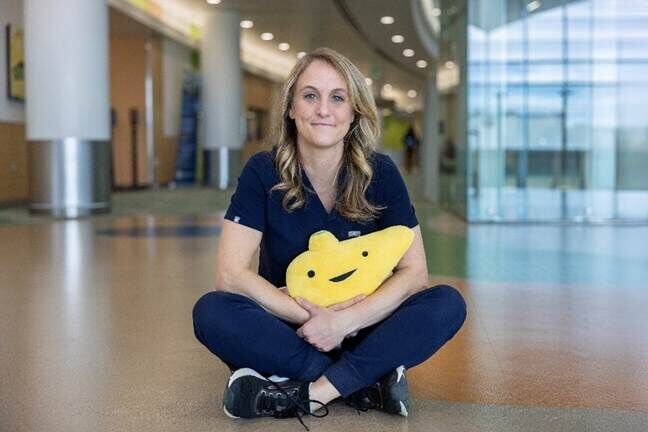
Kayla McCarthy, a registered nurse at Children’s Hospital Colorado, works with post-transplant patients and sees firsthand how a simple procedure can change a young life.
“I work with these really amazing and resilient kids and families, and their only goal is to get better and play with their dinosaurs, and play peekaboo with their parents, and just be kids,” McCarthy said.
“All they want is to get better. I was inspired to take part in that process in a personal way.”
Colorado Springs Fire Department holds quarterly drive to support lifesaving whole-blood program
McCarthy decided to donate part of her liver to a Children’s Colorado patient in Aurora through the living donor program.
“It seemed like the most obvious way I could help an individual child get better,” she said.
A living donation occurs when a healthy adult donates a kidney or part of the liver to a patient with end-stage liver or kidney failure, according to UCHealth. Most donors participate to help a friend or loved one, but McCarthy decided to donate to an unknown recipient.
After making the decision to donate, McCarthy applied through UCHealth’s University of Colorado Hospital to see if she was a viable candidate for the procedure. Donor candidates must be between the ages of 18 and 55, in “excellent physical and psychological health,” according to UCHealth.
“The evaluation process is pretty extensive,” McCarthy said. “There’s a preliminary lab workup, and if you’re eligible, you go through imaging — MRI, X-ray, CT scan, etc. If everything still looks good, you see a surgeon and coordinate a date for your procedure.”
Movers for Moms: Colorado Springs moving company lends a hand to struggling moms
McCarthy’s surgery was performed robotically, which meant smaller incisions, less post-surgery pain, minimal scarring and faster recovery time. The day after her procedure, McCarthy was on her feet. (“I walked a lot that first day,” she said.) Two and a half weeks after the surgery, she was back at work.
A few months after donating a portion of the liver, the organ regenerates back to its original size, according to UNOS.
“The team at UCHealth, on the adult side, was amazing,” McCarthy said. “They were so supportive the entire time. I felt like somebody had my back throughout the entire process, and they provided the safest possible experience.”
McCarthy made a non-directed donation, which is when someone donates without knowing who the recipient will be, so she has not met her recipient. But she has exchanged letters with the child’s family, she said.
“In the letter, they told me why (their child) needed the liver, and what it meant for them to get a transplant,” McCarthy said.
Boxing and baptisms: ‘Unity in the Community’ supports Colorado Springs residents in need
“I would love to meet them someday. But when you make a non-directed donation, you go into it knowing that you might never meet them in person. It’s about being able to help a child go on to lead a normal, healthy life. It feels really good to be able to contribute to that, and I would love to meet them, but if it doesn’t work out, that’s OK too.”
Anyone who is considering becoming a living donor should do as much research as possible in order to make an informed decision, McCarthy said.
“Living donation can be a really good option, and we have had really good outcomes with it,” she said. “Of the eight living donor transplants at Children’s last year, five were non-directed. Anyone who is healthy — and willing — can do it.”